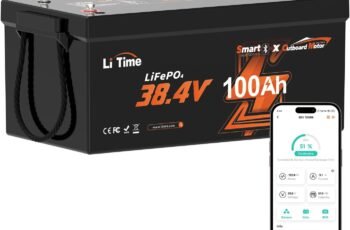
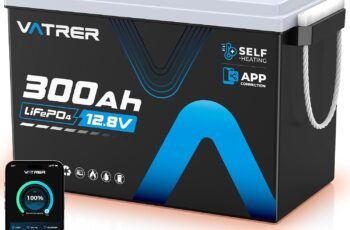
We find this 12.8V 15Ah LiFePO4 battery best for compact, low-current 12V systems. Its 192Wh capacity, 3.5-pound weight, IP67 rating, and built-in BMS suit emergency lights, routers, and fish finders. However, continuous discharge tops out at 3A, so it won’t reliably power high-draw appliances or motors. A compatible charger must also respect its 3A charging limit. We’ll assess its terminals, protection features, lifespan claims, and warranty to help you determine whether it fits your application.
Key Takeaways
- This 12.8V, 15Ah battery stores 192Wh, making it suitable for low-power 12V devices such as routers, alarms, and LED lights.
- At 3.5 pounds and 6.69 × 4.17 × 4.17 inches, it is compact; its F1 terminals require a compatible connection.
- Continuous output is limited to 3A, with 12A available only briefly, so it is unsuitable for many high-draw appliances and motors.
- A built-in BMS, IP67 rating, and low self-discharge add practical protection, while charging current is capped at 3A.
- The manufacturer claims over 4,000 cycles and a 10-year lifespan, but actual longevity varies and the warranty lasts only two years.
12.8V 15Ah LiFePO4 Battery
Although it’s compact, this 12.8V 15Ah LiFePO4 battery stores 192Wh of energy. We can assess its capacity as a fit for low-power 12V systems, including emergency lighting, routers, and fish finders.
Its 3.5-pound weight and 6.69 × 4.17 × 4.17-inch dimensions help us evaluate portability and installation space. The Battery Chemistry—lithium iron phosphate—provides a distinct alternative to lead-acid, while its 120-milliohm resistance informs electrical assessment.
For Charging Compatibility, we can use a LiFePO4 charger, a solar panel with controller, or an alternator. Confirm that the charging source matches the battery’s specified 3A maximum charging current before connection.
Detailed features
The built-in BMS guards against overcharging, over-discharging, and overcurrent, while a temperature cutoff stops charging at 50°C. We can assess its operating limits through key specifications:
| Feature | Rating |
|---|---|
| Nominal energy | 192Wh |
| Maximum charge current | 3A |
| Continuous discharge | ≤3A |
| Pulse discharge | ≤12A |
At 12.8V and 15Ah, the battery suits compatible 12V equipment. F1 terminal compatibility supports devices designed for that connector; check fit and polarity before installation. Its IP67 water protection indicates resistance to dust ingress and temporary immersion, but we should still follow installation guidance. The 120-milliohm resistance and 3.5-pound weight further define its electrical and physical profile.
Pros and Cons
We’ll weigh the battery’s long cycle life, built-in protections, and IP67 rating against its 3A continuous discharge limit.
These trade-offs determine whether it suits your intended load and environment. Let’s examine the key pros and cons.
Pros
Several design advantages make this 12.8V, 15Ah LiFePO4 battery practical for compact power systems. Its 192Wh capacity and 3.5-pound weight suit portable setups, while the IP67 enclosure supports use around water and dust.
Long cycle life stands out: the manufacturer rates it for more than 4,000 deep cycles and a 10-year lifespan. Low self discharge helps preserve stored energy between uses.
We also value the built-in BMS, which protects against overcharging, over-discharging, and overcurrent. F1 terminals simplify connection, and support for series or parallel configurations lets us scale voltage or capacity for compatible solar, backup, and recreational applications.
Cons
Despite its compact design, this battery’s 3A maximum charge and continuous discharge limits restrict how quickly it can recharge and which loads it can support; its 12A pulse rating applies only briefly. These charging constraints make recovery slow after substantial use, especially with modest solar input.
Limited discharge also rules out many high-draw appliances and motors, despite the battery’s 192Wh capacity. We should match loads carefully and avoid treating the pulse rating as a continuous capability.
Its 3.5-pound weight and IP67 protection aid portability, but the 15Ah capacity may require parallel expansion for longer runtimes. The two-year warranty is relatively short beside its stated lifespan.
Concluding thoughts
Overall, this 12.8V 15Ah LiFePO4 battery offers a compact, lightweight 192Wh option for low-current 12V applications. Its 3A continuous output and 12A pulse limit rule out demanding loads, so we should match it carefully to equipment requirements.
For LED lighting, alarms, small solar systems, and portable electronics, its low weight, IP67 protection, and built-in BMS are practical advantages. The rated 4,000-plus cycles suggest strong long term reliability, though real-world performance depends on charging conditions and use.
We’d consider it among ideal applications where modest capacity matters more than high current, and confirm charger compatibility before purchase. The two-year warranty adds reassurance.
Frequently Asked Questions
What Charger Voltage and Current Should I Use for This Battery?
We recommend a LiFePO4 charger with a 14.6V Recommended charging voltage and a Safe charging current no higher than 3A. Don’t use a lead-acid charging profile; follow the battery manufacturer’s instructions for charging.
Can I Connect This Battery in Parallel With a Different-Capacity Battery?
Yes, we can parallel different-capacity batteries if both are 12.8V LiFePO4 and manufacturer guidance permits it. Capacity mismatch can cause uneven discharge; use compatible batteries, match charge levels before connecting, and monitor each battery closely.
What Fuse Size Is Recommended for Protecting Connected Equipment?
Choose a fuse rated just above your equipment’s normal current, but never above the wire’s safe ampacity. We can’t specify one universal Fuse rating; match Wire protection to cable gauge and load, and install near the battery.
How Should I Store the Battery When It Will Not Be Used?
For storage, we recommend charging the battery partially, disconnecting loads, and keeping terminals protected. Maintain Temperature Control in a cool, dry place; periodically check voltage and restore its Storage Charge if it declines. Avoid freezing or excessive heat.
Are F1 Terminals Compatible With Standard Automotive Battery Connectors?
Not directly: F1 terminals are narrower than standard automotive posts, so automotive connector fitment depends on the clamp. We’d check dimensions before connecting; F1 terminal adapter options can bridge mismatches, but secure, polarity-correct contact remains essential.
Conclusion
We see this 12.8V 15Ah LiFePO4 battery as a compact, lightweight choice for modest 12V needs, from alarms and fish finders to backup lighting. Its IP67 enclosure, built-in protection, and claimed 4,000-plus cycles support dependable use, while the 3A continuous output limits higher-draw devices. Before buying, we’d match its discharge rating and charging limits to our equipment, then weigh the two-year warranty against the manufacturer’s longer lifespan claim. For small, steady loads, it offers practical portable power.