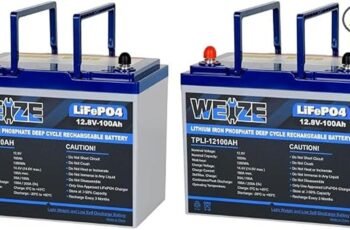
We find the Power Queen 12V 100Ah LiFePO4 battery a strong option for marine, RV, and solar systems where low weight, protection, and expandable capacity matter. It delivers 1,280Wh in a Group 31 case, with a 100A BMS, IP65 protection, and a five-year warranty. Before choosing it, we’d check continuous and startup current, cold-weather charging limits, compartment fit, and system voltage. Its cycle rating and configuration options may justify the cost, depending on your setup.
Key Takeaways
- The Power Queen battery delivers 12.8V, 100Ah, and 1,280Wh in a lightweight, approximately 22-pound Group 31 package.
- Its 100A BMS, IP65 enclosure, salt-spray protection, and ABYC E-13 compliance support marine, RV, and solar use.
- It’s rated for 4,000-plus full-depth cycles and includes a five-year warranty, though actual lifespan depends on use and care.
- The battery supports compatible 12V–36V systems and expansion up to four units; verify configuration, dimensions, and load requirements.
- Consider its upfront cost, 100A continuous-current limit, and below-freezing charging cutoff before buying.
100Ah LiFePO4 Marine Battery
The Power Queen 12.8V 100Ah LiFePO4 marine battery delivers 1,280Wh in a Group 31 form factor. For Capacity Planning, we can compare this energy rating with your boat’s expected loads and operating time. The 12V output suits compatible marine systems, while the 100Ah capacity provides a defined basis for estimating runtime.
At approximately 40 milliohms of resistance, the battery presents a low-resistance energy source for suitable equipment. Its universal-fit designation supports varied installations, but we should still verify compartment dimensions and electrical requirements before purchase. This Marine Battery also serves applications beyond boats, including RVs and solar systems, broadening its potential use.
Detailed features
Beyond its 1,280Wh capacity, the Power Queen adds marine-focused protections and flexible system expansion. Its 100A battery management system guards against overcharging, overheating, and short circuits, while TVS surge protection helps limit voltage spikes.
An IP65-rated enclosure resists dust, water, and salt spray, and the battery meets ABYC E-13 requirements. Low-temperature controls stop charging below 32°F and discharging below −4°F.
For Marine compatibility, it supports 12V–36V systems and trolling motors rated up to 120 pounds of thrust. We can connect up to four units in parallel and series, reaching 51.2V, 400Ah, and 20.48kWh for larger installations.
Pros and Cons
We’ll weigh the battery’s advantages, including its low weight, protection features, and long cycle life, against its limitations.
We’ll also consider how its 100A BMS, temperature cutoffs, and expansion requirements affect your setup. This comparison will help you judge whether it fits your application.
Pros
With its 1,280Wh capacity and 100A BMS, the Power Queen provides a lightweight, protected power source for marine and RV use. We get protection against overcharging, overheating, short circuits, and voltage surges, while its IP65 rating and salt-spray protection suit marine environments.
Low-temperature safeguards help protect cells during charging and discharging. At about 22 pounds, its lightweight design makes installation and transport easier than with a comparable lead-acid battery. We can expand capacity through supported series and parallel configurations.
Its Long cyclelife rating—4,000-plus cycles at full depth of discharge—can reduce replacement frequency, and a five-year warranty adds useful ownership coverage.
Cons
Despite its advantages, this battery’s 100A BMS limits continuous current, so it may not suit equipment with higher power demands. We should check our motor or inverter’s draw before buying, particularly where startup surges are significant.
Its High upfront cost may also challenge buyers comparing it with lead-acid batteries, even though lithium chemistry offers lower weight and longer cycle life.
Charging limitations matter in cold climates: protection stops charging below 32°F, so we’ll need a suitable operating environment or temperature-controlled charging setup.
The 22-pound weight is manageable, but its Group 31 dimensions may still restrict installation in compact compartments.
Concluding thoughts
Overall, the Power Queen 12V 100Ah LiFePO4 battery is a lightweight, expandable option for marine, RV, and solar systems that need reliable capacity and built-in protection. We’d weigh its 1,280Wh capacity, 100A BMS, IP65 rating, and low-temperature cutoffs against your operating conditions.
| Factor | Strength | Consideration |
|---|---|---|
| Ideal Applications | Marine, RV, solar | Confirm system voltage |
| Expansion | Up to 4P4S | Requires compatible setup |
For Long Term Value, its 4,000-plus rated cycles and five-year warranty support consideration, though actual service life depends on use and care. At about 22 pounds, it eases installation versus lead-acid alternatives. We’d choose it when weight, protection, and expandable capacity outweigh upfront cost.
Frequently Asked Questions
Can This Battery Power a 24V Trolling Motor by Itself?
No, we can’t power your 24V trolling motor with one 12.8V battery; Voltage compatibility requires 24V. Use two compatible batteries in a Series connection, following manufacturer guidance, and verify your motor’s current requirements before operating.
What Charger Is Recommended for This Lifepo4 Battery?
We recommend a 12V LiFePO4-compatible charger with a 14.4–14.6V charging voltage and no lead-acid equalization or desulfation modes. Check charger compatibility with the battery’s specifications, and don’t exceed its 100A BMS charging limit.
Can I Connect It in Parallel With a Different Battery Brand?
Yes, but Mixing battery brands introduces risks. Before connecting, we’d verify matching chemistry, nominal voltage, capacity, charge limits, and similar age and state of charge. Connection compatibility isn’t guaranteed; mismatches can cause imbalance, overheating, or premature failure.
How Should I Store the Battery During Winter?
For Winter storage, we recommend disconnecting the battery, keeping it dry in a cool, above-freezing location, and checking charge periodically. Cold protection stops charging below 32°F; don’t charge it when frozen, and follow the manual’s storage guidance.
Is the Battery Suitable for Use as an Engine-Starting Battery?
We wouldn’t recommend this battery for engine cranking: its specifications don’t confirm starter compatibility or provide cranking-current ratings. Choose a battery explicitly approved for starting, and verify your engine’s required cold-cranking amps before purchasing to guarantee reliable starts.
Conclusion
We see the Power Queen 12V 100Ah LiFePO4 as a lightweight option for compatible marine, RV, and solar systems, provided its 100A BMS meets your load requirements. At about 22 pounds, it’s substantially lighter than comparable lead-acid batteries, an advantage when weight matters. Still, we’d verify charger compatibility, low-temperature limits, and the manufacturer’s cycle-life conditions before buying. Its IP65 rating and stated protections add practical value, but they don’t eliminate the need to match the battery to your setup.