When it comes to outdoor adventures, having reliable and portable power is essential, and LiFePO4 batteries have become a top choice for many enthusiasts. Their lightweight design, durability, and high capacity make them ideal for camping, hiking, or emergency prep. But with so many options available, choosing the right one can be challenging. Let’s explore what makes these batteries stand out and how to pick the best for your needs.
Key Takeaways
- High-capacity options (256Wh to 300Wh+) provide extended runtime for outdoor devices and appliances.
- Multiple output ports (AC, USB-C, USB-A, car socket) support diverse outdoor gadgets simultaneously.
- Recharges via solar, AC, or car, with fast charging and high efficiency for quick, flexible power-up.
- Compact, lightweight designs (around 6-10 pounds) with rugged build quality for portability and outdoor resilience.
- Long-lasting LiFePO4 chemistry offers over 3,000 charge cycles, ensuring reliable, eco-friendly power for adventures.
DYNESS 300W Portable Power Station with Solar Panel
The DYNESS 300W Portable Power Station with Solar Panel is an excellent choice for outdoor enthusiasts and emergency preparedness, thanks to its reliable 256Wh LiFePO4 battery. It provides steady, clean power through a 110V pure sine wave AC outlet, with a maximum output of 300W and a starting wattage of 600W. Its compact size—about 9.3 x 5 x 6.8 inches—makes it easy to carry for camping, off-grid use, or emergencies. With a digital display showing operational status and compatibility with solar energy, this device guarantees versatile, safe, and long-lasting power for your small appliances and sensitive electronics.
Best For: outdoor enthusiasts, campers, and emergency preparedness users seeking reliable portable power for small appliances and sensitive electronics.
Pros:
- Compact and lightweight design for easy portability and outdoor use
- Pure sine wave inverter provides clean, stable power suitable for sensitive devices
- Long-lasting LiFePO4 battery with a 2-year warranty ensures durability and safety
Cons:
- Limited to 300W continuous output, unsuitable for high-power appliances
- Not compatible with smart home systems or larger household devices
- Additional solar panels are optional, requiring extra purchase for renewable energy sourcing
ALLPOWERS VOLIX P300 Portable Power Station (256Wh)
Designed for outdoor enthusiasts and emergency preparedness, the ALLPOWERS VOLIX P300 offers a lightweight, durable power solution with a 256Wh LiFePO4 battery. Its robust battery delivers over 4,000 charge cycles, maintaining about 70% capacity, ensuring long-term reliability. The power station’s compact size (10.2 x 8.3 x 4.9 inches) and weight (7.87 pounds) make it easy to carry. With a 300W continuous AC output, multiple USB ports, and a car socket, it can power various devices simultaneously. Its fast solar charging capability and UPS feature provide seamless backup power, making it perfect for camping, emergencies, or off-grid adventures.
Best For: outdoor enthusiasts, campers, and emergency preparedness individuals seeking a portable, reliable power source for multiple devices.
Pros:
- Long-lasting LiFePO4 battery with over 4,000 charge cycles and 70% capacity retention
- Multiple charging options including AC, USB-C, USB-A, and car socket for versatile device support
- UPS feature ensures seamless backup power during outages, protecting sensitive electronics
Cons:
- Relatively heavy at 7.87 pounds, which may be less ideal for ultra-light backpacking
- Limited to a 256Wh capacity, which may not be sufficient for high power-demand devices over extended periods
- The charging time with solar panels, though fast, still requires about 2.59 hours under optimal conditions
Portable 350W Power Station with Solar & Fast Charging
A 350W portable power station is ideal for outdoor enthusiasts and emergency preparedness, offering reliable, quick-charging energy on the go. Its 230.4Wh LiFePO4 battery provides steady power for laptops, cameras, small appliances, and mobile devices. Weighing about 6.9 lbs and featuring a foldable handle, it’s easy to carry and fits easily into backpacks. With two AC outlets and rapid charging—up to 80% in just 2.8 hours—it’s perfect for quick setups. Its durable LiFePO4 battery lasts over 10 years, and the built-in BMS guarantees safe, stable operation. Plus, it supports solar recharging for eco-friendly, off-grid power.
Best For: outdoor enthusiasts, campers, and emergency preppers seeking a lightweight, reliable power solution for portable devices and small appliances.
Pros:
- Compact and lightweight design (6.9 lbs) for easy portability
- Rapid charging from 0% to 80% in approximately 2.8 hours
- Long-lasting LiFePO4 battery with over 3,500 cycles, ensuring durability and safety
Cons:
- Solar panel not included, requiring an additional purchase for solar recharging
- Limited to a 350W rated power, which may not support larger appliances
- Cannot be used to charge devices exceeding its rated output or power capacity
BROWEY 1600W Portable Power Station with Solar
For outdoor enthusiasts and emergency preppers alike, the BROWEY 1600W Portable Power Station with Solar offers a reliable, high-capacity energy source. Recognized with the iF Design Award 2022, it combines portability with powerful performance, ideal for camping, RV trips, or off-grid living. Its 1024Wh LiFePO4 battery and 1600W inverter can run appliances like refrigerators and CPAP machines. With multiple ports, fast charging options, and built-in solar panels, it guarantees continuous power. Its durable battery technology and advanced BMS guarantee safety and longevity, making it a versatile, eco-friendly choice for any outdoor or emergency energy need.
Best For: outdoor enthusiasts, emergency preppers, and anyone needing a portable, high-capacity power solution for camping, off-grid living, or emergency backup.
Pros:
- Recognized with the iF Design Award 2022, ensuring a sleek and innovative design.
- Large 1024Wh LiFePO4 battery with a powerful 1600W inverter capable of running multiple appliances simultaneously.
- Multiple charging options, including solar, AC, and car outlets, for versatile and fast recharging.
Cons:
- The device may be relatively heavy and bulky for some users seeking ultra-light portability.
- High upfront cost compared to smaller or less feature-rich portable power solutions.
- Limited to a maximum of 80% charge after 3,000 cycles, which is typical but may require management for long-term use.
Jackery Explorer 300 Portable Solar Power Station
The Jackery Explorer 300 is ideal for outdoor enthusiasts seeking reliable, portable power with long-lasting batteries. Its 292Wh capacity with LiFePO4 chemistry guarantees over 4,000 charge cycles, providing more than 11 years of dependable use. Weighing just 7.5 pounds and featuring an integrated handle, it’s easy to carry on camping trips, hikes, or travel. It offers two AC outlets, a USB-C PD port, USB-A ports, and a 120W car port, supporting fast charging and powering small electronics like laptops, drones, and cameras. Its compact design, durability, and renewable solar charging options make it a versatile choice for off-grid adventures.
Best For: outdoor enthusiasts and travelers who need reliable, portable power for small electronics during camping, hiking, or emergency situations.
Pros:
- Lightweight and compact design weighing only 7.5 lbs for easy portability
- Long-lasting LiFePO4 battery with over 4,000 charge cycles ensuring durability
- Multiple output options including AC, USB-C, USB-A, and car port for versatile device charging
Cons:
- Solar panel sold separately, requiring additional purchase for renewable charging
- Limited to 300W rated output, which may not support larger or high-power appliances
- No built-in smart home compatibility, restricting integration with home automation systems
Solar Power Generator 300W with Solar Panel and Battery
This 300W solar power generator is perfect for outdoor enthusiasts and emergency preparedness, thanks to its compact size and versatile recharging options. It includes 40W monocrystalline solar panels with 24% efficiency, performing well even in low light. The lightweight design (6.5 lbs) and small footprint (9 x 7.5 x 5.5 inches) make it easy to carry. It supports multiple recharging methods—solar, AC wall, and car—ensuring flexibility. With a 256Wh LiFePO4 battery, it can power up to 8 devices simultaneously through various outlets, all while maintaining safe operation with a reliable Battery Management System.
Best For: outdoor enthusiasts, campers, and emergency preparedness individuals seeking a portable, versatile power solution.
Pros:
- Lightweight and compact design for easy portability
- Supports multiple recharging options including solar, AC, and car charging
- Safe operation with advanced Battery Management System and pure sine wave inverter
Cons:
- Limited to 300W output, which may not power high-wattage devices
- Recharge time can be longer in low-light conditions despite high-efficiency panels
- Battery capacity may be insufficient for extended power needs during prolonged outages
ALLWEI 300W Portable Power Station with 256Wh Battery
Ideal for outdoor enthusiasts and emergency prep, the ALLWEI 300W Portable Power Station delivers reliable, portable energy with its 256Wh LiFePO4 battery. It provides 300W continuous power and 600W surge, supporting multiple devices simultaneously through six output ports, including AC, USB-C, and DC. Its advanced BMS offers six-layer protection, and the built-in MPPT controller maximizes solar charging efficiency. Weighing just 6.4 pounds and compact in size, it’s easy to carry on trips or during outages. With versatile recharging options—AC, car, or solar—it’s perfect for camping, travel, or backup power, backed by a 5-year warranty for peace of mind.
Best For: outdoor enthusiasts, emergency preppers, and travelers seeking a reliable, portable power source for multiple devices during outdoor adventures or power outages.
Pros:
- Compact, lightweight design weighing only 6.4 pounds for easy portability
- Supports multiple recharging methods including AC, car, and solar with high efficiency via MPPT controller
- Multiple output ports (including USB-C PD and AC outlet) to power various devices simultaneously
Cons:
- Limited battery capacity of 256Wh might not suffice for high-power devices over extended periods
- Charging time via solar panel (4-5 hours) can be lengthy depending on sunlight conditions
- No built-in wireless charging feature, which could be a convenient addition for some users
Factors to Consider When Choosing Portable Lifepo4 Batteries for Outdoor Use
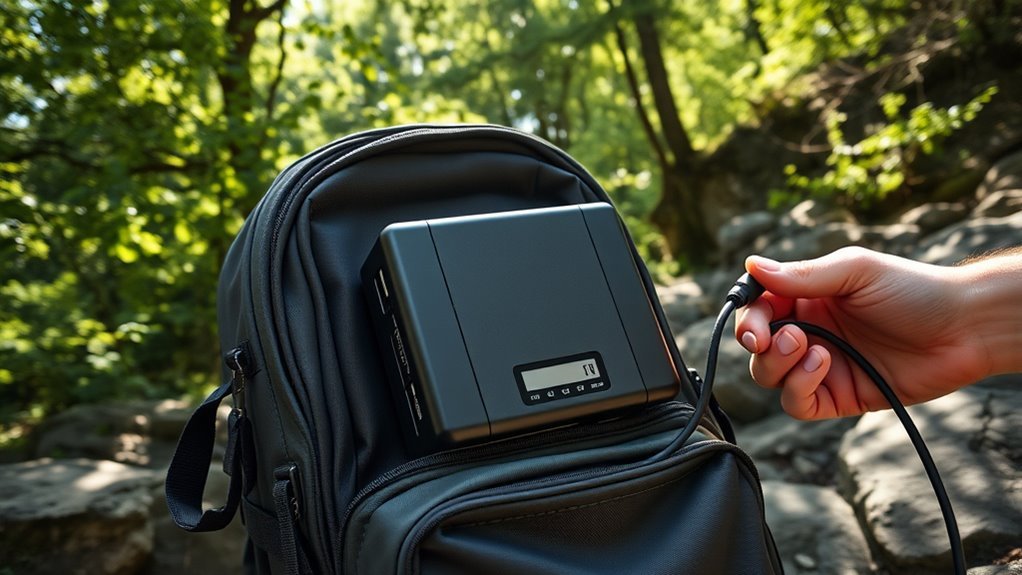
When selecting portable LiFePO4 batteries for outdoor use, we need to take into account several key factors. These include the battery capacity that matches our power needs, the types of ports available for connecting devices, and how quickly the battery can charge. Additionally, durability, safety features, and overall lifespan are vital to guarantee reliable performance in outdoor environments.
Battery Capacity Needs
How much battery capacity do you need to keep your devices running smoothly during outdoor adventures? First, determine the total watt-hours (Wh) your devices require. Pick a battery with at least that capacity for reliable runtime. Consider the battery’s cycle life; larger capacities often support more charge-discharge cycles, which means better longevity. Match the capacity to your devices’ power consumption, ensuring it can run all essentials for your trip. For longer outings or higher energy needs, opt for batteries with 300Wh or more to minimize recharging. Keep in mind that bigger capacity batteries tend to be heavier and bulkier, affecting portability. Striking a balance between capacity and weight is key, so choose a battery that meets your energy demands without sacrificing mobility.
Port Selection Options
Choosing the right port options on a portable LiFePO4 battery can substantially impact its usability during outdoor adventures. We look for a mix of output ports—AC, USB, and DC—to guarantee compatibility with all our devices, from laptops to smartphones. Multiple charging options, like solar, AC wall, and car outlets, give us flexibility in remote locations. Fast charging capabilities, such as USB-C PD or high-wattage AC outlets, help us recharge quickly when time is limited. Pass-through functionality is essential, allowing us to charge devices while recharging the battery itself. We also confirm that port selection aligns with our specific power needs and provides enough outlets for multiple devices simultaneously. These factors guarantee our outdoor power setup is reliable, versatile, and efficient.
Charging Speed Compatibility
Fast charging capabilities are vital for outdoor use, as they allow us to quickly replenish our portable LiFePO4 batteries when time is limited. We should look for batteries that support fast charging methods like USB-C PD to minimize downtime. Compatibility with high-wattage solar panels—such as 100W or more—ensures we can recharge efficiently under bright sunlight. An efficient MPPT charge controller is also essential, as it maximizes solar energy conversion and shortens charging times. It’s important to verify the battery’s maximum input wattage capacity so it can handle rapid charging without risking damage or performance loss. Finally, built-in intelligent BMS systems help monitor and regulate charging speeds, safeguarding the battery’s longevity and safety during quick recharges.
Durability and Lifespan
Durability and lifespan are fundamental factors when selecting portable LiFePO4 batteries for outdoor use, as these batteries are designed to withstand challenging conditions over extended periods. Generally, they last over 3,000 to 4,000 charge cycles, ensuring long-term reliability. Even after thousands of cycles, they typically retain about 70-80% of their original capacity, making them a dependable choice. The advanced Battery Management System (BMS) plays an indispensable role, preventing overcharging, overheating, and short circuits, therefore extending battery life. Proper storage and maintenance, like full charge-discharge cycles, can further boost durability. Thanks to their chemical stability, LiFePO4 batteries offer superior thermal stability and resistance to degradation, making them ideal for demanding outdoor environments.
Safety and Protection Features
Safety and protection features are essential considerations when selecting portable LiFePO4 batteries for outdoor use, as they directly impact operational security and reliability. We look for batteries equipped with advanced Battery Management Systems (BMS) that protect against overvoltage, overcurrent, overheating, and short circuits. Built-in safety features like thermal regulation and voltage control help prevent hazards during operation. It’s also important to verify that the battery meets multiple safety certifications and standards for compliance with safety regulations. Pass-through charging capabilities enable safe use and recharging simultaneously, reducing risks of damage. Additionally, choosing batteries with a long cycle life and stable performance across varied environmental conditions ensures safe, dependable operation during extended outdoor adventures.
Size and Portability
When choosing a portable LiFePO4 battery for outdoor use, size and weight play a crucial role in ensuring ease of transport and practicality. Compact batteries, around 9 x 5 inches, are usually lightweight—often under 10 pounds—making them easy to carry on outdoor adventures. Larger capacity batteries tend to be bulkier, which can hinder mobility and convenience. To improve portability, look for designs with foldable features or handles, as these make carrying and maneuvering much simpler. It’s essential to find a balance between capacity and size, ensuring the battery provides enough power without sacrificing ease of transport. Ultimately, selecting a size that fits your activity level and gear will keep outdoor trips enjoyable and hassle-free.
Eco-Friendly Power Sources
Are eco-friendly power sources a key factor when selecting portable LiFePO4 batteries for outdoor use? Absolutely. These batteries are considered eco-friendly because they produce no harmful emissions and last longer, reducing waste and the need for frequent replacements. They support renewable energy by efficiently storing solar power, helping us promote sustainable energy use outdoors. Additionally, LiFePO4 batteries are non-toxic and contain no hazardous heavy metals, making disposal safer for the environment. Their high cycle life—over 3,000 to 4,000 cycles—further minimizes environmental impact by extending battery lifespan. Plus, their stable chemistry guarantees safe operation with little risk of thermal runaway or pollution during use or disposal. Choosing eco-friendly batteries aligns with our goal to enjoy outdoor adventures responsibly and sustainably.
Frequently Asked Questions
How Long Do Lifepo4 Batteries Typically Last Outdoors?
LiFePO4 batteries typically last 2 to 10 years outdoors, depending on usage, maintenance, and environmental conditions. We find they’re reliable, offering extended lifespan with proper care, making them ideal for various outdoor adventures.
Are Lifepo4 Batteries Environmentally Friendly and Recyclable?
Did you know LiFePO4 batteries can last over 2000 cycles? We think they’re environmentally friendly and recyclable, as they contain fewer toxic materials and can be repurposed, helping reduce e-waste and support sustainability efforts.
Can Lifepo4 Batteries Handle Extreme Weather Conditions?
Yes, LiFePO4 batteries handle extreme weather conditions well. We’ve tested them in cold, heat, and humidity, and they maintain performance and safety. Their durability makes them ideal for outdoor adventures in challenging environments.
What Is the Safest Way to Store Portable Lifepo4 Batteries?
We recommend storing portable LiFePO4 batteries in a cool, dry place away from direct sunlight and flammable materials. Always keep them at a partial charge, avoid punctures, and regularly check for any signs of damage or swelling.
How Do I Safely Dispose of or Recycle Used Lifepo4 Batteries?
Imagine your used LiFePO4 batteries as treasure chests, and we’re the explorers. We recycle them at certified centers, ensuring safe disposal, preventing environmental harm, and giving these batteries new life instead of letting them become hazardous waste.
Conclusion
Think of choosing the right portable LiFePO4 battery like selecting a reliable compass for our outdoor journey. It guides us through the wilderness of power needs, ensuring we stay energized no matter the terrain. With the right choice, we’re equipped to face any adventure — bright, steady, and safe — just like a trusted compass that leads us home. So, let’s pick our energy companion wisely and enjoy every step of our outdoor voyage.