Choosing a LiFePO4 battery is like balancing a tightrope—precision and understanding are essential. We know that selecting the right capacity involves analyzing your power needs and future expansion, while factors affecting longevity, such as temperature and cycle count, must be carefully evaluated. Ensuring safety features and reputable brands can prevent costly mistakes. To make an informed investment, it’s vital to take into account these technical nuances; otherwise, your system’s reliability may be compromised.
Key Takeaways
- Calculate total power needs and add safety margin for future expansion or load spikes.
- Verify battery quality through certifications (UL, CE) and understand chemistry for safety and stability.
- Choose a capacity that matches your usage cycle to prevent deep discharges and optimize lifespan.
- Select reputable brands with proven safety, durability, and transparent specifications.
- Consider additional features like thermal management, monitoring systems, and safety accessories for enhanced performance.
How to Choose the Right Capacity for Your LiFePO4 Battery
How do you determine the appropriate capacity for your LiFePO4 battery? Proper selection hinges on analyzing your energy demands and ensuring ideal battery maintenance. We start by calculating the total power consumption of your devices or systems, then add a safety margin to accommodate future expansion or unexpected load spikes. Considering charging protocols is essential—select a capacity that aligns with your preferred charging rates to prevent overcurrent stress and prolong lifespan. It’s also vital to match the battery’s capacity with your usage cycle to avoid deep discharges that could diminish cycle life. By accurately evaluating your energy needs and adhering to proper charging protocols, you can choose a capacity that balances performance, longevity, and safety—maximizing your investment in LiFePO4 technology.
What Factors Affect the Battery’s Cycle Life and Longevity?
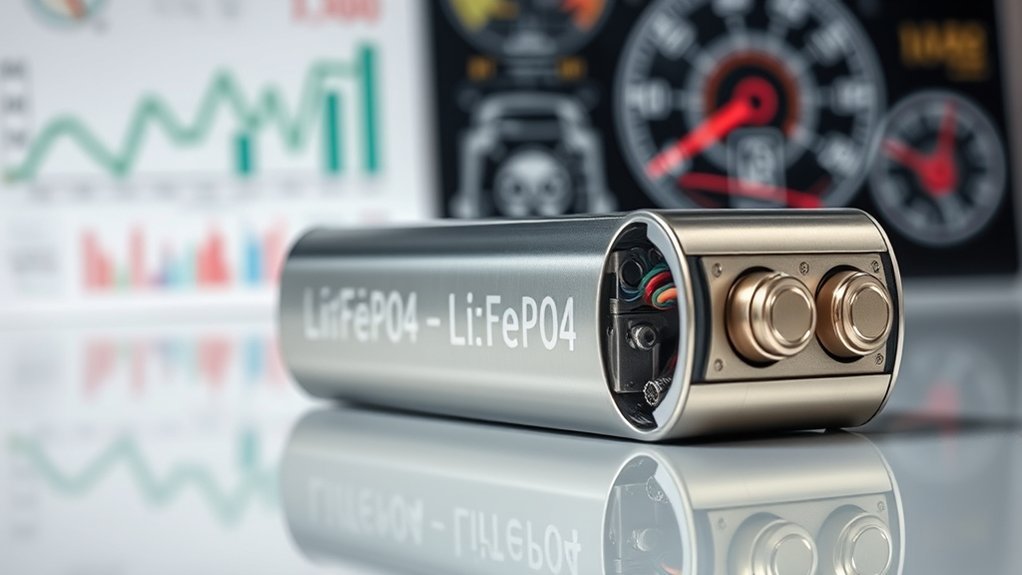
The longevity and cycle life of a LiFePO4 battery are primarily influenced by operational practices and environmental conditions. Proper management minimizes battery degradation caused by excessive charging cycles, high temperatures, or deep discharges. Charging and discharging at ideal rates preserve cell integrity, reducing capacity fade over time. Environmental factors like temperature fluctuations accelerate chemical reactions that degrade battery components, shortening lifespan.
| Factor | Impact |
|---|---|
| Charging Cycles | Increased cycles accelerate degradation |
| Temperature | High temps accelerate chemical wear |
| Discharge Depth | Deeper discharges reduce cycle life |
How to Assess Quality and Safety Features in LiFePO4 Batteries
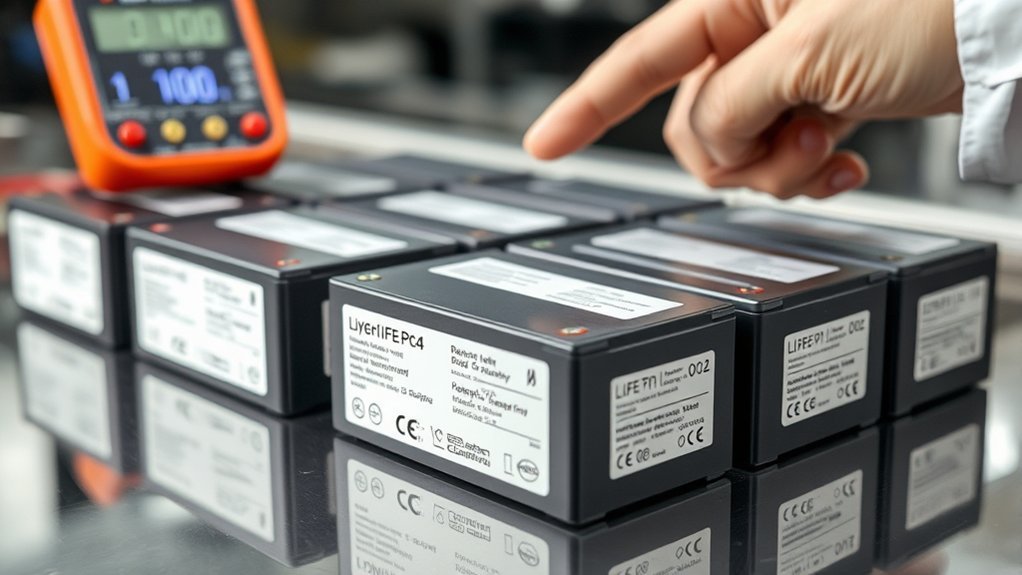
Evaluating the quality and safety features of LiFePO4 batteries requires a systematic examination of manufacturer specifications, certification standards, and built-in protective mechanisms. Key to this assessment is understanding the battery chemistry, which influences stability and thermal behavior. Safety certifications, such as UL, CE, or IEC standards, validate that the battery meets rigorous safety and performance criteria. We also look for integrated safety features like overcharge, over-discharge, and short-circuit protection, which prevent hazardous failures. A thorough review of datasheets and test reports provides insights into the battery’s robustness and compliance. By focusing on these technical details, we can confidently determine whether a LiFePO4 battery offers the quality and safety necessary for reliable, long-term use.
How Price and Brand Reputation Influence Your Purchase Decision
Price and brand reputation serve as critical factors in selecting LiFePO4 batteries, influencing both perceived value and long-term reliability. Pricing strategies often reflect manufacturing quality, warranty support, and technological innovation, directly impacting the cost-benefit analysis. Brand trust, built through consistent performance and customer feedback, plays a pivotal role in decision-making. When evaluating options, consider:
- Manufacturers with proven track records in safety and durability
- Pricing models that balance affordability with quality assurance
- The presence of transparent specifications and certifications
- Customer reviews indicating long-term reliability
These elements highlight how pricing strategies and brand reputation intertwine, shaping perceptions of value and reducing uncertainty. Ultimately, a reputable brand with fair pricing often offers better assurance of consistent performance over time, guiding more informed purchasing decisions.
What Additional Features or Accessories Should You Consider?
When selecting a LiFePO4 battery, considering additional features and accessories can considerably enhance system performance and longevity. Proper battery installation is critical; accessories like mounting brackets and cooling systems guarantee ideal thermal management and secure placement. Additionally, implementing advanced monitoring systems provides real-time data on voltage, current, and temperature, helping improve charging protocols and prevent over-discharge. Choosing compatible chargers with built-in balancing and specific charging protocols tailored to LiFePO4 chemistry ensures efficient, safe charging cycles, extending battery lifespan. Accessories such as fuse holders and disconnect switches add safety and ease of maintenance. Overall, integrating these features supports reliable operation, safeguards system components, and maximizes battery efficiency over its service life.
Frequently Asked Questions
How Do Temperature Variations Affect Lifepo4 Battery Performance?
Temperature impact causes performance fluctuations in Lifepo4 batteries; high temperatures accelerate degradation, reducing lifespan, while low temperatures decrease capacity and efficiency. We analyze these effects to optimize battery management systems for consistent performance across varying conditions.
Are There Specific Certifications to Look for in Quality Lifepo4 Batteries?
We believe that verifying battery certification and adhering to quality standards is vital for safety and performance. Ensuring your Lifepo4 battery meets certifications like UL or CE confirms it’s reliable, durable, and compliant with international technical standards.
Can Lifepo4 Batteries Be Recycled or Disposed of Safely?
Lifepo4 batteries can be recycled through proper battery recycling programs, ensuring safe disposal. We emphasize disposal safety to prevent environmental harm, highlighting that responsible recycling maintains battery integrity and reduces toxic waste risks effectively.
What Are the Warranty Options Typically Available for Lifepo4 Batteries?
We’ve found that warranty options usually cover 8-10 years or 2,000-5,000 charging cycles, with some providers offering prorated coverage based on battery capacity decline, ensuring reliability and longevity for critical applications.
How Do I Properly Maintain and Store My Lifepo4 Battery Long-Term?
We maintain our Lifepo4 batteries by following proper charging protocols, avoiding over-discharge, and storing in a cool, dry environment. These practices optimize battery lifespan, prevent capacity loss, and guarantee reliable long-term performance through careful handling and periodic maintenance.
Conclusion
Ultimately, choosing the right LiFePO4 battery involves balancing capacity, longevity, safety, and cost. Do we prioritize brand reputation and advanced features, or focus solely on initial price? By analyzing these factors critically, we can make informed decisions that guarantee long-term performance and safety. Investing in quality and understanding each component’s impact helps us optimize our energy systems for reliability and efficiency—because isn’t that the true goal of a sound battery purchase?