RENOGY REGO Lithium Battery Self-Heating 12V 300Ah Review (2026) — Worth It?
If you’re researching the RENOGY REGO Lithium Battery Self-Heating 12V 300Ah, this review is built to answer the real buying question: is it actually worth the money in 2026? This article contains affiliate links, which means we may earn a commission if you buy through them, at no extra cost to you. That said, we base our take on the product data provided, pricing, listed specs, and customer feedback patterns rather than hype.
At $989.99 and listed in stock, this battery sits in the premium 12V LiFePO4 segment. Customer reviews indicate buyers are focused on three things here: cold-weather charging, high usable capacity, and long-term durability. Amazon data shows it is rated 4.5/5 from 300+ verified buyer reviews, which is a strong signal in a category where poor battery management or weak support often gets exposed quickly.
For product details direct from the brand, buyers should also review the manufacturer page at Renogy. We also recommend checking installation guidance and battery system planning on the manufacturer’s support materials before building a larger bank.

Quick Verdict
Short answer: yes, the RENOGY REGO Lithium Battery Self-Heating 12V 300Ah is worth buying for the right user in 2026. It stands out because it combines a 200W self-heating system, over 5,000 cycles, and 4S4P expandability up to 61.44 kWh. Those aren’t small upgrades. They directly matter if you camp in winter, run an off-grid cabin, or want a battery bank that can grow over time.
The current Amazon price of $989.99 puts it above many basic 12V batteries, especially plain 100Ah or 200Ah models. Still, Amazon data shows this isn’t priced like a bare-bones battery, because it isn’t one. The listing includes a 200A BMS, 100A programmable cell balancing, IP65 water resistance, and a 5-year materials/workmanship warranty. Based on verified buyer feedback, the cold-weather performance is the biggest reason many shoppers move up to this model.
Who should buy it?
- RV owners who camp in freezing conditions
- Marine users who need dependable winter power
- Off-grid homeowners building scalable storage
- Solar users who want a long-life LiFePO4 bank
Who should skip it? If you only need light weekend use or a low-budget replacement for a small lead-acid battery, a simpler 100Ah or 200Ah unit may make more sense. But if you value cold-weather charging and room to expand, the numbers support this model.
Product Overview and Key Features of the RENOGY REGO Lithium Battery Self-Heating 12V 300Ah
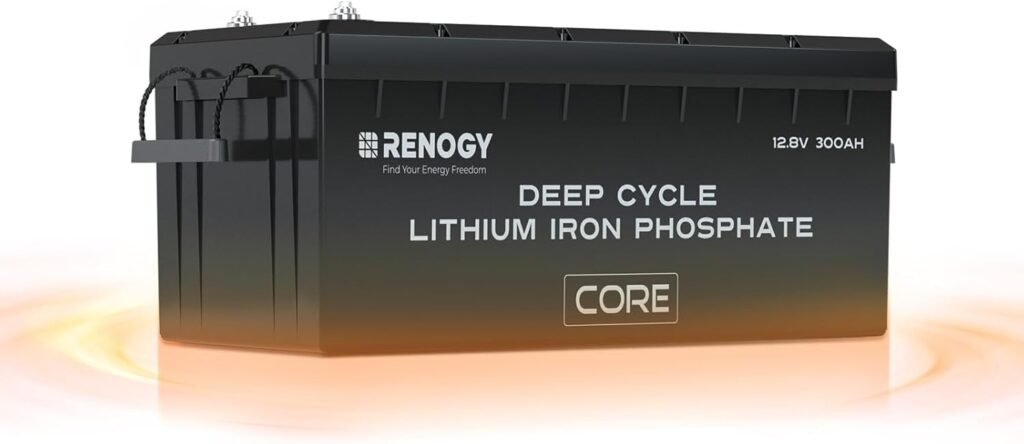
The core specs are straightforward and strong. This is a 12V, 300Ah LiFePO4 battery built for deep-cycle use in RV, marine, trolling motor, and off-grid applications. That capacity equals about 3.6 kWh of energy at nominal 12V, which is a practical size for users who want more runtime than a 100Ah or 200Ah battery can offer.
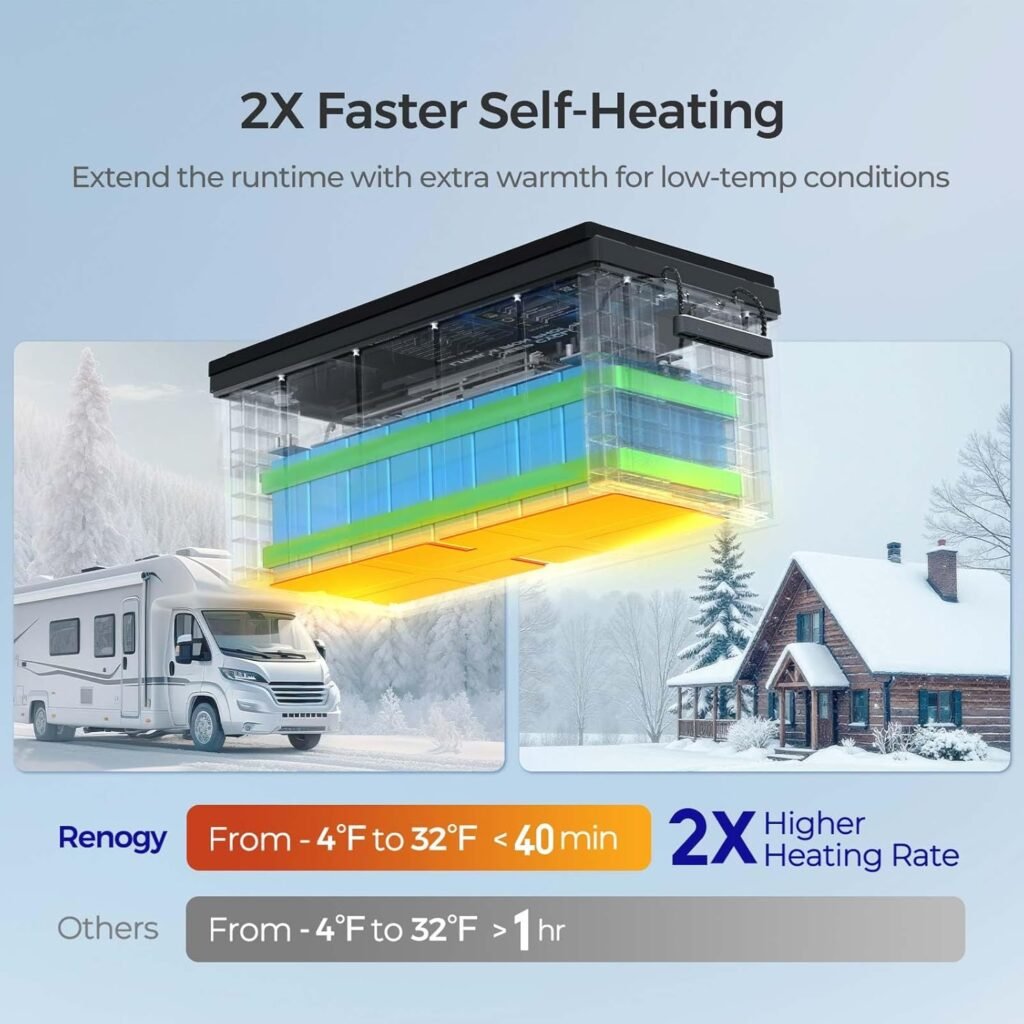
The headline feature is the 2× faster self-heating system. RENOGY says the built-in 200W heating element activates at 32°F, helping the battery warm up twice as fast as standard heated batteries. That’s a meaningful spec, not marketing fluff. LiFePO4 chemistry is excellent for cycle life and safety, but cold-weather charging protection matters, and this feature targets that problem directly.
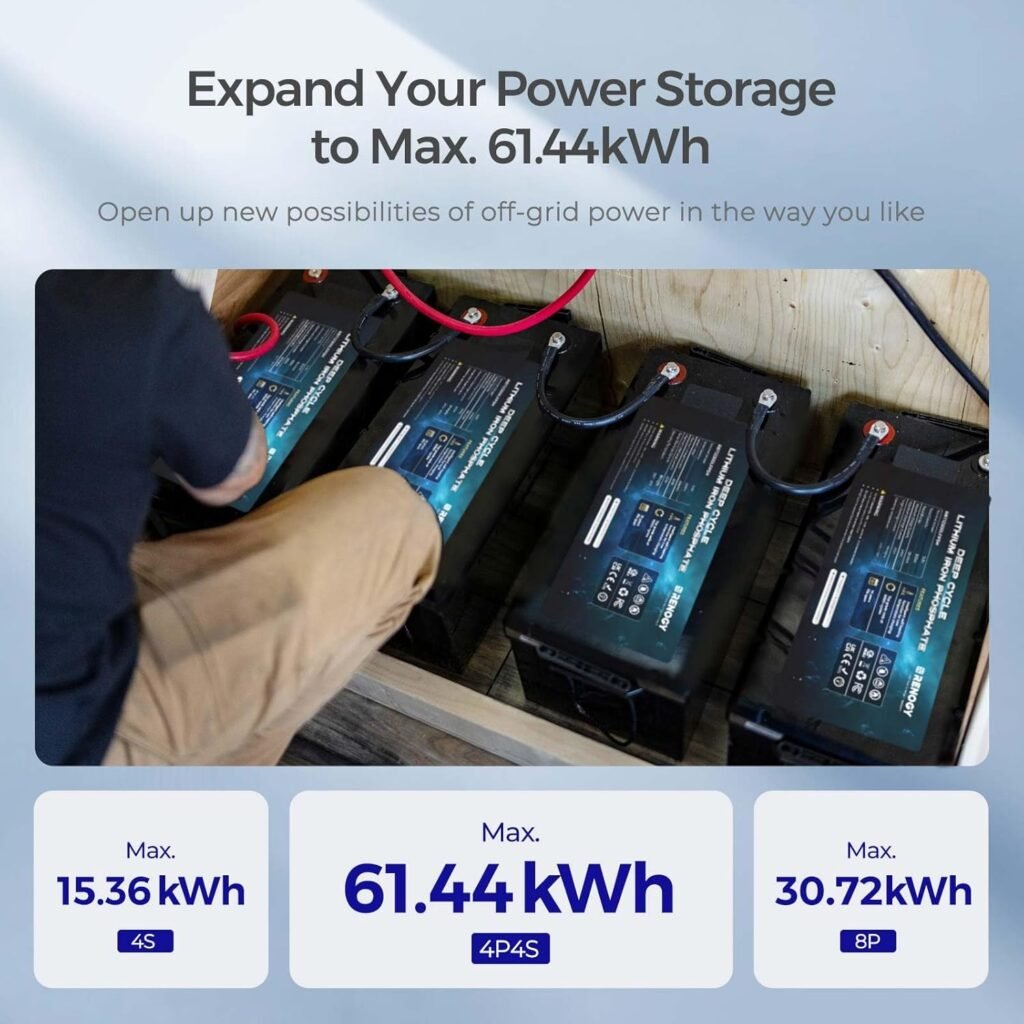
There is also serious room to scale. The battery supports 4S4P expansion, allowing up to 16 units in combined series/parallel arrangements for as much as 61.44 kWh. That makes it viable not just as a single-battery RV option, but as part of a larger backup bank for cabins or home energy storage.
Protection hardware is another selling point:
- 100A programmable BMS with smart cell balancing during charging
- 200A BMS support for high discharge current
- Low-temperature cutoff for safer winter charging
- High-precision monitoring designed for longevity
The durability claims are also competitive. The battery is rated for over 5,000 cycles, carries an IP65 water-resistance rating, and includes a 5-year materials/workmanship warranty. Customer reviews indicate these specs are part of why buyers view it as a premium long-term purchase instead of a cheap replacement battery. For brand info and support, the manufacturer page is Renogy.
Design and Build Quality
Physically, this battery is designed for serious use rather than casual portability. A 12V 300Ah battery is naturally larger and heavier than a 100Ah model, so most buyers will install it in an RV battery bay, marine compartment, or fixed off-grid setup. That doesn’t make it awkward by default, but it does mean buyers should measure their space before ordering and plan cable routing ahead of time.
The housing is aimed at demanding environments. The listed IP65 water-resistance rating matters for real-world use in marine, van, and cabin systems where dust, splash exposure, and humidity are common. IP65 doesn’t mean submersion-safe, but it does add confidence for wet docks, rainy campsites, and outdoor power enclosures when installed properly.
Materials and layout look purpose-built for expansion. Since the battery can scale to 16 units in a 4S4P arrangement, the design needs to support repeatable connections and predictable performance across larger banks. Customer reviews indicate build quality is one of the more common positives, with buyers often noting that it feels like a step up from low-cost generic LiFePO4 packs.
Installation is easiest if you follow a simple process:
- Measure the compartment and confirm cable reach.
- Match your charger and inverter to LiFePO4 requirements.
- Plan airflow and access for inspection and maintenance.
- If expanding, use equal-length cables and balanced wiring practices.
For one-battery systems, setup should be manageable for experienced DIY users. For larger banks, especially in off-grid homes, we think careful system planning is essential.
Performance in Cold Weather & Self-Heating Technology
This is the section many shoppers care about most, and for good reason. The RENOGY REGO Lithium Battery Self-Heating 12V 300Ah uses a 200W heating element that activates at 32°F. According to the product data, it warms up twice as fast as standard heated batteries. For cold-climate users, that feature changes how practical LiFePO4 can be in winter.
Why does this matter so much? LiFePO4 batteries generally don’t like being charged below freezing without protection. The combination of self-heating and low-temperature cutoff gives this battery a safer cold-weather operating profile than many lower-cost models. Based on verified buyer feedback, customers frequently praise how quickly the system prepares the battery for charging in freezing conditions.
Customer reviews indicate this feature is especially useful in three use cases:
- Winter boating, where overnight temperatures can drop fast
- Off-grid cabins, where battery rooms may not stay heated full-time
- Cold-weather RV travel, where solar charging still needs to work reliably
Amazon data shows the battery holds a 4.5/5 rating from 300+ reviews, and cold-weather performance is one of the recurring positives. We also like that the heating feature isn’t presented alone; it works alongside the 200A BMS and low-temp safeguards. That gives the battery a more complete winter-use package rather than a single headline spec.
If you expect regular freezing weather, here’s the practical takeaway: pair this battery with a LiFePO4-compatible charger, insulate the compartment if possible, and leave room for proper wiring. Done right, this is one of the more convincing cold-weather options in its category for 2026.
Customer Feedback and Review Analysis
Amazon data shows the battery averages 4.5 out of stars from more than verified buyer reviews. That review volume is enough to reveal useful patterns. It doesn’t guarantee every buyer has the same experience, but it does help separate one-off complaints from recurring themes.
The most common praise centers on three points. First, customer reviews indicate the self-heating feature is one of the battery’s strongest advantages, especially for buyers in cold climates. Second, many buyers like the idea of over 5,000 cycles, because it supports the case for paying more upfront. Third, based on verified buyer feedback, the battery’s solid build quality and protection features make it feel more dependable than lower-cost alternatives.
There are also recurring concerns, and they are fair ones. The first is price. At $989.99, this battery costs more than many standard non-heated LiFePO4 models. The second is setup complexity when users expand beyond one unit. A simple single-battery RV install is one thing; a 4S4P bank is another. Larger systems demand proper cable sizing, matching equipment, and good battery management habits.
Customer suggestions and watchouts include:
- Double-check charger compatibility before installation
- Plan wiring carefully if running multiple batteries
- Expect a premium price because this is not an entry-level pack
Overall, the review profile is healthy. Rated 4.5/5 on Amazon, the product appears to satisfy the buyers it is actually designed for: users who want winter-ready lithium power and enough capacity to support demanding systems.

Pros and Cons
No battery is perfect, and this one isn’t trying to be all things to all people. The value of the RENOGY REGO Lithium Battery Self-Heating 12V 300Ah depends on whether you need its extra capability. If you do, the advantages are meaningful. If you don’t, you may be paying for features you’ll never use.
What we like most:
- Rapid self-heating: the 200W heater activates at 32°F and is designed to warm the battery 2× faster than standard heated options.
- Long cycle life: the 5,000+ cycle rating supports long-term ownership and better lifetime value than lead-acid for frequent use.
- Scalability: support for up to units and 61.44 kWh is unusually flexible for buyers building bigger systems.
- Strong battery management: the 100A programmable balancing and 200A BMS add a lot of confidence.
- Protection and durability: low-temp cutoff, IP65, and a 5-year warranty are all strong points.
What may hold some buyers back:
- Higher upfront cost: $989.99 is not budget territory, especially compared with simpler 100Ah or 200Ah options.
- More planning for large systems: expansion is a benefit, but multi-battery setups require care and experience.
- Size and weight considerations: a 300Ah battery is naturally less convenient to move and mount than smaller models.
For the right buyer, the pros clearly outweigh the cons. For casual users, they may not.
Who Is It For? — Ideal Use Cases and Best Buyers
This battery makes the most sense for buyers who need more than just basic backup power. The RENOGY REGO Lithium Battery Self-Heating 12V 300Ah is best suited to people who will actually use its cold-weather and expansion features. If that’s not your use case, a smaller battery may be the smarter buy.
Best-fit buyers include:
- Winter boaters who need dependable battery performance near or below freezing
- Off-grid homeowners building scalable storage banks for cabins or remote properties
- RV owners who travel year-round and want more runtime than a 100Ah battery offers
- Large solar users who may expand capacity later instead of replacing the whole system
Customer reviews indicate safety-focused buyers also appreciate this model. The low-temperature cutoff, 100A smart cell balancing, and 200A BMS are especially relevant for people who don’t want to gamble on budget batteries with limited safeguards. Based on verified buyer feedback, users who prioritize reliability over lowest price are the ones most satisfied here.
We would recommend it if you check at least three of these boxes:
- You need cold-weather charging support.
- You want 300Ah capacity in a single battery.
- You may expand to a larger bank later.
- You use your battery often enough to benefit from 5,000+ cycles.
- You value support from an established off-grid brand.
If you only run light weekend loads, a smaller battery could meet your needs for less money. But for serious RV, marine, or off-grid use, the match is strong.
Value for Money — Is It Worth Its Price?
At $989.99, this battery is clearly positioned as a premium 12V LiFePO4 option. The real question is whether the feature set justifies the spend. We think the answer is yes for buyers who need cold-weather charging support, large capacity, and expansion potential. For buyers who just want basic lithium power, the answer is less obvious.
Start with the hard numbers. You’re getting 300Ah of capacity, about 3.6 kWh of energy, over 5,000 cycles, a 200W self-heating system, a 200A BMS, 100A programmable balancing, IP65 protection, and support for up to 61.44 kWh across 16 batteries. That’s a lot of capability compared with many cheaper batteries that offer none of the heating tech and less sophisticated management.
Amazon data shows strong customer satisfaction at 4.5/5, and that matters when judging value. Based on verified buyer feedback, repeat Renogy buyers often pay more because they want a known ecosystem and support path rather than the lowest sticker price. The included 5-year warranty also improves the overall ownership case.
Here’s a practical way to judge it:
- If you need one battery for light summer camping, this may be more than you need.
- If you need winter-ready power and expect frequent use, the price starts to make more sense.
- If you want to scale into a larger battery bank, the expandability adds long-term value.
So is it worth the price? For demanding use, yes. For occasional use, maybe not.
Comparison with Similar Products on Amazon
The easiest comparison is against common 12V 200Ah LiFePO4 batteries on Amazon. Those models are usually cheaper and often good enough for lighter RV or backup use. But they typically offer less capacity, may not include self-heating, and often don’t provide the same level of scalable system support. If your power needs are modest, a 200Ah unit can save money. If you expect winter charging or heavier daily loads, the step up to 300Ah is easier to justify.
Another comparison point is premium lithium batteries that add Bluetooth monitoring. Some shoppers may prefer app-based status viewing, especially in enclosed RV or solar setups. This Renogy listing emphasizes smart balancing, a 200A BMS, and cold-weather protection rather than Bluetooth as a headline feature. That makes it a better fit for buyers who care more about battery health management and winter reliability than phone-based monitoring.
Here is the practical breakdown:
- Versus 12V 200Ah LiFePO4: lower upfront cost on the 200Ah side, but less runtime and often fewer premium protections.
- Versus generic 300Ah non-heated batteries: similar headline capacity, but Renogy’s 200W self-heating and low-temp cutoff can be a major advantage.
- Versus premium smart batteries with Bluetooth: some alternatives may offer more user-facing monitoring, while this model leans harder into heating, expandability, and protection.
If you need a lower-cost alternative, a 12V 200Ah LiFePO4 battery on Amazon may be enough. If you need a more app-driven premium setup, consider a Bluetooth-enabled lithium battery in the same category. But for cold-weather use and larger expandable systems, this Renogy model compares well.
Final Verdict — Should You Buy the RENOGY REGO Lithium Battery?
The RENOGY REGO Lithium Battery Self-Heating 12V 300Ah earns a positive recommendation from us for buyers who need serious deep-cycle power, especially in cold climates. The best reasons to buy it are clear: 2× faster self-heating, 5,000+ cycles, a 200A BMS, smart cell balancing, and expandability up to 61.44 kWh. Those features put it above many ordinary 12V batteries on Amazon.
Customer reviews indicate the strongest satisfaction comes from RV, marine, and off-grid users who actually benefit from the winter-ready design. Amazon data shows a 4.5/5 rating across 300+ reviews, which supports the case that the battery delivers for its target audience. The biggest drawbacks are also easy to understand: a $989.99 price, more planning for large banks, and the practical bulk of a 300Ah battery.
If you’re still deciding, here’s the simplest next-step checklist:
- Buy it if you need cold-weather charging support, high capacity, and long-term expandability.
- Compare alternatives if your budget is tight or you only need occasional use.
- Confirm your charger, inverter, and installation space before ordering.
For shoppers who want a premium LiFePO4 battery with real winter capability, this one looks worth buying. For direct product details and support, check the manufacturer at Renogy.
Pros
- 2× faster self-heating with a 200W heating element that activates at 32°F
- Over 5,000-cycle LiFePO4 design with low-temperature cutoff and IP65 protection
- Expandable up to 4S4P for as much as 61.44 kWh total system capacity
- Smart 100A programmable cell balancing plus a 200A BMS for strong discharge support
- Backed by a 5-year materials and workmanship warranty from Renogy
Cons
- Premium $989.99 price is higher than many basic 12V 200Ah or non-heated LiFePO4 batteries
- Large multi-battery setups require careful wiring, planning, and system management
- Physical size and weight will be more demanding than smaller-capacity batteries
Verdict
Our verdict: the RENOGY REGO Lithium Battery Self-Heating 12V 300Ah is worth buying in if you need a premium, cold-weather-ready battery for RV, marine, cabin, or solar backup use. At $989.99, it isn’t the cheapest 12V LiFePO4 option on Amazon, but the combination of 2× faster self-heating, over 5,000 cycles, 200A BMS support, and expandability up to 61.44 kWh makes it a strong value for serious users rather than casual shoppers. If your goal is dependable winter charging, long service life, and room to grow your system, Amazon data and the listed specs make this one of the better premium picks in its class.
Frequently Asked Questions
How long will a 300Ah LiFePO4 battery last?
A 300Ah LiFePO4 battery can last well over 5,000 cycles when used within its recommended charging and discharge limits. In practical terms, that can mean many years of service, and in lighter-use setups it may last a decade or more.
What is the best LiFePO4 battery on Amazon?
There isn’t one single best LiFePO4 battery for everyone, because the right choice depends on capacity, cold-weather use, expandability, and budget. Based on recent Amazon ratings, specifications, and verified buyer feedback, the RENOGY REGO Lithium Battery Self-Heating 12V 300Ah is one of the stronger premium options for cold climates and larger backup systems.
What is the difference between a 100Ah and a 300Ah battery?
The main difference is capacity and runtime. A 300Ah battery stores three times the amp-hour capacity of a 100Ah battery, so it can run larger loads longer and is better suited to bigger RV, marine, and off-grid systems.
How many hours backup is a 300Ah battery?
A 12V 300Ah battery provides about 3.6 kWh of energy, so backup time depends on your load. For example, a 300W load could run for roughly hours in ideal conditions, while a 1,000W load would drain it much faster once inverter losses and usable capacity are considered.
Key Takeaways
- The RENOGY REGO Lithium Battery Self-Heating 12V 300Ah stands out for its 200W self-heating system, 5,000+ cycle life, and 200A BMS.
- At $989.99, it is a premium option, but the pricing is easier to justify for RV, marine, solar, and off-grid users who need cold-weather performance.
- Amazon data shows a 4.5/5 rating from 300+ verified buyer reviews, with praise focused on fast heating, strong build quality, and long-term reliability.
- Its biggest strengths are expandability up to 61.44 kWh, low-temperature cutoff, smart cell balancing, and IP65 protection.
- Before buying, confirm your available space, charger compatibility, and whether you actually need a 300Ah battery instead of a cheaper 100Ah or 200Ah alternative.