As we explore the landscape of energy storage solutions, LiFePO4 batteries stand out due to their unique chemistry and safety profile. Their stable electrochemical properties make them a compelling choice for various applications, from renewable energy systems to electric vehicles. Understanding their mechanisms and advantages can inform better decision-making in designing sustainable energy setups. Yet, to fully appreciate their potential, it’s essential to examine how these batteries compare with other lithium-ion options and what future developments may bring.
Key Takeaways
- LiFePO4 batteries are rechargeable lithium-ion cells known for their thermal stability and enhanced safety.
- They utilize lithium iron phosphate cathodes, supporting stable voltage and long cycle life.
- Ideal for renewable energy storage, electric vehicles, and backup power due to reliability and safety.
- Offer environmental benefits with lower toxicity and easier recycling compared to other lithium chemistries.
- Ongoing innovations focus on increasing energy density, lifespan, and sustainability through advanced materials and recycling methods.
What Are Lifepo4 Batteries and How Do They Work?
Lifepo4 batteries, also known as lithium iron phosphate batteries, are a type of rechargeable lithium-ion battery distinguished by their stable chemistry and enhanced safety profile. Their battery chemistry relies on the cathode material, lithium iron phosphate, which provides thermal stability and reduces the risk of thermal runaway. While their energy density is generally lower than other lithium-ion chemistries, Lifepo4 batteries excel in safety and longevity. The chemistry enables efficient charge-discharge cycles, maintaining stable voltage and capacity over time. This stability makes them suitable for applications demanding reliability. Despite their moderate energy density, their predictable performance and thermal stability make Lifepo4 batteries a compelling choice for renewable energy storage and electric vehicles, where safety and long-term performance are prioritized.
Key Advantages of Lifepo4 Battery Technology

One of the primary advantages of Lifepo4 battery technology is its exceptional safety profile, which stems from its stable chemistry and robust thermal management. This stability reduces risks of thermal runaway, making it a reliable choice for various applications. Additionally, Lifepo4 batteries offer environmental benefits through lower toxicity and recyclability, minimizing environmental impact. However, manufacturing challenges exist, such as the need for precise control during synthesis and electrode fabrication to guarantee performance and safety. These factors contribute to the overall efficiency and sustainability of Lifepo4 technology.
- Enhanced safety reduces risk of fires and explosions
- Environmentally friendly with lower toxicity and easier recycling
- Manufacturing complexity demands high precision in production processes
Comparing Lifepo4 to Other Lithium-Ion Batteries
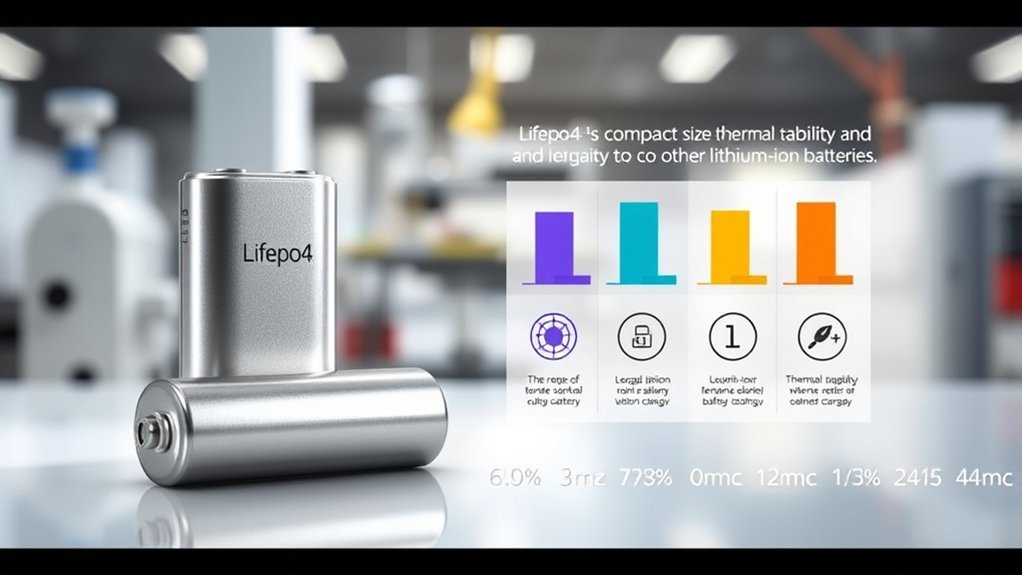
When comparing Lifepo4 batteries to other lithium-ion chemistries, it becomes evident that each type offers distinct advantages and trade-offs. Lifepo4’s inherent thermal stability reduces risks of overheating and thermal runaway, contributing to a safer profile. This stability also enhances battery longevity, leading to more frequent cycles and lower replacement costs. In regards to environmental impact, Lifepo4 batteries are more eco-friendly due to easier battery recycling processes and less toxic material use. Conversely, other lithium-ion chemistries, such as NMC or NCA, often contain cobalt or nickel, which pose environmental and ethical concerns during extraction and disposal. Overall, Lifepo4’s safer, more sustainable profile makes it a compelling choice when considering lifecycle environmental impact and the efficiency of battery recycling.
Common Uses and Applications of Lifepo4 Batteries
Due to their high safety profile and long cycle life, Lifepo4 batteries are extensively used across various industries, particularly in applications requiring reliable and sustainable power sources. Their stability and durability make them ideal for renewable energy systems, where consistent energy storage is vital. Additionally, Lifepo4 batteries power portable devices, offering enhanced safety and longevity compared to traditional lithium-ion options.
Common applications include:
- Energy storage systems for solar and wind farms
- Backup power solutions for critical infrastructure
- Portable electronics and medical devices
Their ability to handle deep cycling and high discharge rates ensures they meet demanding power needs efficiently. Overall, Lifepo4 batteries serve as a cornerstone for sustainable energy and portable technology advancements.
How to Choose the Right Lifepo4 Battery for Your Needs
Selecting the appropriate Lifepo4 battery requires an analysis of capacity and power demands to guarantee reliable performance. We must also consider compatibility with existing systems, including size constraints, while balancing budget constraints and expected longevity. By systematically evaluating these factors, we can identify the most effective solution for specific applications.
Capacity and Power Needs
Understanding your specific power and capacity requirements is essential for choosing the right Lifepo4 battery. Accurate assessment guarantees ideal energy storage, efficiency, and longevity. To determine this, consider:
- Total energy storage needs based on your application’s duration and load demands.
- Peak power requirements to handle sudden surges without voltage drops.
- Environmental impact, selecting batteries with longevity and recyclable components to minimize waste.
Matching capacity and power ensures reliable operation and maximizes lifespan. Higher capacity batteries provide extended runtime, while increased power output supports high-demand systems. Properly aligned, these factors reduce overall environmental impact by decreasing the frequency of replacements and optimizing energy use. A precise understanding of these parameters results in efficient, sustainable energy storage solutions that meet your specific needs.
Compatibility and Size
When choosing a Lifepo4 battery, ensuring compatibility with your system’s voltage, connector types, and mounting requirements is critical to achieving reliable performance. Compatibility factors include matching the battery’s voltage and form factor to your application’s specifications. Battery size directly influences installation feasibility and system capacity, making it essential to select an appropriate size for your needs. The following table highlights key compatibility considerations:
| Compatibility Factor | Description |
|---|---|
| Voltage Compatibility | Must match system voltage requirements |
| Connector Type | Ensure connectors are compatible |
| Mounting Requirements | Verify physical dimensions and mounting options |
Choosing the correct size and verifying these factors prevents operational issues and optimizes overall system efficiency.
Budget and Longevity
Budget considerations and battery longevity markedly influence the ideal Lifepo4 battery choice for your application. When evaluating options, a thorough price comparison helps identify models that balance initial costs with long-term value. Higher-quality cells often offer extended cycle life, reducing replacement frequency and environmental impact. To optimize investment, consider batteries with proven durability and favorable warranty terms.
- Price comparison emphasizes upfront costs versus lifespan savings
- Longer cycle life decreases environmental impact through fewer replacements
- Higher initial investment can lead to lower total ownership costs over time
Tips for Proper Maintenance and Longevity of Lifepo4 Batteries
Proper maintenance is essential to maximize the lifespan and performance of LiFePO4 batteries. Adhering to correct charging protocols, such as avoiding overcharging or deep discharges, helps prevent capacity loss and thermal stress. We recommend maintaining a consistent charge voltage within the manufacturer’s specified range, typically around 3.65V per cell, to optimize cycle life. Storage best practices also play a critical role; batteries should be stored in a cool, dry environment at approximately 40-50% state of charge, avoiding prolonged periods at full or empty states. Regular inspections for corrosion or physical damage are indispensable, as they can compromise internal chemistry. By implementing these strategies, we can guarantee LiFePO4 batteries perform reliably over their intended lifespan, preserving their capacity and safety.
The Future of Lifepo4 Battery Innovation and Industry Trends
As the demand for sustainable and efficient energy storage solutions accelerates, the industry is witnessing rapid advancements in LiFePO4 battery technology. Future innovation focuses on enhancing energy density, improving charge cycles, and minimizing environmental impact through advanced battery recycling techniques. Industry trends include integrating smart management systems for optimized performance and developing scalable manufacturing processes to reduce costs. Emphasizing environmental impact, manufacturers are prioritizing eco-friendly materials and recycling methods to guarantee sustainability. Additionally, regulatory pressures drive innovations toward circular economy models, aiming to extend battery lifespan and facilitate easier recycling. These trends collectively aim to reduce waste, lower life cycle costs, and promote broader adoption of LiFePO4 batteries, positioning them as a critical component in renewable energy infrastructure.
Frequently Asked Questions
What Are the Environmental Impacts of Lifepo4 Battery Production?
We find that Lifepo4 battery production has lower environmental impacts due to eco-friendly manufacturing and supply chain sustainability efforts, reducing hazardous waste and resource depletion, though careful management remains essential to minimize residual ecological effects.
How Safe Are Lifepo4 Batteries During Extreme Conditions?
We find that LiFePO4 batteries exhibit high thermal stability, considerably reducing battery fire risks during extreme conditions. Their robust chemical composition prevents thermal runaway, making them safer than many other lithium-ion options in demanding environments.
Can Lifepo4 Batteries Be Recycled Effectively?
We believe Lifepo4 batteries can be effectively recycled through advanced battery recycling techniques, reducing environmental pollution. Proper processes recover valuable materials, minimizing waste and promoting sustainability, making Lifepo4 recycling a vital component of environmentally responsible energy storage management.
What Is the Typical Lifespan of a Lifepo4 Battery?
We find that LiFePO4 batteries typically last around 2,000 to 3,000 charging cycles, maintaining significant battery capacity throughout, which translates to roughly 8 to 10 years under proper conditions, highlighting their durability and longevity.
Are There Any Ongoing Developments to Improve Lifepo4 Energy Density?
We’re actively researching advancements in battery manufacturing to enhance LiFePO4 energy density, aiming for improved energy storage capacity, stability, and safety, which could lead to more efficient, longer-lasting batteries for various applications.
Conclusion
Just as a skilled navigator relies on a sturdy compass to steer through uncertain waters, our understanding of LiFePO4 batteries guides us toward safer, more sustainable energy solutions. Their stability and longevity serve as a reliable beacon in the evolving landscape of energy storage. By embracing this technology, we’re not only charting a course for efficiency but also ensuring a resilient, eco-friendly future. Together, we can harness these batteries to power tomorrow’s innovations.