As we examine energy storage solutions, LiFePO4 batteries stand out due to their technical advantages and safety features. Their long cycle life, thermal stability, and environmentally friendly chemistry make them a compelling choice for various applications. Understanding these benefits can influence how we approach sustainable energy systems, yet the full scope of their performance and safety implications warrants a closer look to determine how they compare to other options.
Key Takeaways
- Lithium iron phosphate (LiFePO4) offers enhanced thermal stability and safety, reducing fire risk during operation.
- Long cycle life exceeds 2000 cycles, ensuring durability and lower replacement costs over time.
- Environmentally friendly with non-toxic chemistry, facilitating sustainable disposal and recycling processes.
- Cost-effective in the long run due to extended lifespan and reduced maintenance requirements.
- Suitable for high-demand applications like renewable energy storage and electric vehicles, supporting safety and sustainability.
What Are Lifepo4 Batteries and How Do They Work?
Although lithium iron phosphate (LiFePO4) batteries are a subset of lithium-ion technology, they distinguish themselves through their unique chemical composition and electrochemical properties. Their cathode material, lithium iron phosphate, offers enhanced thermal stability and safety. During manufacturing processes, careful control of material synthesis guarantees consistent performance and longevity. When it comes to battery recycling, LiFePO4 cells are less environmentally hazardous due to their non-toxic cathode chemistry, facilitating more sustainable disposal and reuse. The electrochemical stability of these batteries results from the phosphate’s strong covalent bonds, enabling efficient charge-discharge cycles. Overall, understanding their chemical and manufacturing nuances underscores their advantages and highlights considerations for sustainable management, including recycling initiatives that address environmental impacts and resource recovery.
Why Lifepo4 Batteries Offer Longer Lifespan Than Traditional Batteries
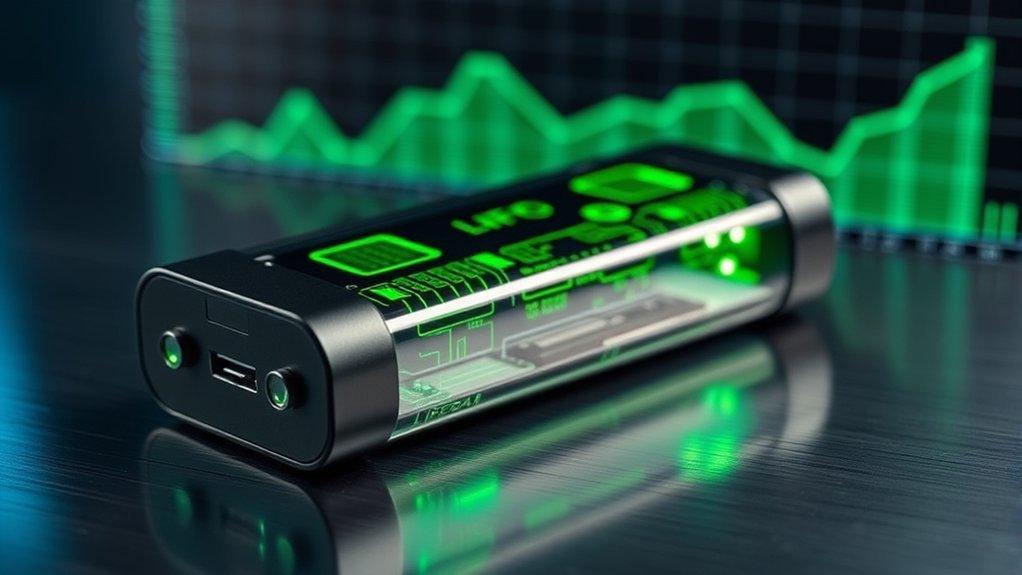
The unique chemical stability of lithium iron phosphate (LiFePO4) contributes markedly to its extended lifespan compared to traditional lithium-ion batteries. This stability minimizes degradation over charge cycles, resulting in higher cycle counts and less capacity loss. Additionally, LiFePO4’s robust chemistry enhances safety and reduces the need for frequent replacements, lowering overall lifetime costs. When considering battery recycling, the stable chemistry simplifies disassembly and reduces hazardous waste. The cost comparison reveals that although initial investments may be higher, the longer cycle life and lower maintenance costs yield superior long-term value.
| Aspect | Traditional Batteries | Lifepo4 Batteries |
|---|---|---|
| Cycle Lifespan | Fewer cycles | Significantly more cycles |
| Safety & Degradation | Higher degradation | Lower degradation |
| Cost Over Time | Higher replacement costs | Lower due to longevity |
How Safety Is Enhanced With Lifepo4 Battery Technology
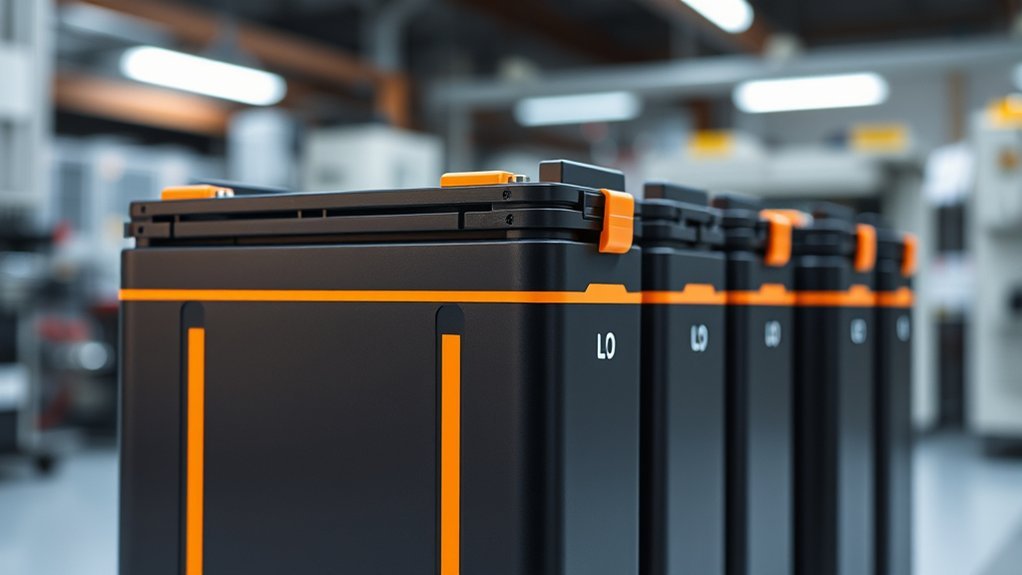
Lifepo4 batteries exhibit superior thermal stability, reducing the risk of overheating during operation. This stability minimizes potential fire hazards compared to traditional lithium-ion chemistries. Consequently, the safety profile of Lifepo4 technology offers a significant advantage in high-demand applications.
Thermal Stability Advantages
Because of their inherent chemical stability, Lifepo4 batteries exhibit exceptional thermal stability, substantially reducing the risk of overheating and thermal runaway. Their low thermal conductivity minimizes heat transfer within the cell, preventing localized hotspots that can trigger instability. Additionally, Lifepo4 chemistry promotes efficient heat dissipation, enabling the battery to maintain a stable temperature during operation. This combination of properties enhances safety by limiting temperature fluctuations and reducing thermal stress on the cells. Unlike other chemistries, Lifepo4’s stable structure resists decomposition under high temperatures, further mitigating safety concerns. Overall, these thermal stability advantages make Lifepo4 batteries a reliable choice for applications demanding consistent performance under varying thermal conditions.
Reduced Fire Risk
While many battery chemistries pose safety concerns related to thermal instability, Lifepo4 technology actively reduces fire risk through its inherent chemical and structural properties. Its stable phosphate chemistry minimizes the likelihood of thermal runaway, a common cause of fires in other batteries. This inherent safety enhances fire prevention and allows for relaxed safety protocols without compromising performance.
| Feature | Benefit |
|---|---|
| Stable Chemical Structure | Reduced risk of thermal runaway |
| Robust Cell Design | Enhanced structural integrity |
| Non-flammable Electrolyte | Improved safety during faults |
| Built-in Safety Mechanisms | Lower fire hazard |
This combination makes Lifepo4 batteries a safer choice, emphasizing their role in fire prevention and safety protocol adherence.
The Thermal Stability Advantages of Lifepo4 Batteries
Lifepo4 batteries exhibit superior resistance to overheating, maintaining stability even under high load conditions. Their performance remains consistent within a broad temperature range, reducing the risk of thermal runaway. This inherent thermal stability considerably lowers fire hazards compared to other lithium-ion chemistries.
Resistance to Overheating
Lifepo4 batteries demonstrate exceptional resistance to overheating due to their stable thermal chemistry and robust internal structure. This stability minimizes thermal runaway risks, making them safer under high load conditions. Their manufacturing processes emphasize consistent quality control, ensuring uniform cell construction that enhances thermal management. Additionally, the chemical composition of Lifepo4 reduces exothermic reactions, limiting heat generation during operation. This inherent thermal stability also benefits battery recycling efforts, as lower overheating risks decrease degradation and hazardous emissions during reuse. Overall, the combination of stable chemistry and precise manufacturing processes provides Lifepo4 batteries with superior resistance to overheating, ensuring safer operation and simplifying end-of-life recycling procedures. These factors collectively reinforce their reliability across demanding applications.
Stable Performance Range
Because of their inherent chemical stability, Lifepo4 batteries maintain consistent performance across a broad temperature range, ensuring reliable operation even under thermal stress. This stability stems from their robust crystal structure, which resists thermal degradation and allows for predictable behavior in extreme conditions. Their thermal stability simplifies battery recycling processes by reducing safety hazards during disassembly and disposal. Additionally, manufacturing processes for Lifepo4 cells are optimized to enhance thermal performance, resulting in minimal capacity loss and extended lifespan. This stable performance range is critical for applications demanding reliable power regardless of environmental fluctuations. Overall, Lifepo4 batteries’ thermal stability not only boosts operational consistency but also supports sustainable practices through safer recycling and efficient manufacturing.
Reduced Fire Risk
The inherent thermal stability of Lifepo4 batteries considerably reduces the risk of fires compared to other lithium-ion chemistries. This stability stems from their chemical composition, which resists thermal runaway—a common cause of battery fires. As a result, Lifepo4 batteries inherently support more effective fire prevention, lowering the need for extensive safety protocols. Their lower propensity for overheating minimizes the likelihood of catastrophic failure, even under extreme conditions. This attribute makes Lifepo4 batteries a safer choice for various applications, especially where safety is paramount. Consequently, integrating these batteries simplifies safety protocols, reducing the necessity for complex thermal management systems. Overall, the reduced fire risk enhances both operational safety and reliability, providing peace of mind in critical energy storage and power systems.
Environmental Benefits of Using Lifepo4 Batteries
While traditional battery chemistries often pose environmental challenges, Lifepo4 batteries offer a more sustainable alternative due to their inherent chemical stability and recyclability. Their eco-friendly disposal reduces hazardous waste, minimizing soil and water contamination. Additionally, Lifepo4 batteries support renewable energy integration by enabling efficient storage of solar or wind power, reducing reliance on fossil fuels. This contributes to a lower carbon footprint and promotes cleaner energy practices. The environmental advantages extend further with their longer lifespan, decreasing the frequency of replacement and waste generation.
Lifepo4 batteries offer eco-friendly, recyclable solutions that support renewable energy and reduce long-term waste.
- Minimize ecological impact through safe, eco-friendly disposal
- Enhance renewable energy systems for a sustainable future
- Reduce long-term waste and resource consumption
Comparing Lifepo4 Batteries to Other Lithium-Ion Options
Lifepo4 batteries distinguish themselves from other lithium-ion chemistries through notable differences in safety, lifespan, and environmental impact. They are inherently safer due to their stable chemistry, reducing risks of thermal runaway. Their longer cycle life—often exceeding 2000 cycles—leads to lower total cost of ownership. When comparing costs, Lifepo4 batteries tend to have higher upfront expenses but offset this through durability and longevity. Regarding battery recycling, Lifepo4’s less toxic materials simplify disposal and repurposing, minimizing environmental concerns associated with other lithium-ion types that contain more hazardous components. Overall, Lifepo4 batteries offer a compelling balance of safety, economic efficiency over time, and environmental sustainability, making them a superior choice compared to other lithium-ion options in many applications.
Real-World Applications That Benefit From Lifepo4 Batteries
Because of their superior safety, durability, and environmental profile, Lifepo4 batteries are increasingly favored in applications demanding reliable energy storage. They excel in sectors like renewable energy, electric vehicles, and backup power systems, where longevity and safety are critical. Their stable chemistry simplifies battery recycling, reducing environmental impact and supporting sustainable practices. A thorough cost analysis reveals that, despite higher initial costs, Lifepo4 batteries offer longer lifecycle benefits and lower maintenance expenses.
- Enhanced safety minimizes risks in high-stakes environments.
- Extended lifespan reduces replacement frequency and waste.
- Environmental friendliness aligns with eco-conscious initiatives, making them ideal for green applications.
These characteristics make Lifepo4 batteries indispensable in sectors prioritizing safety, sustainability, and economic efficiency.
Tips for Choosing the Right Lifepo4 Battery for Your Needs
Selecting the appropriate Lifepo4 battery requires careful consideration of several technical specifications to guarantee it meets specific application demands. First, evaluate capacity and voltage to confirm compatibility with your device or system. Consider cycle life and efficiency, as these impact long-term performance and total cost of ownership. Battery maintenance is also vital; Lifepo4 batteries generally require minimal upkeep, but understanding maintenance needs helps optimize lifespan. Conducting a cost comparison is essential—assess upfront costs against long-term benefits like longevity and reduced replacement frequency. Additionally, verify safety features and thermal management capabilities. By analyzing these parameters, you can select a Lifepo4 battery that balances performance, durability, and cost-effectiveness, assuring it aligns with your operational requirements and budget constraints.
Frequently Asked Questions
Are Lifepo4 Batteries Suitable for High-Drain Devices?
Yes, Lifepo4 batteries are suitable for high-drain devices, as their battery capacity supports sustained power output, ensuring power stability during demanding operations. This makes them reliable for high-performance applications requiring consistent energy delivery.
How Do Lifepo4 Batteries Perform in Cold Weather Conditions?
In cold weather, Lifepo4 batteries experience reduced efficiency due to increased internal resistance, but they maintain better performance than other chemistries, making them reliable for cold climate applications while requiring proper thermal management for peak efficiency.
What Is the Cost Comparison Between Lifepo4 and Other Lithium Batteries?
We find that Lifepo4 batteries, despite higher initial costs, excel in cost efficiency over time due to market availability and longer lifespan, making them a strategic choice compared to other lithium batteries, especially for demanding applications.
Can Lifepo4 Batteries Be Recycled Easily?
We find Lifepo4 batteries are recyclable through established battery recycling processes, which considerably reduce environmental impact. Their chemistry allows for efficient recovery of valuable materials, making them a sustainable choice for reducing waste and promoting environmental responsibility.
How Long Do Lifepo4 Batteries Typically Hold a Charge When Not in Use?
We find Lifepo4 batteries typically retain a charge for several months when stored properly, thanks to their strong storage stability and superior charge retention; regular maintenance and ideal conditions extend their performance, ensuring prolonged power reliability.
Conclusion
In summation, LiFePO4 batteries stand as the steadfast pillars of modern energy storage—combining safety, longevity, and eco-friendliness in a symphony of engineering prowess. Like a resilient oak weathering storms, their thermal stability and sustainability guarantee dependable performance over time. As we harness these advanced power sources, we’re not just investing in technology; we’re planting the seeds for a safer, greener future where innovation and responsibility grow hand in hand.