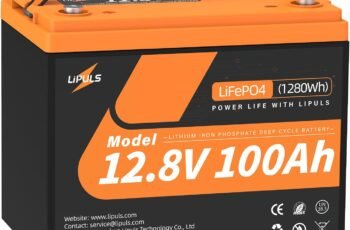
We find this 12V 100Ah Group 31 LiFePO4 battery well suited to RV, marine, and off-grid systems that need 1,280Wh of usable capacity in a 24.69-pound package. Its 120A BMS provides protection against common electrical and thermal risks, while low-temperature charging pauses below 32°F. The IP65 rating resists dust and water but doesn’t permit immersion. Check compartment fit, system compatibility, and load requirements; its current limit and upfront cost may not suit every installation. We’ll examine its features and trade-offs next.
Key Takeaways
- Delivers 1,280Wh of usable capacity in a 12V, 100Ah Group 31 battery.
- Weighs 24.69 pounds and measures 12.99 × 6.77 × 8.46 inches; check compartment fit and terminal layout.
- LiFePO4 cells are rated for 15,000-plus cycles, while a 120A BMS protects against key electrical and thermal risks.
- IP65 protection resists dust and water, and low-temperature charging pauses below 32°F until conditions reach 41°F.
- Supports up to 16 compatible batteries in a 4S4P system, but check load requirements, system compatibility, and upfront cost.
Group 31 Battery Review
How does this Group 31 battery balance capacity and portability? We get 1,280Wh from its 12V, 100Ah rating, with full usable capacity for compatible systems. At 24.69 pounds, it’s substantially lighter than many lead-acid batteries of similar capacity, easing transport and installation.
Its 12.99 × 6.77 × 8.46-inch dimensions support a practical Group 31 size comparison: check your compartment’s clearances and terminal layout before replacing an existing battery. LiFePO4 lifespan is another key consideration; the cells are rated for 15,000-plus cycles, supporting extended use.
Together, these figures make the battery a compact, high-capacity option for RV, marine, and off-grid applications.
Detailed features
Beyond its capacity and weight, the battery’s 120A smart BMS manages key operating risks. It guards against overcharge, over-discharge, short circuits, and overheating, while Temperature protection pauses charging below 32°F and resumes it at 41°F.
We can configure up to 16 batteries in 4S4P, scaling storage to 51.2V, 400Ah, or 20.48kWh. Its IP65 durability rating indicates resistance to water and dust, relevant for RV, marine, and off-grid installations, though it doesn’t establish suitability for immersion.
LiFePO4 cells deliver a stated 15,000-plus cycles. For installation questions or troubleshooting, you can contact the manufacturer’s 24/7 support team.
Pros and Cons
We’ll weigh the battery’s full usable 1,280Wh capacity, 15,000+ cycle rating, and expansion options against its operating limits.
Its 120A BMS and low-temperature charging cutoff also shape how it performs in different systems. Let’s assess these pros and cons against your intended use.
Pros
The battery’s strongest advantages are its high usable capacity, long cycle life, and broad system compatibility. Its 1,280Wh rating and full usable capacity let’s draw more stored energy for a given installation.
LiFePO4 cells support 15,000+ cycles, making Long cycle life a notable benefit for frequent-use systems. A 120A smart BMS manages overcharge, over-discharge, short-circuit, and overheating protection, while Low temperature protection pauses charging below 32°F and resumes at 41°F.
We can expand up to 16 batteries in a 4S4P configuration, reaching 20.48kWh. Group 31 dimensions, 24.69-pound weight, IP65 protection, and 24/7 support broaden practical installation options.
Cons
Those advantages come with trade-offs: the 120A BMS limits the current available to high-demand loads, so check that it suits your inverter or motor’s requirements.
We should also weigh the Higher upfront cost against long-term cycle life and usable capacity; buyers with tight budgets may prefer a lower-cost alternative.
The battery’s cold weather limitations matter in unheated installations: charging pauses below 32°F and resumes at 41°F, so we’ll need temperature-aware charging or a warmer location.
Its Group 31 footprint may not fit every compartment, despite its standard format. Finally, expanding capacity requires compatible batteries and careful system planning.
Concluding thoughts
Overall, this Group 31 LiFePO4 battery combines 100Ah of fully usable capacity with a 120A BMS, low-temperature charging protection, and an IP65 enclosure in a 24.69-pound package. Its 1,280Wh output and 15,000-plus-cycle rating support sustained use, while the BMS pauses charging below 32°F and resumes at 41°F.
We’d consider its long term value strongest where reduced weight, usable capacity, and cycle life matter more than initial cost. Ideal applications include RVs, boats, trolling motors, solar storage, backup power, and off-grid systems.
You can expand up to 16 batteries, but confirm voltage, wiring, and system compatibility before installation.
Frequently Asked Questions
What Charger Is Compatible With This 12V Lifepo4 Battery?
Choose a 12V LiFePO4-compatible charger with a LiFePO4 charging voltage specified by the battery maker and suitable charger amperage. We recommend confirming its settings and avoiding lead-acid equalization; charging pauses below 32°F.
Can This Battery Power a Standard 12V Refrigerator Overnight?
Yes—we can treat its 1,280Wh capacity as a fuel tank: overnight runtime depends on your refrigerator’s average draw, while refrigerator startup surges must stay within the 120A BMS limit. Check both appliance specifications before connecting.
How Should I Store the Battery When It’s Not in Use?
For Battery Storage, disconnect loads, store the battery in a cool, dry place, and keep it partially charged. During Offseason Care, check charge periodically; don’t charge below 32°F, and follow the manufacturer’s storage guidance.
Can I Connect This Battery in Parallel With a Lead-Acid Battery?
Don’t mix battery chemistries in parallel; they’re mismatched dance partners. We can’t guarantee charging balance between lithium iron phosphate and lead-acid batteries, risking uneven currents, poor performance, and damage. Use separate systems or a compatible, professionally designed charger.
Does Installing This Battery Require a Special Mounting Tray?
No special tray is specified; we can use a compatible Group 31 tray. Check Tray dimensions against the battery’s 12.99 × 6.77-inch footprint, and allow Mounting clearance for secure fastening, wiring, and ventilation.
Conclusion
We found the 12V 100Ah Group 31 battery a compelling upgrade for RVs, boats, solar systems, and backup power. Its 1,280Wh capacity, 120A BMS, cold-weather charging cutoff, and 24.69-pound weight make everyday use pleasantly straightforward. Expandable to 20.48kWh, it can grow from a modest power source into a small energy empire—provided your system supports the configuration. We’d still verify fit, charging compatibility, and load requirements before buying. For the right setup, it’s a practical, well-protected choice.