Like a chess game where each move impacts the entire strategy, replacing lead-acid batteries with LiFePO4 involves more than just swapping components. We need to evaluate system compatibility, voltage requirements, and physical dimensions to facilitate a seamless shift. Understanding these technical nuances is essential before making a decision, as the implications extend beyond initial installation. Exploring these factors can reveal whether the upgrade aligns with your system’s long-term performance goals.
Key Takeaways
- Yes, but verify voltage compatibility and ensure your system supports LiFePO4 specifications.
- Upgrading may require new chargers, BMS, and physical modifications to accommodate different size and weight.
- LiFePO4 offers longer lifespan, higher efficiency, and safer operation compared to lead-acid batteries.
- Proper thermal management and correct charging protocols are essential for optimal performance and safety.
- Recycling and disposal procedures should be updated to handle LiFePO4 batteries responsibly.
What Are the Main Differences Between Lead-Acid and LiFePO4 Batteries?
While both lead-acid and LiFePO4 batteries serve as energy storage solutions, their fundamental differences markedly impact performance, lifespan, and cost-effectiveness. The key distinction lies in battery chemistry, which directly influences energy density—the amount of energy stored per unit volume or weight. Lead-acid batteries have lower energy density, making them bulkier and heavier for the same capacity, whereas LiFePO4 batteries offer considerably higher energy density, enabling more compact designs. Additionally, LiFePO4’s chemistry provides improved thermal stability, longer cycle life, and better charge retention. These factors contribute to reduced maintenance costs and increased reliability. Despite higher upfront costs, the superior performance characteristics of LiFePO4 batteries often translate into better long-term value compared to traditional lead-acid systems.
Is My Current Battery System Compatible With LiFePO4?
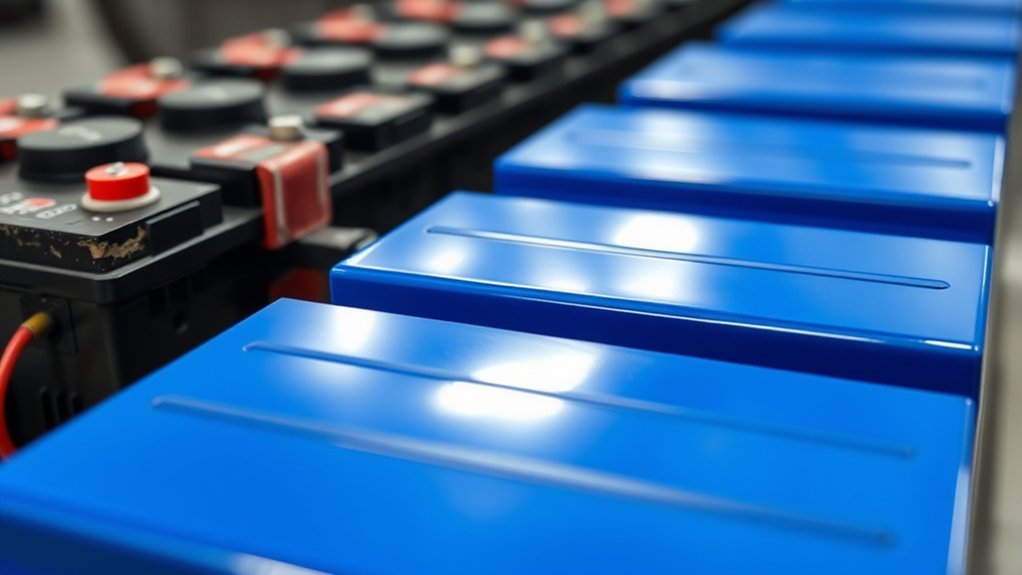
To determine if your current battery system is compatible with LiFePO4, we need to assess voltage compatibility to guarantee proper system operation. Physical size and form factor also matter, as LiFePO4 batteries often differ in dimensions from lead-acid units. Additionally, verifying that your charging system meets LiFePO4-specific requirements is essential for safe and efficient performance.
Voltage Compatibility Checks
Determining whether your existing battery system can support LiFePO4 requires a precise examination of voltage compatibility. LiFePO4 cells typically operate at a nominal voltage of 3.2V per cell, with a fully charged voltage around 3.6V to 3.65V, which differs from lead acid batteries’ 2V to 12V configurations. You need to verify that your system’s voltage limits align with these ranges to prevent overvoltage or undervoltage issues. Proper matching ensures safe operation and ideal performance, while also supporting sustainable practices like battery recycling, minimizing environmental impact. An incompatible voltage setup can lead to premature battery failure, increasing waste and environmental harm. Consequently, thorough voltage compatibility checks are essential before shifting from lead acid to LiFePO4, ensuring both system integrity and ecological benefits.
Physical Size Considerations
Evaluating physical size compatibility is essential when considering a switch from lead acid to LiFePO4 batteries, as differences in cell dimensions and configuration can impact system integration. LiFePO4 cells typically have more uniform physical dimensions, often allowing for more efficient packing within existing enclosures. We must compare the physical dimensions of the new batteries to the current lead acid units to confirm proper fit and mounting. Additionally, weight differences are significant; LiFePO4 batteries usually weigh less for the same capacity, which can influence overall system design and structural support requirements. Any discrepancies in size or weight may necessitate modifications to battery trays, mounting brackets, or compartment dimensions. Careful assessment guarantees seamless integration, avoiding potential mechanical or safety issues.
Charging System Requirements
When considering a switch from lead acid to LiFePO4 batteries, evaluating the compatibility of your existing charging system becomes paramount. LiFePO4 batteries require specific charging profiles to guarantee safety, longevity, and maximum performance. Key considerations include:
- Charge Voltage Settings – Verify your charger can deliver a proper voltage cutoff for LiFePO4 chemistry, typically around 3.65V per cell.
- Charge Rate Compatibility – Verify that your charger’s current limits align with the recommended charge rates for LiFePO4 batteries.
- Battery Management System (BMS) – Confirm your system integrates a suitable BMS to protect against overcharging and deep discharging.
- Environmental Impact & Recycling – Use chargers that support battery recycling initiatives, reducing environmental impact. Compatibility reduces waste and promotes sustainable battery lifecycle management.
How Do I Determine If Replacing Is Cost-Effective?
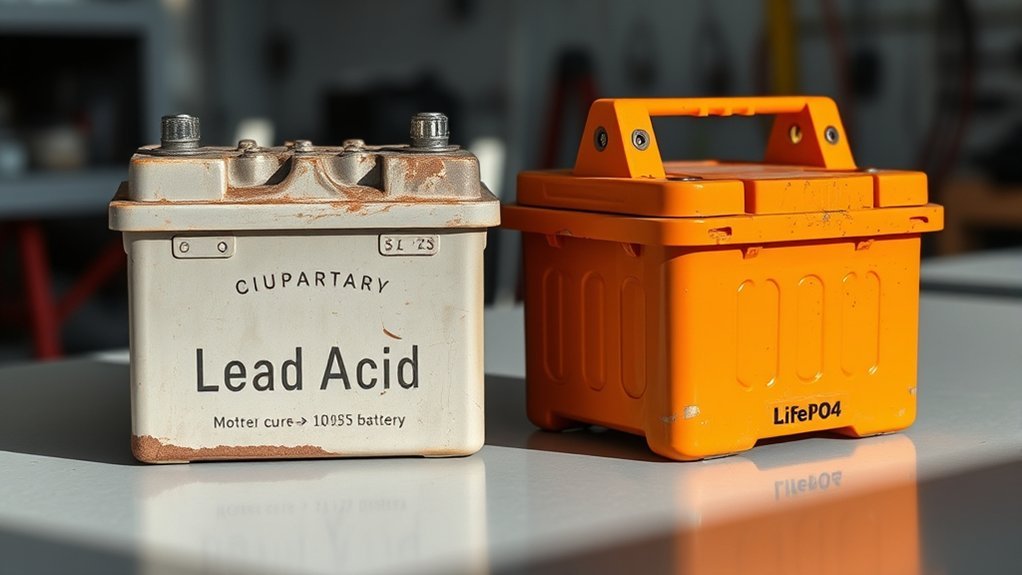
To determine if replacing a battery is cost-effective, we need to compare initial investment costs with long-term savings from lower maintenance and higher efficiency. Analyzing battery lifespan and performance metrics helps clarify whether the higher upfront cost of Lifepo4 justifies its durability gains over lead-acid options. Ultimately, a detailed cost-benefit assessment guarantees informed decisions aligned with operational needs.
Initial Investment Comparison
Determining whether replacing a lead-acid battery with a LiFePO4 system is cost-effective requires a detailed comparison of initial investment costs versus long-term savings. First, compare purchase prices: LiFePO4 batteries typically have higher upfront costs but offer greater cycle life. Second, consider the environmental impact: LiFePO4 batteries are more sustainable, with less toxic waste and easier battery recycling. Third, evaluate the efficiency gains, as LiFePO4 systems often provide better charge retention and reduced energy losses. Fourth, analyze the residual value and potential rebates or incentives for eco-friendly technology. These factors help clarify if the higher initial investment balances out through savings, environmental benefits, and reduced disposal costs over the system’s lifespan.
Long-Term Maintenance Costs
Evaluating long-term maintenance costs involves analyzing the ongoing expenses associated with battery health, performance, and replacement frequency over its lifespan. Lifepo4 batteries typically require less frequent replacements due to higher cycle durability, reducing overall replacement costs. Additionally, their design facilitates easier battery recycling, minimizing environmental impact and long-term disposal expenses. In contrast, lead acid batteries demand regular maintenance such as watering and equalization, which adds to operational costs. Considering the environmental impact, Lifepo4 batteries are more sustainable, with fewer hazardous materials needing disposal. When determining cost-effectiveness, it’s essential to factor in potential savings from reduced maintenance, longer lifespan, and eco-friendly recycling options. These elements collectively influence the total cost of ownership and sustainability over the battery’s operational life.
Battery Lifespan and Efficiency
Determining whether replacing a battery is cost-effective hinges on understanding its remaining lifespan and efficiency. Lifepo4 batteries generally offer a longer cycle life than lead-acid, making them potentially more economical over time. To assess this, consider:
- Remaining charge cycles relative to manufacturer claims
- Efficiency in energy transfer and minimal self-discharge rates
- Overall environmental benefits, including reduced waste and longer usage periods
- Recycling processes, which are less invasive for Lifepo4 and reduce environmental impact
What Modifications Are Needed to Switch to LiFePO4 Batteries?
Switching to LiFePO4 batteries requires several critical modifications to existing systems to guarantee compatibility and peak performance. First, the charge controller must be replaced or upgraded to accommodate the different charging profile of LiFePO4 cells, preventing overcharging and ensuring longevity. Additionally, the battery management system (BMS) needs updating to monitor voltage, current, and temperature accurately, safeguarding against thermal runaway. Wiring and connectors may also require adjustments to handle higher discharge rates safely. From an environmental perspective, proper disposal and battery recycling protocols are essential, as LiFePO4 batteries pose different recycling challenges than lead acids. These modifications not only optimize performance but also minimize environmental impact, making the switch both technically sound and environmentally responsible.
How Does Battery Capacity and Voltage Compare Between the Two Types?
When comparing the capacity and voltage of lead acid and LiFePO4 batteries, it becomes evident that each type offers distinct characteristics suited to different applications. The battery chemistry of LiFePO4 provides higher energy density and more consistent voltage stability throughout discharge cycles. Specifically:
- Lead acid batteries typically have a lower usable capacity due to voltage sag under load.
- LiFePO4 batteries maintain a nearly constant voltage close to 3.2V per cell, enhancing efficiency.
- The nominal voltage of lead acid batteries is around 2V per cell, whereas LiFePO4 cells are standardized at 3.2V.
- For equivalent capacity, LiFePO4 batteries often require fewer cells, resulting in compact, lightweight designs with superior voltage stability.
What Are the Safety Considerations When Using LiFePO4?
LiFePO4 batteries are generally considered safer than other lithium-ion chemistries due to their stable chemical structure, but safety precautions remain vital during handling and use. Proper management minimizes risks like thermal runaway, which is less common with LiFePO4 but still possible if damaged or improperly charged. Safety standards emphasize correct installation, use of protective circuitry, and avoiding overcharging or deep discharging. Responsible battery recycling is essential to mitigate environmental impact, as improper disposal can release harmful materials. Additionally, adherence to safety protocols reduces risks to personnel and the environment. While LiFePO4 batteries are inherently safer, extensive safety practices ensure maximum performance and environmental sustainability, emphasizing the importance of proper handling, recycling, and disposal procedures.
How Long Do LiFePO4 Batteries Last Compared to Lead-Acid?
LiFePO4 batteries generally outperform lead-acid batteries in regard to lifespan, primarily due to their more stable chemical composition and deeper cycle capability. They typically last 2,000 to 5,000 cycles, compared to 500-1,000 cycles for lead-acid. This extended lifespan reduces frequency of replacements, impacting battery recycling processes and minimizing environmental impact.
Key differences include:
- Cycle Life: LiFePO4 offers considerably more charge-discharge cycles.
- Degradation Rate: Lead-acid batteries degrade faster, shortening effective lifespan.
- Environmental Impact: Longer lifespan means fewer batteries disposed of, easing waste concerns.
- Cost Efficiency: Lower replacement frequency enhances long-term economic sustainability.
Can LiFePO4 Batteries Improve My System’s Efficiency and Performance?
Upgrading to LiFePO4 batteries can substantially enhance your system’s efficiency and overall performance due to their higher energy density and improved charge acceptance. These batteries deliver more consistent power output and faster charging cycles, reducing energy loss. Additionally, their longer lifespan minimizes replacement frequency, positively impacting environmental impact through reduced battery waste. Proper recycling practices further mitigate environmental concerns associated with battery disposal. Here’s a comparison of key parameters:
| Aspect | LiFePO4 | Lead Acid |
|---|---|---|
| Energy Density | Higher (Wh/kg) | Lower |
| Charge Acceptance | Faster | Slower |
| Lifespan | Longer | Shorter |
| Environmental Impact | Lower (recyclable) | Higher (hazardous waste) |
This technical edge makes LiFePO4 a strategic choice for system efficiency and sustainability.
What Are the Common Challenges and How Can I Address Them?
While LiFePO4 batteries offer notable advantages, they also present specific challenges that users must address to maximize their benefits. These include managing thermal stability, ensuring proper charging protocols, addressing the environmental impact, and implementing effective battery recycling.
- Thermal management is critical for safety and longevity, requiring adequate cooling systems.
- Correct charging is essential to prevent capacity loss and degradation.
- Environmental impact concerns necessitate responsible disposal practices, emphasizing battery recycling.
- As the technology advances, improving recycling processes helps reduce waste and environmental footprint.
Addressing these challenges guarantees peak performance and sustainability, making LiFePO4 a viable alternative to lead-acid batteries while minimizing ecological harm. Proper handling and disposal are key to harnessing their full potential.
Frequently Asked Questions
Are Lifepo4 Batteries Suitable for All Climate Conditions?
Lifepo4 batteries exhibit strong climate adaptability and temperature resilience, making them suitable across diverse environments. Their stable chemistry guarantees consistent performance despite temperature fluctuations, providing reliable energy storage even in extreme climate conditions.
How Do Lifepo4 Batteries Impact Recycling and Environmental Disposal?
We find that LiFePO4 batteries, due to eco-friendly battery manufacturing and more streamlined recycling processes, notably reduce hazardous waste, making disposal safer and more sustainable compared to traditional lead-acid batteries.
Can I Install Lifepo4 Batteries Myself or Need Professional Help?
We believe installing Lifepo4 batteries is straightforward but requires careful attention to installation safety and proper battery maintenance; rushing could cause damage or safety hazards, so consulting a professional guarantees ideal performance and peace of mind.
What Warranties Are Typically Offered With Lifepo4 Batteries?
We find that LiFePO4 batteries typically offer warranties of 5 to 10 years, reflecting their longer battery lifespan. Though initial costs are higher, the cost comparison favors them over time due to durability and extended performance.
Are There Any Compatibility Issues With Existing Battery Chargers?
We find Lifepo4 batteries generally compatible with existing chargers, but their specific voltage and charge profiles may impact battery capacity and charging cycles; verifying charger specifications guarantees ideal performance and longevity when replacing lead-acid batteries.
Conclusion
Moving from lead-acid to LiFePO4 batteries is like upgrading from a steady, old engine to a sleek, high-performance vehicle—offering smoother operation, longer journeys, and enhanced safety. While the switch requires careful planning and system adjustments, the potential benefits in longevity and efficiency are substantial. With proper evaluation and modifications, you can navigate the shift confidently, ensuring your system runs more reliably and efficiently—driving your energy needs toward a brighter, more resilient horizon.