Imagine a well-orchestrated dance where electrons and ions move seamlessly between two partners—this is how Lifepo4 batteries store and release energy. We’ll explore the intricate chemistry and key components that enable this process, revealing what sets these batteries apart from traditional lithium-ion cells. Understanding how they operate not only explains their safety and longevity but also uncovers their potential limitations. Join us as we dissect the mechanics behind this advanced energy storage technology.
Key Takeaways
- Lithium ions migrate between cathode (lithium iron phosphate) and anode (graphite) during charging and discharging processes.
- Electrons flow externally to power devices as lithium ions intercalate or de-intercalate from electrode structures.
- The stable phosphate lattice in the cathode ensures consistent voltage and reduces thermal risks.
- Electrolyte facilitates ion transfer between electrodes, impacting efficiency and lifespan.
- The chemistry’s inherent stability enhances safety, cycle life, and resistance to overheating.
How Do Lifepo4 Batteries Store and Release Energy?
Lifepo4 batteries store and release energy through a series of electrochemical reactions involving lithium ions moving between the anode and cathode during charging and discharging cycles. During charging, lithium ions migrate from the cathode to the anode, embedding into the electrode’s structure. Conversely, discharging reverses this flow, releasing electrons to power external devices. The manufacturing processes for Lifepo4 batteries emphasize material stability and safety, enabling efficient energy transfer. Recycling initiatives are critical, as they recover valuable materials like lithium and iron phosphate, reducing environmental impact and supporting sustainable production. Advances in battery recycling contribute to a circular economy, ensuring that raw materials are reused effectively. This integration of recycling with optimized manufacturing processes enhances the durability and sustainability of Lifepo4 batteries, making them a reliable energy storage solution.
What Are the Key Components of a Lifepo4 Battery?
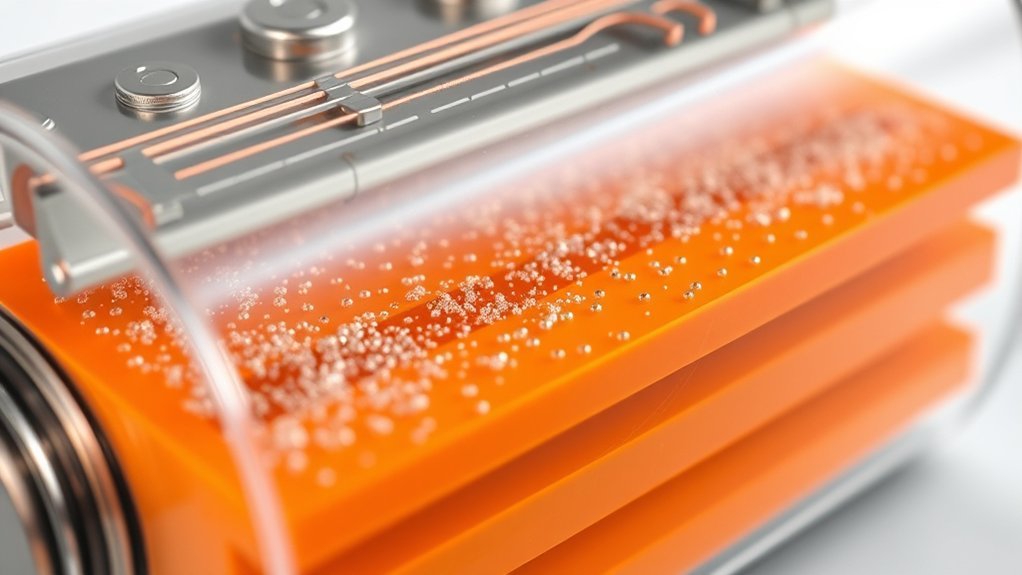
Understanding the key components of a Lifepo4 battery is essential for appreciating its performance and safety. The battery casing provides structural integrity, protecting internal elements from physical damage, environmental factors, and ensuring safety during operation. Inside, the core components include the electrodes—comprising a cathode made of lithium iron phosphate and an anode typically of graphite—and the electrolyte, whose composition is critical for ion transfer. The electrolyte, usually a lithium salt dissolved in an organic solvent, facilitates the movement of lithium ions between electrodes during charge and discharge cycles. Precise electrolyte composition impacts efficiency, thermal stability, and lifespan. Together, these components work harmoniously to deliver reliable, safe energy storage, with each element’s design and material selection playing an essential role in overall battery performance.
How Does the Chemistry of Lifepo4 Batteries Differ From Traditional Lithium-Ion?
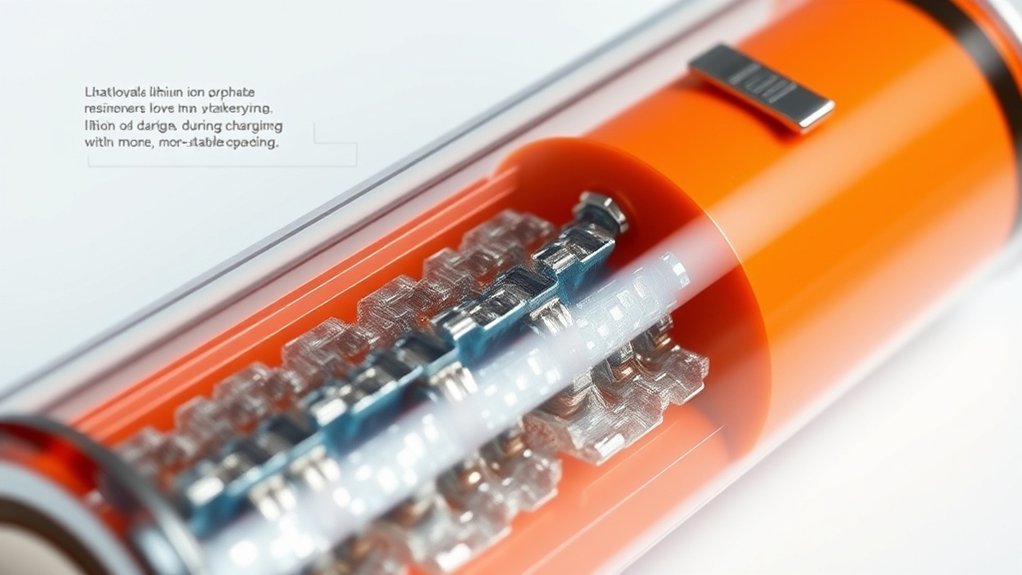
The core difference in chemistry between Lifepo4 batteries and traditional lithium-ion cells lies in their cathode material, which influences both performance and safety. Lifepo4’s cathode, composed of lithium iron phosphate, offers superior thermal stability, reducing risks of thermal runaway. This distinct chemistry enhances safety margins while maintaining reliable energy storage characteristics.
Cathode Material Composition
Unlike traditional lithium-ion batteries that utilize cobalt or nickel-based cathodes, Lifepo4 batteries employ a cathode composed of lithium iron phosphate. This distinct electrode structure impacts the overall electrochemical behavior. The lithium iron phosphate lattice provides a stable framework, reducing voltage fluctuations during charge/discharge cycles. The electrolyte composition works synergistically with this cathode, facilitating efficient lithium-ion transport without compromising stability. Key features include:
- Robust electrode structure enhances cycle life and safety.
- Electrolyte composition ensures high ionic conductivity and minimal degradation.
- The phosphate-based cathode minimizes thermal runaway risks.
- Structural stability contributes to consistent performance over time.
This chemistry difference results in a more durable, safer battery, with electrode and electrolyte interactions central to its reliability.
Thermal Stability Advantages
The inherent chemistry of Lifepo4 batteries grants them superior thermal stability compared to traditional lithium-ion batteries. This advantage stems from their robust chemical structure, which enhances thermal regulation and heat resistance. Unlike cobalt-based cathodes, Lifepo4’s phosphate compounds do not decompose or release oxygen at elevated temperatures, reducing the risk of thermal runaway. This stability means the batteries maintain consistent performance under high temperatures and are less prone to overheating or combustion. Consequently, Lifepo4 batteries offer better heat resistance and safer operation in demanding environments. Their ability to effectively manage heat and resist thermal degradation makes them ideal for applications where thermal stability is critical, providing both reliability and safety through inherent chemical properties.
What Happens During a Lifepo4 Battery Charge and Discharge Cycle?
During a Lifepo4 battery’s charge and discharge cycle, electrochemical processes facilitate the movement of lithium ions between the cathode and anode, enabling energy storage and release. During charging, lithium ions migrate from the cathode to the anode, storing energy through intercalation. Conversely, during discharge, these ions move back to the cathode, releasing stored energy to power devices. This process involves precise electron flow and ion diffusion. Key aspects include:
- Stable voltage profile during cycling, ensuring consistent performance
- Minimal capacity fade, extending battery lifespan
- Environmental considerations like battery recycling to reduce waste
- Lower environmental impact compared to other chemistries, due to fewer toxic materials
Understanding these processes highlights Lifepo4’s efficiency and sustainability in energy storage systems.
Why Are Lifepo4 Batteries Considered Safer and Longer-Lasting?
The inherent thermal stability of Lifepo4 batteries reduces the risk of overheating and thermal runaway, making them safer for various applications. Their stable chemical composition minimizes degradation over charge cycles, extending overall lifespan. These factors collectively contribute to their reputation as safer and more durable energy storage solutions.
Enhanced Thermal Stability
Because Lifepo4 batteries exhibit inherently stable chemical properties, they resist overheating and thermal runaway more effectively than other lithium-ion chemistries. This enhanced thermal stability stems from their robust crystal structure, which minimizes the risk of dangerous heat buildup. Additionally, their manufacturing processes prioritize thermal management, reducing defect risks that could lead to instability. Their stable chemistry allows for safer battery recycling, since fewer hazardous byproducts are produced during disposal. Key factors include:
- Tight control over cell temperature during manufacturing
- Use of thermally stable cathode materials
- Reduced propensity for dendrite formation
- Improved safety margins in high-temperature environments
These qualities contribute to their longer lifespan and safer operation, making Lifepo4 batteries a resilient choice for various applications.
Stable Chemical Composition
Lifepo4 batteries are regarded as safer and longer-lasting primarily due to their inherently stable chemical composition. This stability stems from their electrolyte composition, which minimizes the risk of thermal runaway and dendrite formation. Unlike other lithium-ion chemistries, Lifepo4’s electrode materials are more resistant to overcharging and high temperatures, reducing degradation over time. Manufacturing processes also play a vital role, ensuring consistent material quality and precise cell assembly, which enhances chemical stability. These processes mitigate impurities and defects that could compromise performance. Consequently, the combination of a stable electrolyte composition and rigorous manufacturing standards results in batteries that maintain their capacity longer and operate with reduced safety concerns, making Lifepo4 a reliable choice for demanding applications.
How Do Temperature and Usage Affect Lifepo4 Battery Performance?
Temperature and usage patterns considerably influence Lifepo4 battery performance, affecting both capacity retention and lifespan. Environmental factors, such as ambient temperature fluctuations, directly impact chemical stability and internal resistance. Consistent manufacturing quality guarantees predictable performance, but variability can exacerbate temperature sensitivity. High temperatures accelerate electrolyte decomposition, reducing lifespan, while cold conditions hinder chemical reactions, decreasing efficiency. Frequent deep discharges and high current draws induce thermal stress, accelerating capacity fade. Proper thermal management is vital to mitigate these effects, especially in environments with extreme temperature swings. Additionally, irregular usage patterns can lead to uneven aging, emphasizing the importance of consistent operational cycles. Understanding these factors allows for optimized battery management, prolonging lifespan and maintaining peak performance despite environmental challenges.
What Are Common Applications and Limitations of Lifepo4 Batteries?
Lifepo4 batteries are widely utilized across various industries due to their high safety profile, long cycle life, and stable chemical composition. Their applications include renewable energy storage, electric vehicles, and backup power systems, where reliability and longevity are vital. However, limitations exist; for example, their energy density is lower than other lithium-ion chemistries, which can restrict use in space-constrained applications. Additionally, cost comparison analyses often highlight higher initial costs, though this is offset by longer lifespan and reduced maintenance. Battery recycling is also a key factor—Lifepo4 batteries are more environmentally friendly and easier to recycle than other chemistries, yet efficient recycling infrastructure remains underdeveloped. Understanding these applications and limitations is essential for optimizing Lifepo4 battery deployment in the evolving energy landscape.
Frequently Asked Questions
How Long Do Lifepo4 Batteries Typically Last Before Needing Replacement?
Lifepo4 batteries generally last between 2,000 to 5,000 charging cycles, maintaining substantial battery capacity throughout. Their lifespan depends on usage patterns, charging practices, and environmental conditions, making proper maintenance essential for longevity.
Can Lifepo4 Batteries Be Recycled Safely?
Absolutely, Lifepo4 batteries can be recycled safely, reducing environmental impact. Battery recycling involves breaking down components for reuse, minimizing hazardous waste, and promoting sustainability—making it a responsible choice for eco-conscious users and the planet.
What Are the Most Common Signs of Lifepo4 Battery Failure?
We observe Lifepo4 battery failure through signs like capacity loss, voltage drops, and increased internal resistance, often linked to improper charging protocols or battery chemistry degradation. These indicators help us diagnose issues early and maintain ideal performance.
How Do Lifepo4 Batteries Perform in Extreme Weather Conditions?
Like a seasoned sailor, Lifepo4 batteries navigate extreme weather with impressive resilience. Their temperature robustness and weather adaptability ensure stable performance in cold or hot conditions, making them reliable across diverse environments, even under harsh climatic challenges.
Are There Any Environmental Concerns With Lifepo4 Battery Disposal?
We recognize that LiFePO4 battery disposal raises environmental concerns due to hazardous materials; adhering to strict disposal regulations is essential. Battery manufacturing impacts sustainability, and proper disposal minimizes ecological risks, ensuring responsible lifecycle management for these batteries.
Conclusion
In conclusion, understanding how LiFePO4 batteries operate reveals their reliability and safety. Their stable chemistry and efficient energy transfer make them a smart choice for various applications. While they aren’t perfect and have limitations, their benefits often outweigh the drawbacks. As we continue to explore their potential, it’s clear that these batteries are here to stay—proving that sometimes, the best things come in small, well-designed packages.