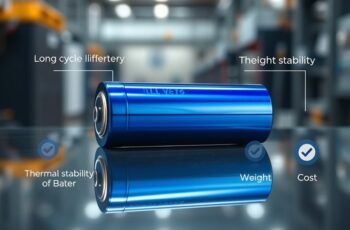
Did you know that Lifepo4 batteries can last over 2,000 charge cycles, making them a durable choice for energy storage? While they offer significant safety and environmental benefits, their higher initial costs and larger size raise questions for many users. Understanding the nuanced pros and cons is essential before committing, especially as technology and application needs evolve. We’ll explore these factors to help you determine if Lifepo4 batteries are right for your specific requirements.
Key Takeaways
- Lifepo4 batteries offer high safety, stable chemistry, and resistance to thermal runaway, reducing fire risks.
- They provide long cycle life, often exceeding 2000 cycles, with minimal capacity loss over years of use.
- The batteries are environmentally friendly, containing no toxic heavy metals and being easily recyclable.
- Higher initial costs and larger physical size can be drawbacks compared to other battery types.
- Proper maintenance and compatible charging systems are essential to maximize lifespan and performance.
What Are Lifepo4 Batteries and How Do They Work?
Lifepo4 batteries, also known as lithium iron phosphate batteries, are a type of rechargeable lithium-ion battery characterized by their use of iron phosphate as the cathode material. These batteries operate through lithium-ion transfer between the cathode and anode during charge and discharge cycles. Their unique chemistry offers improved thermal stability and safety compared to other lithium-ion chemistries. Manufacturing processes for Lifepo4 batteries emphasize precise control over material synthesis, which impacts performance and longevity. Additionally, their recyclability is a key factor—efficient battery recycling helps recover valuable materials and reduces environmental impact. The design of Lifepo4 batteries facilitates easier recycling, aligning with sustainable practices. Overall, understanding these core aspects underscores their reliability and the importance of optimized manufacturing processes in ensuring consistent performance.
Benefits of Choosing Lifepo4 Batteries for Your Energy Needs
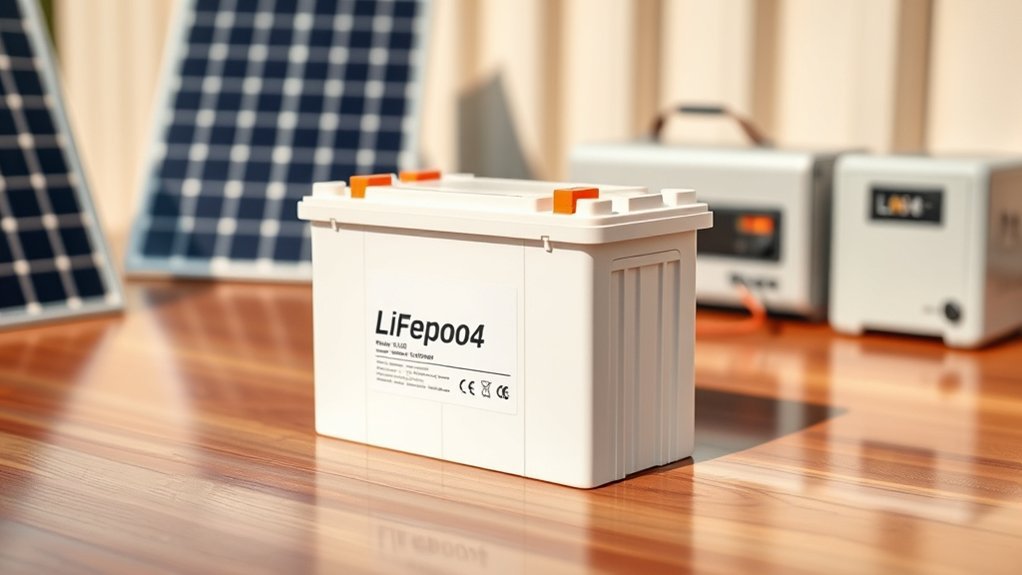
Choosing Lifepo4 batteries offers significant advantages due to their long cycle life, which guarantees sustained performance over extensive charge-discharge cycles. Their enhanced safety features reduce risks associated with thermal runaway and fires, making them a reliable energy source. Additionally, their high energy density allows for compact, efficient storage solutions across various applications.
Long Cycle Life
Because of their advanced chemical composition, Lifepo4 batteries deliver an exceptional cycle life that surpasses many other lithium-ion variants, often exceeding 2000 cycles with minimal capacity loss. This durability translates into long-term reliability, reducing the frequency of replacements and associated waste. Their longevity also benefits battery recycling efforts, as fewer replacements mean less environmental impact and resource extraction. The extended cycle life minimizes the end-of-life disposal concerns, supporting more sustainable energy solutions. Additionally, the stable chemistry of Lifepo4 reduces degradation over time, ensuring consistent performance throughout its lifespan. This combination of longevity and sustainability makes Lifepo4 batteries a compelling choice for those prioritizing both operational efficiency and environmental responsibility.
Enhanced Safety Features
Have you considered how safety features play a critical role in battery selection? Lifepo4 batteries are inherently safer due to their chemical stability, reducing risks of thermal runaway. Their design minimizes potential hazards, which impacts battery maintenance by lowering the need for complex safety protocols. Key safety advantages include:
- Non-flammable electrolyte—reduces fire risk during misuse or failure.
- Stable chemical composition—resists overcharging and discharging damage.
- Low risk of explosion or leakage—protects users and the environment.
- Reduced environmental impact—safer disposal and recycling processes.
These features make Lifepo4 batteries a reliable choice for energy storage, emphasizing safety and environmental responsibility. Their resilience minimizes safety concerns, streamlines maintenance, and aligns with sustainable practices.
High Energy Density
Lifepo4 batteries stand out for their impressive energy density, enabling them to store more power within a compact form factor. This high energy density results from optimized manufacturing processes that improve electrode material utilization and cell design, maximizing storage capacity. Such efficiency reduces the overall size and weight of battery packs, making them ideal for space-constrained applications. Additionally, the inherent stability of Lifepo4 chemistry simplifies battery recycling, facilitating safer and more sustainable end-of-life management. The manufacturing processes used in Lifepo4 production prioritize longevity and safety, which also contribute to maintaining high energy density over multiple charge cycles. Overall, these factors make Lifepo4 batteries a compelling choice for those seeking reliable, high-capacity energy storage solutions.
What Are the Main Drawbacks of Lifepo4 Batteries?
While Lifepo4 batteries offer many advantages, their higher initial cost can be a significant barrier for large-scale applications. Additionally, their limited energy density means they are less suitable where space and weight are critical factors. Understanding these drawbacks helps in evaluating their overall suitability for specific energy storage needs.
Higher Cost Compared to Alternatives
Although Lifepo4 batteries offer numerous advantages, their higher initial cost remains a significant barrier for many consumers and businesses. The cost comparison with alternatives like lead-acid or lithium-ion batteries often reveals a premium price. This higher cost impacts budget planning and project feasibility. Additionally, installation challenges can add to expenses, as specialized equipment or expertise may be required. Key drawbacks include:
- Elevated upfront investment, making initial purchase less accessible.
- Increased costs for compatible charging systems and management units.
- Potential need for reinforced enclosures due to higher voltage requirements.
- Longer-term savings may be offset by initial price, affecting overall ROI.
These factors emphasize that, despite their benefits, Lifepo4 batteries demand careful financial and logistical evaluation before adoption.
Limited Energy Density
Despite their many advantages, Lifepo4 batteries are limited by their relatively low energy density compared to other lithium-ion chemistries. This constraint affects their overall energy storage capacity, making them less suitable for applications demanding high battery capacity in compact forms. The lower energy density results from the material’s intrinsic properties, which restrict the amount of energy stored per unit volume or weight. Consequently, Lifepo4 batteries require larger physical space to deliver equivalent energy compared to alternatives like NMC or NCA chemistries. This limitation impacts their use in portable devices or situations where space and weight are critical. While they excel in safety and cycle life, their energy storage capacity remains a key drawback, particularly in high-demand applications.
How Do Lifepo4 Batteries Compare to Traditional Lithium-Ion Options?
Lifepo4 batteries distinguish themselves from traditional lithium-ion options through their unique chemical composition, which offers notable advantages in safety and longevity. They typically feature a more stable chemistry, reducing risks of thermal runaway. When comparing performance metrics, Lifepo4 batteries excel in:
Lifepo4 batteries offer superior safety, longer cycle life, and eco-friendly disposal compared to traditional lithium-ion options.
- Cycle life, often exceeding 2,000 charge cycles, compared to 500-1,000 for conventional lithium-ion.
- Safety, with lower flammability and thermal stability.
- Environmental impact, since Lifepo4 batteries are easier to recycle due to fewer toxic materials.
- Battery recycling, where Lifepo4’s stable chemistry simplifies disposal and minimizes environmental hazards. Overall, Lifepo4 batteries present a more sustainable choice, emphasizing durability and ecological responsibility over energy density, which remains a drawback relative to traditional lithium-ion options.
Are Lifepo4 Batteries Safe for Home and Outdoor Use?
Lifepo4 batteries are generally considered safe for both home and outdoor applications due to their inherent chemical stability and robust design. Their stable chemistry reduces the risk of thermal runaway, making them less prone to fires or explosions. From an environmental perspective, Lifepo4 batteries have a lower environmental impact because they contain no toxic heavy metals like cobalt or nickel. Additionally, their longer lifespan minimizes the frequency of battery recycling, reducing waste. When recycling is required, Lifepo4 batteries are easier to process safely compared to traditional lithium-ion types, thanks to their stable chemistry. Overall, their safety profile, combined with eco-friendly benefits, makes Lifepo4 batteries suitable for diverse outdoor and residential uses, ensuring both user safety and minimal environmental footprint.
What Factors Should You Consider When Buying a Lifepo4 Battery?
When selecting a lithium iron phosphate (LiFePO4) battery, understanding the key factors that influence performance and suitability is essential. First, evaluate the battery capacity and current rating to make certain it meets your power demands. Second, consider charging methods compatible with the battery, focusing on proper voltage and current control to optimize lifespan. Third, assess battery recycling options, as environmentally responsible disposal is critical for sustainable use. Fourth, examine cycle life and warranty terms, which reflect durability and manufacturer support. These factors collectively impact long-term reliability, safety, and environmental impact, making them indispensable in your decision-making process. Prioritizing these elements ensures you select a LiFePO4 battery that aligns with your technical needs and sustainability goals.
How Long Do Lifepo4 Batteries Typically Last?
Because of their robust chemistry and design, LiFePO4 batteries are known for their impressive lifespan, often outlasting other lithium-ion types when properly maintained. Typically, they deliver between 2,000 to 5,000 charge cycles, equating to 8 to 10 years of use in many applications. Their longevity is partly due to stable electrochemical properties and resistance to thermal degradation. Manufacturing processes that emphasize high-quality materials and precise assembly further extend their lifespan. Additionally, battery recycling plays an essential role in maintaining sustainability, ensuring that components can be repurposed or disposed of responsibly once the batteries reach end-of-life. Proper maintenance and understanding of these factors help maximize longevity, making LiFePO4 batteries a durable, environmentally conscious choice for long-term energy storage.
Is Investing in a Lifepo4 Battery Worth It for Your Budget?
Is investing in a LiFePO4 battery a financially sound decision for your budget? While the initial cost is higher than traditional batteries, the long-term savings often justify it. The durability of these batteries means fewer replacements, reducing overall expenditure. Additionally, proper charging protocols extend lifespan, and battery recycling efforts ensure environmental and economic benefits. Consider these points:
Investing in LiFePO4 batteries offers long-term savings through durability, proper care, and sustainable recycling.
- Higher upfront investment but lower lifecycle costs
- Extended cycle life reduces replacement frequency
- Adherence to charging protocols maximizes longevity
- Recycling supports sustainable disposal and potential cost recovery
These factors make LiFePO4 batteries a cost-effective choice in the long run, especially if you factor in maintenance and environmental considerations. Careful planning around charging and recycling can considerably impact your overall investment return.
Frequently Asked Questions
How Do Lifepo4 Batteries Perform in Extreme Temperatures?
We find Lifepo4 batteries exhibit excellent thermal stability and temperature resilience, maintaining performance in extreme conditions. Their ability to resist thermal runaway and operate efficiently across wide temperature ranges makes them reliable, especially in challenging environments.
Can Lifepo4 Batteries Be Recycled Easily?
Recycling Lifepo4 batteries is like unraveling a complex puzzle; their environmental impact is minimized due to a streamlined recycling process. We find that these batteries are relatively easy to recycle, reducing waste and promoting sustainable energy storage.
What Maintenance Is Required for Lifepo4 Batteries?
We monitor voltage and temperature regularly to maximize battery lifespan and prevent degradation, considering cost considerations of maintenance versus replacement. Proper care guarantees ideal performance, safety, and longevity, making Lifepo4 batteries a reliable, cost-effective energy storage solution.
Are Lifepo4 Batteries Compatible With Existing Solar Systems?
We find Lifepo4 batteries compatible with many existing solar systems, but thorough battery safety assessments and cost comparison are essential to guarantee ideal integration, considering their stable chemistry, longevity, and potential compatibility issues with current inverter and management systems.
How Quickly Can Lifepo4 Batteries Be Recharged?
They say “time is of the essence,” and with Lifepo4 batteries, quick recharging is possible—typically within a few hours—thanks to high charging efficiency, which extends battery longevity and optimizes overall performance in energy storage systems.
Conclusion
In weighing the pros and cons of Lifepo4 batteries, we see a technology that’s both a steady ship in turbulent energy waters and a complex puzzle. While their safety, longevity, and eco-friendliness are compelling, higher upfront costs and size constraints warrant careful evaluation. Ultimately, choosing Lifepo4 is like planting a seed—nurturing it requires foresight, but the long-term harvest can power our future sustainably and reliably.