Did you know that charging LiFePO4 batteries correctly can substantially extend their lifespan and guarantee safe operation? Many users overlook the importance of adhering to specific voltage and temperature parameters, risking damage or reduced performance. Proper charging involves more than just plugging in a compatible charger; it requires precise procedures and monitoring. Understanding these details is vital, and mastering them can prevent costly mistakes—something we’ll explore in detail as we guide you through the essentials of LiFePO4 battery charging.
Key Takeaways
- Use a charger specifically designed for LiFePO4 batteries with proper CC/CV charging profiles.
- Keep voltage around 14.6V for 12V systems to prevent overcharging.
- Monitor temperature and voltage throughout charging to ensure safety and battery health.
- Avoid charging outside recommended temperature ranges to prevent degradation.
- Disconnect the battery promptly once fully charged to extend cycle life.
Understanding LiFePO4 Batteries and Their Charging Needs
Although LiFePO4 batteries are known for their stability and safety, understanding their specific charging requirements is essential for peak performance and longevity. The battery chemistry of LiFePO4 offers inherent thermal stability and a flat voltage curve, which influences charging protocols. Proper charging safety involves maintaining a consistent voltage cutoff, typically around 14.6V for a 12V system, to prevent overcharging. Unlike other chemistries, LiFePO4 cells require a precise charging current to avoid capacity loss or damage. Ensuring the correct charger is used, with controlled temperature and voltage regulation, is vital. By adhering to these specific charging parameters, we optimize the battery’s lifespan and performance while maintaining the safety standards integral to this chemistry.
How to Choose the Right Charger for Your LiFePO4 Battery
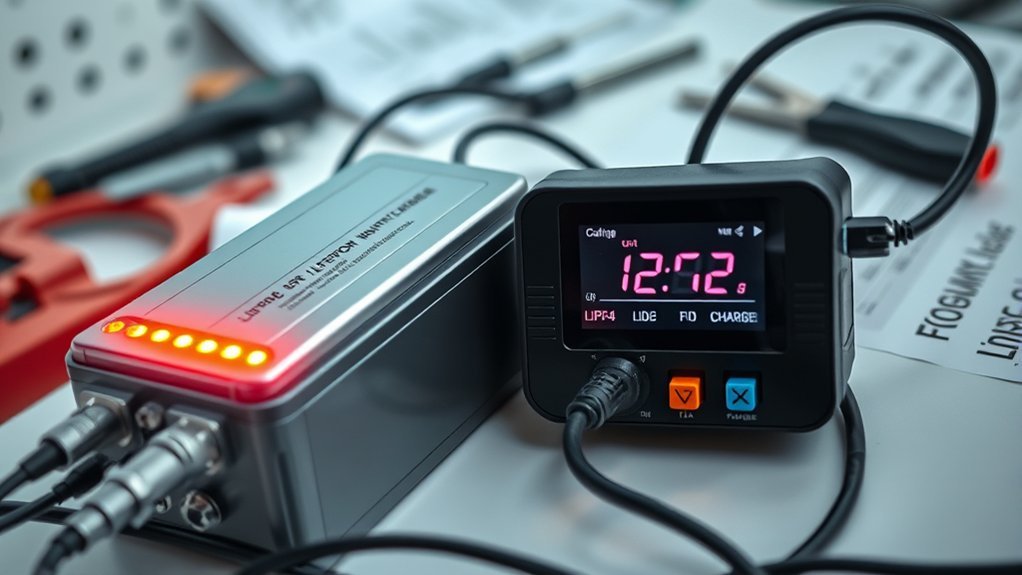
Selecting the appropriate charger for your LiFePO4 battery is vital to guarantee safe, efficient, and long-lasting performance. The charger must be compatible with the specific battery chemistry, designed to follow proper charging protocols that prevent overcharging or overheating. LiFePO4 batteries require chargers with a tailored voltage and current profile, typically involving a constant current/constant voltage (CC/CV) charging protocol. This ensures ideal cell balancing and longevity. Using a charger not rated for LiFePO4 chemistry can result in reduced cycle life or safety hazards. Hence, it’s important to verify that the charger explicitly states compatibility with LiFePO4 batteries and adheres to the recommended charging parameters to maintain battery health and performance.
Step-by-Step Guide to Proper LiFePO4 Charging Procedures
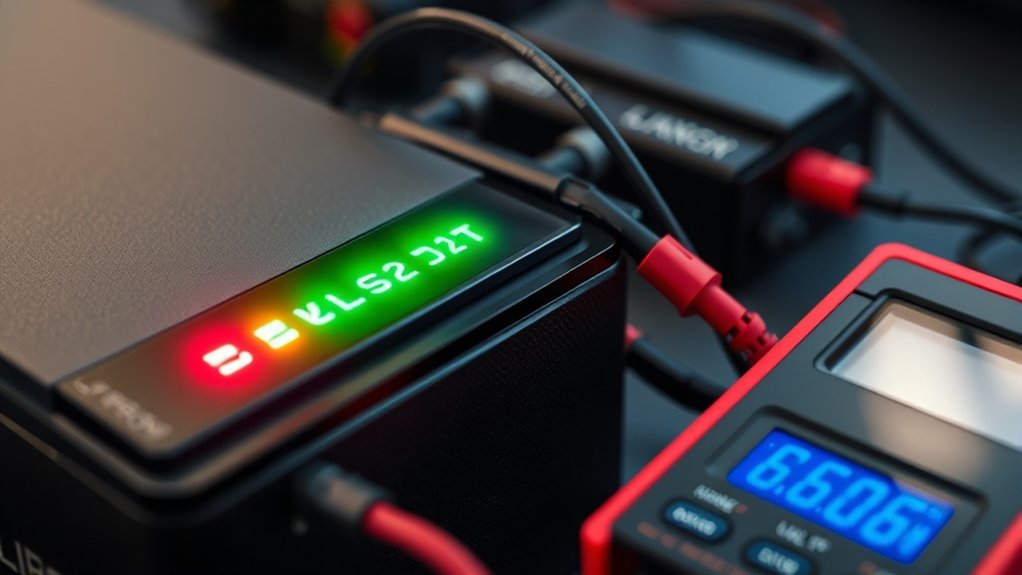
To guarantee your LiFePO4 battery performs at its best and maintains safety, following a precise charging procedure is necessary. First, ensure the charger is compatible and set to a proper charging profile, typically constant current followed by constant voltage. Monitor voltage levels carefully, avoiding overcharging, which can degrade the battery’s lifespan and increase environmental impact due to premature disposal. During charging, maintain ideal temperature conditions to prevent thermal stress. Once fully charged, disconnect the battery promptly to prevent overcharge. Responsible battery recycling is essential at end-of-life to minimize environmental impact. Proper charging and disposal procedures help extend battery life, reduce hazardous waste, and promote sustainable practices, ensuring safety and environmental stewardship throughout the lifecycle of your LiFePO4 battery.
Common Mistakes to Avoid When Charging LiFePO4 Batteries
Even small mistakes during the charging process can considerably impact the performance and longevity of LiFePO4 batteries. To guarantee effective operation, avoid these common errors:
- Overcharging – Continuously exceeding the recommended voltage can cause thermal stress, reduce cycle life, and hinder battery recycling efforts.
- Using incompatible chargers – Employing chargers not designed for LiFePO4 can compromise charging safety and damage cells.
- Ignoring temperature conditions – Charging outside the ideal temperature range accelerates degradation and may pose safety risks.
- Neglecting proper shutoff – Failing to disconnect or terminate charging at the correct voltage jeopardizes battery health and safety protocols.
Adhering to precise charging practices safeguards battery longevity, promotes safety, and supports responsible recycling.
How to Monitor and Maintain Your Battery During Charging
Monitoring and maintaining your LiFePO4 battery during charging is crucial to guarantee safety, optimize performance, and extend its lifespan. We recommend regularly checking voltage and temperature to prevent overcharging or overheating. Battery calibration is essential; perform a full charge cycle periodically to ensure accurate State of Charge (SOC) readings. Adjust charging speed based on battery condition and manufacturer guidelines, avoiding rapid charging that can stress cells. Consistent monitoring helps detect anomalies early, such as voltage imbalance or temperature spikes. Record charging parameters to track performance trends over time. Proper calibration and controlled charging speed maintain cell balance, optimize capacity, and prevent degradation. Adhering to these practices ensures reliable operation and prolongs your battery’s effective lifespan.
Troubleshooting Charging Issues and Ensuring Long Battery Life
When troubleshooting charging issues, we focus on diagnosing voltage irregularities and identifying faulty connections. Employing proper charging techniques guarantees ideal battery health and prevents damage, while implementing best practices helps maximize lifespan. By systematically addressing these points, we can maintain reliable performance and extend the longevity of LiFePO4 batteries.
Identifying Charging Problems
Identifying charging problems in LiFePO4 batteries requires careful observation of their behavior and voltage patterns, as early detection can prevent long-term damage. Variations from normal voltage curves may indicate issues related to battery chemistry or charging safety. Common signs include:
- Unexpected voltage drops during charging, suggesting internal resistance issues.
- Inconsistent charging times, reflecting potential cell imbalances.
- Overheating during charge, risking safety hazards and indicating faulty connections.
- Inability to reach full voltage, which may signal degraded capacity or cell failure.
Monitoring these signs helps diagnose problems early, maintaining the battery’s health and safety. Recognizing these symptoms allows us to implement corrective measures before severe damage occurs, preserving long-term performance and safety.
Proper Charging Techniques
To guarantee peak performance and longevity of LiFePO4 batteries, it’s essential to employ proper charging techniques that prevent issues and promote safety. Ensuring charger compatibility is critical; always select chargers designed specifically for LiFePO4 chemistry, with appropriate voltage and current ratings. Proper charging practices include maintaining a consistent charging rate and avoiding overcharging, which can lead to capacity loss. Regularly monitoring voltage levels helps prevent deep discharges that damage the cells. When batteries reach end-of-life, responsible battery recycling is crucial to minimize environmental impact and recover valuable materials. Adhering to manufacturer guidelines for charging parameters and using certified chargers enhances safety and system efficiency. Proper techniques not only optimize battery lifespan but also support sustainable practices through effective battery recycling.
Extending Battery Lifespan
Properly troubleshooting charging issues and implementing strategies to extend LiFePO4 battery lifespan are essential for maximizing performance and durability. Effective voltage regulation prevents overcharging and deep discharges, reducing capacity loss over time. To optimize lifespan, consider these steps:
- Regularly monitor voltage levels to avoid exceeding recommended limits.
- Use a charger with precise voltage regulation to prevent overvoltage conditions.
- Implement proper battery recycling practices to dispose of degraded cells responsibly.
- Maintain consistent charge and discharge cycles, avoiding deep discharges that accelerate aging.
Frequently Asked Questions
Can I Charge Lifepo4 Batteries With a Regular Lead-Acid Charger?
We advise against using a regular lead-acid charger for LiFePO4 batteries because different battery chemistries require specific charging profiles for safety and longevity, ensuring proper Charging safety and preventing potential damage or safety hazards.
How Long Does a Typical Lifepo4 Battery Take to Fully Charge?
A typical Lifepo4 battery takes about 3 to 4 hours to fully charge, depending on its capacity and charging efficiency. Larger capacity batteries require more time, but proper charging algorithms optimize efficiency and minimize charge time.
Is It Safe to Leave a Lifepo4 Battery on Charge Overnight?
Research shows Lifepo4 batteries can handle overnight charging safely if battery temperature remains within 0-45°C, preventing overheating. We recommend monitoring during the charging cycle to avoid potential thermal risks, ensuring ideal safety and battery longevity.
Do Lifepo4 Batteries Require a Special Charging Cable or Connector?
We confirm that Lifepo4 batteries don’t need a special charging cable; standard charging cable types with compatible connectors suffice. Make certain of connector compatibility, use quality cables, and follow manufacturer specifications to ensure safe, efficient charging without risking damage or safety hazards.
What Are the Signs of Overcharging a Lifepo4 Battery?
We observe overcharging in LiFePO4 batteries through rising battery temperature and voltage irregularities, like sudden spikes or inconsistent readings, which indicate potential damage. Monitoring these signs helps prevent battery failure and extends lifespan effectively.
Conclusion
While proper charging protocols for LiFePO4 batteries seem straightforward, neglecting detailed procedures can ironically shorten their lifespan. Even with advanced technology, overlooking regular monitoring or using incompatible chargers risks safety and performance. So, we can confidently say that following meticulous, manufacturer-recommended steps is the secret to longevity — because, after all, ignoring expert advice might just be the quickest way to compromise your investment. Precision and care truly make all the difference.