The difference in charging times between LiFePO4 and lead acid batteries can be staggering, often impacting operational efficiency more than we realize. While LiFePO4 batteries can reach full charge in just a few hours, lead acid batteries may require half a day or more. This stark contrast influences everything from energy management to downtime. Understanding these differences is essential for making informed choices, but the underlying factors and ideal practices are complex—so, we should explore them further.
Key Takeaways
- LiFePO4 batteries typically fully charge in 2–4 hours, whereas lead acid batteries take 8–16 hours.
- LiFePO4 supports higher charging currents (2C–3C), enabling faster recharge times compared to lead acid (around 0.2C).
- Cold temperatures slow down lead acid recharging more significantly than LiFePO4.
- Proper charging protocols and temperature management are essential for optimal charging times for both chemistries.
- LiFePO4’s faster charging reduces downtime, making it more suitable for high-turnaround applications.
How Do Lifepo4 and Lead Acid Batteries Differ in Charging Time?
Although both LiFePO4 and lead acid batteries serve similar purposes, their charging times differ markedly due to their distinct chemical properties and internal resistances. LiFePO4 batteries typically charge faster because of lower internal resistance, enabling higher charge rates without compromising safety. This results in reduced charging durations and increased operational efficiency. Conversely, lead acid batteries have higher internal resistance, which limits their maximum charge rate and prolongs charging times. When considering battery lifespan, LiFePO4 batteries generally outperform lead acid options, maintaining capacity over more charge cycles, which can offset higher upfront costs. The cost comparison reveals that, despite higher initial investment, LiFePO4 batteries tend to be more economical long-term due to their longevity and faster charging capabilities, reducing maintenance and downtime.
What Factors Influence Battery Charging Speeds?
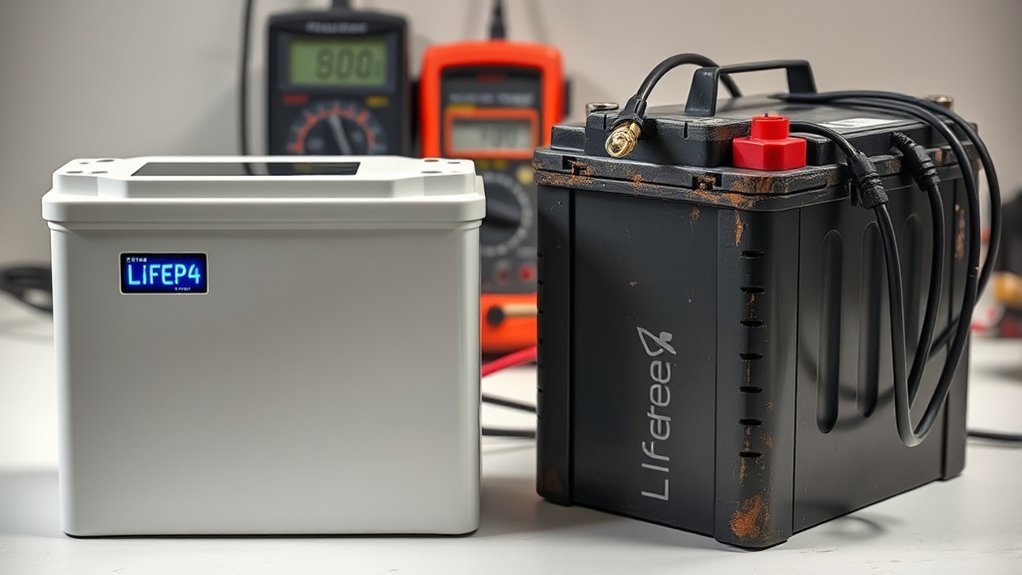
Several factors directly impact the speed at which batteries can be charged, extending beyond their chemical composition. These include current regulation, temperature, and the battery’s design, all affecting charge efficiency and battery longevity. For instance, higher charging currents can reduce time but may compromise battery health if not properly managed. Temperature fluctuations influence chemical reactions and impact charging speed, with extreme temperatures risking damage. Additionally, the quality of charging infrastructure impacts both speed and safety, especially for fast charging.
| Factor | Effect on Charging Speed | Consideration |
|---|---|---|
| Charging current | Quicker charging, potential harm | Balance for longevity and efficiency |
| Temperature | Ideal range accelerates process | Avoid extremes to preserve battery life |
| Infrastructure quality | Enables rapid, safe charging | Ensures consistent performance |
Typical Charging Times for Lifepo4 Batteries
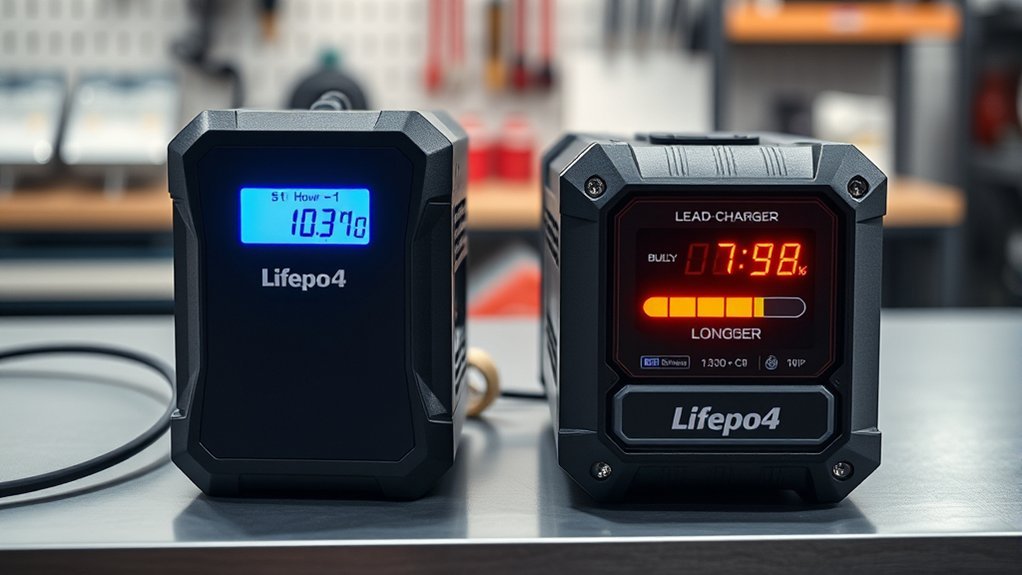
Lifepo4 batteries are known for their fast charging capabilities, which can considerably reduce downtime. Typically, they charge fully within 2 to 4 hours under ideal conditions, depending on capacity and charger specifications. Several factors, including current rate and temperature, influence these charging times and must be carefully managed for efficiency.
Fast Charging Capabilities
Fast charging capabilities greatly influence the practicality of Lifepo4 batteries, as they can typically be recharged in a matter of hours or less, depending on capacity and charger specifications. This rapid recharge potential minimizes downtime, enhancing operational efficiency. Importantly, high charging rates do not compromise battery lifespan when proper charge protocols are followed, as Lifepo4 chemistries are inherently robust. Charging safety is paramount; specialized chargers with integrated voltage and current regulation ensure safe fast charging, preventing thermal runaway or overcurrent conditions. These safety features preserve battery integrity over repeated cycles, maintaining peak performance. Consequently, Lifepo4’s fast charging capabilities facilitate quick turnaround times without sacrificing longevity or safety, making them suitable for applications demanding rapid recharge cycles.
Typical Charging Duration
Typically, the charging duration for Lifepo4 batteries depends on their capacity and the current supplied by the charger. For standard applications, a 100Ah Lifepo4 battery generally charges fully within 4 to 6 hours using a charger set at 0.5C to 1C. This efficient charging process helps preserve battery lifespan by reducing stress and heat buildup. Proper maintenance routines, including regular voltage checks and avoiding overcharging, further extend the battery’s longevity. Unlike lead-acid batteries, Lifepo4 units tolerate faster charging without compromising cycle life, provided the correct parameters are maintained. Overall, typical charging times are predictable and optimized for minimal wear, making Lifepo4 batteries a reliable choice for applications requiring consistent, efficient power replenishment.
Factors Affecting Speed
Several key factors influence the charging speed of Lifepo4 batteries, impacting their overall cycle time. Battery durability plays a vital role; higher-quality cells tolerate faster charging rates without compromising lifespan, whereas lower-grade batteries may degrade prematurely. Charging infrastructure also considerably affects speed—advanced chargers with proper voltage regulation enable enhanced, rapid charging while safeguarding battery health. Additionally, the state of charge and temperature conditions impact charging efficiency; batteries charged at ideal temperatures and within recommended SOC ranges charge more swiftly. Proper management of these factors ensures maximum charging speed without sacrificing longevity. Understanding how battery durability and infrastructure interplay helps us select suitable charging systems and protocols, ultimately reducing downtime and enhancing the performance of Lifepo4 batteries.
How Long Do Lead Acid Batteries Take to Recharge?
Lead acid batteries typically require 8 to 16 hours to fully recharge, depending on their capacity and state of discharge. Recharge time is influenced by factors such as charger current, battery age, and temperature conditions. Understanding these variables helps optimize recharging efficiency and battery lifespan.
Typical Recharging Duration
Charging lead acid batteries generally requires a duration of 8 to 16 hours, depending on the battery’s capacity and the charger’s current output. Larger battery capacities extend recharge times, while higher current chargers can shorten this process. Typically, a full recharge restores the battery’s capacity after 3 to 5 charging cycles, though this varies with usage.
| Battery Capacity | Approximate Recharging Time |
|---|---|
| 50 Ah | 8–10 hours |
| 100 Ah | 10–12 hours |
| 200 Ah | 12–16 hours |
| 300 Ah | 14–16 hours |
Understanding these durations helps optimize charging schedules, ensuring full recharge without risking overcharge or damage.
Factors Influencing Recharge Time
The recharge time for lead acid batteries varies considerably based on multiple technical factors. Key among these are the battery’s capacity, state of charge, and the charging current applied. Higher currents reduce recharge duration but can accelerate battery aging, negatively impacting battery longevity. Temperature also plays a vital role; colder environments slow chemical reactions, extending recharge times, while higher temperatures can damage plates and reduce lifespan. Additionally, the depth of discharge influences how long a battery takes to recharge—deep discharges require more time to restore full capacity. Environmental impact considerations include energy efficiency during charging and the potential for electrolyte degradation. Understanding these factors enables us to optimize recharge procedures, balancing fast recharging with maintaining battery health and minimizing environmental effects.
Comparing Fast Charging Capabilities of Lifepo4 vs Lead Acid Batteries
Although both Lifepo4 and lead acid batteries can be charged rapidly, their capabilities differ considerably due to inherent chemical and design characteristics. Lifepo4 batteries support higher charge currents, enabling faster charging without compromising battery lifespan or safety. Conversely, lead acid batteries are limited by their electrochemical properties, risking overheating and reduced lifespan during rapid charge cycles.
Key distinctions include:
- Charging Rate: Lifepo4 can typically handle 2C to 3C, while lead acid is limited to about 0.2C.
- Battery lifespan: Lifepo4 maintains a longer cycle life under fast charging conditions.
- Environmental impact: Lifepo4 is more environmentally friendly due to fewer toxic components.
- Design resilience: Lifepo4’s robust chemistry allows for repeated fast charging, enhancing durability and sustainability.
Why Charging Speed Matters for Renewable Energy and EVs
Fast charging speeds are essential for optimizing the performance and practicality of renewable energy systems and EVs. Rapid charging reduces downtime, enhances grid integration, and improves user convenience. Battery chemistry influences charging efficiency; for example, Lifepo4 enables faster, safer charging compared to lead acid. Adequate charging infrastructure must support high power transfer to facilitate these benefits. The table below highlights key aspects:
| Aspect | Impact |
|---|---|
| Battery Chemistry | Determines maximum safe charging rate |
| Charging Infrastructure | Must supply high current for quick recharge |
| System Efficiency | Faster charging minimizes energy losses and wear |
Effective synergy of chemistry and infrastructure is critical for achieving desired charging speeds, ultimately advancing renewable energy deployment and EV adoption.
Best Practices to Optimize Charging Times for Both Battery Types
Optimizing charging times for both Lifepo4 and lead acid batteries requires implementing specific best practices that account for their distinct characteristics. Proper charging protocols enhance battery lifespan and improve overall performance, influencing the cost comparison over their operational lifetime.
Following best practices for charging extends battery life and improves performance over time.
- Use a charger compatible with the battery type, ensuring correct voltage and current levels.
- Avoid high current rates that can shorten battery lifespan, especially for lead acid cells.
- Implement temperature monitoring to prevent overheating, which degrades both types’ longevity.
- Follow recommended charging stages, such as bulk, absorption, and float, to optimize efficiency and reduce charging time. Adhering to these practices ensures reliable operation, maximizes lifespan, and optimizes the cost comparison between Lifepo4 and lead acid batteries.
Common Mistakes That Slow Down Battery Recharging
One of the most common mistakes that slows down battery recharging is using an inappropriate charger or neglecting to match the charging profile to the specific battery type. This mismatch can lead to extended recharging times, reduced battery lifespan, and compromised performance. Additionally, ignoring temperature effects considerably impacts recharge efficiency; high or low temperatures hinder chemical reactions within the cells. Properly controlled charging parameters are essential for ideal recharging. The following table highlights key factors influencing recharge speed:
| Factor | Impact on Recharge Time | Best Practice |
|---|---|---|
| Charger Compatibility | Mismatch prolongs charging cycle | Use battery-specific chargers |
| Temperature | Extremes slow chemical reactions | Maintain ideal ambient temperature |
| Charging Profile | Incorrect profiles cause delays | Follow manufacturer recommendations |
| Battery State of Charge | Deep discharges extend recharge duration | Avoid deep discharges |
| Battery Age | Aging cells recharge slower | Regular maintenance and testing |
Which Battery Is Better Suited for Your Charging Time Needs?
When selecting a battery type based on charging time requirements, it’s essential to take into account their chemical properties and charge acceptance rates. Lifepo4 batteries generally charge faster, thanks to higher charge acceptance and lower internal resistance, making them suitable for applications needing rapid recharge cycles. They also offer greater battery longevity, allowing more charge-discharge cycles over time. Lead acid batteries, however, require longer charging periods due to slower chemical reactions, which can impact operational efficiency. Additionally, Lifepo4 batteries tend to have a lower environmental impact through reduced emissions and safer chemical composition.
- Lifepo4 batteries excel in quick charging and longer lifespan.
- Lead acid batteries demand more time, reducing efficiency.
- Battery longevity influences total cost of ownership.
- Environmental impact favors Lifepo4 for sustainability.
Frequently Asked Questions
How Does Temperature Affect Lifepo4 and Lead Acid Charging Times?
Temperature sensitivity impacts both batteries’ charging times; higher temperatures enhance voltage stability and reduce charging duration, especially in Lifepo4 cells. Conversely, cold conditions hinder voltage stability, prolonging charge times for both battery types.
Can Charger Compatibility Influence Charging Speed Differences?
Charger compatibility greatly influences charging speed, as incompatible chargers may limit power transfer or cause inefficiencies. Advanced charging technology guarantees ideal current flow and voltage regulation, maximizing efficiency for both Lifepo4 and lead acid batteries, but proper matching is essential.
What Safety Considerations Impact Charging Durations?
Charging safety and battery protection are vital, so we guarantee proper voltage limits and temperature monitoring to prevent overheating or damage. This careful approach helps maintain ideal charging durations while safeguarding the battery’s lifespan and performance.
Do Battery Age and Usage History Alter Recharge Times?
Battery age and usage history do alter recharge times; as batteries age, their lifespan shortens, and usage patterns influence the efficiency of charge cycles, requiring adjustments in charging protocols to maintain best performance and prevent premature failure.
Are There Environmental Factors That Affect Charging Efficiency?
Environmental factors act as catalysts or barriers in chemical reactions, influencing energy transfer efficiency during charging. Temperature, humidity, and ventilation directly impact battery performance, with ideal conditions ensuring precise, rapid recharge cycles and minimizing energy losses in our systems.
Conclusion
In fundamental terms, choosing between LiFePO4 and lead acid batteries is like selecting a sports car versus a truck—each excels in different scenarios. LiFePO4 batteries charge swiftly, much like a lightning bolt, making them ideal for applications demanding quick turnaround times. Lead acid batteries, however, excel in stability but require longer recharge periods. Understanding these differences helps us optimize our systems for efficiency, ensuring we match the right battery to our specific charging time needs.