When evaluating batteries for solar energy storage, we recognize that Lifepo4 and lithium-ion technologies each present distinct advantages and limitations rooted in their chemistry and design. Understanding these differences is essential for optimizing system performance, safety, and cost-effectiveness. As we explore these options, it becomes clear that selecting the appropriate battery type depends on specific system requirements and long-term goals—details that warrant careful consideration before making a decision.
Key Takeaways
- Lifepo4 offers higher thermal stability and safety, reducing risks of thermal runaway in solar energy storage systems.
- Lithium iron phosphate batteries generally have a longer lifespan and better durability than traditional lithium-ion batteries.
- Lifepo4 features faster charging capabilities and better performance across temperature variations, ideal for solar applications.
- Lithium-ion batteries tend to be more cost-effective upfront due to mature manufacturing processes and higher energy density.
- Proper disposal and recycling are easier for Lifepo4, making it a more environmentally friendly choice for solar energy systems.
Understanding the Basics of Lifepo4 and Lithium-Ion Batteries
While both Lifepo4 and lithium-ion batteries are popular choices for solar energy storage, understanding their fundamental differences is vital for effective battery installation and energy storage strategies. Lifepo4 batteries feature a stable chemistry with a longer cycle life, making them suitable for long-term applications. Lithium-ion batteries, however, often provide higher energy density and faster charging, but may require more careful management to guarantee safety and longevity. When designing energy storage strategies, it’s essential to take into account factors such as thermal management, safety protocols, and lifecycle costs. Proper understanding of each battery type’s characteristics helps optimize system performance and reliability, ensuring that the chosen technology aligns with specific operational demands and environmental conditions.
How Do Lifepo4 and Lithium-Ion Batteries Differ in Chemistry and Design?
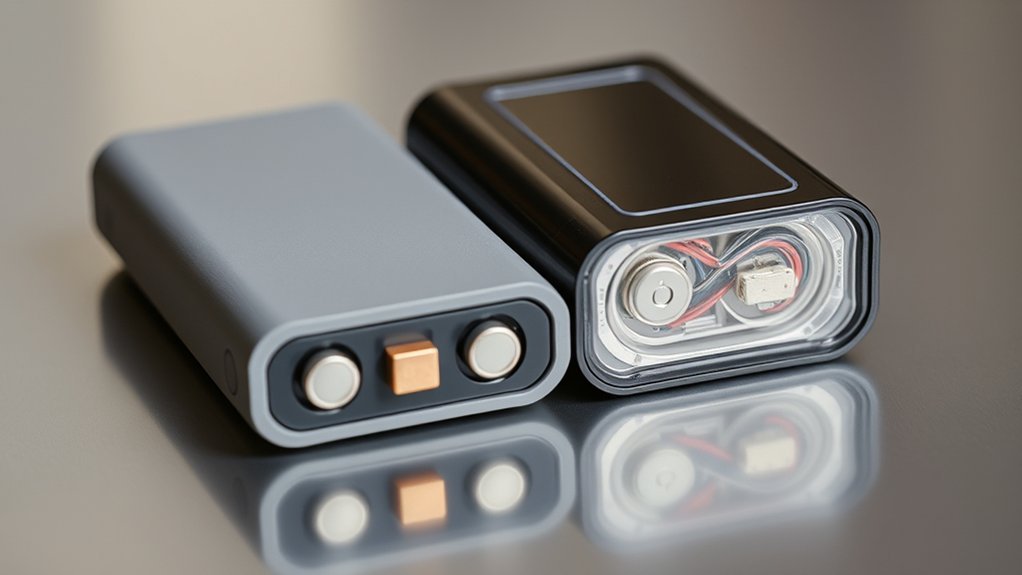
Lifepo4 and lithium-ion batteries differ markedly in their chemical compositions, with Lifepo4 utilizing a lithium iron phosphate cathode that offers enhanced thermal stability. Their structural designs also vary, affecting energy density, cycle life, and safety profiles. Understanding these distinctions is vital for evaluating their suitability in solar energy storage applications.
Chemical Composition Differences
Understanding the fundamental chemical differences between Lifepo4 and traditional lithium-ion batteries is essential for evaluating their performance and safety characteristics. Lifepo4 batteries use lithium iron phosphate as their electrode material, which results in distinctive chemical reactions during charge and discharge cycles. These reactions involve the intercalation of lithium ions into the FePO4 structure, offering a more stable and robust chemical composition. In contrast, typical lithium-ion batteries employ layered transition metal oxides, such as cobalt or nickel manganese cobalt, which undergo more complex chemical reactions. The electrode materials in Lifepo4 produce less thermal instability, reducing risks like thermal runaway. This fundamental difference in chemical composition directly influences their safety, cycle life, and overall stability, making Lifepo4 a more chemically stable and safer option for solar energy storage.
Structural Design Variations
The chemical composition of Lifepo4 and traditional lithium-ion batteries influences their internal structural design, which in turn affects performance, safety, and longevity. Lifepo4 cells typically feature a more stable crystal lattice, allowing for a robust, lightweight structure with fewer thermal management concerns. Their battery aesthetics often involve modular, cylindrical or prismatic formats, optimized for manufacturing processes that emphasize durability and ease of assembly. Conversely, lithium-ion batteries, with their layered oxide cathodes, tend to have complex, multi-layered architectures that can impact manufacturing efficiency and aesthetic uniformity. These design differences directly influence heat dissipation, structural integrity, and scalability. Overall, Lifepo4’s simplified, stable design offers advantages in manufacturing consistency, while lithium-ion’s intricate structure allows for higher energy density but demands more precise production controls.
Safety and Stability Factors
Despite their shared purpose of energy storage, Lifepo4 and lithium-ion batteries differ markedly in their chemical compositions and structural designs, which directly influence their safety profiles and stability. Lifepo4 chemistry inherently offers higher thermal stability and lower risk of thermal runaway, making it safer under stress conditions. Its stable chemistry contributes to consistent performance and reduced degradation over time. Lithium-ion batteries, with their more complex chemistries, can be more susceptible to overheating and potential failure, especially if damaged. In terms of battery aesthetics, Lifepo4 cells tend to maintain structural integrity better, enhancing safety. Additionally, Lifepo4’s straightforward production scalability allows for safer manufacturing processes, reducing risks associated with large-scale deployment. These factors collectively make Lifepo4 a more stable and safer choice for solar energy storage systems.
Comparing Safety Features of Lifepo4 vs Lithium-Ion Batteries for Solar Use
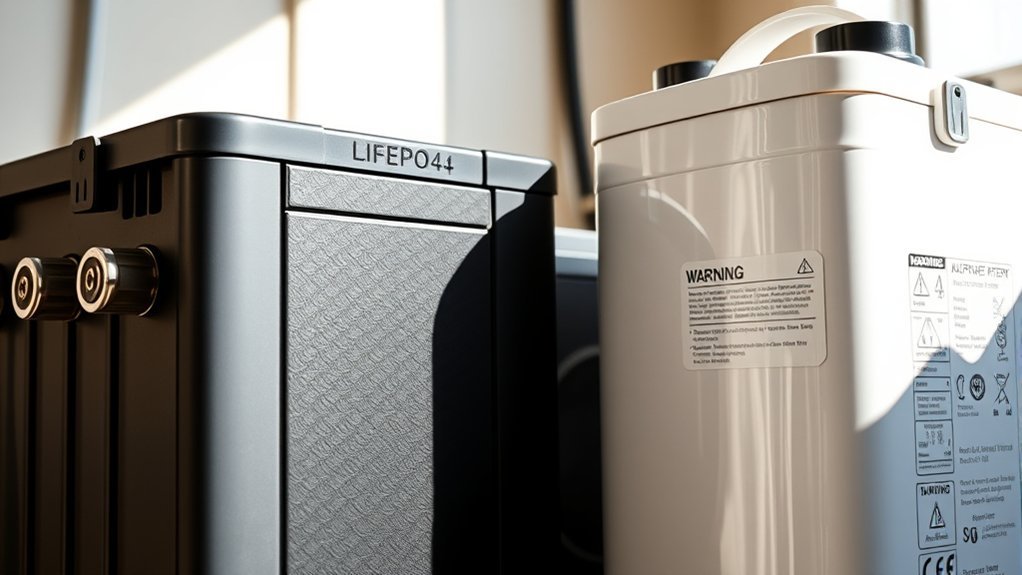
We examine how Lifepo4 batteries offer superior thermal stability, reducing the risk of fire or explosion compared to traditional lithium-ion chemistries. The Battery Management System (BMS) plays a critical role in maintaining safety by monitoring and controlling voltage, current, and temperature. Understanding these safety features helps us evaluate the overall reliability of each battery type for solar applications.
Thermal Stability Differences
While both LiFePO4 and lithium-ion batteries are widely used in solar energy systems, their thermal stability profiles differ considerably, impacting overall safety. LiFePO4 cells exhibit superior thermal stability due to their stable chemical structure, markedly reducing the risk of thermal runaway. They effectively dissipate heat through their robust crystal lattice, preventing dangerous temperature buildup. In contrast, traditional lithium-ion batteries with cobalt or nickel cathodes are more prone to overheating, especially under high load or fault conditions, due to less efficient heat dissipation. This decreased ability to manage heat can trigger thermal runaway, leading to potential safety hazards. Overall, LiFePO4’s enhanced heat dissipation and inherent stability make it a safer choice for solar applications where thermal management is critical.
Risk of Fire or Explosion
LiFePO4 batteries inherently present a lower risk of fire or explosion compared to traditional lithium-ion batteries, largely due to their more stable chemical composition. This stability reduces thermal runaway potential, making them safer in various conditions. From a manufacturing perspective, LiFePO4 cells are less prone to manufacturing defects that could lead to safety issues. Regarding market trends, increasing adoption reflects their safety advantages, especially in residential solar setups. Key safety features include:
- Enhanced thermal stability reduces overheating risks.
- Less prone to internal short circuits during abuse.
- Lower propensity for combustion or explosion.
- Consistent safety performance across diverse operating conditions.
These factors highlight LiFePO4’s safety edge, aligning with evolving industry standards and consumer safety expectations.
Battery Management System (BMS) Role
The Battery Management System (BMS) plays a critical role in ensuring the safety and longevity of both LiFePO4 and lithium-ion batteries used in solar applications. It monitors cell voltage, temperature, and state of charge, preventing conditions that could lead to thermal runaway or damage. LiFePO4 batteries benefit from inherently stable chemistry, reducing reliance on complex BMS features, but a robust BMS still enhances safety and performance. Manufacturing standards influence BMS quality, affecting overall safety and durability. Additionally, an effective BMS supports safer battery recycling by facilitating accurate diagnostics and end-of-life management. In contrast, lithium-ion batteries often require more sophisticated BMS protections due to greater sensitivity to overcharge and deep discharge, directly impacting safety and environmental considerations.
Which Battery Offers Longer Lifespan and Better Durability?
When comparing lifespan and durability, lithium iron phosphate (LiFePO4) batteries generally outperform traditional lithium-ion variants due to their chemical stability and robust construction. The key factors influencing battery life and durability include:
- Chemical stability—LiFePO4’s stable chemistry reduces degradation over cycles.
- Cycle life—LiFePO4 batteries typically endure 2,000+ cycles, surpassing lithium-ion’s 500–1,000.
- Thermal resilience—LiFePO4 maintains performance under high temperatures, enhancing durability factors.
- Structural robustness—Their rigid cathode material minimizes capacity loss, extending overall lifespan.
These attributes result in superior long-term performance, making LiFePO4 batteries more reliable for solar energy systems where longevity and resilience are essential.
Assessing Cost Differences Between Lifepo4 and Lithium-Ion Batteries
Although initial purchase prices are a significant factor, understanding the cost differences between LiFePO4 and lithium-ion batteries requires analyzing their long-term economic impacts. LiFePO4 batteries generally have higher manufacturing costs due to more complex chemistry and stricter quality controls. However, their extended lifespan and enhanced stability can offset upfront expenses over time. Market availability also influences costs; lithium-ion batteries benefit from mature manufacturing processes, making them more affordable and widely accessible. Conversely, LiFePO4’s growing demand and specialized production can limit availability, driving prices higher initially. When evaluating total cost, it’s vital to consider not only purchase price but also longevity, maintenance, and replacement intervals. This exhaustive approach provides a clearer picture of the true economic impact of each battery type.
How Do Performance and Charging Rates Compare?
When comparing Lifepo4 and lithium-ion batteries, we observe notable differences in charging speeds and overall performance durability. Lifepo4 batteries typically charge more slowly but maintain consistent performance over many cycles, whereas lithium-ion batteries offer faster charging but may degrade more quickly. Analyzing these factors helps determine which technology better suits specific solar energy applications.
Charging Speed Differences
While both LiFePO4 and lithium-ion batteries can be charged efficiently, their rates of charging and overall performance during this process differ markedly. LiFePO4 batteries generally allow faster charging due to their tolerant manufacturing processes and stable chemistry, which supports higher current flows without degradation. In contrast, lithium-ion batteries tend to have more controlled charging rates to preserve battery capacity and longevity.
Key differences include:
- Charging current limits, with LiFePO4 supporting higher currents for rapid charge.
- Manufacturing processes that enable LiFePO4 to sustain faster charge without compromising safety.
- Battery capacity influences charging speed; larger capacities require more time regardless of chemistry.
- Voltage stability during fast charging is typically better in LiFePO4, reducing risks of thermal runaway.
Performance Durability Comparison
| Feature | LiFePO4 | Lithium-Ion |
|---|---|---|
| Battery Capacity | Stable over many cycles | Declines more rapidly |
| Charging Cycles | 2,000–5,000+ | 500–1,500 |
| Degradation Rate | Lower, slower fade | Higher, faster fade |
| Temperature Tolerance | Better at high temperatures | Sensitive to high temps |
| Long-term Durability | Superior for longevity | Less durable over time |
This comparison highlights LiFePO4’s superior performance durability, especially for solar systems needing longevity.
Which Battery Type Is Better Suited for Off-Grid or Grid-Tied Solar Systems?
Choosing the appropriate battery type for off-grid or grid-tied solar systems hinges on specific energy storage requirements and system design considerations. When evaluating Lifepo4 and lithium-ion batteries, key factors include:
Selecting the right battery depends on your energy needs and system design considerations.
- Battery capacity: Lifepo4 offers higher cycle life, supporting larger capacity over time, ideal for extensive off-grid systems.
- Energy density: Lithium-ion batteries typically have higher energy density, enabling more compact designs suitable for limited space.
- Performance stability: Lifepo4 maintains consistent performance across a broad temperature range, beneficial for off-grid setups.
- System integration: Lithium-ion batteries often integrate more seamlessly with existing grid-tied infrastructure due to their higher energy density and mature technology.
Ultimately, Lifepo4’s durability and capacity make it more suitable for off-grid applications, while lithium-ion’s density favors grid-tied systems with space constraints.
Environmental Impact and Recycling Considerations for Both Battery Types
Environmental considerations play a critical role in evaluating battery technologies, as both Lifepo4 and lithium-ion batteries involve resource extraction, manufacturing impacts, and end-of-life management. Lifepo4 batteries generally have a lower environmental footprint due to their safer chemistry and reduced toxicity, simplifying recycling processes. Lithium-ion batteries, however, require advanced recycling infrastructure to recover valuable materials like cobalt and nickel, which are often associated with environmental concerns. Effective recycling infrastructure is essential to minimize waste and prevent hazardous substances from leaching into ecosystems. Additionally, environmental regulations increasingly mandate responsible disposal and recycling practices for both battery types, influencing manufacturing standards and end-of-life management strategies. Ultimately, the environmental impact of each battery depends on the maturity of recycling infrastructure and adherence to evolving environmental regulations.
Choosing the Right Battery Based on Your Solar Energy Needs and Budget
Selecting the appropriate battery for your solar energy system depends critically on your specific energy requirements and budget constraints. To make an informed choice, consider these factors:
Choosing the right solar battery depends on your energy needs and budget.
- Energy density: Lithium-ion batteries generally have higher energy density, making them suitable for space-limited applications.
- Cost and lifespan: Lifepo4 batteries typically offer a longer cycle life at a lower initial cost, balancing budget constraints with longevity.
- Battery recycling: Both types have environmental considerations; Lifepo4’s more straightforward recycling process can influence sustainability decisions.
- System compatibility: Match your battery’s capacity and voltage with your solar system’s specifications to maximize performance and cost-efficiency.
Assessing these factors guarantees a best-fit balance between performance, sustainability, and budget.
Frequently Asked Questions About Lifepo4 and Lithium-Ion Batteries for Solar
Understanding the differences between Lifepo4 and lithium-ion batteries can clarify which technology best suits your solar energy setup. Many ask about battery installation, noting Lifepo4’s modular design simplifies integration, while lithium-ion requires precise management systems. Concerns about manufacturing processes highlight Lifepo4’s safety advantages, as it involves stable chemistry and fewer thermal runaway risks. Lithium-ion batteries, however, benefit from established manufacturing techniques that improve energy density. Questions also arise regarding lifespan and maintenance; Lifepo4 offers a longer cycle life with minimal degradation, whereas lithium-ion batteries may require more frequent replacements. Clarifying these factors helps optimize system performance and safety. Ultimately, understanding these technical distinctions guarantees informed decisions aligned with your solar energy goals.
Frequently Asked Questions
Can Lifepo4 Batteries Handle Extreme Weather Conditions Better Than Lithium-Ion?
We believe Lifepo4 batteries handle extreme weather better due to their superior battery lifespan and stability, maintaining charging efficiency under harsh conditions, unlike lithium-ion batteries, which are more susceptible to temperature fluctuations affecting performance and longevity.
How Does Battery Maintenance Differ Between Lifepo4 and Lithium-Ion Systems?
We find that Lifepo4 batteries require less maintenance with stricter charging protocols enhancing battery longevity, whereas lithium-ion systems demand careful monitoring of electrolyte levels and temperature management, making Lifepo4 more user-friendly for long-term solar energy storage.
Are Lifepo4 Batteries More Environmentally Friendly Than Lithium-Ion?
Lifepo4 batteries are more environmentally friendly due to higher recycling efficiency and lower material toxicity, making them safer and easier to dispose of, compared to lithium-ion batteries, which pose greater environmental risks through toxic materials and less efficient recycling.
What Are the Warranty Differences for Lifepo4 Versus Lithium-Ion Solar Batteries?
We find Lifepo4 batteries generally offer longer warranties, often around 10 years, due to their superior battery lifespan and stability, while lithium-ion options tend to have shorter warranties; this impacts overall cost comparison and long-term reliability.
How Do Lifepo4 and Lithium-Ion Batteries Perform in High-Temperature Environments?
High temperatures are like a double-edged sword; Lifepo4 batteries maintain a longer lifecycle and stable energy density, performing better under heat stress than lithium-ion, which can degrade faster and lose capacity in extreme environments.
Conclusion
In the end, choosing between LiFePO4 and lithium-ion batteries isn’t just about upfront costs or size—it’s about understanding the trade-offs. Ironically, the safer, longer-lasting LiFePO4 might seem the obvious choice, yet many still opt for the cheaper, denser lithium-ion. Perhaps it’s a reminder that investing in durability and safety often demands a deeper analysis than just initial price, emphasizing that true value lies in longevity and reliability over fleeting convenience.