When comparing LiFePO4 and lithium-ion batteries, we find fundamental differences in chemistry, safety, and application suitability that are critical to understand. Each offers unique advantages and limitations that influence performance, lifespan, and environmental impact. To make an informed choice, we need to analyze these factors systematically. The question remains: which technology aligns best with your specific needs, and what trade-offs are involved in that decision?
Key Takeaways
- LiFePO4 batteries have lower energy density but offer superior thermal stability and safety compared to lithium-ion batteries.
- Lithium-ion batteries provide higher energy density, making them ideal for portable electronics and electric vehicles.
- LiFePO4 features a longer lifespan (over 2,000 cycles) and better environmental sustainability due to its stable chemistry.
- Lithium-ion batteries typically have faster charging capabilities but require careful management to prevent thermal issues.
- Cost differences depend on materials, manufacturing, and application, with LiFePO4 often being more eco-friendly and cost-effective over time.
What Are LiFePO4 and Lithium-Ion Batteries?
LiFePO4 and lithium-ion batteries are both rechargeable energy storage devices widely used in various applications, yet they differ considerably in chemical composition, performance characteristics, and safety profiles. LiFePO4 batteries utilize lithium iron phosphate as the cathode, offering enhanced thermal stability and safety, while lithium-ion batteries generally employ layered metal oxides. Market availability influences their adoption; lithium-ion batteries dominate consumer electronics due to high energy density, whereas LiFePO4 is favored for applications prioritizing safety and longevity. Both types are subject to battery recycling challenges, with LiFePO4’s more stable chemistry simplifying recycling processes. Understanding these distinctions is vital for optimizing performance, safety, and sustainability in energy storage solutions.
How Do Lithium-Ion and LiFePO4 Batteries Differ in Chemistry and Performance?
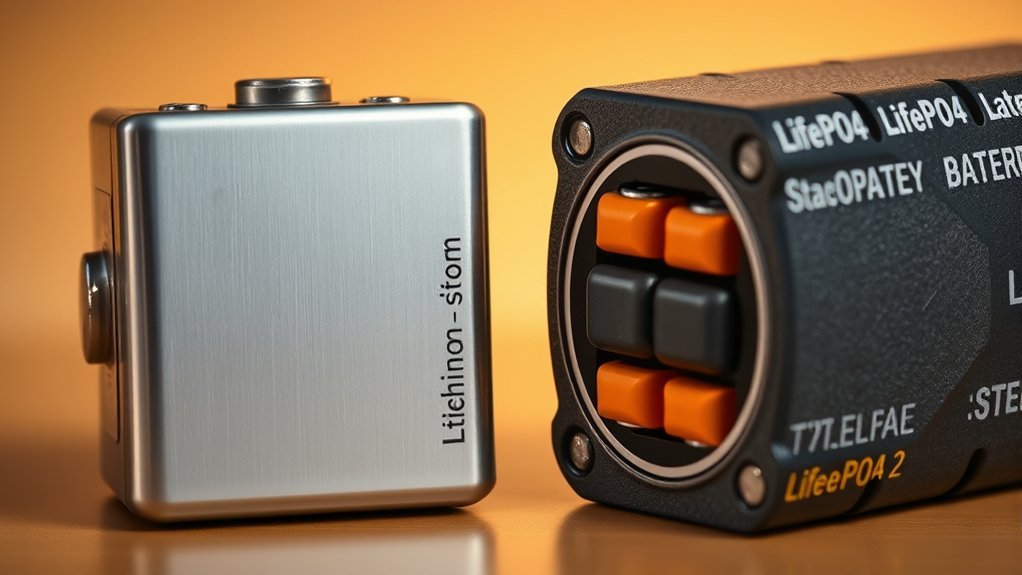
Lithium-ion and LiFePO4 batteries differ fundamentally in their chemical compositions, affecting their energy density and thermal stability. These differences influence their charging and discharging rates, with each chemistry offering distinct performance characteristics. Understanding these distinctions is essential for optimizing battery selection based on specific application requirements.
Chemical Composition Differences
While both battery types rely on lithium-based chemistries, their core differences stem from their cathode materials, which fundamentally influence their chemistry and performance characteristics. The primary distinction lies in their material composition, shaping electrochemical stability and overall behavior.
- Lithium-ion batteries typically use layered transition metal oxides like lithium cobalt oxide, offering higher energy density but lower thermal stability.
- LiFePO₄ batteries employ iron phosphate for their cathode, providing superior electrochemical stability and safety, though with slightly lower energy density.
- The material composition of LiFePO₄ results in more stable electrochemical reactions, reducing risks of thermal runaway.
- These core differences in cathode chemistry directly impact their performance, lifespan, and safety profiles, making each suited for specific applications.
Energy Density Variations
The differences in chemical composition directly influence the energy density achievable by each battery type. Lithium-ion batteries generally offer higher energy densities due to their greater voltage and storage capacity per unit weight, making them suitable for portable electronics and EVs. In contrast, LiFePO4 batteries have lower energy densities, which impacts their range but enhances thermal stability and lifespan. This variance influences manufacturing costs; LiFePO4’s simpler chemistry can reduce production expenses and improve safety margins. Additionally, both chemistries affect battery recycling processes: LiFePO4’s stable materials simplify recycling efforts, potentially lowering environmental impact. Understanding these energy density variations helps in selecting the appropriate battery for specific applications, balancing performance, safety, and cost considerations, especially when factoring in the long-term implications of battery recycling and lifecycle management.
Charging and Discharging Rates
Understanding the charging and discharging dynamics of lithium-ion and LiFePO4 batteries requires examining their distinct chemical structures and electrochemical behaviors. LiFePO4 batteries typically allow higher charge and discharge rates due to their stable olivine structure, which reduces degradation risks. In contrast, traditional lithium-ion batteries often have lower rates to prevent overheating and capacity loss.
Key points include:
- LiFePO4’s superior thermal stability enables faster charging/discharging, impacting manufacturing processes and safety protocols.
- Lithium-ion batteries may require more careful management to optimize lifespan and performance.
- Higher rates influence battery recycling efficiency, as rapid cycling affects material integrity.
- Differences in chemistry also dictate manufacturing considerations, affecting component durability and end-of-life recycling strategies.
Which Battery Offers Better Safety and Thermal Stability?
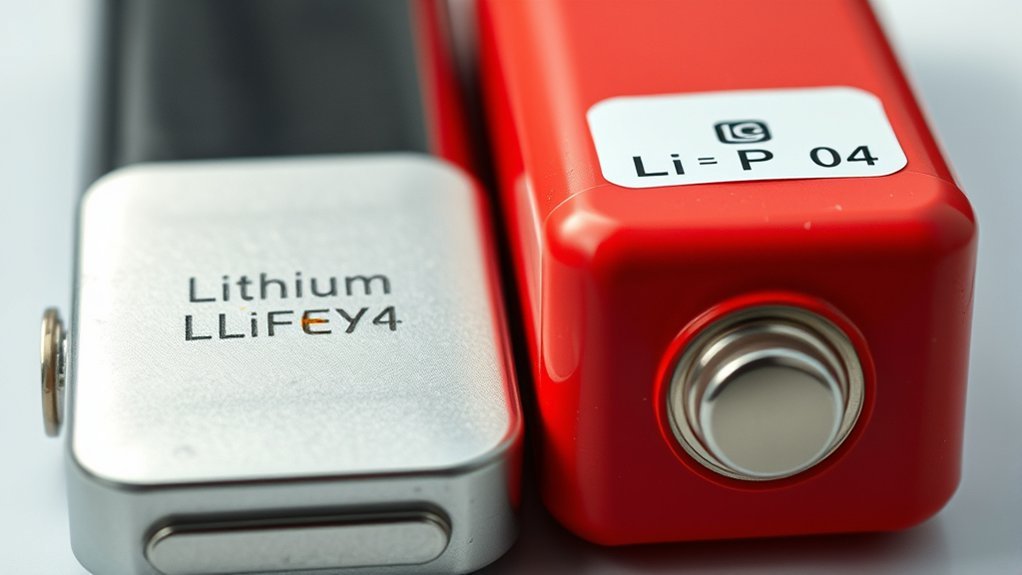
When comparing safety and thermal stability, LiFePO4 batteries typically present a lower fire risk due to their chemical stability and non-volatile cathode material. They also demonstrate higher heat resistance levels, maintaining performance integrity under elevated temperatures. Analyzing these factors highlights the safety advantages of LiFePO4 over traditional lithium-ion chemistries.
Fire Risk Comparison
Although both LiFePO4 and traditional lithium-ion batteries pose fire risks, LiFePO4 batteries generally demonstrate superior safety and thermal stability. Their stable chemistry reduces the likelihood of thermal runaway, a primary cause of battery fires.
Key factors include:
- Chemical stability: LiFePO4’s robust cathode material resists decomposition under stress, lowering fire hazards.
- Manufacturing impact: Safer manufacturing processes minimize defects that could lead to thermal issues.
- Battery recycling: LiFePO4’s non-flammable, eco-friendly materials simplify recycling, reducing fire risks during disposal.
- Thermal behavior: LiFePO4 maintains thermal stability over a broader temperature range, decreasing fire potential during high-load or fault conditions.
Heat Resistance Levels
LiFePO4 batteries exhibit superior heat resistance compared to traditional lithium-ion variants, primarily due to their stable chemical composition and robust thermal properties. Their enhanced thermal stability stems from improved thermal insulation within the cell structure, which limits heat transfer and prevents rapid temperature escalation. Additionally, LiFePO4’s lower heat conduction rate reduces the risk of thermal runaway, even under high-stress conditions. This inherently safer thermal profile minimizes the impact of external heat sources and internal temperature fluctuations. Overall, the combination of effective thermal insulation and controlled heat conduction makes LiFePO4 batteries more resilient to temperature extremes, offering better safety margins. This stability ensures fewer thermal-related failures, making them a more reliable choice in applications where thermal management is critical.
Comparing Lifespan, Durability, and Maintenance Requirements
While both LiFePO4 and lithium-ion batteries are widely used for energy storage, their lifespan and durability differ markedly due to their chemical compositions and manufacturing processes. LiFePO4 batteries generally last longer, often exceeding 2,000 cycles, thanks to their stable chemistry. Lithium-ion batteries typically offer around 1,000-1,500 cycles but degrade faster under stress. Durability impacts maintenance requirements, with LiFePO4 requiring less frequent replacement and exhibiting better thermal stability. Key factors include:
- Cycle Life: LiFePO4’s higher cycle count enhances longevity.
- Battery Recycling: LiFePO4’s stable chemistry simplifies recycling, reducing environmental impact.
- Manufacturing Processes: Variations influence durability; LiFePO4’s simpler chemistry often results in fewer defects.
- Maintenance Needs: LiFePO4 demands less monitoring due to lower risk of thermal runaway.
This analysis underscores how chemistry and production influence lifespan, durability, and maintenance.
How Do Cost and Price Factors Influence Your Choice?
Cost and price considerations are central to selecting the appropriate battery technology, as initial investment and long-term expenses can profoundly influence overall value. Market availability substantially impacts pricing, with LiFePO4 batteries often benefiting from growing production volumes, which reduce manufacturing costs. Conversely, lithium-ion batteries, with broader market penetration, tend to have more competitive prices due to established manufacturing processes and supply chains. When evaluating options, it’s essential to weigh how manufacturing costs—driven by raw materials, complexity of cell design, and economies of scale—affect unit prices. While LiFePO4 batteries may have higher upfront costs, their longer lifespan and stability can lead to lower total ownership costs over time. Ultimately, understanding these price factors helps optimize cost-efficiency aligned with application needs.
Which Battery Is More Environmentally Friendly and Sustainable?
Evaluating the environmental friendliness and sustainability of battery technologies involves examining their raw material extraction, manufacturing processes, and end-of-life management. LiFePO₄ batteries are generally considered more eco-friendly due to their use of abundant, less toxic materials, and their longer lifespan reduces waste. Lithium-ion batteries, however, often rely on scarce, environmentally sensitive lithium and cobalt, posing supply chain sustainability challenges.
LiFePO₄ batteries are more eco-friendly with abundant materials and longer lifespan, unlike lithium-ion batteries reliant on scarce, sensitive resources.
Key factors include:
- Recycling initiatives that improve material recovery and reduce environmental impact.
- Supply chain sustainability, with LiFePO₄ benefiting from more ethical sourcing practices.
- Manufacturing processes that emit fewer greenhouse gases for LiFePO₄ batteries.
- End-of-life management strategies that extend battery usability and reduce waste, favoring LiFePO₄’s durability.
What Are the Best Use Cases for Lithium-Ion vs LiFePO4 Batteries?
Lithium-ion and LiFePO₄ batteries each excel in different applications due to their distinct chemical properties and performance characteristics. Lithium-ion batteries are ideal for portable electronics and electric vehicles, where high energy density and fast charging are critical, supported by broad market availability. Conversely, LiFePO₄ batteries are better suited for stationary energy storage and solar applications, thanks to their thermal stability, longevity, and safety. When considering use cases, battery recycling plays a role—LiFePO₄’s more stable chemistry simplifies recycling processes, potentially reducing environmental impact. Market availability also influences deployment; lithium-ion batteries are more widely accessible due to mature manufacturing, while LiFePO₄’s niche markets are expanding. Understanding these distinctions helps optimize application-specific performance and lifecycle management.
How to Decide Between LiFePO4 and Lithium-Ion for Your Needs?
Choosing between LiFePO₄ and lithium-ion batteries depends on carefully evaluating your specific application requirements and operational priorities. Key factors include safety, longevity, and cost.
Selecting the right battery depends on your application’s safety, lifespan, and cost priorities.
- Battery packaging: LiFePO₄ offers enhanced thermal stability and safer battery packaging, reducing risks during operation.
- Manufacturing processes: Differences in manufacturing processes influence cost, quality, and scalability—LiFePO₄ batteries often require more precise manufacturing controls.
- Cycle life and durability: LiFePO₄ provides superior cycle life, making it suitable for long-term use, while lithium-ion batteries might be more economical upfront.
- Application environment: Consider operational temperature ranges and safety standards—LiFePO₄ excels in high-temperature environments, whereas lithium-ion batteries might require additional thermal management.
Evaluating these factors helps determine the most suitable choice based on safety, lifespan, and production considerations.
Frequently Asked Questions
How Do Charging Times Compare Between Lifepo4 and Lithium-Ion Batteries?
Charging times are comparable, but LiFePO4 batteries typically offer higher charging efficiency and longer battery lifespan, allowing for faster, more durable charging cycles, which makes them advantageous in applications demanding quick turnaround and longevity.
Can Lifepo4 Batteries Be Used in High-Temperature Environments?
We find LiFePO4 batteries excel in high-temperature environments due to their superior thermal stability, reducing thermal runaway risks. Additionally, their environmentally friendly composition minimizes environmental impact, making them a safer, more sustainable choice for demanding applications.
Are There Any Size or Weight Differences Affecting Portability?
Like weighing options on a delicate balance, we find that LiFePO4 batteries tend to be slightly larger and heavier due to material durability and safety features, impacting portability but offering superior capacity and longevity in demanding environments.
How Do Internal Resistance and Power Output Vary Between the Two Types?
We observe that LiFePO4 batteries generally have higher internal resistance due to electrochemical stability, resulting in lower power output, but better thermal conductivity enhances safety. Lithium-ion batteries typically offer lower resistance and higher power, yet may pose thermal risks.
What Are the Warranty and Support Options for Each Battery Type?
We find that warranty coverage and customer support vary; LiFePO4 batteries often come with longer warranties and dedicated technical support, whereas lithium-ion batteries typically offer standard warranties with less specialized assistance, influencing long-term reliability and service expectations.
Conclusion
Ultimately, choosing between LiFePO4 and lithium-ion batteries is like selecting the right tool for a precise job. While lithium-ion offers compact energy density for portable needs, LiFePO4 provides a sturdy backbone for safety and longevity in stationary applications. By understanding each chemistry’s strengths and limitations, we can navigate the complex landscape of energy storage, ensuring our choices fuel efficiency and sustainability—like a well-orchestrated symphony, perfectly tuned to meet our specific demands.