Approximately 70% of lithium-ion batteries in renewable energy systems are now LiFePO4 types due to their superior safety profile and longevity, yet many remain unfamiliar with what truly defines a LiFePO4 battery. Understanding its fundamental chemistry and operational advantages is essential for making informed decisions in applications demanding reliable, sustainable power. As we explore the meaning behind LiFePO4 batteries, you’ll see why their characteristics are reshaping energy storage solutions—something you won’t want to overlook.
Key Takeaways
- LiFePO4 batteries are rechargeable lithium-ion cells with lithium iron phosphate as the cathode chemistry.
- They provide stable voltage, high safety, thermal stability, and long cycle life.
- Used mainly for energy storage, renewable systems, and portable applications.
- Known for environmental friendliness, recyclability, and minimal capacity fade.
- They are valued for safety, reliability, and sustainable energy solutions.
What Is a LiFePO4 Battery and How Does It Work?
A LiFePO4 battery, also known as lithium iron phosphate battery, is a type of rechargeable lithium-ion cell distinguished by its cathode chemistry, which consists of lithium iron phosphate. Its unique battery chemistry provides enhanced thermal stability and safety compared to other lithium-ion chemistries. This stability influences its charging protocols, necessitating specific voltage limits and current controls to optimize lifespan and performance. Unlike lithium cobalt oxide batteries, LiFePO4 cells tolerate higher charge and discharge rates without compromising safety. The chemistry also results in a more stable voltage during discharge, improving predictable operation. Proper understanding of its battery chemistry and adherence to recommended charging protocols are essential for maximizing efficiency, safety, and longevity in various applications.
Key Advantages of LiFePO4 Batteries Over Other Lithium-Ion Types

LiFePO4 batteries offer several key advantages over other lithium-ion chemistries, primarily due to their inherent chemical stability and safety profile. Their robust thermal stability reduces risks of thermal runaway and fire, making them safer for large-scale applications. Additionally, LiFePO4 batteries have a longer cycle life, which enhances durability and cost-efficiency over time. Their manufacturing processes are more environmentally friendly, with less hazardous waste and simpler recycling procedures. These batteries also exhibit minimal capacity fade, maintaining performance over extensive charge cycles. Moreover, the widespread adoption of battery recycling programs helps recover valuable materials, supporting sustainability. Overall, these advantages position LiFePO4 batteries as a more reliable, safer, and eco-conscious choice compared to other lithium-ion chemistries.
Common Uses and Applications of LiFePO4 Batteries
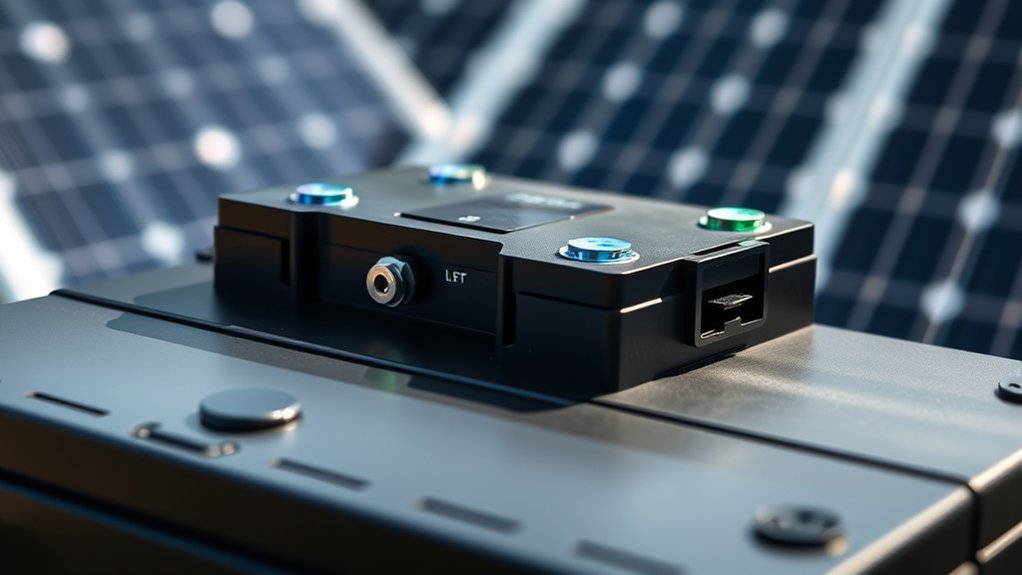
LiFePO4 batteries are integral to renewable energy systems due to their high cycle life and thermal stability, making them ideal for energy storage. They also serve critical roles in marine and RV applications, where safety, reliability, and performance are paramount. Understanding these applications highlights their versatility across sectors demanding durable, efficient power solutions.
Renewable Energy Storage
How do we efficiently store renewable energy for reliable use across various applications? LiFePO4 batteries provide an ideal solution due to their stability, longevity, and high energy density. They enable grid stabilization, solar and wind energy storage, and off-grid power systems. Proper management includes emphasis on battery recycling to reduce waste and mitigate environmental impact. These batteries’ durability minimizes replacement frequency, decreasing lifecycle environmental costs. Their thermal stability enhances safety in large-scale installations. Critical considerations include:
- Enhancing energy retention and discharge efficiency
- Extending battery lifespan through advanced management systems
- Ensuring responsible battery recycling to lessen environmental impact
- Facilitating integration with renewable energy sources
- Reducing overall ecological footprint of energy storage infrastructure
This technical approach emphasizes sustainability, safety, and environmental responsibility in renewable energy storage solutions.
Marine and RV Power
Why are LiFePO4 batteries increasingly favored in marine and RV applications? Their high energy density, long cycle life, and thermal stability make them ideal for powering boats and RV systems. Unlike traditional lead-acid batteries, LiFePO4 units offer faster charging and deeper discharge capabilities while maintaining safety standards. Additionally, their environmental impact is lower due to safer chemistry and the potential for battery recycling, reducing waste and pollution. This sustainability aspect aligns with eco-conscious boating and travel practices. The durability and reliability of LiFePO4 batteries minimize maintenance and replacement frequency, further reducing environmental footprint over time. As a result, these batteries are becoming the preferred choice for marine and RV users seeking efficient, safe, and eco-friendly power solutions.
How to Identify a Genuine LiFePO4 Battery
Ensuring the authenticity of a LiFePO4 battery requires careful examination of several key indicators. Genuine batteries typically feature clear labeling, including serial numbers and certifications, ensuring traceability for battery recycling and environmental impact considerations. Look for consistent cell voltage and capacity ratings that match manufacturer specifications. Authentic units often have tamper-proof seals and high-quality construction. Verify manufacturer credentials through official channels. Be wary of suspiciously low prices or vague product descriptions, as counterfeit batteries compromise safety and sustainability efforts. Genuine LiFePO4 batteries support responsible disposal and recycling, minimizing environmental impact. Accurate identification safeguards performance, safety, and environmental commitments, ensuring you invest in reliable, eco-conscious energy storage solutions.
Factors to Consider When Choosing a LiFePO4 Battery
When selecting a LiFePO4 battery, we must evaluate several critical factors that directly influence performance, safety, and longevity. Battery safety is paramount; choosing batteries with robust thermal management and protective circuitry minimizes risks of thermal runaway or damage. Charging protocols are equally essential; adherence to specific voltage and current limits ensures ideal lifespan and prevents overcharging, which can compromise safety. We should also consider capacity ratings, cycle life, and manufacturer certifications to verify reliability. The battery’s internal design, including cell quality and BMS (Battery Management System), affects both safety and longevity. A thorough assessment of these factors helps us select a battery that not only meets our power needs but also maintains safety standards and operational stability over time.
Comparing LiFePO4 Batteries to Lead-Acid and Other Lithium Batteries
LiFePO4 batteries are often compared to lead-acid and other lithium-ion chemistries due to their distinct performance characteristics and applications. Their battery chemistry offers a safer, more stable alternative with improved thermal stability and longer cycle life. While lead-acid batteries tend to have lower energy density, LiFePO4 cells provide higher energy density, enabling more compact designs. Compared to other lithium chemistries like NMC or LTO, LiFePO4 balances safety with moderate energy density, making them ideal for stationary and off-grid uses.
- Safer thermal stability due to chemical composition
- Longer cycle life, reducing replacement costs
- Higher energy density for compact setups
- Lower maintenance requirements
- Enhanced safety in high-demand environments
Maintenance Tips to Maximize Your LiFePO4 Battery’s Lifespan
Proper maintenance is essential for maximizing the lifespan of your LiFePO4 battery, as its chemistry is inherently stable but still susceptible to operational stresses. Adhering to proper charging protocols—such as avoiding overcharging and maintaining recommended voltage levels—helps prevent capacity fade and thermal stress. Consistent monitoring of voltage and temperature guarantees ideal performance and safeguards against potential damage. When decommissioning, prioritize battery recycling to minimize environmental impact and recover valuable materials. Regular inspection and balanced charging routines reduce internal stress, prolonging cycle life. By implementing disciplined charging protocols and responsible recycling practices, we can extend the functional lifespan of LiFePO4 batteries, ensuring reliable operation while supporting sustainable waste management.
Potential Drawbacks and Limitations of LiFePO4 Technology
Although LiFePO4 batteries offer several advantages, they also present specific drawbacks that can limit their application in certain contexts. One concern involves their relatively high initial cost compared to traditional batteries. Additionally, their energy density is lower, which may restrict use in space-constrained systems. The environmental impact of battery recycling remains a challenge, requiring efficient processes to mitigate waste and toxic materials. They also exhibit limited performance at very low temperatures, affecting cold-weather operations. Ultimately, supply chain limitations for raw materials can hinder large-scale deployment. These drawbacks highlight the need for continued innovation and responsible management, especially regarding battery recycling practices, to ensure environmental sustainability and broaden application potential.
Future Trends and Innovations in LiFePO4 Battery Development
Advancements in materials science and manufacturing processes are driving significant innovations in the development of LiFePO4 batteries. These innovations aim to improve energy density, cycle life, and safety, while addressing environmental concerns. Manufacturing innovations, such as scalable production techniques and enhanced quality control, enable more cost-effective and consistent battery output. Additionally, the focus on battery recycling is increasingly crucial, as it promotes sustainability and resource efficiency by recovering valuable materials for reuse. Future trends include integrating smart battery management systems that optimize performance and lifespan, and exploring solid-state electrolytes to enhance safety and energy density further. Collectively, these developments position LiFePO4 technology as a more sustainable, efficient, and technologically advanced option in energy storage solutions.
Frequently Asked Questions
How Long Does a Lifepo4 Battery Typically Last?
We find that Lifepo4 batteries typically last around 2000 to 5000 charging cycles, depending on usage. Their capacity gradually diminishes over time, but proper maintenance guarantees peak performance and longevity, making them highly reliable.
Are Lifepo4 Batteries Environmentally Friendly?
We find LiFePO4 batteries environmentally friendly, as they produce 70% less environmental impact during manufacturing compared to traditional lithium-ion batteries. This efficiency showcases their potential to reduce ecological footprints and promote sustainable energy solutions.
Can Lifepo4 Batteries Be Recycled?
Yes, Lifepo4 batteries can be recycled through specialized battery recycling processes, which considerably reduce environmental impact by recovering valuable materials, minimizing waste, and promoting sustainable resource management, aligning with our commitment to environmentally responsible energy storage solutions.
What Safety Precautions Are Necessary for Lifepo4 Batteries?
We prioritize battery management and fire safety by avoiding overcharging, preventing short circuits, and using proper protective equipment. Regular inspections and adherence to manufacturer guidelines are essential to mitigate risks associated with LiFePO4 batteries safely.
How Do Temperature Variations Affect Lifepo4 Performance?
Temperature variations impact Lifepo4 performance by affecting thermal stability and requiring proper temperature management; excessive heat accelerates degradation, while cold reduces efficiency, emphasizing the importance of maintaining ideal operating temperatures for longevity and safety.
Conclusion
In conclusion, LiFePO4 batteries offer a reliable, safe, and durable power source suitable for diverse applications. For instance, a renewable energy farm integrating LiFePO4 storage demonstrated sustained performance over a decade, highlighting their longevity. As technology advances, these batteries will likely become even more efficient and cost-effective, making them an essential component for sustainable energy solutions. Their unique combination of stability and performance positions LiFePO4 as a critical technology for future energy infrastructure.