Proper maintenance of LiFePO4 batteries is essential for ensuring their safety, performance, and longevity. By actively monitoring key parameters like voltage, temperature, and connections, we can prevent common issues and extend operational life. Implementing best practices in charging, storage, and inspection is critical, yet each step involves specific considerations that can markedly impact overall battery health. Understanding these details can help us make informed decisions—so let’s explore the key tips that can optimize your LiFePO4 battery management.
Key Takeaways
- Regularly check voltage levels and perform full charge/discharge cycles to calibrate and maintain accuracy.
- Keep the battery within recommended temperature ranges (0°C–45°C) to prevent overheating or freezing.
- Store batteries in a cool, dry place at 50-70% charge for long-term preservation.
- Ensure proper ventilation and cooling during operation to prevent thermal runaway.
- Perform periodic inspections for corrosion, damage, and electrolyte leaks, and recycle responsibly at end-of-life.
How Do LiFePO4 Batteries Work and Why Maintenance Matters
How do LiFePO4 batteries operate, and why is proper maintenance vital? These batteries utilize lithium iron phosphate as their core chemistry, providing stable chemical properties and enhanced safety. The battery chemistry results in a balanced energy density, offering reliable performance without excessive weight. Proper maintenance guarantees ideal chemical stability, preventing degradation that can diminish capacity over time. Maintaining consistent charge and discharge cycles preserves the battery’s energy density and prolongs lifespan. Because LiFePO4 batteries have a lower energy density compared to other lithium-ion chemistries, careful management is essential to maximize their useful energy. Regular checks and appropriate charging practices keep the chemical structure intact, ensuring consistent power output and safety. In summary, meticulous maintenance safeguards the integrity of this advanced battery chemistry.
How to Check and Maintain Proper Voltage Levels in LiFePO4 Batteries
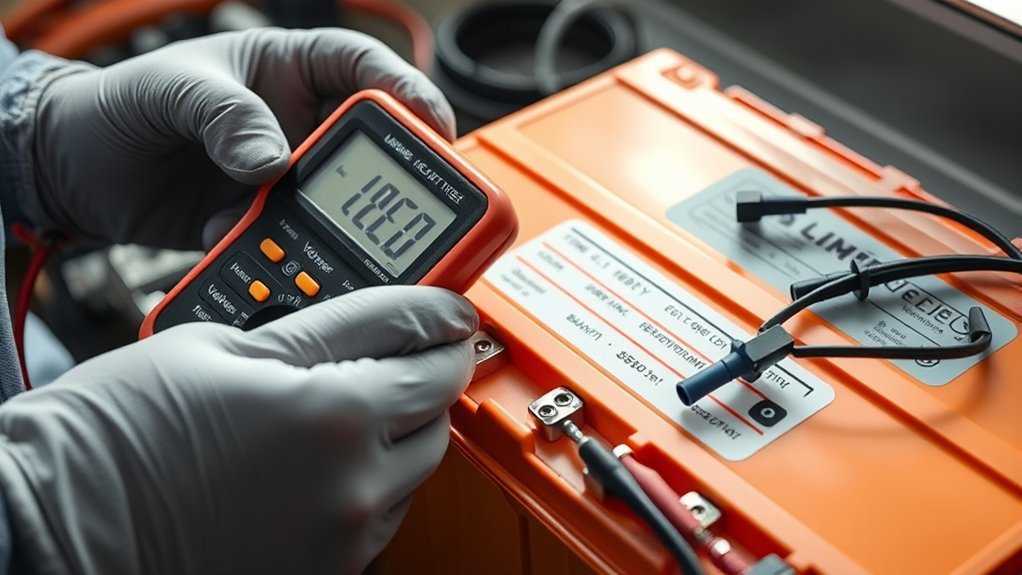
Maintaining proper voltage levels in LiFePO4 batteries is fundamental to ensuring their longevity and reliable performance. Voltage regulation is essential to prevent overcharging or deep discharging, which can harm battery cells. To accurately check voltage levels, use a precise multimeter to measure the battery’s voltage at rest, preferably after a period of inactivity. Regular battery calibration involves fully charging and discharging the battery according to manufacturer guidelines, ensuring the voltage readings reflect true capacity. Proper calibration resets the battery’s voltage baseline, promoting accurate state-of-charge assessments. Consistent monitoring and adherence to voltage thresholds during calibration help maintain ideal voltage levels, reduce capacity loss, and extend overall battery life.
Best Practices for Charging and Discharging to Extend Battery Life

Maintaining ideal charging voltages guarantees maximum lifespan and safety for LiFePO4 batteries, so adhering to manufacturer-recommended voltage ranges is essential. Avoiding deep discharges prevents voltage drops that can damage the cells, preserving capacity over time. Using proper charging equipment guarantees consistent current and voltage delivery, minimizing risks of overcharging or undercharging.
Optimal Charging Voltages
To maximize the lifespan of a Lifepo4 battery, it’s essential to adhere to ideal charging voltages, as exceeding recommended levels can accelerate capacity loss, while undercharging may lead to incomplete utilization. Proper voltage regulation during charging guarantees the battery operates within its safe voltage window, typically around 3.65V to 3.7V per cell. Maintaining this range minimizes stress on the cells and prolongs the number of effective charging cycles. Overvoltage during charging can cause irreversible damage, reducing overall capacity, whereas undervoltage hampers full utilization. Consistent adherence to specified voltage limits helps optimize performance and longevity, assure the battery sustains consistent charge acceptance over its lifespan. Accurate voltage regulation is key to balancing capacity retention with the overall health of the Lifepo4 battery.
Avoid Deep Discharges
Deep discharges can substantially shorten the lifespan of a Lifepo4 battery, so it’s crucial to prevent fully draining the cells whenever possible. Deep discharges cause increased stress on the battery’s internal structure, accelerating capacity loss over time. To maximize longevity, avoid discharging below the recommended cutoff voltage, typically around 2.5V per cell. Regularly maintaining a voltage window preserves capacity and cycle life. Proper discharge management also benefits environmental impact, as extending battery lifespan reduces the frequency of battery recycling and waste. It’s essential to monitor discharge levels accurately and implement protective circuitry to prevent over-discharge. By preventing deep discharges, we not only extend the operational life of Lifepo4 batteries but also contribute to more sustainable battery recycling practices, minimizing environmental footprint.
Use Proper Charging Equipment
Using proper charging equipment is essential for maximizing the lifespan of Lifepo4 batteries. High-quality, compatible chargers ensure correct voltage and current regulation, preventing overcharging and thermal stress. This not only extends battery cycle life but also reduces the risk of capacity degradation over time. Precise charging minimizes the environmental impact by promoting efficient energy use and decreasing waste. Proper equipment also facilitates safe battery recycling, ensuring materials are recovered responsibly, which supports sustainable disposal practices. Investing in certified chargers aligns with best practices for maintaining battery health and environmental responsibility. Ultimately, using the right charging tools preserves battery integrity, enhances performance, and contributes to a more sustainable lifecycle for Lifepo4 batteries.
How to Keep Your LiFePO4 Batteries Safe and Prevent Overheating
Ensuring the safe operation of LiFePO4 batteries requires vigilant management of their operating environment and usage patterns. Temperature monitoring is critical; regular checks help identify overheating risks before damage occurs. Maintaining ideal temperature ranges—typically between 0°C and 45°C—prevents thermal runaway and prolongs battery lifespan. Ventilation solutions are essential in confined spaces, as they facilitate heat dissipation and reduce thermal buildup. Proper airflow helps maintain a stable temperature, especially during high charge or discharge cycles. We recommend installing active cooling systems or ensuring adequate natural ventilation around the batteries. Consistently monitoring temperature levels and employing effective ventilation are key strategies to prevent overheating and guarantee safe, reliable battery performance over time.
Why Regular Cleaning and Inspection Improve LiFePO4 Battery Performance
Regular cleaning and inspection of LiFePO4 batteries play an essential role in maintaining peak performance and extending their lifespan. By removing dirt, dust, and corrosion, we prevent conductive issues that can lead to capacity loss or overheating. Regular inspections allow us to identify early signs of wear, damaged connectors, or electrolyte leaks, guaranteeing timely intervention. This proactive approach supports efficient battery recycling by reducing waste caused by premature failure, thereby minimizing environmental impact. Maintaining clean, well-inspected batteries also guarantees safety and reliability, preventing potential hazards. Consistent care not only preserves energy capacity but also promotes responsible disposal practices, aligning with sustainability goals. Ultimately, diligent maintenance is vital for maximizing battery longevity and reducing environmental footprint.
How to Store LiFePO4 Batteries When Not in Use for Long Periods
When storing LiFePO4 batteries for extended periods, it’s crucial to keep them in a cool, dry environment to minimize degradation. We recommend maintaining the charge level between 50-70% to prevent capacity loss, and avoiding full discharges that can damage the cells. Proper storage practices guarantee peak performance and longevity when the batteries are reactivated.
Store in Cool, Dry Place
To preserve the longevity and performance of LiFePO4 batteries during extended periods of disuse, it’s essential to store them in a cool, dry environment. Excessive heat accelerates chemical degradation, reducing battery lifespan, while moisture can cause corrosion and compromise safety. A temperature range of 0–25°C is ideal for storage, minimizing capacity loss over time. Maintaining a stable environment also supports responsible battery recycling efforts by preventing premature failure, which could lead to increased environmental impact. Proper storage conditions help guarantee the batteries remain functional, reducing the need for early disposal. This approach aligns with sustainable practices, decreasing the environmental footprint associated with battery manufacturing and disposal, and promoting eco-friendly lifecycle management.
Maintain 50-70% Charge
Maintaining a charge level between 50% and 70% is vital for minimizing capacity loss and preserving the health of LiFePO4 batteries during extended storage periods. Proper storage at this range reduces stress on the cells, preventing capacity fade and extending lifespan. To optimize storage:
- Regularly check the state of charge, ensuring it remains within the 50-70% window.
- Store batteries in a cool, dry environment to prevent degradation.
- Plan for eventual recycling to mitigate environmental impact, as improperly stored batteries can pose environmental hazards.
Maintaining this charge range not only supports battery longevity but also aligns with responsible environmental practices, reducing the need for premature battery recycling and minimizing waste. Proper storage and handling are essential in preserving battery performance and ecological integrity.
Avoid Full Discharges
Avoiding full discharges is vital for preserving the longevity of LiFePO4 batteries during long-term storage. Deep discharges can cause irreversible capacity loss, reducing overall lifespan. To mitigate this, store batteries at around 50-70% charge, which maintains ideal chemical stability and prevents capacity degradation. Fully discharged batteries pose challenges for safe recycling, increasing environmental impact if not properly managed. Proper storage also facilitates efficient battery recycling at end-of-life, minimizing ecological harm. Monitoring voltage periodically ensures batteries stay within safe voltage ranges, preventing deep discharges. Adhering to these practices supports sustainable battery lifecycle management, reduces waste, and lessens the environmental footprint associated with improper disposal. Proper storage and handling are essential to maximize performance and promote environmentally responsible battery recycling efforts.
Troubleshooting Common LiFePO4 Battery Issues and How to Fix Them
When troubleshooting LiFePO4 battery issues, identifying the root cause quickly is essential for effective resolution. Common problems include capacity loss, voltage irregularities, and overheating. To address these:
- Check connections and terminals for corrosion or looseness, which can cause voltage drops.
- Test voltage levels with a multimeter to identify capacity degradation or uneven cell performance.
- Monitor temperature during operation; overheating indicates potential internal damage or imbalance.
Resolving these issues prevents further damage and prolongs battery life. Proper maintenance also supports responsible practices like battery recycling, reducing environmental impact. Ignoring problems risks premature failure and environmental harm, emphasizing the importance of prompt, precise troubleshooting. By understanding these key steps, we ensure safer, more efficient use and disposal of LiFePO4 batteries.
Understanding Battery Management Systems (BMS) and Their Role in Maintenance
A Battery Management System (BMS) plays a pivotal role in guaranteeing the safe and efficient operation of LiFePO4 batteries by continuously monitoring and controlling key parameters such as voltage, current, and temperature. It safeguards against overcharge, over-discharge, and thermal runaway, thereby extending battery life and maintaining ideal performance. The BMS also facilitates effective battery recycling by providing accurate data on cell health and capacity, supporting environmentally responsible disposal practices. Adhering to environmental regulations is indispensable in battery maintenance, and the BMS helps assure compliance by preventing hazardous conditions that could lead to environmental contamination. Overall, the BMS is essential for both operational safety and environmental sustainability, making it a critical component in thorough LiFePO4 battery maintenance strategies.
Tips for Maximizing LiFePO4 Battery Longevity in Different Applications
To maximize the lifespan of LiFePO4 batteries across various applications, it’s important to tailor maintenance practices to specific use cases and operating conditions. For solar integration systems, maintaining ideal charge levels and avoiding deep discharges substantially extend battery life. In stationary applications, consistent monitoring of voltage and temperature safeguards against thermal stress. When considering battery recycling, proper disposal prevents environmental damage and preserves resources. Key strategies include:
- Regularly monitor state of charge (SOC) and avoid overcharging or excessive discharge.
- Implement temperature controls, especially in high-temperature environments.
- Conduct periodic maintenance checks and ensure proper recycling at end-of-life to prevent environmental contamination.
These practices enhance longevity, ensure safety, and support sustainable use in diverse applications.
Frequently Asked Questions
Can Lifepo4 Batteries Be Safely Recycled?
Yes, Lifepo4 batteries can be safely recycled through proper battery recycling processes, ensuring environmental safety. We recommend consulting certified facilities that handle lithium iron phosphate batteries responsibly, minimizing hazardous waste and promoting sustainable material recovery.
How Does Temperature Affect Lifepo4 Battery Lifespan?
Did you know that extreme temperatures can accelerate battery degradation by up to 50%? Temperature effects considerably impact Lifepo4 battery lifespan, with high heat causing faster degradation and cold reducing efficiency, emphasizing the need for ideal operating conditions.
Are There Specific Signs Indicating Battery Deterioration?
We observe signs of battery deterioration through reduced capacity and fewer available charge cycles, indicating internal degradation. These symptoms suggest the battery’s chemistry is compromised, impacting performance and signaling that maintenance or replacement may be necessary.
What Are the Environmental Impacts of Disposing of Lifepo4 Batteries?
Coincidentally, disposing of LiFePO4 batteries impacts the environment through hazardous waste concerns, but strict environmental regulations and advanced recycling processes minimize risks, ensuring harmful materials are safely recovered and reducing ecological footprints during disposal.
How Often Should I Recalibrate My Battery Management System?
We suggest performing battery calibration and system recalibration every three to six months, depending on usage. Regular recalibration guarantees accurate state-of-charge readings, prolongs battery lifespan, and maintains ideal performance by aligning the BMS with actual battery capacity.
Conclusion
In conclusion, maintaining LiFePO4 batteries is like tending a delicate garden—consistent care yields a thriving, long-lasting system. By monitoring voltage, temperature, and connections, and following best practices for charging, storage, and inspection, we guarantee optimal performance and safety. Regular maintenance acts as the steady hand guiding these batteries through their lifecycle, preventing issues before they arise. With proper attention, we can access the full potential of our batteries, making them reliable power sources that stand the test of time.