Imagine a lithium-ion battery used in an electric vehicle suddenly overheating due to a manufacturing defect, causing a fire. This scenario highlights the importance of understanding the safety differences between LiFePO4 and traditional lithium-ion batteries, which vary markedly in their chemical stability and thermal behavior. As we explore these differences, we can better assess which technology offers safer performance for demanding applications and how proper handling influences overall safety.
Key Takeaways
- LiFePO4 batteries have higher thermal stability and are less prone to thermal runaway compared to traditional lithium-ion chemistries.
- LiFePO4’s stable chemical structure reduces risks of overheating, swelling, and catching fire during operation and disposal.
- Both battery types incorporate safety features like protection circuits and BMS, but LiFePO4’s inherent stability enhances overall safety.
- Proper handling, charging, and recycling practices are essential to minimize safety risks for all lithium-ion batteries.
- LiFePO4 is preferred in safety-critical applications like EVs and solar storage due to its superior stability and lower fire hazard.
How Do Lifepo4 and Lithium-Ion Batteries Differ in Safety?
While both LiFePO4 (lithium iron phosphate) and traditional lithium-ion batteries utilize lithium-based chemistries, their safety profiles differ considerably due to their chemical compositions and thermal stability. LiFePO4’s stable crystal structure enhances thermal stability, reducing risks of thermal runaway. This stability minimizes safety hazards, making manufacturing standards for LiFePO4 less stringent compared to lithium-ion variants. Additionally, the chemical composition influences battery recycling processes; LiFePO4’s non-toxic, more environmentally friendly materials simplify recycling efforts and reduce hazardous waste concerns. Conversely, lithium-ion batteries often require more rigorous safety protocols during manufacturing and disposal due to flammable electrolytes. Consequently, understanding these chemical differences informs safer handling, manufacturing, and recycling practices—crucial factors in overall battery safety.
Understanding the Chemical Stability of Lifepo4 vs Lithium-Ion Batteries
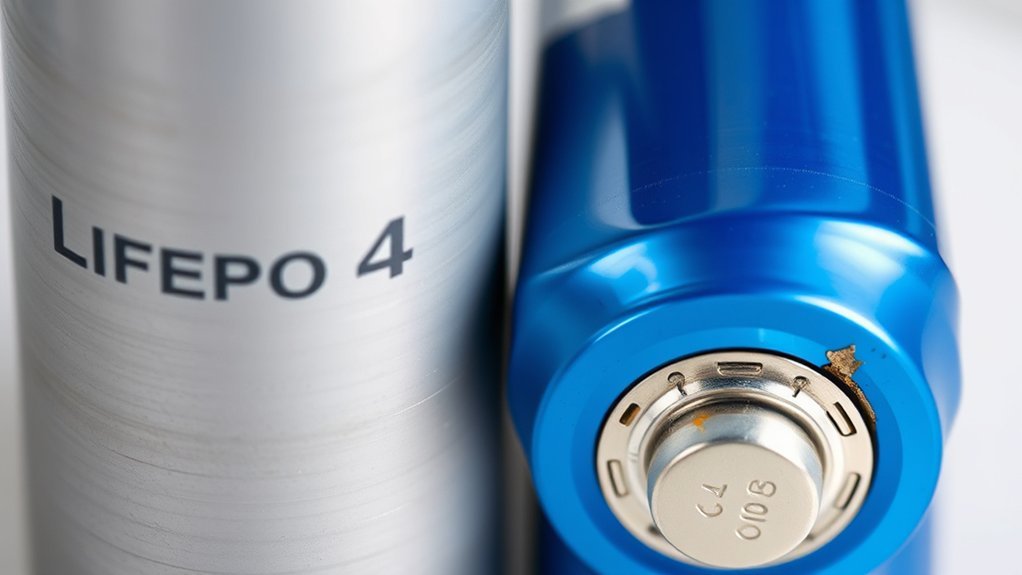
We recognize that the chemical composition of Lifepo4 offers greater stability under various conditions compared to traditional lithium-ion chemistries. This increased stability reduces the likelihood of thermal runaway, even in high-stress scenarios. Understanding these fundamental differences is key to evaluating their relative safety profiles.
Chemical Composition Stability
Understanding the chemical stability of Lifepo4 (lithium iron phosphate) batteries compared to traditional lithium-ion variants is crucial for evaluating overall safety. Lifepo4’s chemical composition offers superior stability due to its robust crystal structure, which resists decomposition during charge and discharge cycles. This stability minimizes reactive side reactions, markedly reducing the risk of battery degradation over time. In contrast, conventional lithium-ion batteries often experience gradual degradation stemming from unstable cathode materials, leading to capacity loss and potential safety hazards. The inherent chemical stability of Lifepo4 ensures consistent performance and fewer structural changes, translating into a longer lifecycle and enhanced safety profile. Consequently, chemical composition stability directly impacts both battery longevity and safety, making Lifepo4 a more resilient choice in demanding applications.
Thermal Runaway Risks
Thermal runaway poses a significant safety concern in lithium-based batteries, and the chemical stability of the battery’s core materials plays a critical role in mitigating this risk. Lifepo4 batteries exhibit higher thermal stability due to their robust chemical composition, reducing the likelihood of runaway incidents. In contrast, traditional lithium-ion batteries with cobalt or nickel chemistries are more susceptible to temperature-induced decomposition, increasing safety risks. This difference impacts battery recycling processes, as Lifepo4’s stable chemistry simplifies safe handling and disposal, ultimately reducing environmental impact. Understanding these chemical stability differences helps inform safer battery design, recycling practices, and environmental considerations. By choosing Lifepo4, we can minimize the potential for thermal runaway, protect ecosystems, and promote sustainable battery lifecycle management.
How Do Thermal Runaway Risks Compare Between Both Battery Types?

Lifepo4 batteries exhibit considerably higher thermal stability compared to traditional lithium-ion cells, reducing the likelihood of overheating under stress. This inherent stability lowers the risk of thermal runaway, even if the battery is subjected to physical damage or high temperatures. Consequently, understanding these differences is essential when evaluating safety profiles for various applications.
Thermal Stability Differences
Although both Lithium Iron Phosphate (LiFePO4) and traditional lithium-ion batteries can experience thermal runaway, their thermal stability profiles differ considerably. LiFePO4 batteries exhibit higher thermal stability due to their robust chemical structure, making them less prone to rapid temperature escalation. This enhanced stability extends battery lifespan and reduces the risk of catastrophic failure. In contrast, conventional lithium-ion cells, with their layered cathode materials, are more susceptible to heat-induced decomposition and thermal runaway. This increased risk impacts not only safety but also environmental impact, as failures can release hazardous materials. Overall, LiFePO4’s superior thermal stability offers a safer, more environmentally friendly option, especially in demanding applications where consistent thermal management is critical.
Risk of Overheating
When comparing the risk of overheating between lithium iron phosphate (LiFePO4) and traditional lithium-ion batteries, it becomes clear that their differing chemistries markedly influence their susceptibility to thermal runaway. LiFePO4’s stable chemistry reduces overheating risks, making it inherently safer, especially under manufacturing standards that emphasize thermal management. Conversely, traditional lithium-ion batteries, with higher energy densities, are more prone to thermal runaway if damaged or improperly recycled. The table below highlights key differences:
| Aspect | LiFePO4 | Lithium-Ion |
|---|---|---|
| Thermal Stability | High, less prone to overheating | Lower, higher risk of thermal runaway |
| Manufacturing Standards | Stringent, focus on safety | Varies, often less strict |
| Battery Recycling | Safer, less toxic materials | More toxic, complex recycling |
| Overheating Risks | Lower, due to stable chemistry | Higher, due to reactive materials |
This comparison underscores the importance of adhering to manufacturing standards and proper recycling to mitigate overheating risks.
What Are the Common Safety Features in Lifepo4 and Lithium-Ion Batteries?
Safety features in both Lifepo4 and lithium-ion batteries are designed to prevent hazardous conditions such as thermal runaway, overcharging, and mechanical damage. These batteries incorporate sophisticated protection circuits, including voltage regulators, temperature sensors, and current limiters, to guarantee safe operation. Manufacturing standards play a critical role in maintaining these safety features, emphasizing quality control and material consistency. Additionally, both battery types include built-in safety mechanisms like venting systems to release gases safely during failure. Regarding sustainability, robust safety features facilitate safer battery recycling processes, reducing environmental risks. Overall, these safety measures reflect industry commitment to minimizing hazards, ensuring battery integrity, and promoting responsible disposal aligned with strict manufacturing standards.
How Do Charging and Discharging Practices Affect Battery Safety?
Proper charging and discharging practices are critical for maintaining battery safety, as improper handling can lead to thermal instability, capacity loss, or catastrophic failure. Adhering to specific charging protocols ensures batteries operate within safe voltage and current limits, reducing risks. For example, improper charging can cause:
- Overvoltage, leading to electrolyte breakdown and potential fire hazards.
- Deep discharging, which damages the cell structure and shortens lifespan.
- Frequent cycling outside recommended parameters, resulting in capacity fade and safety compromises.
Additionally, responsible battery recycling prevents hazardous material exposure and environmental contamination. By following strict charging protocols and proper discharging techniques, we effectively mitigate safety risks and prolong battery life, ensuring safer operation for both Lifepo4 and lithium-ion systems.
Are Lifepo4 Batteries Less Likely to Overheat or Catch Fire?
Lifepo4 batteries exhibit superior thermal stability due to their chemical composition, reducing the likelihood of overheating and thermal runaway. Effective battery management systems further enhance safety by monitoring temperature and current, preventing conditions that could lead to fires. Consequently, Lifepo4 cells are generally less prone to catastrophic failure compared to traditional lithium-ion chemistries.
Thermal Stability Factors
Because of their inherent chemical properties, Lifepo4 batteries generally exhibit greater thermal stability compared to traditional lithium-ion chemistries. This stability reduces the risk of overheating and thermal runaway, making them inherently safer. Specifically, their stability is influenced by:
- The strong FePO4 crystal lattice, which resists decomposition at high temperatures.
- Low internal resistance, limiting heat generation during charge and discharge cycles.
- Reduced risk of thermal runaway due to their non-flammable electrolyte, decreasing fire hazards.
This inherent safety profile also benefits environmental impact considerations, as Lifepo4 batteries are easier to recycle safely, minimizing toxic waste. Overall, these thermal stability factors make Lifepo4 batteries a more resilient choice, especially in applications demanding high safety and sustainable battery recycling practices.
Battery Management Systems
While the inherent thermal stability of Lifepo4 batteries substantially reduces the risk of overheating and thermal runaway, the role of advanced Battery Management Systems (BMS) is essential in further enhancing safety. BMS continuously monitors voltage, current, and temperature, ensuring ideal operation and protecting against overcharging or deep discharging that could compromise battery lifespan. They also facilitate balanced cell charging, which minimizes internal stress and prolongs service life. Additionally, effective BMS can mitigate environmental impact by preventing catastrophic failures that might release harmful substances. The table below illustrates key BMS functions:
| Function | Impact on Safety & Longevity |
|---|---|
| Cell balancing | Extends battery lifespan |
| Overcharge/Discharge Protection | Reduces thermal risks |
| Temperature Regulation | Limits overheating potential |
| Fault Detection | Prevents unsafe operating conditions |
Risk of Thermal Runaway
Is the risk of thermal runaway considerably lower in Lifepo4 batteries compared to other lithium-ion chemistries? Yes, Lifepo4’s stable chemical structure reduces this risk markedly. Unlike traditional lithium-ion batteries, Lifepo4:
- Maintains thermal stability under high charge/discharge cycles, preventing overheating.
- Resists internal short circuits that could trigger thermal runaway.
- Emits minimal heat during operation, decreasing fire hazards.
This inherent safety profile also benefits battery recycling and environmental impact. Lifepo4 batteries are less prone to swelling or catching fire, simplifying disposal and reducing environmental hazards. Their stability lessens the need for complex safety measures, ultimately supporting safer recycling processes. Overall, Lifepo4’s lower risk of thermal runaway makes it a safer choice, with positive implications for both user safety and environmental sustainability.
What Are the Safety Concerns Associated With Each Battery Type?
Safety concerns vary considerably between LiFePO4 (lithium iron phosphate) and traditional lithium-ion batteries, primarily due to their chemical compositions and thermal stability. Lithium-ion batteries, which often contain cobalt and nickel, are more susceptible to thermal runaway, leading to fires or explosions if damaged or improperly handled. In contrast, LiFePO4 batteries offer enhanced thermal stability and are less prone to overheating. However, safety risks still exist, especially if they are not manufactured according to strict standards. Proper battery recycling procedures are essential to prevent environmental hazards and reduce the risk of hazardous exposure during disposal. Ensuring rigorous manufacturing standards helps minimize defects and safety issues in both battery types, but LiFePO4’s inherent chemistry provides a safer profile in most applications.
How Do Manufacturing Standards Impact the Safety of Lifepo4 and Lithium-Ion Batteries?
Manufacturing standards play a crucial role in determining the safety of both LiFePO4 and lithium-ion batteries by ensuring consistent quality control and adherence to safety protocols. High manufacturing quality minimizes defects that could lead to thermal runaway or structural failures. Specifically, strict standards influence:
- The uniformity of internal components, reducing the risk of short circuits.
- The precision of battery assembly, preventing weak spots that could cause overheating.
- The implementation of safe battery recycling practices, decreasing environmental hazards and secondary safety risks.
Adherence to these standards ensures reliable performance and safety, while also promoting responsible disposal and recycling. Overall, rigorous manufacturing standards are essential to mitigate safety concerns associated with battery production, extending beyond initial use to the entire lifecycle of LiFePO4 and lithium-ion batteries.
Which Battery Type Is Safer for Specific Applications Like Electric Vehicles or Solar Storage?
When selecting batteries for specific applications such as electric vehicles (EVs) or solar energy storage, safety considerations become a primary concern due to the varying operational demands and potential risks involved. Lithium iron phosphate (LiFePO4) batteries generally offer enhanced safety profiles because of their thermal stability, reducing risks of thermal runaway. This makes them preferable for EVs and stationary solar storage where safety is critical. Additionally, LiFePO4 batteries are easier to recycle, decreasing environmental impact and supporting sustainable battery lifecycle management. Conversely, traditional lithium-ion batteries with cobalt or nickel pose higher safety risks but often provide higher energy density. Evaluating these factors helps determine the safer option tailored to specific applications, considering both safety and environmental impacts like battery recycling efficiency.
What Tips Can Help You Maximize Safety When Using Either Battery Type?
To maximize safety when using either lithium iron phosphate (LiFePO4) or traditional lithium-ion batteries, it’s essential to follow proper handling, storage, and charging protocols. First, always use compatible chargers designed for your specific battery type to prevent overcharging or overheating. Second, store batteries in a cool, dry environment, away from flammable materials and direct sunlight, minimizing risks of thermal runaway. Third, prioritize battery recycling at end-of-life to reduce environmental impact and prevent hazardous leaks. These practices guarantee safe operation, reduce the risk of fires, and support sustainable disposal. Proper maintenance and awareness of safety guidelines not only protect users but also contribute to minimizing environmental harm associated with battery production and disposal.
Frequently Asked Questions
How Do Lifepo4 Batteries Perform in Extreme Weather Conditions Safety-Wise?
We find Lifepo4 batteries excel in extreme weather due to their thermal stability and fire resistance, maintaining safety and performance in high or low temperatures, making them reliable for demanding environments without risk of thermal runaway or combustion.
Are There Environmental Safety Differences Between Lifepo4 and Lithium-Ion Batteries?
We believe environmental safety hinges on battery manufacturing and chemical stability; Lifepo4 batteries, with their eco-friendly materials and stable chemistry, pose fewer risks than lithium-ion batteries, which often involve hazardous elements and complex recycling challenges.
What Are the Long-Term Safety Implications of Using Each Battery Type?
We believe Lifepo4 batteries offer superior long-term safety due to greater chemical stability and battery longevity, reducing risks of thermal runaway, while lithium-ion batteries may degrade faster, increasing safety concerns over extended use.
How Do Safety Regulations Vary Globally for Lifepo4 and Lithium-Ion Batteries?
We observe that safety regulations for battery manufacturing and regulatory compliance vary globally, with stricter standards often applied to lithium-ion batteries due to higher thermal risks, while LiFePO4 batteries benefit from relaxed safety requirements in many regions.
Can Lifepo4 Batteries Be Safely Recycled Compared to Lithium-Ion Batteries?
We find Lifepo4 batteries are generally safer to recycle due to less toxic materials and simpler recycling processes, reducing environmental risks. Lithium-ion batteries require more complex disposal procedures, but both demand strict battery disposal practices for environmental safety.
Conclusion
In summary, while LiFePO4 batteries are generally safer than traditional lithium-ion cells—thanks to their stable chemistry and thermal resilience—proper handling and adherence to safety protocols remain vital. Studies show that LiFePO4 batteries have a markedly lower risk of thermal runaway, with incidents being less than 1% compared to 3-5% for other lithium-ion types. By understanding these differences and following best practices, we can guarantee safer, more reliable energy storage solutions across various applications.