When comparing LiFePO4 and lithium-ion batteries for RV applications, we must consider their underlying technologies, safety profiles, and long-term costs. Both have distinct advantages, but choosing the right type depends on your specific power needs and travel style. Understanding these differences is essential for making an informed decision that balances performance, safety, and investment. Let’s examine the key factors that can influence which battery type best suits your RV setup.
Key Takeaways
- LiFePO4 offers superior safety, thermal stability, and longer cycle life, making it ideal for RV use.
- Lithium-ion batteries have higher energy density and are lighter, suitable for weight-sensitive RV setups.
- Initial costs are higher for LiFePO4, but its durability reduces long-term replacement expenses.
- LiFePO4 is more eco-friendly with simpler recycling processes and less toxic waste.
- Both types meet different RV needs: LiFePO4 for safety and longevity, lithium-ion for capacity and weight savings.
How Do LiFePO4 and Lithium-Ion Batteries Differ in Technology?
Although both LiFePO4 and traditional lithium-ion batteries rely on lithium chemistry, their underlying technologies differ markedly. LiFePO4 batteries utilize lithium iron phosphate as their cathode material, resulting in a more stable battery chemistry that enhances thermal stability and cycle life. In contrast, lithium-ion batteries typically employ cobalt or nickel-based cathodes, which are more energy-dense but less stable. These differences influence charging methods; LiFePO4 batteries tolerate higher charge and discharge rates, allowing for faster charging without compromising safety. Additionally, their chemistry enables more consistent voltage during discharge, improving efficiency. Lithium-ion batteries require more precise charging protocols to prevent overheating or capacity loss, making their charging methods more sensitive. Overall, these technological distinctions considerably impact performance, safety, and longevity for RV applications.
Which Battery Type Offers Better Safety and Longevity for RV Use?
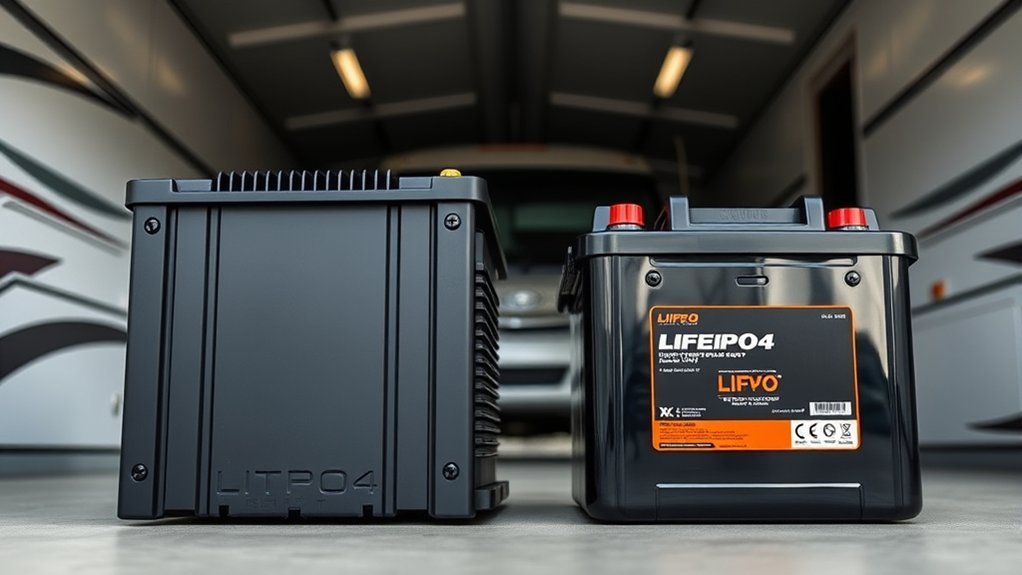
When evaluating safety and longevity for RV batteries, lithium iron phosphate (LiFePO4) batteries generally outperform traditional lithium-ion options. LiFePO4 cells have a more stable chemistry, reducing the risk of thermal runaway and fires, making them safer for RV applications. They also boast longer cycle life—often exceeding 2,000 cycles—enhancing overall durability. From an environmental perspective, LiFePO4 batteries are more eco-friendly due to their reduced toxicity and easier battery recycling processes. Their longer lifespan contributes to less frequent replacements, minimizing environmental impact. Conversely, lithium-ion batteries tend to degrade faster and pose higher safety risks if damaged. Consequently, for safety and longevity, LiFePO4 batteries present a more reliable, sustainable choice for RV users committed to safety and environmental responsibility.
How Do Cost and Maintenance Compare Between LiFePO4 and Lithium-Ion Batteries?
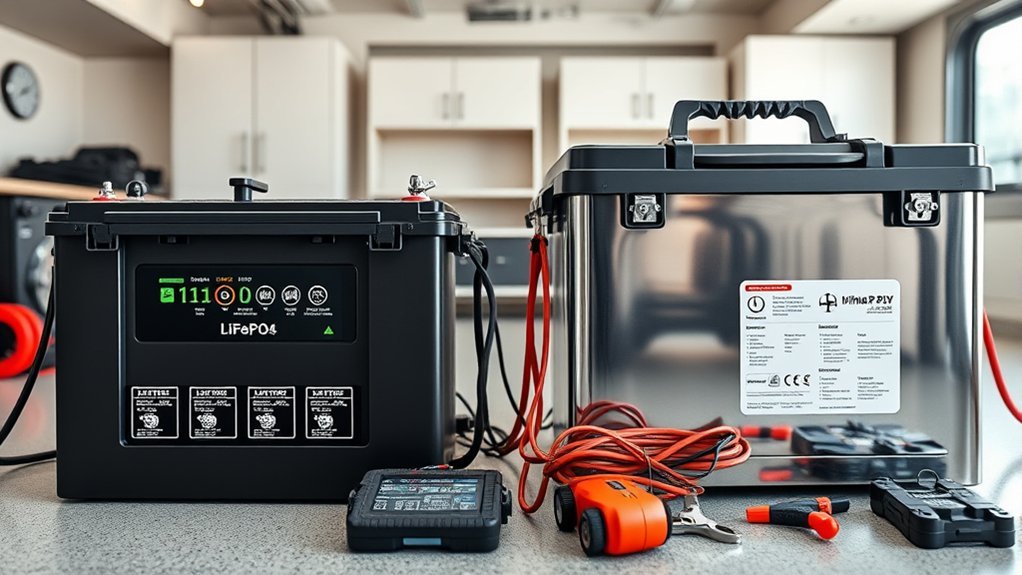
While LiFePO4 batteries typically have higher upfront costs than traditional lithium-ion options, their long-term maintenance and operational expenses often favor them. LiFePO4 batteries generally require less frequent replacement and exhibit lower degradation rates, reducing replacement costs over time. Their robust chemistry minimizes risks like thermal runaway, which decreases safety-related maintenance. Additionally, LiFePO4 batteries are more environmentally friendly, with easier battery recycling processes and a smaller environmental impact during disposal. In contrast, lithium-ion batteries often contain hazardous materials that complicate recycling and pose environmental concerns. Although initial investment is higher, the durability and lower maintenance needs of LiFePO4 batteries lead to reduced lifecycle costs, making them a more sustainable and cost-effective option for RV users in the long run.
Which Battery Is More Suitable for Different RV Power Needs and Travel Styles?
Selecting the appropriate battery for an RV depends heavily on the specific power demands and travel style of the user. For high-demand applications, such as full-time living or extensive off-grid use, larger battery capacity guarantees sustained power and minimizes recharge cycles. Lithium-ion batteries typically offer higher capacity-to-weight ratios, making them suitable for lightweight, mobile setups. Conversely, for shorter trips or minimal power needs, smaller batteries with lower capacity may suffice, reducing weight considerations and overall cost. Weight considerations are vital, especially when maximizing payload capacity or managing storage space. Lithium-ion batteries tend to be heavier but more compact, while Lifepo4 options are lighter but may require larger units to meet the same capacity. Ultimately, matching battery capacity and weight to your specific usage guarantees optimal performance and efficiency.
What Factors Should You Consider When Choosing Between LiFePO4 and Lithium-Ion Batteries?
Choosing between LiFePO4 and lithium-ion batteries requires careful consideration of several technical and practical factors. First, assess the environmental impact: LiFePO4 batteries generally have a lower environmental footprint due to their increased stability and safer disposal. Battery recycling processes differ; LiFePO4’s simpler chemistry facilitates more eco-friendly recycling. Additionally, consider longevity and cycle life—LiFePO4 cells typically last longer, reducing replacement frequency and waste. Cost is another factor; while initial investment in LiFePO4 may be higher, savings accrue over time through durability and reduced maintenance. Safety concerns, such as thermal stability, favor LiFePO4. Ultimately, evaluating these factors helps guarantee your choice aligns with both your RV’s power needs and environmental responsibility.
Frequently Asked Questions
How Do Charging Times Compare Between Lifepo4 and Lithium-Ion Batteries?
Charging times for Lifepo4 and lithium-ion batteries are comparable due to similar charging efficiencies, but Lifepo4 batteries often offer better battery longevity, maintaining ideal performance over more charge cycles, which can influence overall charging time and efficiency long-term.
Are There Environmental Impacts Associated With Each Battery Type?
We find that both battery types impact the environment through toxic materials and recycling challenges; Lifepo4 batteries contain fewer toxic elements, making recycling easier and less harmful, whereas lithium-ion batteries pose greater environmental risks due to complex toxic material management.
Can Existing RV Electrical Systems Be Easily Adapted for Lifepo4 Batteries?
We can easily adapt RV electrical systems for Lifepo4 batteries, considering battery recycling and cost comparison, as they require compatible BMS, wiring adjustments, and safety measures, making upgrades a practical, cost-effective, and environmentally conscious choice.
What Are the Warranty Differences Between Lifepo4 and Lithium-Ion Options?
We find that Lifepo4 batteries typically offer longer warranties due to their superior battery lifespan and lower manufacturing costs, reflecting their durability and stability. Lithium-ion options often have shorter warranties, influenced by higher manufacturing costs and variable longevity.
How Do Temperature Tolerances Affect Each Battery’s Performance?
We find Lifepo4 batteries offer superior temperature resilience due to their stable chemistry, while lithium-ion batteries demand rigorous thermal management to prevent performance drops or safety risks in extreme temperatures, impacting overall efficiency and lifespan.
Conclusion
Ultimately, choosing between LiFePO4 and lithium-ion batteries boils down to your specific needs and priorities. While LiFePO4 offers unmatched safety, longevity, and environmental benefits—making it a powerhouse for full-time or off-grid RVing—lithium-ion batteries excel in lightweight design and rapid charging for shorter trips. Carefully weigh factors like safety, cost, and travel style, because making the wrong choice could be like steering through a minefield without a map.