Imagine a solar energy system designed to operate reliably for over a decade; selecting the right battery type is essential. When comparing LiFePO4 and lithium-ion batteries, their differing chemistries notably influence longevity, maintenance, and overall cost-effectiveness. Understanding these distinctions can inform smarter choices, but the question remains: which battery type truly offers superior performance over time? Exploring their cycle lives and real-world durability reveals insights that could impact your long-term planning.
Key Takeaways
- Lifepo4 batteries typically last 8–10 years with 2,000–5,000 charge cycles, outperforming lithium-ion’s 2–10 years and 500–1,500 cycles.
- Higher cycle life of Lifepo4 reduces replacement frequency, extending overall lifespan and decreasing waste.
- Proper temperature management significantly impacts the longevity of both Lifepo4 and lithium-ion batteries.
- Lifepo4’s stable chemistry offers improved safety and durability, contributing to a longer effective lifespan.
- Initial higher cost of Lifepo4 is offset by its longer lifespan and fewer replacements over time.
How Do LiFePO4 and Lithium-Ion Batteries Differ in Basic Chemistry?
While both LiFePO4 and traditional lithium-ion batteries rely on lithium-based chemistries, they differ markedly at the chemical level, influencing their performance and lifespan. The key distinction lies in their material composition, which directly affects electrochemical processes. LiFePO4 batteries utilize lithium iron phosphate as the cathode, providing a stable crystal structure that supports consistent electrochemical reactions. Conversely, typical lithium-ion batteries often use layered transition metal oxides, such as cobalt or nickel, which are more reactive. These differences in material composition lead to variations in voltage stability, thermal management, and cycle life. The electrochemical processes in LiFePO4 are inherently more robust, enabling a longer lifespan and enhanced safety, while lithium-ion batteries’ more reactive chemistry results in higher energy density but reduced longevity.
What Factors Impact the Lifespan of Lithium Batteries?
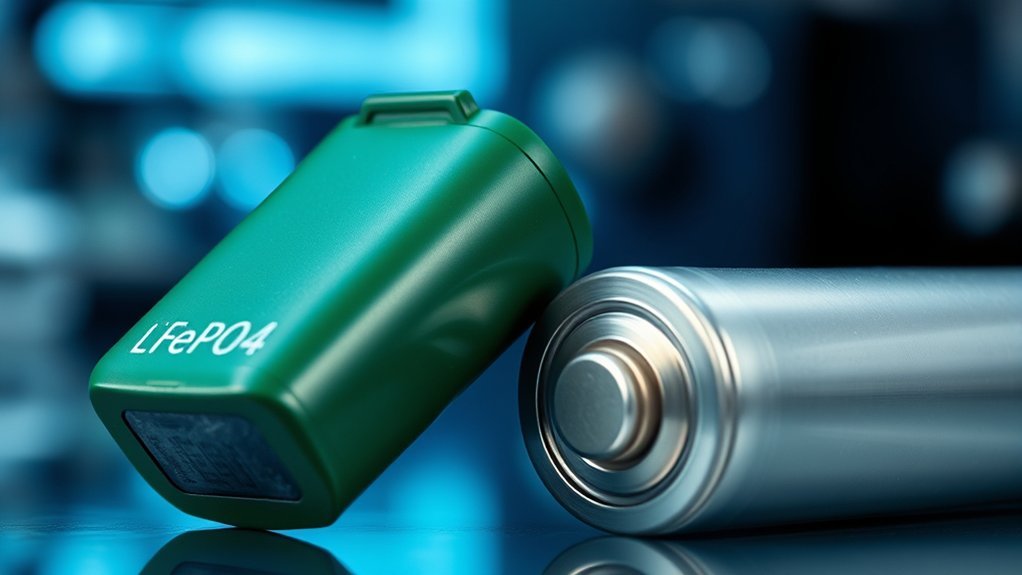
The lifespan of lithium batteries is primarily influenced by charge cycles and usage patterns, which determine the rate of electrode degradation. Additionally, temperature and storage conditions play critical roles, as extreme heat accelerates chemical breakdown while cold can impair performance. Understanding these factors allows us to optimize battery longevity through proper management and environmental controls.
Charge Cycles and Usage
The lifespan of lithium batteries is considerably influenced by the number of charge cycles they undergo and how they are used. Frequent deep discharges accelerate capacity degradation, reducing overall cycle life. Proper usage, such as avoiding complete discharges and overcharging, extends battery longevity. Additionally, the number of cycles directly impacts battery recycling efforts; longer-lasting batteries generate less waste, mitigating environmental impact. Proper management of charge cycles can also improve the sustainability of lithium technology, emphasizing the importance of efficient usage patterns. Understanding this relationship underscores the need for optimized charging practices and responsible disposal protocols to maximize lifespan and minimize ecological footprint. Ultimately, controlling charge cycles and promoting battery recycling are critical for environmental sustainability and prolonging lithium battery service life.
Temperature and Storage Conditions
Proper management of charge cycles considerably extends lithium battery life, but external environmental factors also play a vital role. Temperature and storage conditions directly influence degradation rates; high temperatures accelerate capacity loss, while extreme cold hampers performance. Maintaining ideal storage at room temperature minimizes chemical breakdown, preserving battery health. Additionally, improper storage can lead to safety hazards and reduce lifespan, increasing the frequency of battery recycling and its associated environmental impact. Conversely, storing batteries in controlled environments supports sustainable disposal and recycling practices, reducing ecological footprint. Understanding these factors emphasizes the significance of environmental considerations in battery longevity strategies, aligning with the broader goals of minimizing environmental impact and promoting responsible lifecycle management in lithium battery applications.
Comparing Cycle Life: How Many Charge-Discharge Cycles Can Each Battery Handle?
While both Lifepo4 and lithium-ion batteries are popular choices for energy storage, their cycle life capacities differ notably. Lifepo4 batteries typically endure between 2,000 to 5,000 charge-discharge cycles, whereas lithium-ion variants often handle around 500 to 1,500 cycles. This higher cycle count for Lifepo4 translates into longer overall lifespan and reduced replacement frequency. From an environmental impact perspective, extended cycle life minimizes battery recycling frequency, reducing waste and resource consumption. Additionally, Lifepo4’s more stable chemistry lessens degradation products, supporting safer disposal and recycling practices. Consequently, Lifepo4’s superior cycle durability not only enhances longevity but also promotes more sustainable energy storage solutions by decreasing the environmental footprint associated with frequent battery replacements.
How Long Can You Expect Lithium-Ion Batteries to Last?
Lithium-ion batteries typically last between 2 to 10 years, depending on usage patterns, operating conditions, and maintenance practices. Their lifespan hinges on factors like temperature, depth of discharge, and charging cycles. As batteries approach end-of-life, effective battery recycling becomes critical to mitigate environmental impact and recover valuable materials such as cobalt and lithium. Proper recycling reduces hazardous waste and conserves resources, extending the sustainability of lithium-ion technology. However, the finite lifespan means many batteries will eventually require disposal or refurbishment, emphasizing the importance of responsible management. Advances in recycling processes and stricter regulations aim to reduce environmental harm, but the inherent degradation over time remains a key consideration for users and manufacturers alike.
What Is the Typical Lifespan of LiFePO4 Batteries?
LiFePO4 (lithium iron phosphate) batteries are known for their exceptional longevity compared to traditional lithium-ion counterparts, typically lasting longer with more charge cycles. On average, LiFePO4 batteries reach 2,000 to 5,000 cycles, translating to 8–10 years of reliable use under ideal conditions. Their durability benefits battery recycling efforts, as fewer replacements reduce waste and environmental impact.
| Cycle Life | Approximate Years | Key Benefit |
|---|---|---|
| 2,000-3,000 | 8-10 | Longer lifespan, lower waste |
| 3,000-4,000 | 10-12 | Reduced environmental footprint |
| 4,000-5,000 | 12-15 | Enhanced sustainability |
This longevity makes LiFePO4 batteries a sustainable choice, minimizing environmental impact over their lifecycle.
How Do Usage Conditions Affect Battery Durability and Longevity?
The performance and longevity of batteries are considerably influenced by their usage conditions, as operational environments and handling practices directly impact degradation rates. Factors such as temperature extremes, depth of discharge, and charging habits accelerate wear, reducing lifespan. Specifically:
- Operating at high temperatures increases chemical reactions, hastening capacity loss.
- Frequent deep discharges strain battery components, shortening cycles.
- Rapid charging can induce thermal stress, impairing durability.
- Poor maintenance hampers battery recycling efforts, heightening environmental impact.
Understanding these conditions emphasizes the importance of proper handling to extend battery life and minimize ecological footprint. Optimized usage not only prolongs lifespan but also supports sustainable battery recycling, reducing waste and environmental impact. Proper practices are essential for maximizing performance and ecological responsibility.
Which Battery Type Performs Better Over Time in Real-World Applications?
When evaluating battery performance over time, real-world conditions reveal significant differences in durability and reliability between various chemistries. Lithium iron phosphate (Lifepo4) batteries generally outperform lithium-ion in longevity, maintaining capacity through more charge cycles under daily use. This extended lifespan translates into fewer replacements, reducing the environmental impact and supporting sustainable practices like battery recycling. In contrast, traditional lithium-ion batteries tend to degrade faster, leading to increased waste and environmental concerns. Lifepo4’s stable chemistry also minimizes safety risks, making it more reliable over years of application. Overall, Lifepo4 batteries demonstrate superior long-term performance in demanding environments, offering a more sustainable solution that balances durability and environmental considerations.
Cost Considerations: Do Longer Lifespans Justify Price Differences?
When evaluating battery options, we must consider the initial cost differences alongside long-term savings, as a higher upfront price may be offset by extended lifespan and reduced replacement frequency. The value of a longer-lasting battery hinges on balancing these investment costs against operational durability and maintenance expenses. Ultimately, we need to assess whether the increased initial expenditure is justified by the potential for decreased total cost of ownership over time.
Initial Cost Differences
Are longer lifespans worth the higher initial investment? The upfront cost difference between Lifepo4 and lithium-ion batteries is significant. Lifepo4 batteries tend to be more expensive initially due to advanced materials and manufacturing processes. Consider these factors:
- Higher purchase price can offset longer lifespan, reducing replacement frequency.
- Longer-lasting batteries minimize environmental impact through reduced battery recycling needs.
- Initial costs influence total lifecycle costs, factoring in maintenance and disposal.
- Despite higher upfront costs, Lifepo4 batteries may provide better value over time, especially where sustainability matters most.
While the initial investment is steeper, the extended lifespan can justify costs when accounting for reduced environmental impact and lower frequency of replacements. This makes Lifepo4 a compelling choice for those prioritizing sustainability and long-term efficiency.
Long-Term Savings Potential
Although Lifepo4 batteries typically have a higher initial cost, their longer lifespan can lead to significant long-term savings. With fewer replacement cycles, operational costs decrease, offsetting upfront expenses. This extended durability also minimizes the frequency of battery recycling, reducing environmental impact and disposal costs. From a lifecycle perspective, Lifepo4’s longevity translates to lower cumulative expenses and less waste generation. Additionally, fewer replacements reduce resource extraction and manufacturing demands, further supporting environmental sustainability. While lithium-ion batteries may seem cheaper initially, the economic benefits of Lifepo4’s durability become evident over time, especially when factoring in reduced recycling needs and lower ecological costs. Overall, the long-term savings potential justifies the initial price difference, making Lifepo4 a more cost-effective choice in the long run.
Value of Extended Lifespan
Extended lifespan considerably impacts the overall value proposition of Lifepo4 batteries, often justifying their higher initial cost. A longer cycle life reduces the frequency of replacements, lowering long-term expenses and resource consumption. Consider these factors:
- Cost savings over time—fewer replacements mean less money spent.
- Enhanced sustainability—extended lifespan minimizes environmental impact through reduced battery waste.
- Battery recycling efficiency—long-lasting batteries lessen the burden on recycling systems, conserving resources.
- Environmental footprint—fewer battery replacements decrease hazardous waste, supporting ecological health.
Ultimately, investing in batteries with extended lifespans aligns economic benefits with environmental responsibility, making Lifepo4’s higher upfront price a strategic choice for sustainable, cost-effective energy solutions.
Maintenance Tips to Extend the Lifespan of Both Battery Types
Proper maintenance is essential for maximizing the lifespan of both Lifepo4 and lithium-ion batteries. Regularly monitoring charge cycles and avoiding deep discharges reduce stress on the cells, preserving capacity over time. Temperature management is critical; operating within ideal temperature ranges minimizes degradation and enhances longevity. Additionally, implementing proper storage practices—such as partial charges and cool environments—can prevent capacity loss. Proper maintenance also involves responsible battery recycling, which reduces environmental impact by preventing hazardous materials from contaminating ecosystems. By extending battery life through these practices, we not only optimize performance but also contribute to sustainable resource use, reducing the need for frequent replacements and minimizing environmental footprint. This proactive approach ensures both economic and ecological benefits.
Which Battery Is the Best Choice for Your Long-Term Needs?
When selecting a battery for long-term use, understanding the specific demands of your application is essential, as it directly impacts which type will serve you best over time. Lifepo4 batteries excel in battery safety, offering stable chemistry and reduced risk of thermal runaway. Lithium-ion batteries provide higher energy density but require careful management to prevent safety hazards. Consider these factors:
- Longevity and cycle life, favoring Lifepo4 for durability.
- Environmental impact, with recycling and disposal processes favoring Lifepo4’s eco-friendliness.
- Cost-effectiveness over time, where Lifepo4’s longer lifespan reduces replacement frequency.
- Application-specific safety requirements, making Lifepo4 the safer choice for critical systems.
Ultimately, evaluating your long-term needs in safety, recyclability, and lifespan will guide you toward the most suitable battery choice.
Frequently Asked Questions
How Do Temperature Fluctuations Specifically Influence Lifepo4 and Lithium-Ion Battery Lifespans?
Temperature fluctuations impact thermal stability and temperature resilience, causing Lifepo4 batteries to withstand wider ranges with less degradation, while lithium-ion batteries suffer accelerated aging under extreme conditions, ultimately shortening their lifespan due to thermal stress.
Are There Environmental Factors That Uniquely Affect Each Battery Type’s Longevity?
Environmental factors uniquely impact each battery chemistry; high temperatures accelerate material degradation in lithium-ion batteries, while Lifepo4 batteries are more resilient but still susceptible to extreme conditions, affecting overall longevity through distinct mechanisms of material degradation.
How Does Charging Speed Impact the Lifespan of Lifepo4 Versus Lithium-Ion Batteries?
Just like a finely tuned engine, rapid charging can strain both Lifepo4 and lithium-ion batteries, reducing their capacity over time. Faster charging decreases efficiency, especially in lithium-ion, but Lifepo4 batteries better withstand high rates, preserving lifespan.
Can Improper Storage Shorten the Lifespan of Either Battery Type?
Improper storage can indeed shorten battery lifespan by degrading capacity and reducing charging cycles. We recommend maintaining ideal temperature, avoiding deep discharge, and storing with a partial charge to preserve both Lifepo4 and lithium-ion battery capacity.
What Are the Recycling and Disposal Considerations for Each Battery?
Coincidentally, recycling processes for both batteries focus on recovering valuable materials, ensuring safe disposal and maintaining battery capacity. Proper recycling minimizes environmental impact, aligning with regulations, and optimizes resource reuse for Lifepo4 and lithium-ion batteries alike.
Conclusion
In analyzing lifespan differences, the theory that LiFePO4 batteries are inherently more durable holds strong, given their higher cycle counts and longer operational life. While initial costs may be higher, their extended longevity and lower replacement frequency often justify the investment, especially for long-term applications. Ultimately, selecting the best battery hinges on balancing upfront costs with expected lifecycle performance, making LiFePO4 the more sustainable and cost-effective choice over time.