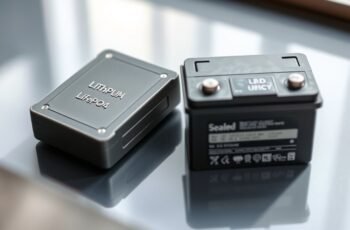
When evaluating battery options, understanding the cost dynamics of Lifepo4 versus lead acid is essential for making informed decisions. While Lifepo4 batteries often have higher upfront costs, their longer lifespan and efficiencies can lead to significant savings over time. Yet, the true value depends on various factors like maintenance, replacement frequency, and application needs. Exploring these aspects helps clarify which technology offers the best long-term investment, prompting us to contemplate all relevant costs.
Key Takeaways
- Lifepo4 batteries have higher upfront costs but lower long-term ownership expenses due to longer lifespan and higher cycle durability.
- Lead acid batteries are cheaper initially but require more frequent replacements, increasing total costs over time.
- Lifepo4 offers better energy density and efficiency, reducing the need for larger capacity batteries and lowering operational costs.
- Recycling and environmental disposal favor Lifepo4, leading to reduced environmental and safety-related expenses.
- For short-term projects, lead acid batteries may be more cost-effective initially, but Lifepo4 is more economical for long-term use.
What Are Lifepo4 and Lead Acid Batteries and How Do They Work?
Lithium iron phosphate (LiFePO₄ or Lifepo4) and lead acid batteries are two prevalent types of rechargeable energy storage systems, each operating through distinct electrochemical mechanisms. Lifepo4 batteries utilize a lithium-based cathode and phosphate-based anode, offering high energy density and long cycle life. Lead acid batteries rely on lead dioxide and sponge lead plates submerged in sulfuric acid, providing reliable performance at lower costs. During manufacturing, material selection influences recycling processes, with Lifepo4’s lithium components enabling more sustainable battery recycling compared to lead acid’s heavy metals. These differences impact not only performance but also the environmental footprint. Understanding these electrochemical and manufacturing distinctions is essential for evaluating their cost-effectiveness and sustainability in various applications.
Initial Costs: Comparing Purchase Prices of Lifepo4 and Lead Acid Batteries
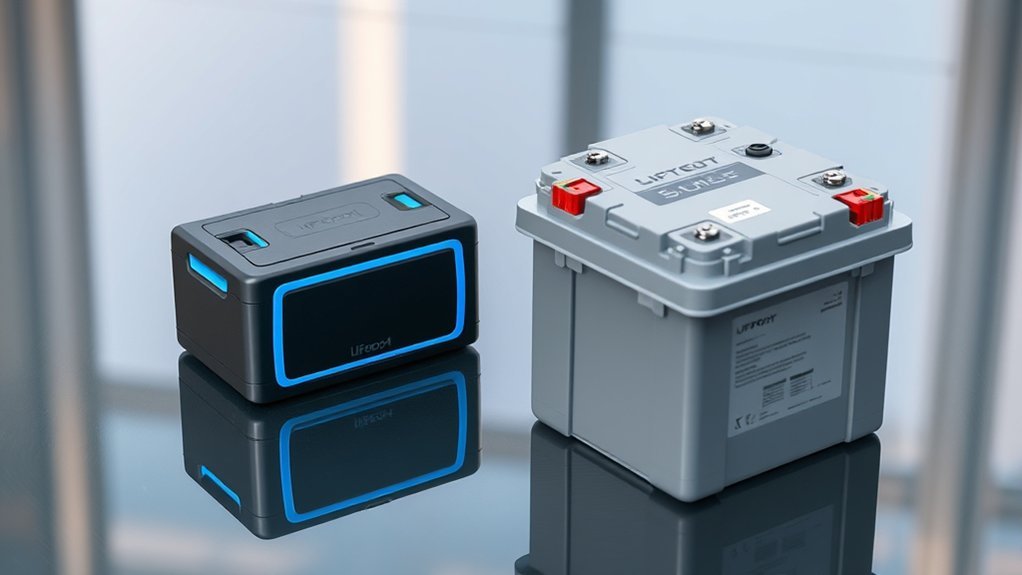
When comparing initial costs, Lifepo4 batteries typically have a higher purchase price than lead acid counterparts, but variations in capacity influence overall value. We examine how these price differences impact upfront investment and consider the significance of battery capacity differences on total cost. Understanding these factors helps clarify which technology presents a more cost-effective option at the outset.
Purchase Price Differences
The initial purchase price of batteries considerably influences the overall cost-effectiveness of energy storage solutions. Lifepo4 batteries generally have a higher upfront cost compared to lead acid batteries, primarily due to more complex manufacturing processes and higher material costs. However, this initial disparity is offset over time through longer lifespan and reduced maintenance. When considering battery recycling, Lifepo4’s environmentally friendly chemistry minimizes disposal expenses, which can impact total ownership costs. Lead acid batteries, with their simpler manufacturing, are cheaper initially but require frequent replacements and higher recycling costs due to hazardous materials like lead. While the upfront investment favors lead acid, the all-encompassing cost analysis underscores Lifepo4’s potential for long-term savings, especially in applications emphasizing sustainability and lifecycle management.
Battery Capacity Variations
How do the initial costs of Lifepo4 and lead acid batteries compare when considering their capacities? Battery chemistry considerably influences capacity per dollar; Lifepo4 batteries, with their advanced chemistry, typically offer higher usable capacity in a compact form, but at a higher purchase price. Lead acid batteries are more economical upfront, often providing larger capacity for lower initial costs, yet they tend to have lower energy density. The different charging methods—lifepo4 batteries requiring specialized chargers and lead acid batteries compatible with standard chargers—also impact capacity utilization and overall costs. While lead acid batteries may seem cheaper initially, Lifepo4’s higher capacity retention and efficiency can offset the initial investment over time. Capacity variations therefore reflect both chemistry-driven efficiency and associated upfront costs.
Initial Investment Impact
Are initial costs the decisive factor in choosing between Lifepo4 and lead acid batteries? While purchase price differences are significant, initial investment must be examined alongside manufacturing processes and end-of-life considerations like battery recycling. Lifepo4 batteries generally have higher upfront costs due to advanced manufacturing techniques that guarantee enhanced safety and longer lifespan. Conversely, lead acid batteries benefit from established, cost-effective manufacturing processes, lowering initial expenses. However, their shorter cycle life leads to more frequent replacements, increasing long-term costs. Battery recycling, which is more streamlined for lead acid due to mature recycling infrastructure, further influences total investment calculations. Ultimately, a thorough comparison reveals that initial costs alone don’t determine overall value; lifecycle and recycling efficiencies also play vital roles in investment decisions.
Maintenance Expenses for Lifepo4 vs Lead Acid Batteries
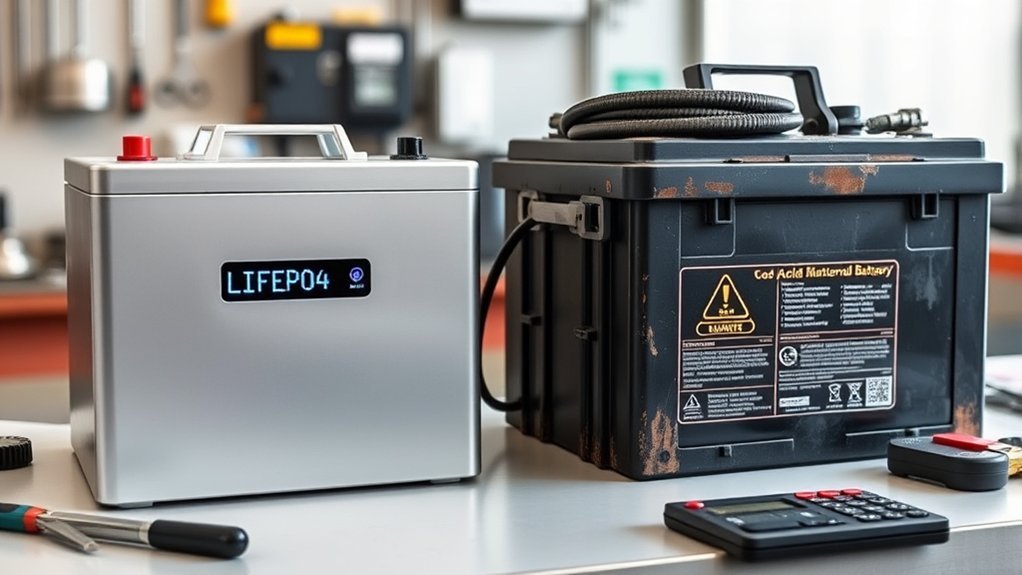
While both Lifepo4 and lead acid batteries require maintenance, Lifepo4 batteries generally demand less ongoing attention due to their chemical stability and reduced susceptibility to degradation. This lower maintenance translates to cost savings over time. Key factors include:
- Reduced watering requirements in lead acid batteries, eliminating frequent top-ups.
- Lower risk of sulfation and capacity loss for Lifepo4, minimizing maintenance interventions.
- Decreased need for equalization charges, saving labor and energy.
- Environmental considerations: Lifepo4’s potential for easier battery recycling and lower manufacturing costs contribute to sustainable lifecycle management.
In contrast, lead acid batteries incur higher maintenance expenses due to electrolyte management and shorter replacement cycles. These factors make Lifepo4 batteries more cost-effective, especially when considering lifecycle maintenance.
Battery Lifespan and Replacement Costs: Which Lasts Longer?
Although both Lifepo4 and lead acid batteries serve similar functions, Lifepo4 batteries generally offer a longer operational lifespan due to their more stable chemical composition and deeper cycle capabilities. Lifepo4 cells typically endure 2,000–3,000 cycles, compared to 500–1,000 for lead acid. This extended lifespan reduces frequent replacements, impacting total costs. Additionally, manufacturing processes for Lifepo4 involve safer, more sustainable techniques, enhancing recyclability.
| Battery Type | Typical Lifespan (cycles) | Replacement Cost | Recycling Process | Environmental Impact |
|---|---|---|---|---|
| Lifepo4 | 2,000–3,000 | Higher initial | Safer, more efficient | Lower footprint |
| Lead Acid | 500–1,000 | Lower initial | More hazardous | Higher footprint |
Overall Cost of Ownership: Calculating Long-Term Savings
When evaluating the overall cost of ownership for Lifepo4 versus lead acid batteries, it’s essential to consider not just the initial purchase but long-term expenses like maintenance, replacements, and efficiency. Lifepo4 batteries typically offer greater longevity, reducing replacement frequency. Key factors include:
- Charging cycles: Lifepo4 batteries support more cycles, lowering cost-per-use over time.
- Maintenance needs: Lead acid batteries require regular watering and equalization, increasing upkeep costs.
- Battery recycling: Lifepo4 batteries are more environmentally friendly, easing recycling costs.
- Efficiency and energy loss: Higher efficiency reduces energy costs in the long run, impacting overall savings.
These factors combine to influence long-term ownership costs, with Lifepo4 batteries generally providing better value through durability and reduced associated expenses.
Performance and Efficiency: How Do They Impact Your Budget?
The efficiency and performance characteristics of batteries directly influence ongoing operational costs and overall budget management. Higher performance batteries, like Lifepo4, typically offer more charging cycles, reducing replacement frequency and associated costs over time. Their superior cycle life also enhances battery recycling potential, minimizing environmental impact and disposal expenses. Conversely, lead acid batteries often require more frequent replacements, increasing long-term expenses.
| Aspect | Lifepo4 | Lead Acid | Impact on Budget |
|---|---|---|---|
| Charging Cycles | 2000+ | 500-1000 | Cost savings over time |
| Recycling | More efficient, eco-friendly | Less efficient, waste | Environmental and cost benefits |
| Performance | Consistent, high capacity | Diminishes with use | Lower operational costs |
Safety and Reliability Costs for Lifepo4 and Lead Acid Batteries
Safety and reliability are critical factors influencing the total cost of battery systems, particularly regarding fire risks and safety measures. We need to examine how durability and reliability affect long-term maintenance and replacement expenses for Lifepo4 and lead acid batteries. Analyzing these aspects helps in understanding the true safety investment required for each technology.
Fire Risk and Safety Measures
Although lithium iron phosphate (LiFePO4) batteries generally pose a lower fire risk compared to lead acid batteries, the safety measures required for each type differ markedly and impact their overall reliability costs. LiFePO4 batteries benefit from enhanced thermal stability, reducing the likelihood of thermal runaway. However, safety protocols still demand rigorous manufacturing safety and proper battery recycling procedures to prevent internal short circuits. Lead acid batteries pose a higher fire risk due to acid leaks and potential hydrogen gas buildup, necessitating additional venting and fire suppression systems. Key safety measures include:
- Implementing advanced venting for lead acid batteries
- Enforcing strict manufacturing safety protocols
- Incorporating fire detection and suppression systems
- Ensuring proper battery recycling to mitigate environmental hazards
Durability and Reliability Factors
Durability and reliability are critical factors influencing the long-term safety and operational costs of battery systems. Lifepo4 batteries generally exhibit superior durability due to their stable chemistry, reducing degradation over cycles, which minimizes maintenance and replacement expenses. This enhanced reliability decreases safety risks associated with battery failure, lowering costs linked to safety measures. Conversely, lead acid batteries tend to have shorter lifespans, increasing the frequency of replacements and associated manufacturing costs. Additionally, the recycling process for Lifepo4 batteries is less complex and environmentally impactful, potentially reducing safety and environmental liabilities. Lead acid batteries pose greater challenges in battery recycling, contributing to higher disposal costs and environmental safety concerns. These durability and reliability differences markedly influence total lifecycle costs and safety considerations for both battery types.
Environmental Impact and Disposal Expenses
While both LiFePO4 and lead-acid batteries have environmental considerations, LiFePO4 batteries generally present a lower ecological footprint throughout their lifecycle. They contain fewer toxic materials, reducing potential environmental contamination during disposal. Additionally, the recycling process for LiFePO4 is more efficient, minimizing hazardous waste.
Key points include:
- Battery recycling for LiFePO4 is less complex and more environmentally friendly than lead-acid.
- Toxic materials in lead-acid batteries, such as sulfuric acid and lead, pose higher disposal risks.
- LiFePO4 batteries generate less hazardous waste, lowering disposal expenses.
- The overall lifecycle environmental impact favors LiFePO4, making it a more sustainable choice in terms of disposal and ecological footprint.
Which Battery Offers Better Value for Different Energy Needs?
Determining which battery offers better value depends heavily on specific energy requirements and usage scenarios. Lifepo4 batteries generally excel in applications demanding high charging cycles, as they can often endure 2,000+ cycles with minimal capacity loss, reducing long-term replacement costs. Conversely, lead acid batteries typically provide fewer cycles, necessitating more frequent replacements and increasing overall expenses. When considering battery recycling, Lifepo4 batteries have a more environmentally sustainable profile, with easier recycling processes and less hazardous waste. For applications prioritizing longevity and lower total cost of ownership, Lifepo4 offers superior value. However, for short-term or low-demand needs, lead acid batteries may be more economical upfront. Ultimately, evaluating cycle longevity, recycling benefits, and energy demands guides ideal battery selection for different scenarios.
Key Factors to Consider When Choosing Between Lifepo4 and Lead Acid Batteries
When choosing between Lifepo4 and lead acid batteries, it’s essential to evaluate several key factors to guarantee the selection aligns with your specific energy needs and operational constraints.
- Voltage stability: Lifepo4 batteries maintain more consistent voltage levels during discharge, improving system efficiency, whereas lead acid batteries experience voltage drops that can affect performance.
- Cycle life and durability: Lifepo4 batteries generally offer longer cycle life, reducing replacement costs over time.
- Battery recycling: Lifepo4 batteries are more environmentally friendly, with easier and safer recycling processes compared to lead acid, which pose environmental hazards.
- Initial cost versus total lifecycle expense: While Lifepo4 might have a higher upfront cost, it often results in lower total cost of ownership due to longevity and reduced maintenance needs.
Frequently Asked Questions
How Do Lifepo4 and Lead Acid Batteries Compare in Cold Weather Performance?
We find Lifepo4 batteries outperform lead acid in cold weather, offering greater temperature resilience and longer battery lifespan, maintaining higher capacity and efficiency at lower temperatures, making them a more reliable choice for cold climate applications.
Are There Tax Incentives for Choosing Lifepo4 Over Lead Acid Batteries?
We find that tax credits and government incentives often favor Lifepo4 batteries due to their longevity and efficiency, making them a more cost-effective and environmentally friendly choice, potentially qualifying for specific renewable energy incentives.
What Are the Warranty Differences Between Lifepo4 and Lead Acid Options?
We warrant Lifepo4 batteries with longer lifespan and lower environmental impact, offering superior security, while lead acid options come with shorter warranties, risking reduced reliability. We analyze warranties, emphasizing durability, environmental benefits, and technical trustworthiness.
How Does Charging Time Affect Overall Battery Costs?
Charging time impacts overall costs through higher charging efficiency and reduced maintenance needs; faster charging minimizes downtime, lowers energy expenses, and extends battery lifespan, making Lifepo4 batteries more cost-effective than lead acid options in technical, analytical evaluations.
Can Lifepo4 Batteries Reduce Overall System Size and Cost?
We believe LiFePO4 batteries can reduce overall system size and cost due to their longer battery lifespan and lower environmental impact, enabling fewer replacements and more sustainable, compact energy solutions over time.
Conclusion
While lead acid batteries may seem more affordable upfront, Lifepo4’s longer lifespan and lower maintenance costs ultimately deliver greater value. The initial savings quickly diminish when considering replacements, efficiency, and safety. In the long run, Lifepo4 batteries stand out as a more sustainable, reliable choice, offering lower total ownership costs and fewer environmental concerns. Choosing the right battery hinges on balancing initial investment with long-term performance and cost-effectiveness.