When it comes to choosing the right battery for solar energy storage, the decision between Lifepo4 and lead acid involves more than just initial costs. Their performance, longevity, safety features, and environmental impact all play vital roles in long-term system efficiency. Understanding these differences can substantially influence your system’s reliability and sustainability, but the complexities involved often leave many weighing their options. Let’s explore the key factors that could tip the balance.
Key Takeaways
- Lifepo4 batteries offer longer cycle life and higher efficiency, making them ideal for frequent, high-demand solar applications.
- Lead acid batteries are cheaper initially but have shorter lifespan and higher maintenance, suitable for low-frequency use.
- Lifepo4 batteries are safer with lower risk of thermal runaway and easier to recycle, supporting environmental sustainability.
- Lead acid batteries involve hazardous materials and complex recycling, leading to higher environmental and disposal challenges.
- Consider long-term costs, system capacity needs, safety, and environmental impact when choosing between Lifepo4 and lead acid for solar storage.
What Are Lifepo4 and Lead Acid Batteries?
Lifepo4 and lead acid batteries are two prevalent types of energy storage solutions used in solar power systems, each with distinctive chemical compositions and operational characteristics. Lifepo4 batteries utilize lithium iron phosphate chemistry, offering high energy density and stability, while lead acid batteries rely on lead plates and sulfuric acid, providing cost-effective storage. Their manufacturing processes influence their performance and environmental impact; Lifepo4 cells require precise control during synthesis, impacting recycling efficiency, whereas lead acid manufacturing involves lead smelting with well-established recycling streams. Battery recycling is vital for both; Lifepo4 recycling focuses on recovering lithium and phosphate materials, reducing environmental footprint, whereas lead acid recycling is mature, emphasizing lead recovery to prevent toxicity. These processes shape sustainability and operational longevity in solar applications.
Key Differences in Performance and Longevity
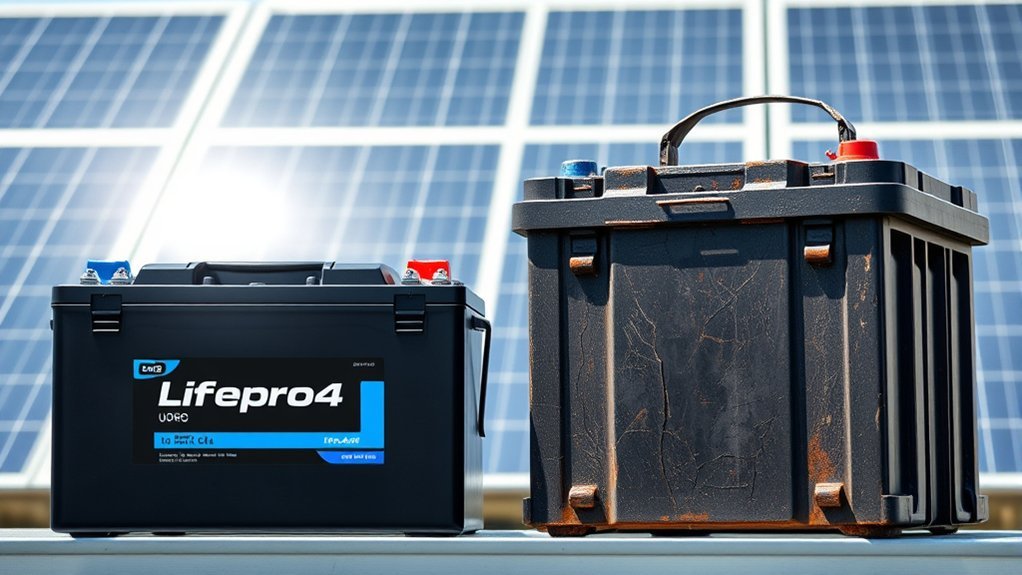
When comparing Lifepo4 and lead acid batteries, charge cycle count and overall durability are critical factors, as Lifepo4 typically supports more cycles with less capacity fade. Efficiency and energy retention also differ markedly, with Lifepo4 maintaining higher state-of-charge levels over time. These distinctions directly impact long-term performance and the overall lifespan of a solar energy storage system.
Charge Cycles & Durability
Although both LiFePO4 and lead-acid batteries are commonly used for solar energy storage, their performance regarding charge cycles and durability varies considerably. LiFePO4 batteries typically endure 2,000–5,000 cycles, maintaining capacity longer and supporting better battery recycling processes due to their stable chemistry. Conversely, lead-acid batteries generally offer 500–1,000 cycles, with capacity degradation accelerating over time. Charging safety is also a critical factor; LiFePO4 batteries exhibit safer charging profiles with lower thermal runaway risk. The following table summarizes these differences:
| Feature | LiFePO4 | Lead-Acid | Implication |
|---|---|---|---|
| Cycle Life | 2,000–5,000 | 500–1,000 | Longer lifespan, better durability |
| Capacity Retention | High | Moderate | Reduced replacement frequency |
| Battery Recycling | Easier due to chemistry | More challenging | Environmental impact considerations |
| Charging Safety | Higher, stable chemistry | Lower, risk of thermal runaway | Safer operation overall |
Efficiency & Energy Retention
Have you ever wondered how effectively these batteries retain energy over time? Lifepo4 batteries exhibit superior energy retention due to their high efficiency, maintaining a consistent capacity over numerous charge cycles. In contrast, lead acid batteries experience gradual capacity loss, reducing long-term performance. Manufacturing processes profoundly impact efficiency; Lifepo4’s precise cell engineering minimizes internal resistance, enhancing energy retention. Additionally, the sustainability of Lifepo4 is reinforced by easier battery recycling, which preserves material integrity for reuse, extending overall lifespan. Lead acid batteries, with more complex manufacturing and more hazardous waste, face greater challenges in recycling. These factors contribute to Lifepo4’s better performance in energy retention and overall efficiency, making it a more durable and environmentally conscious choice for solar applications.
Which Battery Type Is More Cost-Effective?
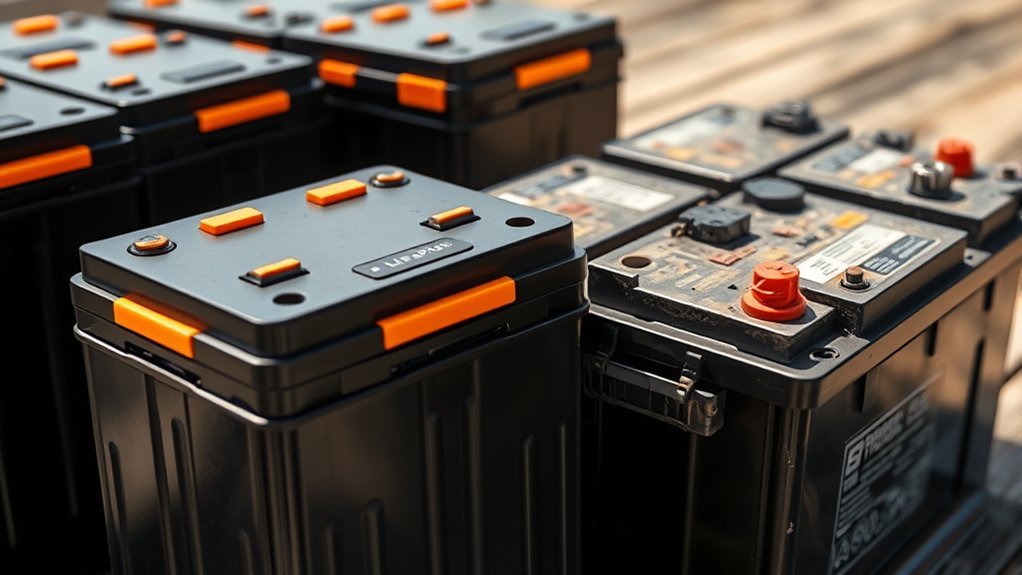
When evaluating cost-effectiveness, we consider both initial purchase price and long-term value. Lifepo4 batteries generally have higher upfront costs but offer lower maintenance and longer lifespan, reducing total lifecycle expenses. Conversely, lead acid batteries are initially cheaper but may incur higher replacement and maintenance costs over time.
Initial Purchase Cost
While initial purchase costs are a critical factor in determining the most cost-effective battery for solar applications, Lifepo4 batteries typically have a higher upfront price compared to lead-acid options. This higher cost stems from complex manufacturing processes and the materials involved, which influence both manufacturing costs and future battery recycling value. The table below compares their initial costs and related factors:
| Battery Type | Initial Cost | Recycling & Manufacturing Costs |
|---|---|---|
| Lead-Acid | Lower | Lower, but shorter lifespan |
| Lifepo4 | Higher | Higher, but longer lifespan |
Although Lifepo4’s initial price is higher, its extended lifespan and efficient recycling process can offset these costs over time, making it potentially more economical in the long run.
Long-Term Value
Although Lifepo4 batteries typically require a higher initial investment, their superior lifespan and enhanced efficiency often translate into greater long-term value compared to lead-acid batteries. Lifepo4’s extended cycle life—up to 10,000 cycles—reduces replacement frequency, lowering lifecycle costs. Manufacturing advancements have improved production quality and energy density, further boosting durability and performance. Additionally, Lifepo4 batteries are more environmentally friendly, supporting efficient battery recycling processes that mitigate ecological impact. In contrast, lead-acid batteries demand more frequent replacement and are less recyclable, increasing long-term disposal costs. Overall, despite higher upfront expenses, Lifepo4 batteries’ durability, efficiency, and advancements in manufacturing and recycling technologies make them a more cost-effective choice over the long term.
How Do Lifepo4 and Lead Acid Batteries Handle Safety and Maintenance?
Lifepo4 batteries generally offer superior safety features and require less maintenance compared to lead acid batteries, making them a more reliable choice for solar energy systems. Their inherent stability reduces the need for strict safety protocols related to thermal runaway or acid leaks. Lifepo4 cells are chemically stable, minimizing risks of fires or explosions, even under stress. Maintenance routines are simplified; they do not require regular watering, equalization, or acid level checks typical of lead acid batteries. Conversely, lead acid systems demand vigilant inspection of venting, corrosion, and fluid levels, increasing operational complexity. The reduced maintenance and enhanced safety protocols of Lifepo4 batteries translate into lower long-term operational costs and fewer safety concerns, supporting a more efficient and secure energy storage solution.
Which Battery Is Better for Off-Grid Solar Systems?
Choosing the right battery for off-grid solar systems hinges on evaluating factors such as energy capacity, longevity, cost, and maintenance requirements. Lifepo4 batteries generally outperform lead acid in these areas, offering longer cycle life and higher efficiency. They also facilitate safer battery recycling processes, reducing environmental impact through more sustainable manufacturing practices. Lead acid batteries, while initially less expensive, demand more frequent replacements and maintenance, ultimately increasing lifecycle costs. Manufacturing sustainability favors Lifepo4 due to cleaner production methods and minimized resource depletion. When considering off-grid applications, Lifepo4’s durability and recyclability make it the superior choice, ensuring reliable energy storage with a reduced ecological footprint. This all-encompassing evaluation emphasizes Lifepo4’s advantages for sustainable, long-term off-grid solar energy systems.
The Environmental Impact of Lifepo4 vs. Lead Acid Batteries
Since environmental considerations are increasingly critical in energy storage decisions, evaluating the ecological impacts of Lifepo4 and lead acid batteries reveals significant differences. Lifepo4 batteries generally have lower manufacturing emissions and are more recyclable, reducing long-term waste. Lead acid batteries, however, involve higher manufacturing emissions and pose greater challenges in battery recycling, often leading to hazardous waste. The table below summarizes these impacts:
| Aspect | Lifepo4 | Lead Acid |
|---|---|---|
| Manufacturing emissions | Lower due to cleaner production | Higher, involving toxic materials |
| Battery recycling | Safer, more efficient | Hazardous, complex process |
| Environmental toxicity | Minimal | High due to lead and acids |
| Lifecycle impact | Reduced due to longevity | Shorter, leading to more waste |
| Waste management | Easier and eco-friendlier | Greater environmental concerns |
This analysis underscores Lifepo4’s superior environmental profile.
Choosing the Right Battery Based on Your Energy Needs
Selecting the appropriate battery technology depends primarily on your specific energy consumption patterns and system requirements. For high daily loads or frequent cycling, Lifepo4 batteries typically outperform lead acid, offering greater depth of discharge and longer lifespan. Conversely, for lower, infrequent use, lead acid may suffice. When choosing, consider the manufacturing processes: Lifepo4 batteries involve complex, resource-intensive manufacturing but benefit from more efficient battery recycling, reducing long-term environmental impact. Lead acid batteries are simpler to produce but pose greater challenges in recycling and disposal, impacting sustainability. Accurate assessment of your energy needs guarantees ideal capacity sizing, while understanding manufacturing and recycling implications helps select a battery that balances performance, environmental impact, and lifecycle costs effectively.
Installation and Compatibility Considerations
Proper installation and compatibility are critical factors that directly influence the performance, safety, and longevity of your solar battery system. Ensuring voltage compatibility between batteries and inverters prevents overvoltage or undervoltage conditions, which can damage components or reduce capacity. Additionally, selecting batteries with compatible wiring and mounting configurations simplifies installation and minimizes connection errors. Considering battery recycling options is essential for sustainable operation, especially for lead acid units, which require proper disposal protocols. Lifepo4 batteries generally offer safer handling and longer cycle life, reducing waste. Properly evaluating these factors guarantees system reliability, optimizes efficiency, and promotes safe operation over the system’s lifespan. Accurate compatibility checks and adherence to installation guidelines are crucial for maximizing your solar investment.
Making the Final Decision: Lifepo4 or Lead Acid for Solar?
When choosing between LiFePO4 (lithium iron phosphate) and lead acid batteries for a solar system, it’s essential to weigh their respective technical advantages and limitations in relation to your specific energy needs and operational priorities. LiFePO4 batteries offer higher energy density, longer cycle life, and faster charging, reducing long-term costs despite higher initial investment. Conversely, lead acid batteries benefit from established manufacturing processes and easier recycling, but they typically have shorter lifespans and lower efficiency. Battery recycling practices differ markedly, with LiFePO4 posing fewer environmental concerns due to safer manufacturing processes and easier recycling options. Ultimately, your decision hinges on balancing upfront costs, environmental impact, and system longevity, aligning with your sustainability goals and maintenance capabilities.
Frequently Asked Questions
How Do Temperature Variations Affect Battery Performance?
Temperature variations greatly affect battery performance; extremely high or low battery temperatures can diminish efficiency and lifespan. Maintaining ideal battery temperature guarantees stable performance and longevity, as performance impact becomes evident outside recommended temperature ranges, especially during rapid charge or discharge cycles.
Can Lifepo4 Batteries Be Recycled Easily?
Lifepo4 batteries can be recycled through established processes that efficiently recover valuable materials, making battery disposal environmentally responsible. Recycling involves disassembling cells and reprocessing components, ensuring minimal environmental impact and supporting sustainable energy storage solutions.
What Is the Typical Lifespan of Each Battery Type?
Lifepo4 batteries typically last 10-15 years, while lead-acid batteries usually endure 3-5 years. Lifepo4’s longer lifespan reduces replacement costs and environmental impact, making it a more cost-effective, sustainable choice despite higher initial battery cost.
Are There Specific Charging Requirements for Lifepo4 Batteries?
We follow specific charging protocols for Lifepo4 batteries, emphasizing proper voltage and current limits. Battery management systems are vital, ensuring safe, efficient charging, preventing overcharge or deep discharge, and prolonging lifespan through precise monitoring and control.
How Do Battery Warranties Compare Between the Two Types?
We find Lifepo4 batteries often offer longer warranties, reflecting their durability, despite higher initial costs. Lead acid batteries tend to have shorter warranties, and their installation complexity can impact long-term maintenance costs and reliability.
Conclusion
While Lifepo4 batteries seem to be the clear long-term winner with their durability and safety, it’s amusing how initial costs often steer us toward lead acid—just like choosing the cheaper, less reliable option today to save a buck, only to spend more later. Ultimately, if sustainability and performance matter, investing in Lifepo4 might seem counterintuitive but makes perfect sense. After all, who wouldn’t want a battery that outlives their solar system’s lifespan?