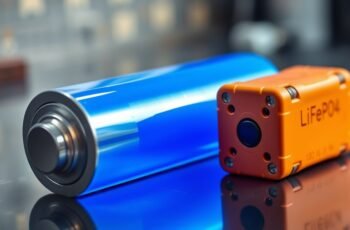
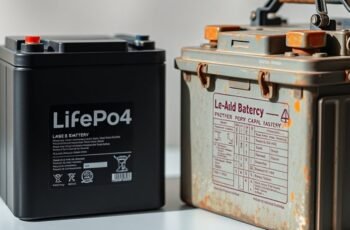
When comparing LiFePO4 and sealed lead acid batteries, we recognize that each offers distinct advantages and limitations that influence their suitability for specific applications. The technical differences in lifespan, safety, weight, and environmental impact are critical factors to evaluate. Understanding these nuances can profoundly impact long-term performance and cost-effectiveness. As we explore these aspects, you’ll see why selecting the appropriate battery type requires careful analysis of your operational requirements.
Key Takeaways
- LiFePO4 batteries have a much longer cycle life (2,000-5,000 cycles) compared to SLA’s 500-1,000 cycles.
- LiFePO4 offers higher energy density, lighter weight, and better performance in extreme temperatures.
- SLAs are cheaper initially but require more maintenance and have a shorter lifespan.
- LiFePO4 is more environmentally friendly, easier to recycle, and supports sustainable use.
- SLAs are suitable for low-demand, short-term applications, while LiFePO4 excels in high-demand, frequent cycling scenarios.
What Are the Basic Differences Between LiFePO4 and Sealed Lead Acid Batteries?
While both LiFePO4 (Lithium Iron Phosphate) and sealed lead acid (SLA) batteries serve as reliable energy storage solutions, they differ markedly in their fundamental chemistry and design. LiFePO4 batteries utilize lithium iron phosphate chemistry, offering high energy density and thermal stability, whereas SLA batteries rely on lead sulfate and sulfuric acid, resulting in lower energy density but proven robustness. Their charging protocols also diverge considerably; LiFePO4 requires precise, voltage-based charging with proper current regulation, while SLA batteries typically follow a constant current-constant voltage approach. These distinctions impact not only performance but also maintenance and safety considerations. Understanding these core differences helps in selecting the appropriate battery type for specific applications, optimizing efficiency, lifespan, and operational safety.
How Do LiFePO4 and Sealed Lead Acid Batteries Compare in Terms of Lifespan and Durability?
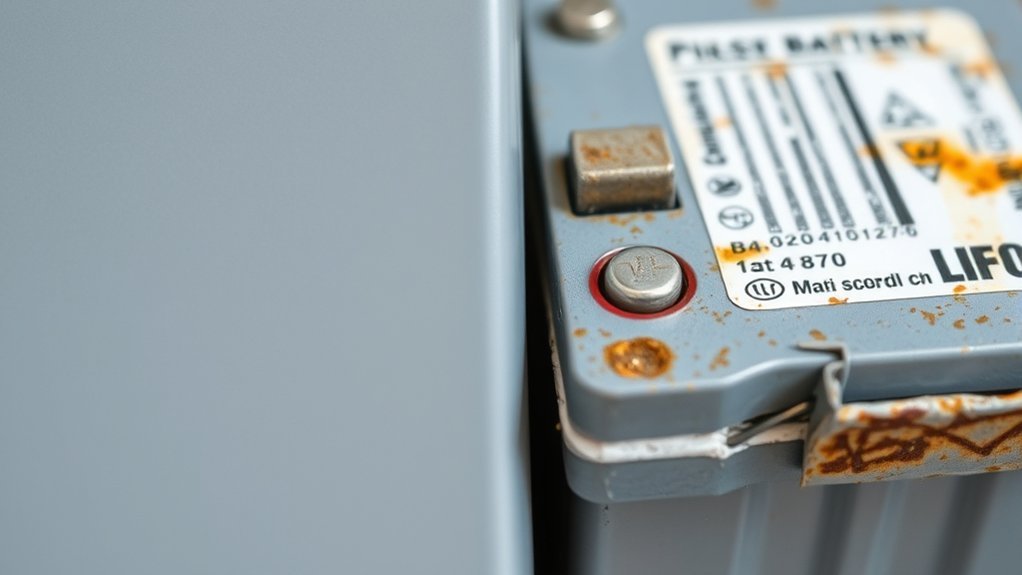
When comparing LiFePO4 and sealed lead acid batteries, cycle life and resistance to wear are critical factors influencing durability. LiFePO4 batteries typically offer markedly higher cycle counts before capacity degradation, indicating greater longevity. Their lower internal resistance also enhances performance stability over extended use, unlike sealed lead acid batteries which tend to wear more quickly over time.
Battery Cycle Life
LiFePO4 batteries generally offer a markedly longer cycle life compared to sealed lead acid (SLA) batteries, making them more durable over repeated charge and discharge cycles. Typically, LiFePO4 cells can endure 2,000 to 5,000 cycles before capacity drops below 80%, whereas SLAs average around 500 to 1,000 cycles. This extended lifespan reduces the frequency of replacements, positively impacting battery recycling efforts and minimizing environmental impact. The durability of LiFePO4 also means less waste and fewer resources required for manufacturing new batteries. In contrast, SLA batteries tend to degrade faster, leading to more frequent disposal and increased environmental burden. As a result, the superior cycle life of LiFePO4 promotes sustainability and aligns with long-term energy storage efficiency.
Resistance to Wear
LiFePO4 batteries demonstrate superior resistance to wear compared to sealed lead acid (SLA) batteries, primarily due to their robust chemical stability and manufacturing process. The chemical stability of LiFePO4 cathodes minimizes degradation over repeated cycles, reducing electrode breakdown and maintaining performance. Additionally, their manufacturing process emphasizes high-purity materials and precise assembly, resulting in a more durable structure that withstands mechanical stresses and thermal fluctuations better than SLA batteries. SLA batteries, with their lead plates and sulfuric acid, are more susceptible to material fatigue, corrosion, and electrode deterioration over time. Consequently, LiFePO4’s combination of stable chemistry and optimized manufacturing yields a longer-lasting, more wear-resistant battery, making it better suited for applications demanding high durability and consistent performance over extended periods.
Which Battery Type Is More Cost-Effective for Different Applications?
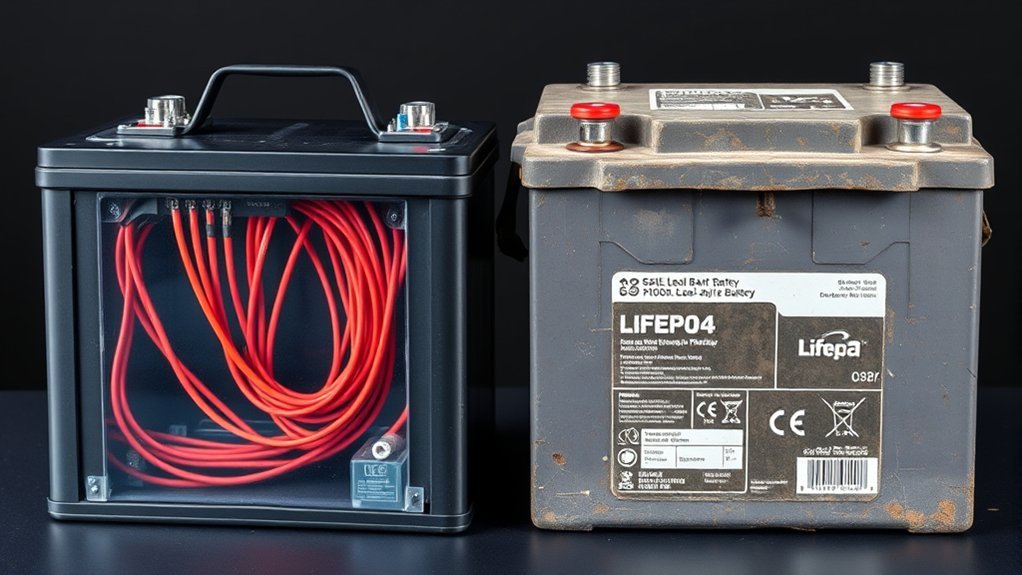
Determining which battery type offers greater cost-effectiveness depends heavily on the specific application and operational requirements. Lifepo4 batteries generally have higher upfront costs but benefit from longer cycle life, reducing replacement frequency and total ownership costs over time. Sealed lead acid batteries, while cheaper initially, often incur higher long-term expenses due to shorter lifespans and maintenance needs. When evaluating cost-effectiveness, it’s crucial to consider battery recycling and environmental impact, as Lifepo4 batteries are more environmentally friendly and easier to recycle, potentially reducing disposal costs. Additionally, energy efficiency and durability influence overall expenses, making Lifepo4 a more economical choice for applications with frequent cycling, whereas lead acid may suffice for short-term, low-demand uses.
How Do Weight and Size Impact the Suitability of Each Battery?
The physical dimensions and weight of a battery greatly influence its suitability for diverse applications, particularly where space limitations and portability are critical. LiFePO4 batteries tend to be lighter and more compact due to their high energy density, making them ideal for portable and space-constrained uses. In contrast, sealed lead-acid (SLA) batteries are generally heavier and bulkier, limiting their application in portable systems but often favoring stationary setups. Battery manufacturing processes directly affect these size and weight characteristics, with LiFePO4 production emphasizing lightweight materials and design efficiency. Additionally, smaller, lighter batteries contribute to reduced environmental impact by enabling more sustainable transportation and installation. These factors collectively determine the practical deployment of each battery type based on size, weight, and environmental considerations.
What Are the Safety and Maintenance Considerations for LiFePO4 and SLA Batteries?
While both LiFePO4 and sealed lead-acid (SLA) batteries are commonly used in various applications, their safety profiles and maintenance requirements differ considerably. LiFePO4 batteries offer enhanced thermal stability, reducing risks of thermal runaway, but still require proper handling during charging and disposal to prevent safety hazards. SLA batteries demand regular maintenance, such as checking electrolyte levels and ensuring proper sealing, to prevent leakage and capacity loss. Both types pose environmental impact concerns; however, LiFePO4 batteries are more environmentally friendly due to their longer lifespan and safer chemistry, facilitating more sustainable battery recycling. Proper disposal and recycling are essential for minimizing environmental impact, and adherence to safety protocols guarantees safe operation and responsible end-of-life management for both battery types.
Which Battery Performs Better in High-Discharge or Extreme Temperature Conditions?
When comparing LiFePO4 and sealed lead-acid (SLA) batteries in high-discharge or extreme temperature environments, their performance characteristics reveal significant differences. LiFePO4 batteries maintain stable voltage and capacity under high discharge rates and tolerate temperature swings better than SLA batteries, which can suffer reduced capacity or failure. LiFePO4’s resilience minimizes thermal degradation, extending lifespan and reducing the frequency of battery recycling. SLA batteries, however, are more sensitive to temperature extremes, leading to faster degradation and increased environmental impact due to more frequent replacements. Additionally, LiFePO4’s environmentally friendly chemistry makes it easier to recycle and less harmful to ecosystems, whereas lead-acid batteries pose greater environmental risks if not properly disposed of. Overall, LiFePO4 offers superior performance and sustainability in extreme conditions.
Which Battery Is Right for Your Specific Use Case : Solar, RV, Backup Power, or Automotive?
When selecting the right battery for your application, we consider compatibility with your power requirements and the environmental durability of each option. Lifepo4 batteries generally offer higher cycle life and better resilience in demanding conditions, making them suitable for critical or variable use cases. Conversely, sealed lead acid batteries may suffice for simpler needs but often require more maintenance and have shorter lifespans in rigorous environments.
Compatibility With Power Needs
Choosing the right battery for your specific application hinges on understanding how Lifepo4 and sealed lead acid (SLA) batteries align with your power requirements. Both technologies differ markedly in capacity, voltage stability, and recharge cycles, affecting suitability for various uses.
Consider these factors:
- Solar power systems benefit from Lifepo4’s high cycle life and environmental advantages, including easier battery recycling.
- RV setups often require reliable, deep-cycle capacity; Lifepo4 provides better performance at a lighter weight.
- Backup power demands consistent voltage output, favoring Lifepo4’s stability.
- Automotive uses need robust start-up power; SLA batteries are traditionally more compatible but less environmentally friendly overall.
Ultimately, matching your power needs with environmental considerations informs the most suitable choice.
Durability in Use Conditions
Selecting the appropriate battery type for specific use conditions requires careful evaluation of durability under operational stresses. Lifepo4 batteries generally demonstrate superior durability due to their robust manufacturing processes, which enhance resistance to temperature fluctuations and cycle life, making them ideal for solar, RV, or backup power. Sealed lead acid batteries, while cost-effective, tend to have shorter cycle lives and are more susceptible to damage from deep discharges and temperature extremes. Both types’ durability is impacted by their end-of-life recycling processes; Lifepo4 batteries are more environmentally friendly, facilitating easier battery recycling, whereas lead acid batteries pose challenges due to toxic materials. Ultimately, selecting the right battery hinges on understanding these durability factors in relation to specific use conditions and long-term sustainability considerations.
Frequently Asked Questions
How Do Charging Times Differ Between Lifepo4 and Sealed Lead Acid Batteries?
Charging times differ due to Lifepo4’s higher charging efficiency and lower temperature sensitivity, enabling faster, more consistent charging compared to sealed lead acid batteries, which are more affected by temperature fluctuations and typically charge more slowly.
Are Lifepo4 Batteries Environmentally Friendly Compared to SLA Batteries?
Like a green leaf signaling renewal, LiFePO4 batteries are more environmentally friendly than SLA, offering longer battery lifespan and lower overall cost, making them a sustainable choice for eco-conscious applications with a better environmental footprint.
Can Lifepo4 Batteries Be Used With Existing Lead Acid Chargers?
We can use Lifepo4 batteries with existing lead acid chargers, but due to differing charging profiles, this may impact battery lifespan and cost efficiency. Proper charger adjustments optimize performance and prevent damage, ensuring reliable operation.
What Are the Recycling Options for Each Battery Type?
We’ve investigated the recycling processes for both batteries, finding Lifepo4 batteries are more environmentally friendly to recycle through specialized facilities, while sealed lead-acid batteries require careful battery disposal due to hazardous materials, emphasizing the importance of proper recycling methods.
How Do Performance Warranties Compare for Lifepo4 and SLA Batteries?
We find that LiFePO4 batteries generally offer longer battery lifespan and more consistent performance warranties, enhancing cost efficiency over time. SLA warranties tend to be shorter, with less predictable longevity, impacting overall long-term performance and value.
Conclusion
In conclusion, choosing between LiFePO4 and SLA batteries depends on your specific needs. LiFePO4’s superior lifespan, safety, and environmental benefits often outweigh the higher initial cost, making it a wise investment for demanding applications. While SLA batteries might seem tempting due to lower upfront costs, they’re fundamentally the energy equivalent of a paper umbrella in a storm—useful but not built for the long haul. Ultimately, the right choice maximizes efficiency and safety for your unique setup.