Studies show that LiFePO4 batteries can last up to 10 times longer than traditional lead-acid options, making them a compelling choice for durable energy storage. As we explore this technology, it’s essential to understand their safety features, chemistry, and practical applications. With proper knowledge, users can optimize performance and lifespan, but steering through the nuances requires a clear grasp of core principles. Let’s examine what sets these batteries apart and why they’re increasingly vital in sustainable energy solutions.
Key Takeaways
- LiFePO4 batteries are safe, stable, and long-lasting lithium-ion batteries ideal for beginners.
- They offer enhanced safety due to thermal stability and resist thermal runaway.
- Important factors include capacity, voltage, cycle life, and compatibility with your application.
- Proper maintenance involves correct charging, regular inspections, and responsible recycling.
- Common uses include solar energy storage, portable power, and electric vehicles.
What Are LiFePO4 Batteries and How Do They Work?
Have you ever wondered what makes LiFePO4 batteries distinct from other lithium-ion types? Their unique battery chemistry involves lithium iron phosphate as the cathode material, which provides greater thermal stability and safety. This chemistry results in more reliable power storage, with a stable voltage profile and longer cycle life. Unlike other lithium-ion batteries, LiFePO4 cells resist thermal runaway, making them safer for various applications. The chemistry also influences their performance: they deliver consistent power output and maintain capacity over many charge cycles. This efficient power storage capability makes LiFePO4 batteries ideal for renewable energy systems, electric vehicles, and backup power. Understanding how their battery chemistry impacts operation helps us appreciate their robustness and suitability for demanding power storage needs.
Key Advantages of Using LiFePO4 Batteries for Beginners
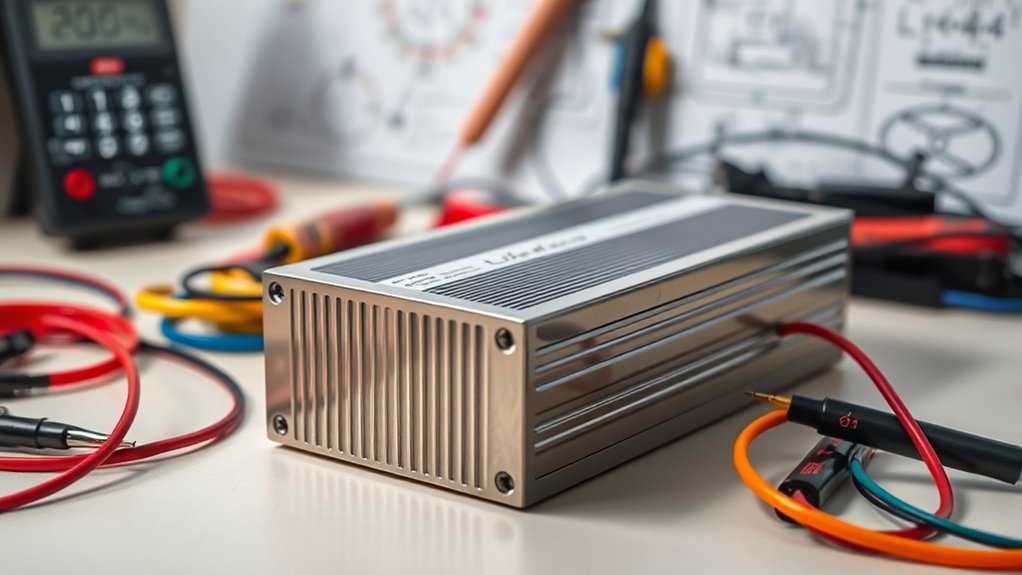
One of the primary reasons beginners should consider LiFePO4 batteries is their exceptional safety profile, rooted in their stable battery chemistry. Unlike other lithium-ion chemistries, LiFePO4’s chemical stability minimizes thermal runaway risks, making them safer for various applications. Their robust chemistry allows for more flexible charging protocols, reducing the risk of overcharging or damage when proper procedures are followed. Additionally, LiFePO4 batteries exhibit a longer cycle life, maintaining capacity over thousands of charge-discharge cycles. This durability translates into lower replacement costs and increased reliability for beginners. Overall, their stable chemistry, forgiving charging protocols, and safety advantages make LiFePO4 batteries an attractive choice for those new to energy storage systems.
Important Factors to Consider When Choosing a LiFePO4 Battery

When selecting a LiFePO4 battery, understanding the key technical specifications and performance parameters is essential to guarantee it meets your specific energy needs. Focus on capacity, voltage, cycle life, and charge/discharge rates to ensure compatibility with your application. Additionally, consider the battery’s environmental impact, including manufacturing processes and disposal. Lithium iron phosphate batteries are more eco-friendly compared to other chemistries, but responsible battery recycling remains necessary to minimize environmental harm. Proper recycling reduces hazardous waste and recovers valuable materials, making sustainability a critical factor. By analyzing these factors, you can choose a battery that balances performance with environmental responsibility, ensuring long-term reliability while supporting eco-conscious practices.
How to Properly Maintain and Safely Use Your LiFePO4 Battery
To guarantee your LiFePO4 battery operates safely and maintains ideal performance, proper maintenance and usage practices are essential. Adhering to established charging protocols ensures maximum lifespan and prevents overcharging or deep discharging, which can damage the cells. Regularly inspecting connections and ensuring they are secure minimizes risks of short circuits or thermal issues. When the battery reaches end-of-life, responsible battery recycling is critical to prevent environmental harm and recover valuable materials. Following manufacturer guidelines for storage, avoiding exposure to extreme temperatures, and monitoring state of charge contribute to safe operation. By integrating these practices, we ensure longevity, safety, and environmental responsibility in handling LiFePO4 batteries, maximizing their efficiency and sustainability over their operational lifecycle.
Common Applications of LiFePO4 Batteries for Beginners
LiFePO4 batteries have become increasingly popular across a range of beginner applications due to their stability, safety, and long cycle life. They are commonly used in solar energy storage systems, portable power banks, and electric vehicles, where reliable performance is essential. Their resilience to overcharging and thermal stability make them suitable for DIY projects, but proper charging techniques are critical to maximize lifespan and safety. Additionally, understanding battery recycling practices is essential for environmentally responsible use, especially as these batteries reach end-of-life. For beginners, selecting compatible chargers and adhering to recommended voltage limits guarantees ideal operation. This combination of safety, durability, and environmental considerations makes LiFePO4 batteries an attractive choice for various practical applications.
Troubleshooting Tips for LiFePO4 Battery Issues
Despite their reputation for safety and durability, LiFePO4 batteries can sometimes encounter issues that hinder peak performance. Troubleshooting begins with examining charging safety protocols, ensuring the charger matches the battery’s specifications to prevent overvoltage or overheating. If a battery exhibits reduced capacity or uneven charging, it may indicate cell imbalance or degradation, requiring careful testing and possibly balancing the cells. Additionally, anomalous temperature behavior or swelling suggests internal damage, which necessitates immediate inspection. Proper battery recycling is essential when disposal becomes necessary, as improper handling can lead to environmental hazards. Regular diagnostics, coupled with adherence to manufacturer guidelines on charging safety and recycling procedures, help maintain battery health and prolong service life while minimizing operational risks.
How to Extend the Lifespan of Your LiFePO4 Battery
Maintaining ideal operating conditions is essential for maximizing the lifespan of your LiFePO4 battery. Limiting the number of charging cycles prevents excessive wear, as each cycle gradually reduces capacity. Proper management involves avoiding overcharging and deep discharging, which can damage the cells. Regularly monitoring voltage and temperature ensures the battery operates within safe parameters, preventing thermal stress. Additionally, responsible battery recycling at the end of its life reduces environmental impact and encourages sustainable use. Minimizing unnecessary charge and discharge cycles not only prolongs performance but also delays the need for replacement. By adopting these practices, we optimize efficiency, extend operational life, and support environmental responsibility through proper battery recycling.
Frequently Asked Questions
Are Lifepo4 Batteries Suitable for High-Drain Devices?
Yes, LiFePO4 batteries suit high-drain devices due to their stable chemistry, long battery lifespan, and rapid charging methods. We analyze their performance, ensuring they can handle high current loads without compromising durability or safety during prolonged usage.
How Do Temperature Changes Affect Lifepo4 Battery Performance?
Temperature tweaks truly test Lifepo4’s battery chemistry, causing capacity caution and cycle concerns. Thermal management helps mitigate these issues, ensuring ideal performance and longevity by maintaining batteries within safe, stable temperature ranges during fluctuating thermal conditions.
Can I Connect Multiple Lifepo4 Batteries in Series or Parallel?
We can connect Lifepo4 batteries in series to increase voltage or in parallel to boost capacity, but we must consider battery capacity, matching voltages, and proper charging methods to guarantee safety and peak performance.
What Safety Precautions Should I Take With Lifepo4 Batteries?
We prioritize battery maintenance and charging safety by regularly inspecting connections, avoiding over-discharge, and using proper chargers. We also guarantee proper ventilation, prevent short circuits, and adhere to manufacturer guidelines to mitigate risks and enhance lifespan.
How Do I Identify Genuine Lifepo4 Batteries From Counterfeit Ones?
We identify genuine Lifepo4 batteries through detailed battery labeling, verifying manufacturer holograms, and checking serial numbers. Counterfeit detection involves analyzing packaging quality, inspecting electrode materials, and comparing technical specifications with official datasheets, ensuring authenticity and safety.
Conclusion
In conclusion, mastering LiFePO4 batteries isn’t rocket science—though it might feel like it at times. With proper understanding and maintenance, you’ll reveal their full potential, ensuring safety, longevity, and reliable performance. Ignoring guidelines, on the other hand, could turn your energy storage dreams into a costly, fiery disaster. So, stay informed, follow best practices, and treat these batteries with respect—they’re more than just a fancy power source; they’re a technical marvel waiting to be optimized.