As we explore the landscape of energy storage solutions, LiFePO4 batteries stand out for their unique chemistry and safety features. While they might not boast the highest energy density, their stability and longevity make them particularly compelling for critical applications. Understanding their fundamental characteristics and how they compare to traditional lithium-ion cells can inform better choices in designing reliable, sustainable power systems—an area worth examining closely.
Key Takeaways
- LiFePO4 batteries are rechargeable lithium-ion batteries with an iron phosphate cathode, known for safety and thermal stability.
- They offer long cycle life, typically over 2,000 charge cycles, with minimal electrode degradation.
- Used in electric vehicles, renewable energy storage, and portable power due to their reliability and safety.
- Compared to traditional lithium-ion batteries, they have lower energy density but superior safety and longer lifespan.
- Proper maintenance, safety precautions, and recycling are essential for optimal performance and environmental sustainability.
What Are LiFePO4 Batteries and How Do They Work?
LiFePO4 batteries, also known as lithium iron phosphate batteries, are a type of rechargeable lithium-ion battery distinguished by their cathode chemistry, which offers enhanced thermal stability and safety. Their battery chemistry involves an iron phosphate cathode, contributing to inherent stability and reduced risk of thermal runaway. While their energy density is typically lower than other lithium-ion chemistries, they provide consistent performance and longer cycle life. The chemistry enables rapid charge and discharge capabilities, making them suitable for applications requiring reliable power. The stable chemical composition results in minimal degradation over time, reinforcing safety and longevity. Despite modest energy density, their robustness and safety profile make LiFePO4 batteries ideal for stationary storage and high-demand applications.
Key Benefits of Using LiFePO4 Batteries
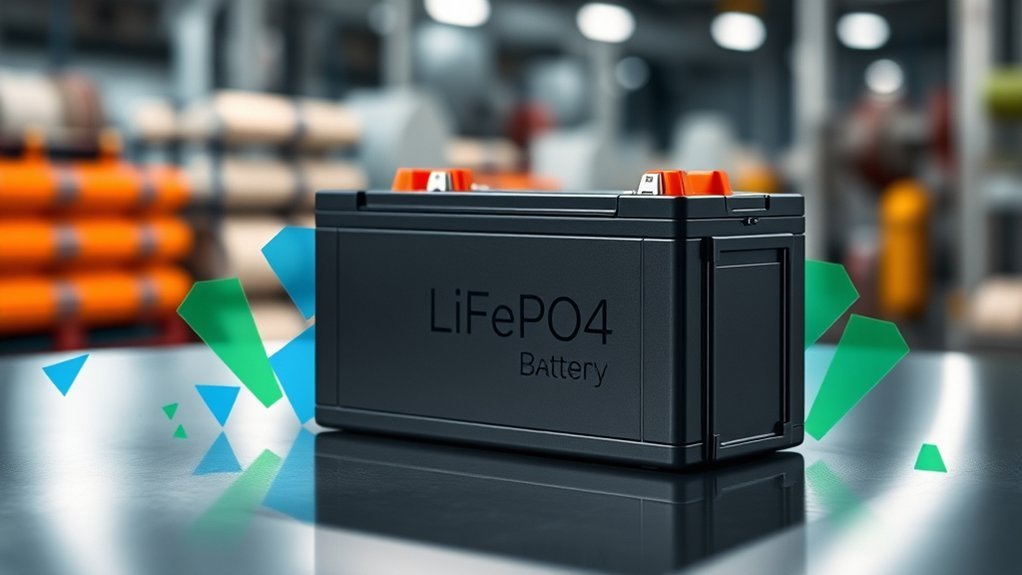
One of the primary advantages of LiFePO4 batteries lies in their exceptional safety profile, which stems from their stable chemical composition and resistance to thermal runaway. This stability is rooted in their specific battery chemistry, characterized by an iron phosphate cathode that prevents rapid temperature escalation. Additionally, LiFePO4 batteries offer more flexible charging protocols, enabling safer and more efficient charging without strict voltage limitations. Unlike other lithium-ion chemistries, their stable chemistry reduces the risk of overcharging and thermal hazards, enhancing durability. This robustness simplifies system design and reduces the need for complex safety mechanisms. Overall, these key benefits position LiFePO4 batteries as a reliable, safe, and long-lasting energy storage solution, ideal for demanding applications requiring consistent performance and safety.
How Do LiFePO4 Batteries Compare to Traditional Lithium-Ion Batteries?
When comparing LiFePO4 batteries to traditional lithium-ion models, safety and stability are significant advantages due to their thermal resistance and lower risk of thermal runaway. Regarding lifespan and durability, LiFePO4 cells typically outperform lithium-ion batteries, offering more charge cycles and longer service life. Cost and availability also influence their adoption, as LiFePO4 batteries tend to be more affordable and increasingly accessible in various applications.
Safety and Stability
How do LiFePO4 batteries compare to traditional lithium-ion batteries regarding safety and stability? The key difference lies in their battery chemistry; LiFePO4 utilizes a phosphate-based cathode, which is thermally stable and less prone to thermal runaway. This inherent stability reduces risks of overheating, fires, or explosions. Additionally, the manufacturing processes for LiFePO4 batteries emphasize safety-critical controls, ensuring consistent quality and minimizing defect risks. Unlike traditional lithium-ion cells that often contain cobalt or nickel, LiFePO4’s chemistry offers a more stable electrochemical profile, which translates into a safer operating range and greater resilience under stress. This combination of chemistry and manufacturing rigor makes LiFePO4 batteries a more stable, safer choice for applications demanding high reliability.
Lifespan and Durability
LiFePO4 batteries are renowned for their superior lifespan and durability compared to traditional lithium-ion cells. Their longer cycle life, often exceeding 2,000 cycles, results from stable chemistry and reduced electrode degradation. This durability minimizes the frequency of battery replacements, aligning with sustainable practices like battery recycling, which is more efficient given their extended lifespan. Additionally, LiFePO4’s lower lithium content reduces risks associated with thermal runaway and prolongs overall stability. The inherent chemical stability contributes to consistent performance over time, making them ideal for demanding applications. By maintaining structural integrity longer, these batteries offer enhanced longevity and resilience, ultimately providing a more sustainable and reliable energy storage solution compared to conventional lithium-ion counterparts.
Cost and Availability
Are LiFePO4 batteries more cost-effective and readily available than traditional lithium-ion options? A thorough cost analysis indicates that while initial prices for LiFePO4 units tend to be higher, their longer lifespan and improved safety features often offset these upfront costs. Market trends reveal increasing production volume, which is driving down prices and enhancing availability. Compared to conventional lithium-ion batteries, LiFePO4 batteries benefit from greater chemical stability, reducing manufacturing complexities and supply chain constraints. Consequently, their growing adoption across sectors like EVs and renewable energy storage is improving access. Overall, the improved durability, safety, and declining costs position LiFePO4 as a competitive alternative in terms of both cost and availability, making them increasingly attractive for a broad range of applications.
Common Applications for LiFePO4 Batteries
LiFePO4 batteries are increasingly utilized in electric vehicle powertrains due to their high stability and long cycle life. They also play a critical role in renewable energy storage systems by providing reliable, safe energy backup. Understanding these applications highlights their importance in advancing sustainable transportation and energy solutions.
Electric Vehicle Power
Why are LiFePO4 batteries increasingly favored in electric vehicle applications? Their high thermal stability, long cycle life, and safety profile make them ideal for EV power systems. These batteries support efficient charging techniques, enabling rapid yet controlled charging to maximize performance and longevity. Additionally, their relatively stable chemistry simplifies battery management systems, reducing risks associated with thermal runaway. As EV adoption grows, the emphasis on sustainable practices like battery recycling becomes essential, ensuring environmental impact is minimized. The durability of LiFePO4 batteries also translates to fewer replacements and better lifecycle management, which is economically advantageous. Overall, their combination of safety, efficiency, and sustainability makes LiFePO4 batteries a compelling choice for powering electric vehicles at scale.
Renewable Energy Storage
The favorable characteristics of LiFePO4 batteries—such as high thermal stability, long cycle life, and safety—make them particularly well-suited for renewable energy storage applications. Their stable chemistry guarantees reliable performance under variable conditions, essential for managing fluctuating energy inputs from solar or wind sources. Effective battery management is critical to maximize lifespan and safety, requiring precise control of charging protocols to prevent overcharging or deep discharging. Implementing advanced battery management systems (BMS) allows for monitoring voltage, temperature, and state of charge, maintaining ideal operating conditions. This ensures longevity and efficiency in energy storage systems, enabling seamless integration with renewable sources. Consequently, LiFePO4 batteries serve as a robust solution for grid-scale and off-grid renewable energy applications, balancing safety and performance.
What Factors Should You Consider When Choosing a LiFePO4 Battery?
When selecting a LiFePO4 battery, it is vital to assess several key factors to guarantee peak performance and longevity. Battery packaging influences thermal management and physical protection, impacting operational safety and lifespan. Opting for robust, well-designed packaging ensures efficient heat dissipation and mechanical durability. Additionally, understanding charging protocols is essential; LiFePO4 batteries require specific voltage and current settings to optimize charge cycles and prevent degradation. Adhering to manufacturer-recommended charging procedures minimizes stress on cells, extending service life. Both considerations—battery packaging and charging protocols—are integral to maintaining consistent performance and avoiding premature failure. Careful evaluation of these factors ensures that the chosen battery aligns with your application’s technical demands and operational conditions.
Understanding the Lifespan and Maintenance of LiFePO4 Batteries
Understanding the lifespan and maintenance requirements of LiFePO4 batteries is essential for maximizing their performance and ensuring long-term reliability. The battery chemistry of LiFePO4 allows for a high cycle life—typically over 2,000 cycles—when properly maintained. Consistent adherence to recommended charging protocols, such as avoiding overcharging or deep discharging, is critical to prevent capacity fade. Proper maintenance involves monitoring voltage levels, ensuring balanced cell charging, and keeping the batteries in a temperature-controlled environment. Unlike other chemistries, LiFePO4 batteries are less prone to thermal runaway but still require careful management to sustain their longevity. By understanding these factors, users can optimize battery health, reduce replacement costs, and extend overall system efficiency.
Safety Tips for Handling and Using LiFePO4 Batteries
Handling and using LiFePO4 batteries safely is crucial to prevent accidents and guarantee peak performance. Proper battery safety relies on strict handling precautions to avoid hazards like electrical shorts, thermal runaway, or chemical leaks. We recommend always inspecting batteries for physical damage before use and avoiding exposure to extreme temperatures, which can compromise the battery’s integrity. When connecting or disconnecting, ensure correct polarity to prevent short circuits. Use insulated tools and wear protective gear when handling terminals. Charging should follow manufacturer specifications, utilizing compatible chargers to prevent overcharge or overheating. Adhering to these handling precautions minimizes risks and maintains battery lifespan. Ultimately, disciplined safety practices are essential for reliable operation and the safe management of LiFePO4 batteries.
Environmental Impact and Recycling of LiFePO4 Batteries
LiFePO4 batteries are gaining popularity due to their safety and performance advantages, but their environmental impact remains an important consideration. Their battery chemistry, involving lithium, iron, and phosphate, offers stability and reduces toxicity, yet disposal and recycling are still necessary to minimize ecological effects. Recycling processes for LiFePO4 batteries involve disassembling cells, extracting valuable materials such as lithium and iron, and safely managing hazardous components. Efficient recycling not only conserves finite resources but also prevents environmental contamination from residual chemicals. Although lithium recovery is technically feasible, current processes require improvement to enhance cost-effectiveness and scalability. Ultimately, understanding and optimizing these recycling processes are essential steps toward mitigating the environmental footprint of LiFePO4 batteries.
Future Trends and Innovations in LiFePO4 Battery Technology
Advancements in LiFePO4 battery technology are increasingly driven by innovations aimed at enhancing energy density, charging speed, and overall lifespan. Future trends focus on optimizing battery chemistry to achieve higher energy densities without compromising safety or stability. Innovations include developing advanced cathode materials and solid-state electrolytes, which can markedly improve charge acceptance and cycle life. Additionally, integrating smart battery management systems (BMS) enhances performance monitoring and longevity.
- Material enhancements: Refining cathode compositions for increased energy density.
- Electrolyte innovations: Moving to solid electrolytes for improved safety and efficiency.
- Manufacturing processes: Employing advanced techniques to reduce costs and improve consistency.
These developments aim to push LiFePO4 batteries toward higher performance and broader application scopes.
Frequently Asked Questions
Are Lifepo4 Batteries Suitable for High-Temperature Environments?
We find LiFePO4 batteries have moderate temperature resilience, but material stability diminishes at high temperatures. For ideal performance, we recommend cooling measures or alternative chemistries, as prolonged exposure risks capacity loss and safety concerns.
How Quickly Can Lifepo4 Batteries Be Recharged?
We can recharge LiFePO4 batteries in about 2-4 hours, optimizing charging efficiency without compromising battery longevity. Fast charging might seem risky, but with proper management systems, it maintains performance and extends lifespan effectively.
Can Lifepo4 Batteries Be Used in Solar Energy Systems?
Yes, we can use Lifepo4 batteries in solar systems due to their long battery lifespan and high thermal stability. Their recyclings processes are environmentally friendly, making them a sustainable choice for renewable energy storage solutions.
What Are the Weight Differences Between Lifepo4 and Other Batteries?
Like a feather compared to a stone, Lifepo4 batteries weigh less due to their higher material density, making them more efficient in energy storage. They typically weigh 30-50% less than lead-acid or lithium-ion counterparts, optimizing system design.
Are There Specific Storage Requirements for Lifepo4 Batteries?
We recommend storing Lifepo4 batteries in a cool, dry, and well-ventilated environment, maintaining a 40-60% charge to optimize battery lifespan and guarantee storage safety, reducing risks of capacity loss or thermal events.
Conclusion
In summary, LiFePO4 batteries stand out as a reliable, safe, and sustainable energy storage solution. Their advantages in safety and longevity make them an attractive choice for diverse applications, from electric vehicles to renewable energy systems. While they may have lower energy density, their benefits outweigh this drawback. By understanding their characteristics and staying abreast of technological advancements, we can harness their full potential and guarantee our energy needs are met without hitting a brick wall.