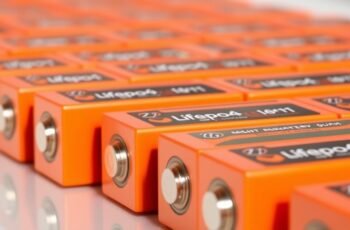
Few realize that LiFePO4 batteries, despite their growing popularity, possess unique chemical stability that markedly enhances safety, especially in high-demand applications. While their advantages—like longer cycle life and eco-friendliness—are well documented, their limitations, such as lower energy density and higher initial costs, often go overlooked. Understanding these trade-offs is vital for making informed decisions about their suitability for various uses, which is why examining their comparative performance and real-world implications becomes essential.
Key Takeaways
- LiFePO4 batteries are safer with high thermal stability, reducing the risk of thermal runaway and fires.
- They offer a longer cycle life and better longevity, lowering replacement costs over time.
- Their lower energy density limits portability and high-capacity applications.
- Higher initial costs are offset by durability and eco-friendly recycling benefits.
- Suitable for renewable energy, EVs, and backup systems that prioritize safety and long-term performance.
What Are LiFePO4 Batteries and How Do They Work?
LiFePO4 batteries, also known as lithium iron phosphate batteries, are a type of rechargeable lithium-ion battery characterized by their cathode material, lithium iron phosphate. These batteries operate through the movement of lithium ions between the anode and cathode during charge and discharge cycles. Their stable chemistry offers enhanced thermal stability and safety. From an environmental perspective, LiFePO4 batteries produce fewer toxic byproducts, making them more eco-friendly. Additionally, their design facilitates more efficient battery recycling, reducing environmental impact over their lifespan. This recyclability minimizes waste and conserves critical materials, supporting sustainability. Understanding the chemistry and lifecycle management of LiFePO4 batteries is essential in evaluating their role in reducing overall environmental impact, especially compared to other lithium-ion chemistries.
The Key Advantages of Using LiFePO4 Batteries
The inherent stability of lithium iron phosphate chemistry translates into several key benefits that make these batteries particularly attractive for various applications. Their thermal and chemical stability enhances safety, reducing risks of thermal runaway and ensuring reliable performance. From an environmental perspective, LiFePO4 batteries have a lower environmental impact due to less toxic manufacturing processes and the absence of cobalt, which is associated with ethical and ecological concerns. Additionally, their longer lifecycle results in fewer replacements, minimizing waste. The manufacturing processes for LiFePO4 batteries are generally cleaner and more sustainable, further supporting their eco-friendliness. These advantages collectively position LiFePO4 batteries as a safe, sustainable, and efficient energy storage solution suitable for diverse sectors.
What Are the Main Disadvantages of LiFePO4 Batteries?
LiFePO4 batteries present certain limitations that impact their suitability for specific applications. Their lower energy density and voltage output can restrict performance in high-demand scenarios, while higher initial costs may affect overall affordability. Understanding these disadvantages is essential for optimizing their integration into energy systems.
Limited Energy Density
Why does limited energy density pose a significant challenge for LiFePO4 batteries? Its lower energy density compared to other lithium-ion chemistries limits their use in applications requiring compact, high-capacity energy storage. This constraint affects the viability of LiFePO4 in portable devices and large-scale alternative energy storage systems where space and weight are critical factors. While LiFePO4 batteries excel in safety and longevity, their lower energy density means more cells are needed to meet energy demands, increasing system size and complexity. Additionally, this limitation influences battery recycling efforts, as larger, heavier packs are more cumbersome to disassemble and process. Addressing energy density constraints is essential for broadening LiFePO4’s application scope, especially in sustainable energy solutions where efficiency and recyclability are paramount.
Higher Initial Cost
While LiFePO4 batteries offer notable safety and longevity benefits, their higher initial costs present a significant barrier to widespread adoption. This costliness stems from manufacturing challenges, including complex processing and specialized materials. Additionally, the economic impact of battery recycling infrastructure influences overall expenses, as recycling lithium iron phosphate cells demands advanced techniques. The table below summarizes key factors:
| Aspect | Explanation | Impact |
|---|---|---|
| Manufacturing Challenges | Precise, costly production processes | Higher upfront investment |
| Material Costs | Scarcity of certain raw materials | Elevated component costs |
| Recycling Infrastructure | Need for specialized recycling facilities | Adds to lifecycle costs |
These factors contribute to the elevated initial price, despite long-term savings in durability.
Lower Voltage Output
Have you considered how voltage levels influence the performance of energy storage systems? LiFePO4 batteries generally have a lower voltage output compared to other lithium-ion chemistries, which impacts voltage stability and power output. This lower voltage can lead to challenges in applications requiring high voltage, potentially limiting the overall system efficiency.
- Reduced voltage means more cells are needed for the same voltage level, increasing system complexity and cost.
- Voltage stability may decline under high load, affecting consistent power delivery.
- Some devices designed for higher voltage systems might require additional circuitry or configuration adjustments.
While LiFePO4’s safety and longevity are strengths, this lower voltage output remains a key disadvantage, especially in high-demand applications.
How LiFeFePO4 Batteries Compare to Other Lithium-ion Options
When comparing LiFePO4 batteries to other lithium-ion chemistries, safety and stability are significant advantages, as they exhibit lower thermal runaway risk. However, they tend to have lower energy densities, which impacts applications requiring compact power sources. Cost and longevity also differ, with LiFePO4 batteries often offering longer cycle life but at a higher initial investment.
Safety and Stability
LiFePO4 batteries are renowned for their superior safety profile compared to other lithium-ion chemistries, primarily due to their stable crystal structure and inherent thermal stability. This chemical stability minimizes risks of thermal runaway and combustion, even under extreme conditions. Their thermal management is more straightforward, as they generate less heat during operation, reducing cooling requirements. Key safety advantages include:
- Resistance to overcharging and discharging, preventing damage and failure
- Reduced risk of thermal runaway due to stable chemical composition
- Greater resilience against external physical impacts, maintaining structural integrity
These characteristics make LiFePO4 batteries highly reliable for safety-critical applications. Their inherent thermal stability and chemical robustness lead to safer operation, especially in environments where temperature fluctuations are common.
Energy Density Differences
How does the energy density of LiFePO4 batteries compare to other lithium-ion chemistries? LiFePO4 exhibits lower energy density than chemistries like NMC or NCA, typically around 90-110 Wh/kg. This is due to its stable crystal structure, which prioritizes safety over volumetric energy storage. Variations in chemistry influence this performance, as modifications aim to improve energy density but often compromise safety or lifespan. Recycling challenges also differ: LiFePO4’s stable compounds are less hazardous but harder to process efficiently, complicating sustainability efforts. While its lower energy density limits high-energy applications, this trade-off is balanced by superior thermal stability and safety. Overall, chemistry variations and recycling complexities shape LiFePO4’s niche, favoring applications where safety outweighs energy density concerns.
Cost and Longevity
Although LiFePO4 batteries tend to have a higher initial cost compared to other lithium-ion chemistries like NMC or NCA, their long-term expenses are often more economical due to superior cycle life and stability. This durability translates into fewer replacements and reduced maintenance costs over time. Additionally, manufacturing processes for LiFePO4 are more environmentally friendly, facilitating easier battery recycling and minimizing ecological impact. The extended cycle life means batteries retain capacity longer, delaying replacements and lowering lifecycle costs. Furthermore, their thermal stability reduces safety-related expenses.
- Longer cycle life enhances overall longevity, reducing replacement frequency
- Safer operation lowers safety and maintenance costs
- Easier battery recycling supports sustainable disposal and resource recovery
Are LiFePO4 Batteries Safe for Your Applications?
Safety is a primary concern when integrating lithium iron phosphate (LiFePO4) batteries into various applications, given their widespread use in renewable energy, electric vehicles, and backup power systems. These batteries are inherently stable, reducing the risk of thermal runaway compared to other chemistries. Their non-toxic composition minimizes environmental impact during both use and disposal, especially when considering battery recycling processes that mitigate hazardous waste. However, improper handling or mechanical damage can still lead to safety issues, such as short circuits or fires. Overall, LiFePO4 batteries are considered safer than many alternatives, but thorough safety protocols and recycling practices are essential to guarantee long-term environmental and operational safety. Proper management ensures these batteries remain a reliable, eco-friendly energy solution.
What Factors Affect the Performance and Longevity of LiFePO4 Batteries?
The performance and lifespan of LiFePO4 batteries are influenced by a combination of operational, environmental, and design factors. Proper charging protocols prevent over-discharge and overcharge, which can degrade cell chemistry. Temperature extremes accelerate capacity loss and may impact environmental impact considerations, especially in battery recycling processes. Additionally, high current draw during operation can induce stress on the battery, reducing longevity.
Key factors include:
- Charging habits: Maintaining ideal voltage levels prolongs cycle life.
- Operating environment: Extreme temperatures accelerate degradation.
- Design quality: Superior manufacturing enhances durability and reduces environmental impact.
Understanding these factors helps maximize performance and supports sustainable practices like battery recycling, ultimately extending battery life and reducing ecological footprint.
Is a LiFePO4 Battery the Right Choice for You?
Determining whether a LiFePO4 battery is the right choice depends on your specific application requirements and operational priorities. From an environmental impact perspective, LiFePO4 batteries offer advantages such as lower toxicity and a more stable chemical composition, reducing risks during use. However, recycling challenges remain significant; the materials involved are complex to recover efficiently, which can hinder sustainability efforts. If your application demands high safety, long cycle life, and minimal environmental footprint, LiFePO4 is advantageous. Conversely, if recycling infrastructure is lacking or environmental considerations are paramount, these challenges may outweigh benefits. Ultimately, evaluating these factors will help determine if a LiFePO4 battery aligns with your technical and ecological priorities.
Frequently Asked Questions
How Much Do Lifepo4 Batteries Typically Cost Compared to Other Types?
We find LiFePO4 batteries generally cost more than lead-acid but less than high-end lithium-ion options, with cost comparison influenced by market availability, capacity, and quality. These factors help determine their competitive positioning in the energy storage market.
What Are Common Applications for Lifepo4 Batteries?
We find LiFePO4 batteries are widely used in electric vehicles, solar energy storage, and backup systems, thanks to their impressive battery lifespan and high charging efficiency, making them ideal for demanding applications requiring longevity and reliable performance.
Can Lifepo4 Batteries Be Recycled Easily?
We find that LiFePO4 batteries can be recycled through established processes involving material recovery and safe disposal methods, enabling efficient extraction of valuable components while minimizing environmental impact, though the process requires specialized facilities and technical expertise.
How Do Temperature Variations Affect Lifepo4 Battery Performance?
Temperature troubles tend to tarnish LiFePO4 battery performance; we observe variations impacting voltage stability and capacity. Thermal management and temperature stability strategies are vital, ensuring consistent, safe operation across diverse environmental conditions and preventing thermal runaway or degradation.
Are There Any Environmental Concerns With Lifepo4 Batteries?
We recognize that LiFePO4 batteries have minimal environmental impact due to non-toxic materials, yet recycling challenges persist, requiring improved processes to mitigate waste and guarantee sustainable disposal, which is essential for reducing ecological footprints.
Conclusion
In weighing the pros and cons of LiFePO4 batteries, we see a technology that’s revolutionizing energy storage, promising safety and longevity that could outlast entire generations. While their lower energy density and cost hurdles might seem intimidating, their unmatched stability and eco-friendliness position them as the future’s backbone. Choosing LiFePO4 is like investing in a resilient, eco-conscious powerhouse—an energy solution so robust, it’s practically the fortress guarding your power needs for decades to come.