Understanding how a LiFePO₄ battery functions requires examining the movement of lithium ions between the electrodes during charge and discharge cycles. These processes involve complex chemical and electrochemical interactions that influence the battery’s performance, safety, and longevity. By analyzing the roles of the anode and cathode, as well as the underlying chemistry, we can better grasp why these batteries are favored for certain applications. This exploration raises questions about what makes LiFePO₄ both efficient and safe in practical use.
Key Takeaways
- Lithium ions move between the cathode (LiFePO₄) and anode during charging and discharging.
- Electrons flow through an external circuit, providing electrical energy to power devices.
- The phosphate-based cathode offers thermal stability and safety during operation.
- Ion movement causes chemical reactions that store and release energy.
- Proper management of charge rates and temperature ensures battery longevity and safety.
How Lithium Ions Move Inside a LiFePO₄ Battery
Although the movement of lithium ions within a LiFePO₄ battery is a microscopic process, it is fundamental to understanding how the battery charges and discharges. During operation, lithium ions migrate through electrolyte interactions, moving between the cathode and anode. This ion flow is tightly controlled by the electrolyte’s composition and ionic conductivity, which influence overall efficiency. Thermal stability plays a vital role, as temperature fluctuations can affect ion mobility and electrolyte stability, impacting battery performance. Proper management of electrolyte interactions ensures consistent ion transport, minimizing degradation and maintaining thermal stability. Understanding these microscopic processes enables us to optimize battery design, improve safety, and extend lifespan by controlling the variables that influence lithium-ion movement within the cell.
The Role of the Anode and Cathode in Energy Storage
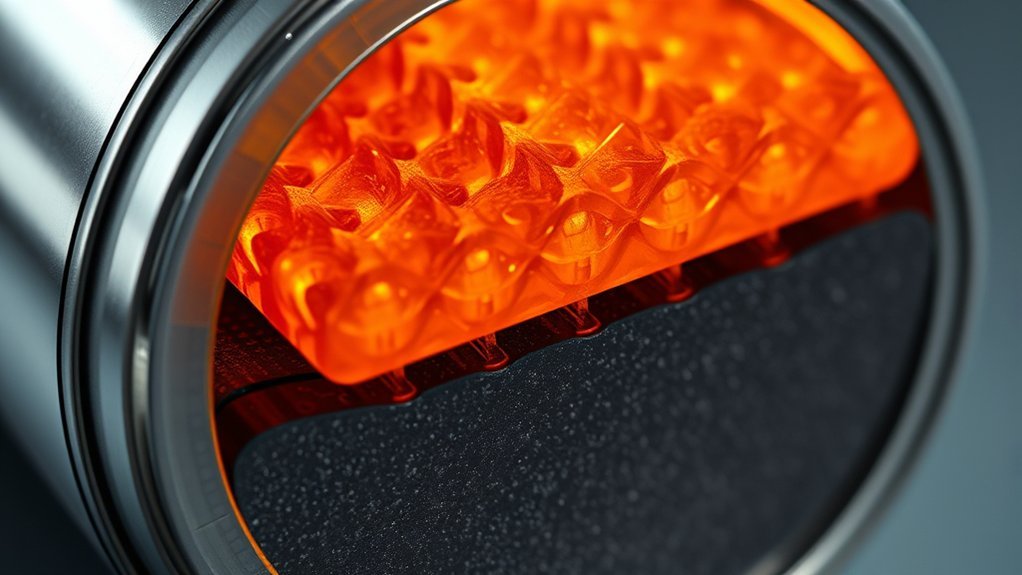
The anode and cathode are fundamental components that determine how energy is stored and released in a LiFePO₄ battery. The anode, typically composed of carbon, facilitates lithium-ion insertion during charging, while the cathode, made of lithium iron phosphate, hosts lithium ions during discharging. This configuration contributes to excellent thermal stability, reducing risks of overheating and thermal runaway. The stability of these electrodes directly impacts battery longevity, as stable electrode materials minimize degradation over cycles. Precise electrode chemistry ensures consistent electrochemical performance, which prolongs operational life. Furthermore, the inherent thermal stability of the cathode material helps maintain capacity retention over time, making LiFePO₄ batteries suitable for demanding applications where safety and durability are critical.
The Chemistry Behind Lithium Iron Phosphate Batteries
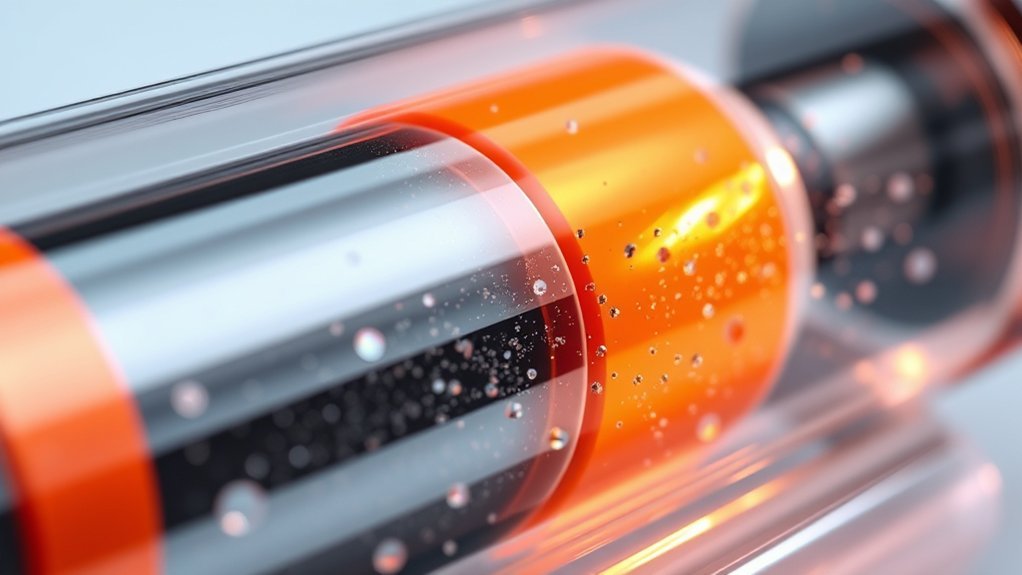
Lithium iron phosphate (LiFePO₄) batteries operate through a well-defined electrochemical reaction involving the transfer of lithium ions between the cathode and anode. During discharge, lithium ions move from the cathode to the anode, releasing electrons that generate electrical energy. Conversely, during charging, lithium ions are extracted from the anode and reinserted into the cathode. This reaction’s stability contributes to an extended battery lifespan by reducing degradation over cycles. The manufacturing processes influence the purity and crystalline structure of the LiFePO₄ material, directly affecting electrochemical performance and durability. Precise control during synthesis guarantees consistent ion mobility and minimizes capacity fade, underscoring the importance of optimized manufacturing techniques in producing reliable, long-lasting batteries.
How Charging and Discharging Affect Battery Chemistry
Charging and discharging directly influence the internal chemistry of a LiFePO₄ battery by driving the movement of lithium ions between electrodes. This ion movement alters the state of charge, impacting the battery’s chemical stability and overall lifespan. Proper charge rates help maintain ideal chemistry, preventing degradation over time. Excessive charging or rapid discharging can induce stress and generate heat, which accelerates chemical breakdown. Temperature effects are critical; high temperatures during charge or discharge can accelerate electrolyte decomposition and cathode wear, reducing longevity. Conversely, low temperatures hinder ion mobility, impairing performance and potentially causing lithium plating. Thus, managing charge/discharge cycles with respect to temperature is essential for preserving battery chemistry, maximizing lifespan, and ensuring reliable performance over time.
Why LiFePO₄ Batteries Are Safer and More Durable
Because of their chemical structure, LiFePO₄ batteries inherently possess enhanced safety and durability compared to other lithium-ion chemistries. The stable phosphate-based cathode minimizes thermal runaway risks, making these batteries less prone to overheating or combustion. This stability directly contributes to an extended battery lifespan, as fewer degradation pathways exist over repeated charge cycles. Although LiFePO₄ batteries typically have a lower energy density than other lithium-ion types, their structural stability guarantees consistent performance and longevity over thousands of cycles. This durability makes them ideal for applications demanding reliability and safety. Ultimately, their chemical robustness not only enhances safety but also sustains consistent performance, providing a dependable power source that outlasts many alternative chemistries.
Frequently Asked Questions
How Long Do Lifepo₄ Batteries Typically Last?
Lifepo₄ batteries typically last 2000-5000 cycles, with a lifespan of 8-10 years, depending on degradation factors like temperature, charge cycles, and depth of discharge. Proper maintenance optimizes battery longevity and performance over time.
What Are the Environmental Impacts of Lifepo₄ Batteries?
We believe Lifepo₄ batteries are environmentally friendly, thanks to strict environmental regulations and efficient recycling processes, which reduce harmful impacts. Their longevity and recyclability help minimize waste and resource depletion, supporting sustainable energy solutions for the future.
Can Lifepo₄ Batteries Be Recycled?
Yes, lifepo₄ batteries can be recycled through specialized battery recycling processes, which recover valuable materials, ensuring environmental sustainability. We analyze these methods to minimize waste and promote responsible disposal, supporting eco-friendly energy storage solutions.
How Do Temperature Variations Affect Battery Performance?
We understand temperature variations can challenge battery performance, but with proper thermal management and high temperature tolerance, Lifepo4 batteries maintain stability and safety, ensuring reliable energy delivery even in extreme conditions, which is essential for critical applications.
Are Lifepo₄ Batteries Suitable for Electric Vehicles?
We believe Lifepo₄ batteries are highly suitable for electric vehicles due to their stable battery chemistry, enhanced safety, and high charging efficiency, which optimize performance and longevity, making them a reliable choice for demanding EV applications.
Conclusion
Understanding how LiFePO₄ batteries work reveals their remarkable balance of safety and performance. While they may not deliver the fastest power, their stability prevents catastrophic failures, unlike more volatile chemistries. This juxtaposition highlights a design that prioritizes reliability over rapid energy release. Essentially, their chemistry embodies a deliberate choice: sacrificing immediate power for long-term safety and durability, ensuring confidence in applications where dependability is paramount.