Most people overlook the intricate electrochemical processes that enable LiFePO4 batteries to store and release energy efficiently. At the core, these batteries rely on a stable crystalline structure that facilitates the movement of lithium ions between electrodes. Understanding how this structure influences charge cycles and longevity reveals why LiFePO4 batteries outperform many alternatives. Exploring these mechanisms uncovers the key factors that make them both reliable and suitable for diverse applications.
Key Takeaways
- Lithium ions migrate between the cathode (LiFePO4) and anode during charging and discharging processes.
- The phosphate crystal structure maintains stability, preventing degradation and ensuring long cycle life.
- Energy is stored when lithium ions move to the anode during charging; released when moving back to the cathode.
- Proper voltage and temperature management optimize ion movement, enhancing efficiency and battery lifespan.
- The safe chemical stability of LiFePO4 minimizes risks of thermal runaway and fire.
How Do LiFePO4 Batteries Store and Release Energy?
LiFePO4 batteries store and release energy through a reversible electrochemical process involving the movement of lithium ions between the cathode and anode. During charging, lithium ions migrate from the cathode to the anode, storing energy in the process. Conversely, discharging prompts lithium ions to flow back to the cathode, releasing stored energy. This mechanism guarantees stable voltage and high cycle life. Proper battery recycling is essential to minimize environmental impact by recovering valuable materials and preventing hazardous waste. LiFePO4’s inherent thermal stability and long lifespan contribute to sustainability, reducing the frequency of replacements and lowering environmental footprint. Understanding this energy transfer process emphasizes the importance of effective battery management and recycling practices to mitigate ecological effects associated with lithium-ion batteries.
What Is the Chemistry Behind LiFePO4 Batteries?

The chemistry of LiFePO4 batteries centers on the specific electrochemical properties of their cathode material, lithium iron phosphate. This material’s stability guarantees safe operation and longevity by resisting thermal runaway. During electrochemical reactions, lithium ions move between the cathode and anode through the electrolyte, facilitating energy transfer. The inherent material stability of LiFePO4 allows for consistent performance over numerous cycles, making it ideal for demanding applications. The phosphate structure maintains crystalline integrity, reducing degradation. Key aspects include:
LiFePO4 batteries offer stable, safe, and durable energy storage through resilient crystalline phosphate structures.
- The stable olivine crystal structure of LiFePO4 that minimizes structural change during cycling.
- The high electrochemical potential that enables efficient energy storage.
- The robustness of chemical bonds that enhances safety and prolongs battery lifespan.
How Do LiFePO4 Batteries Charge and Discharge Efficiently?
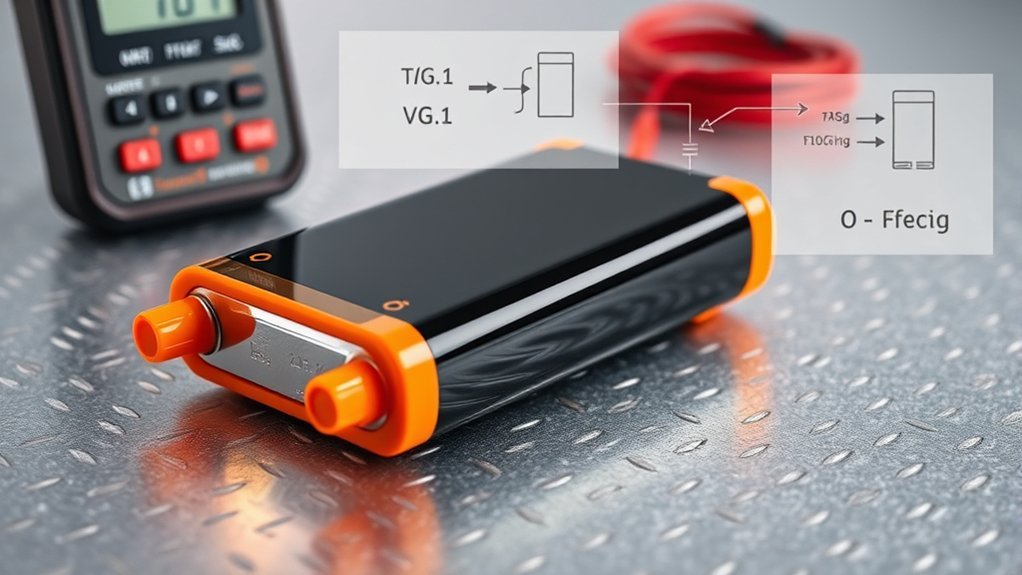
Charging and discharging LiFePO4 batteries efficiently hinges on their ability to facilitate rapid and stable electrochemical reactions. Their unique crystal structure ensures consistent ion movement, minimizing resistance and thermal instability. This stability enables high charge/discharge rates with minimal energy loss, improving overall efficiency. Proper management of charge cycles reduces capacity fade, which is vital for sustainable operation and battery recycling. Environmentally, LiFePO4’s non-toxic chemistry lowers adverse environmental impact compared to other chemistries, and efficient use reduces waste. Optimized charging protocols prevent overcharging and deep discharging, enhancing longevity and reducing the need for frequent replacements. Consequently, their efficient cycling contributes to both improved performance and reduced environmental footprint, emphasizing the significance of precise control in maximizing operational and ecological benefits.
What Factors Contribute to LiFePO4 Battery Longevity?
Maintaining the longevity of LiFePO4 batteries depends heavily on several interconnected factors that influence their electrochemical stability over time. Key among these are proper charge management, operating temperature, and material integrity. Excessive charging or discharging accelerates material degradation, shortening the overall battery lifespan. High temperatures exacerbate chemical reactions that deteriorate electrode structures, while low temperatures hinder ion mobility, reducing capacity. Additionally, consistent cycling within recommended voltage ranges minimizes stress on electrode materials, slowing degradation processes.
- Precise voltage regulation to prevent overcharge and overdischarge
- Maintaining suitable operating temperatures for chemical stability
- Using quality manufacturing processes to guarantee electrode and electrolyte integrity
How Do LiFePO4 Batteries Compare to Other Battery Types?
When comparing LiFePO4 batteries to other types, energy density, charge/discharge rates, and safety profiles are key factors. LiFePO4 cells typically have lower energy density than lithium-ion variants but excel in safety and cycle life. Analyzing these differences helps us understand their best applications and performance trade-offs.
Energy Density Differences
How do LiFePO4 batteries compare to other types regarding energy density? Typically, they have a lower energy density than lithium-ion batteries with nickel-manganese-cobalt (NMC) or lithium cobalt oxide (LCO) chemistries. This stems from their material composition, which involves phosphate cathodes that offer stability but limit energy storage capacity.
- The material composition of LiFePO4 results in volumetric energy densities around 90-150 Wh/L, compared to 250-700 Wh/L for other lithium-ion chemistries.
- Their theoretical energy density is inherently constrained by the electrochemical properties of iron phosphate, which has a lower specific capacity.
- Despite this, LiFePO4’s advantages in safety, cycle life, and thermal stability often outweigh the lower energy density in many applications.
Charging and Discharging Rates
LiFePO4 batteries are notable for their ability to handle high charge and discharge rates relative to many other lithium-ion chemistries. This capacity allows for rapid energy transfer, making them suitable for demanding applications like electric vehicles and power backup systems. Their stable chemistry enables frequent cycling without significant degradation, which supports effective battery recycling and reduces environmental impact. Compared to lithium cobalt oxide batteries, they exhibit lower internal resistance, resulting in more efficient energy flow during high-rate operations. Additionally, their longer cycle life diminishes waste and resource consumption, further benefiting environmental sustainability. These characteristics make LiFePO4 batteries an attractive choice for applications requiring fast charging and discharging, while also aligning with eco-friendly practices through extended lifespan and responsible battery recycling.
Safety and Longevity
Due to their inherently stable chemical structure, LiFePO4 batteries demonstrate superior safety profiles compared to other lithium-ion chemistries, such as lithium cobalt oxide or nickel-manganese-cobalt (NMC) batteries. This stability reduces thermal runaway risk, making them safer for various applications. Furthermore, their longevity surpasses many alternatives, with cycle lives often exceeding 2,000 cycles, which benefits both operational costs and environmental impact. Additionally, LiFePO4 batteries facilitate more sustainable practices through easier battery recycling, minimizing hazardous waste. They also maintain stable performance over time, reducing the frequency of replacement and contributing to overall environmental stewardship. Key considerations include:
- Enhanced thermal stability reduces fire risk
- Longer cycle life lowers total cost of ownership
- Easier battery recycling supports environmental sustainability
What Are Common Applications and Benefits of LiFePO4 Batteries?
Because of their high stability and long cycle life, LiFePO4 batteries are widely adopted across industries like renewable energy, electric vehicles, and grid storage. Their stable chemistry offers superior thermal safety and consistent performance over extensive charge cycles. These attributes reduce maintenance costs and enhance reliability. Additionally, their recyclability supports sustainable battery recycling practices, minimizing environmental impact by reclaiming valuable materials. This eco-friendly aspect makes LiFePO4 batteries attractive for large-scale applications seeking to balance performance with environmental responsibility. Their lower degradation rate and safer chemistry contribute to a reduced risk of fire and toxic leakage, further supporting safety standards. Overall, the combination of durability, safety, and recyclability positions LiFePO4 batteries as a strategic choice for diverse, environmentally conscious energy solutions.
Frequently Asked Questions
Are Lifepo4 Batteries Safe for All Temperature Ranges?
Lifepo4 batteries offer broad temperature tolerance, but their safety considerations depend on proper management. Their battery chemistry guarantees stability at various temperatures, yet extreme conditions can impact performance and safety, warranting careful monitoring for ideal and secure operation.
How Do Lifepo4 Batteries Handle Deep Discharge Cycles?
Lifepo4 batteries handle deep discharge cycles well, maintaining battery longevity thanks to their stable chemistry and high discharge limits. We find they tolerate repeated deep discharges better than other chemistries, ensuring reliable performance over extensive cycling.
What Maintenance Is Required for Lifepo4 Batteries?
We maintain Lifepo4 batteries by following proper charging protocols, avoiding over-discharge, and keeping them clean; this guarantees ideal battery longevity and consistent performance, reducing maintenance needs and extending overall lifespan through proactive care.
Can Lifepo4 Batteries Be Recycled Easily?
Yes, Lifepo4 batteries are recyclable, reducing environmental impact through battery recycling processes that recover valuable materials. This sustainable approach minimizes waste, supports resource efficiency, and aligns with eco-friendly practices in battery management.
How Does Ambient Temperature Impact Lifepo4 Battery Performance?
Ambient temperature markedly influences Lifepo4 battery performance; extreme temperatures induce temperature effects that diminish battery efficiency, resulting in quicker capacity loss or potential safety risks. Maintaining ideal temperature guarantees consistent, dependable operation and extends battery lifespan.
Conclusion
Certainly! Here’s the modified version with alternatives for “In summary”:
Ultimately, LiFePO4 batteries’ unique chemistry offers exceptional safety, longevity, and efficiency, making them ideal for various high-demand applications. Did you know that these batteries can often sustain over 2,000 charge cycles with minimal capacity loss? This remarkable durability underscores their value in renewable energy storage, electric vehicles, and backup systems. As technology advances, understanding their precise electrochemical processes helps optimize performance and extend lifespan, ensuring they remain a reliable energy solution for the future.