Imagine holding a small, seemingly simple battery that can power your outdoor adventures for years. Lifepo4 batteries, with their stable chemistry and impressive cycle life, present a reliable option for newcomers exploring portable energy solutions. Their safety features and minimal maintenance requirements make them a practical choice, but understanding how to select and care for them is essential for long-term success. Let’s explore what makes Lifepo4 batteries a smart investment for beginners.
Key Takeaways
- Lifepo4 batteries are lithium-ion batteries known for their safety, stability, and long cycle life, ideal for beginners.
- They require minimal maintenance and have built-in safety features to prevent overheating and thermal runaway.
- Proper care includes monitoring voltage, storing at proper temperatures, and recycling responsibly at end-of-life.
- They offer reliable, consistent power suitable for outdoor activities, RVs, and renewable energy systems.
- Compared to other lithium batteries, Lifepo4 provides enhanced safety, environmental friendliness, and longer lifespan.
What Are Lifepo4 Batteries and How Do They Work?
Lifepo4 batteries, also known as lithium iron phosphate batteries, are a type of rechargeable lithium-ion battery that utilize a cathode composed of lithium iron phosphate (LiFePO4). Their battery chemistry features a stable phosphate-based cathode, which enhances thermal stability and safety. Unlike other lithium-ion chemistries, Lifepo4’s energy density is moderate, typically around 90-160 Wh/kg, but it compensates with excellent cycle life and thermal stability. This chemistry allows for safe operation at higher temperatures and reduces risks of thermal runaway. The energy density, while lower than lithium cobalt oxide batteries, makes Lifepo4 ideal for applications requiring reliability over compact size. Overall, this chemistry enables durable, safe, and efficient energy storage, making Lifepo4 batteries suitable for numerous long-term, high-cycle applications.
Benefits of Using Lifepo4 Batteries for Beginners

Lifepo4 batteries offer significant safety advantages due to their stable chemical composition, reducing risks of thermal runaway and fire. Their extended cycle life, often exceeding 2,000 charge cycles, translates into lower replacement costs and more reliable performance over time. Additionally, they require minimal maintenance, simplifying operational management for beginners and ensuring consistent, long-term energy output.
Enhanced Safety Features
Have you ever wondered what makes a battery safer for everyday use? Lifepo4 batteries are designed with enhanced safety features rooted in strict manufacturing standards, which minimize risks like thermal runaway or fires. These batteries incorporate advanced safety protocols, such as thermal management systems and built-in current interrupters, to prevent overheating and overcharging. The rigid chemical stability of Lifepo4’s lithium iron phosphate composition reduces the likelihood of violent reactions compared to other lithium-ion chemistries. Manufacturing standards guarantee consistent quality, including rigorous testing and quality control measures, to guarantee safe operation across all units. This combination of robust safety protocols and adherence to strict manufacturing standards makes Lifepo4 batteries a safer choice for beginners and seasoned users alike.
Longer Battery Lifespan
Why do Lifepo4 batteries tend to last considerably longer than other lithium-ion types? Their extended lifespan results from a stable chemical structure that resists capacity fade over numerous charge cycles. Lifepo4’s cathode material minimizes internal degradation, reducing the formation of solid electrolyte interface layers that typically impair other lithium-ion batteries. This durability translates into more charge-discharge cycles, often exceeding 2,000, whereas other types usually reach around 500-1,000 cycles. Additionally, Lifepo4 batteries’ stability supports efficient battery recycling, lowering the environmental impact by enabling multiple reuse cycles. This longevity not only enhances cost-effectiveness but also promotes sustainability by reducing waste and conserving resources. Overall, Lifepo4’s design guarantees a longer operational life, making it an ideal choice for beginners seeking reliable, environmentally conscious energy storage.
Easy Maintenance
Their stable chemical composition not only extends lifespan but also simplifies maintenance requirements, making Lifepo4 batteries ideal for beginners. Unlike other chemistries, Lifepo4 cells resist thermal runaway and degradation, reducing the need for frequent checks or complex balancing. This stability minimizes maintenance tasks like equalization or electrolyte monitoring. Additionally, Lifepo4 batteries are environmentally friendly, thanks to their non-toxic materials, which eases concerns about battery recycling and disposal. Proper recycling of these batteries reduces environmental impact by preventing hazardous waste and recovering valuable materials. Overall, their low-maintenance design, combined with eco-conscious end-of-life options, makes Lifepo4 batteries a reliable, sustainable choice for users seeking straightforward operation without sacrificing environmental responsibility.
How to Choose the Right Lifepo4 Battery for Your Needs
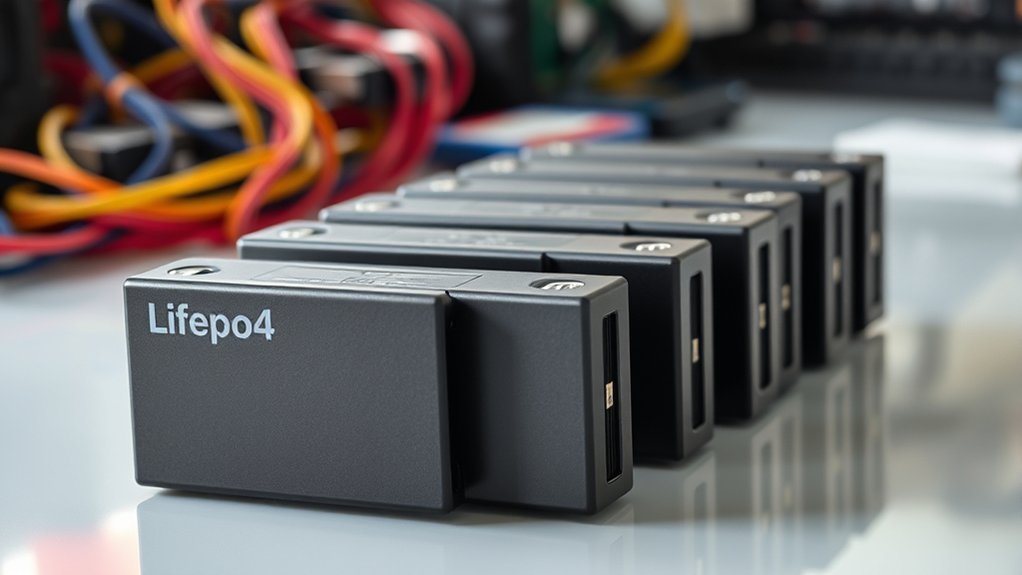
Selecting the appropriate LiFePO4 battery requires a clear understanding of your specific power requirements and the technical specifications that align with those needs. Key factors include battery chemistry and compatible charging protocols to guarantee safety and longevity. To choose correctly, consider these critical points:
Choosing the right LiFePO4 battery ensures safety, longevity, and optimal performance by matching capacity, discharge rate, and compatible charging protocols.
- Capacity and Voltage: Match the battery’s capacity (Ah) and voltage to your device’s power demands.
- Discharge Rate: Ensure the battery’s continuous and peak discharge ratings meet your application’s load.
- Compatibility with Charging Protocols: Verify the battery’s chemistry supports your charger’s voltage and current settings, especially for maximum performance and safety.
Understanding these details helps prevent issues related to overcurrent, improper charging, or insufficient power delivery.
Proper Care and Maintenance of Lifepo4 Batteries
Proper care and maintenance of LiFePO4 batteries are vital for maximizing their lifespan and guaranteeing safety during operation. Regularly monitor voltage levels to prevent over-discharge, which can damage cells, and avoid deep cycling beyond manufacturer recommendations. Proper storage tips include keeping batteries in a cool, dry environment, ideally between 0°C and 25°C, to minimize capacity loss over time. When not in use, store batteries at approximately 50% charge to reduce stress on the cells. Recycling is essential at the end of a battery’s life; always dispose of LiFePO4 batteries through certified recycling programs to prevent environmental harm and recover valuable materials. Adhering to these maintenance practices ensures longevity, safety, and environmental responsibility.
Common Applications of Lifepo4 Batteries for Beginners
Lifepo4 batteries are increasingly utilized in solar power storage systems due to their high energy density and long cycle life, making them ideal for reliable energy backup. They also serve as a preferred power source for recreational vehicles, offering stable, lightweight, and safe energy solutions for mobile applications. Understanding these applications helps beginners identify appropriate use cases that maximize battery performance and lifespan.
Solar Power Storage
Have you ever wondered how solar power systems store energy for later use? Lifepo4 batteries are ideal for this purpose due to their high energy density, longevity, and safety profile. They enable efficient energy storage in off-grid and grid-tied systems. Key applications include:
- Home Solar Systems – storing excess energy for nighttime use or cloudy days.
- Remote Power Systems – providing reliable electricity in isolated locations.
- Grid Stabilization – balancing supply and demand, improving grid resilience.
Lifepo4 batteries are advantageous because they maintain consistent performance over many cycles and are more environmentally friendly, thanks to advanced recycling processes. Their stable chemistry minimizes thermal runaway risk, making them suitable for continuous energy storage in solar applications.
Recreational Vehicle Use
Ever wondered how RV enthusiasts guarantee reliable power on the road? Lifepo4 batteries are increasingly popular in RV applications due to their high energy density, long cycle life, and safety profile. They efficiently power essential systems like lighting, climate control, and advanced entertainment setups, replacing traditional lead-acid batteries. Their stable voltage output ensures consistent performance, critical for sensitive camping gear. Additionally, Lifepo4 batteries support rapid charging and deep discharges, making them ideal for extended trips. Proper battery recycling practices are vital to minimize environmental impact, especially given their long lifespan. We recommend integrating Lifepo4 batteries with energy management systems to optimize efficiency and safety. Overall, these batteries provide a dependable, eco-friendly power source for recreational vehicles, enhancing convenience and sustainability during your adventures.
Troubleshooting Tips for Lifepo4 Battery Issues
When troubleshooting Lifepo4 battery issues, it’s essential to systematically analyze potential causes to accurately identify and resolve problems. First, check the number of charging cycles; excessive cycles can degrade capacity. Regularly monitor voltage and state of charge to detect imbalances. Second, inspect for signs of damage or corrosion, especially around terminals, which can disrupt performance. Third, consider battery recycling practices—improper disposal or recycling can lead to compromised cells and reduced lifespan. Ensuring proper battery management, including balanced charging and avoiding over-discharge, helps maintain ideal health. Addressing these factors methodically can prevent issues like reduced capacity or failure, ensuring longevity and reliable performance of your Lifepo4 batteries.
Comparing Lifepo4 Batteries to Other Lithium Battery Types
Lifepo4 batteries stand out among various lithium-based chemistries due to their unique combination of safety, longevity, and performance characteristics. Compared to lithium-ion (Li-ion) and lithium-polymer (LiPo) batteries, Lifepo4 offers enhanced thermal stability and reduced risk of thermal runaway, making them safer for high-demand applications. Their manufacturing processes emphasize environmentally friendly practices, which facilitate easier battery recycling, reducing ecological impact. Additionally, Lifepo4’s longer cycle life—often exceeding 2,000 charge cycles—outperforms other lithium types, lowering replacement frequency. While Li-ion batteries typically require more complex recycling protocols due to toxic electrolytes, Lifepo4’s stable chemistry simplifies recycling efforts. This combination of safety, durability, and sustainable manufacturing makes Lifepo4 a compelling choice in comparison to other lithium-based options.
Frequently Asked Questions
Are Lifepo4 Batteries Environmentally Friendly?
We believe LiFePO4 batteries are eco-friendly due to their minimal toxic materials and efficient recycling process, which reduces environmental impact. Their long lifespan also lessens waste, making them a sustainable choice for eco-conscious users.
How Long Do Lifepo4 Batteries Typically Last?
Like ancient ships enduring storms, our LiFePO4 batteries typically last 2,000 to 5,000 cycles, translating to 8-15 years, depending on factors like charge rate, temperature, and usage patterns, which influence overall battery lifespan and longevity.
Can Lifepo4 Batteries Be Recycled?
Yes, LiFePO4 batteries can be recycled through specialized battery recycling processes, reducing environmental impact by reclaiming valuable materials like lithium, iron, and phosphate, which helps minimize hazardous waste and promotes sustainable battery lifecycle management.
What Safety Precautions Should I Take With Lifepo4 Batteries?
We prioritize battery storage and charging safety by handling LiFePO4 batteries in well-ventilated areas, avoiding overcharging, using proper chargers, and wearing protective gear. Always follow manufacturer guidelines to prevent thermal runaway and guarantee safe operation.
Are Lifepo4 Batteries Suitable for High-Temperature Environments?
We find LiFePO4 batteries offer excellent thermal stability and temperature resilience, making them suitable for high-temperature environments. Their inherent chemical stability minimizes thermal runaway risks, ensuring safer operation even under elevated temperatures.
Conclusion
While Lifepo4 batteries seem like the ultimate beginner’s choice—offering safety, longevity, and eco-friendliness—don’t forget they still require diligent care and understanding. It’s ironic how a technology designed for simplicity demands attention to detail to maximize its lifespan. But with proper maintenance and knowledge, these batteries stand as a robust, sustainable power solution—proof that even in the world of advanced chemistry, a little know-how keeps everything running smoothly.