It’s almost unbelievable how the initial costs of Lifepo4 batteries can be considerably higher than lithium-ion options, sometimes by nearly 50%, yet this disparity masks a complex reality that demands close examination. The true value lies in understanding how factors like lifespan, durability, safety, and future cost trends influence overall investment decisions. To determine which battery type offers long-term savings and performance, we need to analyze these elements in detail—an assessment that could reshape your entire perspective on energy storage costs.
Key Takeaways
- Lifepo4 batteries generally cost $150-$200 per kWh, slightly more than lithium-ion batteries at $130-$180 per kWh.
- Despite higher upfront costs, Lifepo4’s longer lifespan reduces replacement expenses over time.
- Manufacturing complexities and raw material costs influence lithium-ion batteries’ prices more than Lifepo4.
- Cost trends show Lifepo4 prices stabilizing due to steady raw materials and recycling advancements.
- Long-term, Lifepo4 offers better cost-effectiveness for heavy-duty applications due to durability and lower maintenance.
What Are Lifepo4 and Lithium-Ion Batteries? An Overview of Key Differences
What exactly distinguishes Lifepo4 batteries from traditional lithium-ion variants? Primarily, Lifepo4’s cathode chemistry offers enhanced thermal stability, leading to improved safety and longer cycle life. This stability reduces the risk of thermal runaway, making Lifepo4 batteries less prone to fires. From an ecological standpoint, Lifepo4 batteries are more eco-friendly due to their safer chemistry and the potential for easier battery recycling, which minimizes hazardous waste. In contrast, traditional lithium-ion batteries often contain cobalt and nickel, complicating battery recycling and increasing environmental impact. Additionally, Lifepo4’s robust chemistry results in a longer lifespan, reducing the frequency of replacements and further decreasing environmental footprint over time. These factors make Lifepo4 batteries a more sustainable choice in terms of environmental impact and recycling potential.
How Much Do Lifepo4 Batteries Typically Cost Compared to Lithium-Ion Batteries?
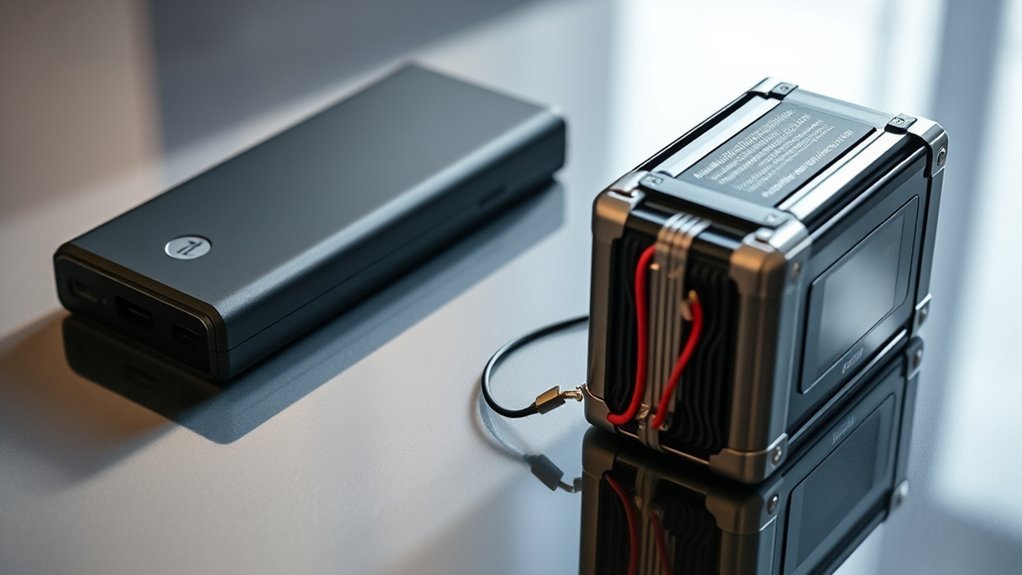
Although Lifepo4 batteries have traditionally been priced higher than standard lithium-ion variants, recent market trends show this cost gap is narrowing, thanks to manufacturing efficiencies and larger production volumes. Typically, Lifepo4 cells cost between $150 to $200 per kilowatt-hour, whereas lithium-ion batteries range from $130 to $180 per kilowatt-hour. The higher cost of Lifepo4 is partly due to materials like iron and phosphate, which are more abundant but less energy-dense. However, Lifepo4’s environmental impact is favorable due to lower toxicity and reduced fire risk, although recycling challenges remain, as their more stable chemistry complicates end-of-life processing. This balance influences long-term costs, making Lifepo4 increasingly competitive despite initial price differences.
Factors That Influence the Price of Lifepo4 and Lithium-Ion Batteries
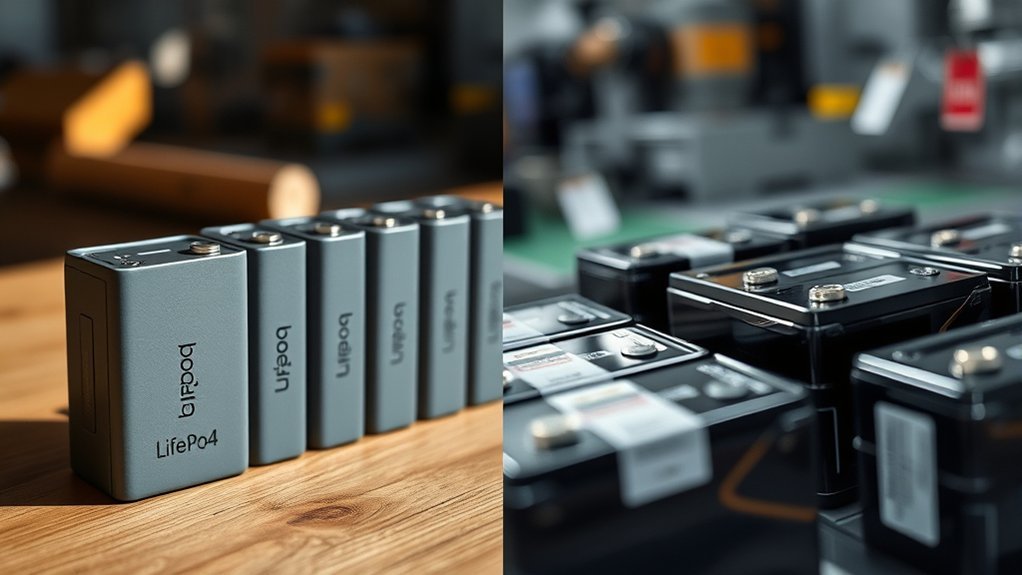
The cost of Lifepo4 and lithium-ion batteries is heavily influenced by material costs, which vary based on raw material market fluctuations and sourcing challenges. Manufacturing process efficiencies also play a critical role, impacting overall production expenses through automation and quality control measures. Additionally, market demand fluctuations can lead to price volatility, as supply and demand dynamics affect procurement and production scales.
Material Costs Variability
Material costs for Lifepo4 and lithium-ion batteries fluctuate considerably due to various interconnected factors, including raw material availability, geopolitical influences, mining and extraction costs, and technological advancements. Variability in material sourcing directly impacts price volatility, as supply chain disruptions or shortages can cause rapid cost increases. Lithium, cobalt, and nickel prices are especially sensitive to geopolitical tensions and market speculation, affecting overall battery costs. Additionally, advancements in extraction technologies can reduce costs but may temporarily increase expenses as new methods are adopted. The complexity of global supply chains amplifies these fluctuations, making material sourcing a critical factor in pricing stability. Understanding these dynamics helps explain the inherent price volatility observed in both Lifepo4 and lithium-ion battery markets.
Manufacturing Processes Efficiency
Manufacturing process efficiency plays a pivotal role in determining the overall cost of Lifepo4 and lithium-ion batteries, as it directly influences production speed, waste reduction, and quality control. Advances in recycling innovations help streamline material reuse, reducing raw material costs and environmental impact. Efficient supply chain logistics minimize delays and inventory costs, ensuring steady component flow and timely production. Factors such as optimized electrode coating, cell assembly, and quality assurance protocols also impact overall efficiency.
| Aspect | Impact on Cost |
|---|---|
| Recycling innovations | Lower raw material expenses |
| Supply chain logistics | Reduced delays and inventory costs |
| Manufacturing automation | Increased throughput |
| Quality control processes | Minimized defect rates |
| Process optimization | Reduced waste and energy use |
Market Demand Fluctuations
What drives the price fluctuations of Lifepo4 and lithium-ion batteries in the market? Primarily, market demand fluctuations are influenced by factors like market saturation and shifting consumer preferences. When market saturation occurs, demand stabilizes or declines, exerting downward pressure on prices. Conversely, surges in consumer interest—driven by innovations, renewable energy policies, or electric vehicle adoption—can create demand spikes, elevating prices. Additionally, evolving consumer preferences toward safer, longer-lasting, and environmentally friendly batteries influence purchasing patterns, impacting supply and price points. Supply chain responsiveness to these demand shifts also affects costs, with rapid demand growth often leading to temporary price increases. Understanding these demand dynamics is essential for anticipating price trends in Lifepo4 and lithium-ion battery markets.
Longevity and Total Cost of Ownership: Which Battery Offers Better Value?
Although both LiFePO4 and lithium-ion batteries are widely used in energy storage, their long-term value hinges on their respective longevity and total cost of ownership. LiFePO4 batteries generally offer a longer cycle life—up to 2000-5000 cycles—reducing replacement frequency and lowering lifecycle costs. This durability leads to fewer battery replacements, diminishing environmental impact through reduced waste and promoting battery recycling efforts. Conversely, lithium-ion batteries tend to degrade faster, often needing replacement after 1000-2000 cycles, which increases total ownership costs. While initial costs may favor lithium-ion, the extended lifespan of LiFePO4 results in better overall value. Thus, evaluating longevity and environmental impact is essential for determining which battery delivers superior long-term investment and sustainability.
Safety Features and Their Impact on Battery Pricing
Safety standards compliance and advanced protection systems considerably influence battery pricing, as they require additional design considerations and quality controls. Lifepo4 batteries, with their inherent thermal stability, often meet safety certifications more easily, potentially reducing costs. In contrast, lithium-ion batteries may incorporate complex protection circuitry, increasing manufacturing expenses but enhancing safety performance.
Safety Standards Compliance
How do safety standards influence the cost of lithium iron phosphate (LiFePO4) and lithium-ion batteries? Strict adherence to safety regulations increases manufacturing complexity and quality assurance efforts, elevating production costs. For LiFePO4, compliance often involves enhanced thermal stability and chemical stability, reducing risks like thermal runaway. For lithium-ion batteries, rigorous safety standards may include advanced separator technologies and fire-resistant components. These standards also impact environmental considerations, such as battery recycling protocols designed to minimize environmental impact. Incorporating safety features that facilitate recycling can incur additional costs but ultimately reduce long-term disposal expenses. Overall, stricter safety standards elevate upfront costs but are vital for ensuring safe operation, environmental sustainability, and compliance with evolving regulations, influencing the overall pricing structure of both battery types.
Advanced Protection Systems
Have you considered how advanced protection systems directly influence the overall cost of lithium iron phosphate (LiFePO4) and lithium-ion batteries? These systems include thermal management, overcharge/discharge protection, short-circuit prevention, and cell balancing. Each feature enhances safety, reduces failure risks, and prolongs battery lifespan, but also adds to manufacturing costs. Incorporating robust safety features can improve battery recycling outcomes by minimizing hazardous failures, thereby reducing environmental impact. However, these protections require sophisticated materials and engineering, increasing upfront expenses. Consequently, the enhanced safety and environmental benefits often justify higher prices. To sum up:
- Thermal management systems
- Overcharge/discharge safeguards
- Short-circuit protection
- Cell balancing mechanisms
These elements markedly impact the pricing structure of advanced batteries.
Manufacturing Processes and Material Costs Affecting Battery Prices
Manufacturing processes and material costs play a crucial role in determining the overall price difference between Lifepo4 and lithium-ion batteries. Lifepo4 cells typically require less complex manufacturing, utilizing more stable cathode materials that reduce safety-related production steps. Lithium-ion batteries, however, involve intricate processing of materials like cobalt and nickel, which are costly and subject to volatile raw material sourcing. Battery recycling also influences costs; Lifepo4’s longer lifespan and easier recycling processes lower long-term expenses, whereas lithium-ion batteries present challenges in efficient recycling, increasing costs. The sourcing of raw materials directly impacts prices, with cobalt and nickel being more expensive and ethically contentious than the raw materials used in Lifepo4. These manufacturing and material factors collectively shape the final battery price disparity.
Market Demand and Supply Chain Factors That Drive Price Differences
Market demand considerably influences the price disparity between Lifepo4 and lithium-ion batteries, as shifts in end-user preferences and application needs can alter production volumes and pricing strategies. Increased demand for Lifepo4 in stationary storage, driven by its environmental benefits, raises supply chain efficiency but can also inflate costs due to limited raw material availability. Conversely, the proliferation of lithium-ion in consumer electronics sustains high production levels, impacting raw material prices. Supply chain factors such as battery recycling efficiency and raw material sourcing directly affect costs, with environmental impact considerations prompting investments in sustainable practices. Additionally, geopolitical stability influences supply chain reliability, affecting pricing volatility. Overall, these interconnected factors shape both short-term costs and long-term market positioning for Lifepo4 and lithium-ion batteries.
Price Trends and Future Outlook for Lifepo4 and Lithium-Ion Batteries
Analyzing current market price trends reveals that Lifepo4 batteries are maintaining a cost advantage due to stable raw material prices, while lithium-ion prices fluctuate with supply constraints. Projections indicate that advancements in manufacturing and economies of scale could further reduce costs for both chemistries over the next decade. Understanding these trajectories helps anticipate the long-term economic viability and adoption rates of each battery type.
Market Price Trends
Have recent trends in battery prices signaled a shift in the competitive landscape for energy storage solutions? We observe significant price volatility influenced by raw material costs, technological advancements, and global supply chain disruptions. Key market trends include:
- Lithium prices have surged due to increased demand, impacting lithium-ion battery costs, while Lifepo4 remains relatively stable.
- Advancements in battery recycling techniques are lowering material costs, reducing environmental impact and influencing price stability.
- Increased adoption of second-life batteries is driving down costs, especially for lithium-ion variants.
- Market forecasts suggest a gradual stabilization, with economies of scale and improved recycling methods playing a crucial role.
These trends highlight evolving cost dynamics, emphasizing environmental considerations and the importance of sustainable sourcing in future price trajectories.
Future Cost Projections
Projections indicate that both Lifepo4 and lithium-ion batteries will experience continued price stabilization over the next decade, driven by technological improvements, economies of scale, and enhanced recycling processes. As battery recycling advances, costs associated with raw material extraction will decline, positively impacting environmental impact by reducing waste and resource depletion. Future cost trajectories suggest that Lifepo4 may maintain a slight cost advantage due to its stable chemistry and lower environmental footprint, while lithium-ion prices will benefit from manufacturing efficiencies. The table below highlights key factors influencing these trends:
| Factor | Impact on Future Costs |
|---|---|
| Technological Innovation | Reduced production costs, increased efficiency |
| Recycling Advancements | Lower raw material costs, decreased environmental impact |
| Economies of Scale | Cost reductions through mass production |
| Raw Material Prices | Fluctuations affecting long-term prices |
| Environmental Regulations | Potential cost increases or savings |
Which Battery Type Is More Cost-Effective for Different Applications?
Determining which battery type—LiFePO4 or lithium-ion—is more cost-effective depends heavily on the specific application and operational requirements. For instance, applications with frequent deep cycling benefit from LiFePO4’s longer cycle life, reducing replacement costs. Conversely, portable electronics prioritize energy density, favoring lithium-ion despite its shorter lifespan. Additionally, battery recycling and environmental impact influence costs; LiFePO4 batteries are easier and safer to recycle, lowering end-of-life expenses and ecological footprint.
- Heavy-duty stationary storage favors LiFePO4 for durability and lower long-term costs.
- Consumer electronics lean toward lithium-ion for higher energy density.
- Fleet EVs consider initial costs vs. lifespan, often preferring LiFePO4 for longevity.
- Environmental regulation compliance makes LiFePO4 more attractive for sustainable investment.
Making the Right Investment: Comparing Cost and Performance for Your Needs
Choosing the right battery investment requires a careful analysis of both upfront costs and long-term performance metrics, tailored to your specific application needs. Lifepo4 batteries often present lower environmental impact due to their longer lifespan and reduced reliance on hazardous materials, yet recycling challenges persist, especially with complex electrode components. Lithium-ion batteries, while offering higher energy density, pose greater recycling complexities and environmental concerns, particularly regarding lithium extraction and disposal. Cost considerations extend beyond initial purchase—factoring in lifecycle durability and environmental costs of recycling. A thorough assessment must weigh these factors, balancing performance requirements with sustainability goals. Ultimately, selecting the best battery hinges on understanding these trade-offs, ensuring that economic investments align with environmental responsibility and long-term operational efficiency.
Frequently Asked Questions
How Do Recycling Costs Impact Lifepo4 and Lithium-Ion Battery Prices?
Recycling expenses considerably influence battery prices; higher recycling costs increase overall costs, impacting lithium-ion batteries more due to complex materials, while Lifepo4’s simpler chemistry offers slightly lower recycling-related cost implications, affecting market pricing and sustainability strategies.
Are There Regional Price Differences Between Lifepo4 and Lithium-Ion Batteries?
We observe regional price differences driven by manufacturing hubs and import tariffs, with Lifepo4 batteries often cheaper in manufacturing-rich areas, while lithium-ion prices fluctuate due to global supply chain disruptions and varying tariff policies.
How Do Government Subsidies Influence Battery Pricing Trends?
Government incentives and market regulations considerably lower battery prices by subsidizing production and adoption, which accelerates technology deployment and drives down costs, making batteries more affordable and market-competitive despite regional price variations.
What Role Do Technological Advancements Play in Reducing Battery Costs?
Technological advancements act like a guiding lighthouse, illuminating improvements in battery chemistry and manufacturing scalability, which substantially lower costs. These innovations streamline production and enhance efficiency, making advanced batteries more accessible and economical for widespread adoption.
How Do Warranty Periods Affect the Perceived Cost-Effectiveness of Each Battery Type?
We find warranty comparison and maintenance considerations essential, as Lifepo4 batteries generally offer longer warranties, reducing perceived costs over time, while lower maintenance needs enhance overall cost-effectiveness; lithium-ion batteries often require more frequent upkeep, impacting their value.
Conclusion
In analyzing Lifepo4 versus lithium-ion batteries, it’s clear that initial costs are higher for Lifepo4, but their longer lifespan and durability often offset this. Notably, as manufacturing efficiencies improve and recycling methods advance, the cost gap narrows—making Lifepo4 increasingly attractive for long-term use. Ultimately, choosing the right battery depends on specific application demands, emphasizing that a detailed, data-driven approach guarantees maximum performance and total ownership value.