We compare the chemistry, performance, safety, and longevity of LiFePO4 and lithium-ion batteries to understand their respective advantages. We examine how differences in construction influence capacity, durability, and risk profiles, along with cost implications and ideal applications. Recognizing these distinctions helps in selecting the most suitable technology for specific needs, but the nuances involved often leave important questions unanswered. Exploring these complexities reveals the practical considerations that should guide your choice.
Key Takeaways
- LiFePO4 offers superior thermal stability and safety compared to lithium-ion batteries, reducing fire risk.
- Lithium-ion batteries have higher energy density, providing longer range and more compact designs.
- LiFePO4 batteries typically have a longer cycle life, lasting 2,000–5,000 cycles versus 500–1,000 for lithium-ion.
- Lithium-ion batteries are more suitable for space-constrained applications due to their higher energy density.
- LiFePO4 is easier and safer to recycle, with lower environmental impact than traditional lithium-ion chemistries.
Differences in Chemistry and Construction Between LiFePO4 and Lithium-Ion Batteries
While both LiFePO4 and traditional lithium-ion batteries rely on lithium-based chemistries, their fundamental chemical structures and construction differ markedly. LiFePO4 batteries use lithium iron phosphate as the cathode material, resulting in a more stable crystal structure and lower thermal runaway risk. In contrast, typical lithium-ion batteries often employ cobalt or nickel-based cathodes, which are more energy-dense but less stable. These structural differences influence not only performance but also battery recycling and environmental impact. LiFePO4’s stable chemistry simplifies recycling processes and reduces toxic waste, decreasing environmental footprint. Conversely, lithium-ion batteries with cobalt cathodes pose greater challenges for safe disposal and recycling due to hazardous materials. Understanding these chemical and construction variances is essential for evaluating sustainability and environmental responsibility across battery technologies.
Comparing Performance: Capacity, Power, and Energy Density
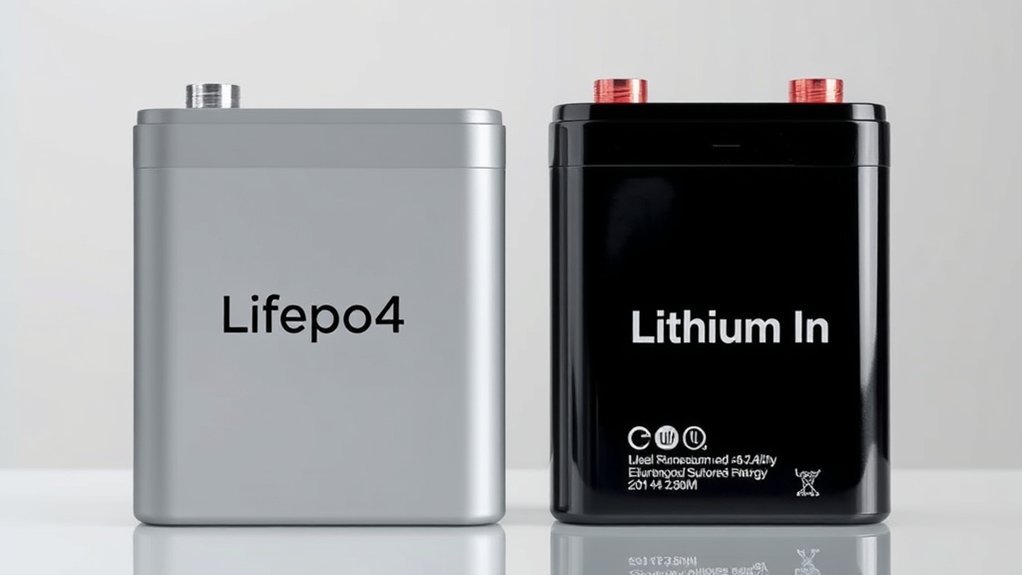
When comparing the performance of LiFePO4 and traditional lithium-ion batteries, capacity, power output, and energy density are key metrics that reveal their suitability for various applications. LiFePO4 batteries typically offer lower energy density but excel in durability and safety. Their capacity remains consistent over many charge cycles, making them favorable for grid storage and electric vehicles prioritizing longevity. In contrast, lithium-ion batteries generally have higher energy density, providing more power in a compact form, but degrade faster. The choice impacts battery recycling processes and environmental impact, with LiFePO4’s longer lifespan reducing waste. Consider the following comparison:
| Metric | LiFePO4 | Lithium-Ion |
|---|---|---|
| Capacity | Moderate | High |
| Power Output | High (steady) | Very high (burst) |
| Energy Density | Lower | Higher |
Safety Features and Risks of LiFePO4 vs. Lithium-Ion Batteries
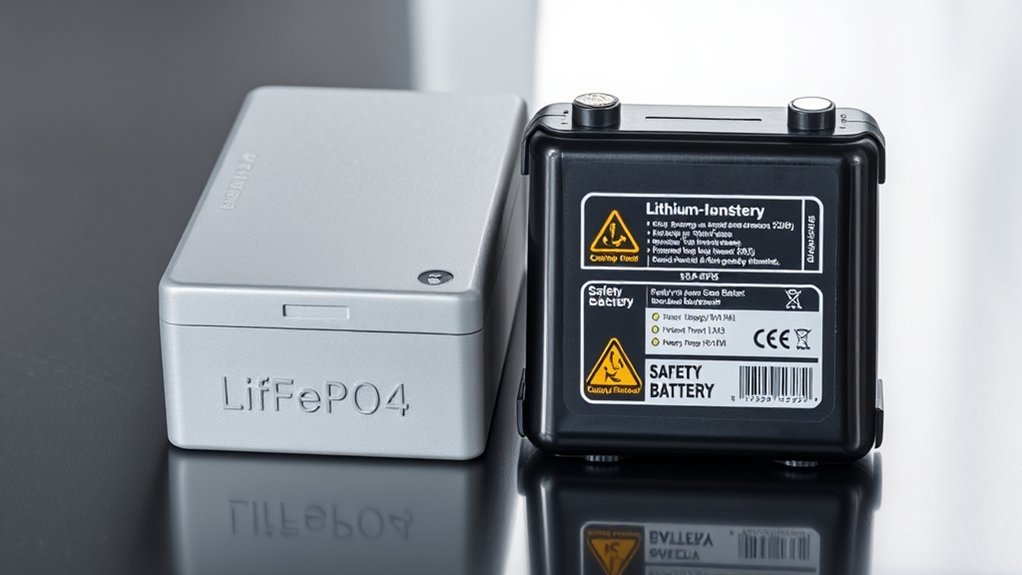
Both LiFePO4 and lithium-ion batteries incorporate safety features designed to mitigate risks associated with thermal runaway, overcharging, and mechanical damage. LiFePO4’s stable chemistry markedly reduces the likelihood of thermal runaway, making it inherently safer under abuse conditions. Lithium-ion batteries, while equipped with protective circuitry, are more susceptible to overheating and fire if damaged or improperly managed. Safety extends beyond operation; LiFePO4 batteries are easier to recycle, minimizing environmental impact and pollution compared to lithium-ion variants, which often contain hazardous materials. Nonetheless, proper handling and disposal are critical for both chemistries to prevent environmental harm. Overall, LiFePO4’s safety profile offers advantages in risk mitigation and sustainability, making it a preferable choice for applications prioritizing safety and environmental responsibility.
Longevity and Maintenance: Which Battery Lasts Longer?
LiFePO4 batteries generally outlast lithium-ion counterparts due to their more stable chemical composition and deeper cycle life. They typically endure 2,000-5,000 cycles, compared to 500-1,000 for lithium-ion. This extended lifespan reduces maintenance needs and enhances cost-effectiveness over time. However, manufacturing challenges, such as ensuring consistent quality and addressing battery recycling issues, can impact longevity. Proper maintenance—avoiding overcharging, deep discharges, and high temperatures—further prolongs lifespan. The table below summarizes key longevity factors:
| Factor | LiFePO4 | Lithium-Ion | Impact |
|---|---|---|---|
| Cycle Life | 2,000-5,000 cycles | 500-1,000 cycles | Longer lifespan for LiFePO4 |
| Maintenance | Less frequent, easier | More delicate, sensitive | Reduced maintenance demands |
| Recycling | More environmentally friendly | Challenges in recycling | Environmental impact considerations |
| Manufacturing Challenges | Complex, quality control issues | Less complex, mature process | Quality consistency and longevity |
| Degradation Factors | Thermal stability, depth of discharge | Higher risk of thermal runaway | Longer-lasting performance |
Cost Considerations: Price, Value, and Total Cost of Ownership
When evaluating LiFePO4 batteries, we must consider the initial purchase price alongside long-term cost benefits to determine true value. While higher upfront costs may seem prohibitive, their extended lifespan and lower maintenance can reduce total ownership expenses over time. Analyzing these factors enables a more accurate assessment of cost-effectiveness beyond initial investment.
Initial Purchase Price
How does the initial purchase price influence the overall cost-effectiveness of a battery system? Market trends and manufacturing challenges considerably impact upfront costs. Lifepo4 batteries generally have a higher initial price compared to traditional lithium-ion cells, driven by advanced chemistry and stricter quality controls. To understand this, consider:
- Material costs, especially for raw components like lithium and phosphate compounds.
- Manufacturing complexity, which increases due to rigorous safety and durability standards.
- Scale of production, where lower volume can elevate unit prices.
- Technological advancements that, over time, could reduce costs but currently face supply chain constraints.
These factors contribute to the initial investment, but Lifepo4’s stability and longevity often offset higher upfront costs, making initial pricing a vital element in evaluating overall value amid evolving market conditions.
Long-Term Cost Benefits
Over the lifespan of a battery system, the long-term cost benefits often outweigh the initial purchase price, emphasizing the importance of total cost of ownership. Lifepo4 batteries typically offer lower maintenance and longer cycle life compared to lithium-ion batteries, reducing replacement frequency and associated costs. Additionally, their recyclability minimizes environmental impact and enhances sustainability, which can decrease disposal costs and support regulatory compliance. This aspect of battery recycling contributes to a more favorable total cost of ownership by preserving value and reducing waste management expenses. While Lifepo4 batteries may have a higher upfront cost, their durability, reduced environmental impact, and efficient recycling processes translate into lower lifecycle costs, making them a more economical choice over time.
Best Use Cases for LiFePO4 and Lithium-Ion Batteries
We recognize that LiFePO4 batteries excel in off-grid power solutions due to their stability and long cycle life, making them ideal for remote setups. In electric vehicle applications, their thermal stability and safety profile position them as a compelling alternative to traditional lithium-ion cells. For renewable energy storage, their high efficiency and durability support effective integration with solar and wind systems, maximizing energy retention over time.
Off-Grid Power Solutions
Are LiFePO4 and lithium-ion batteries suitable for off-grid power systems? Yes, they are, but their effectiveness depends on specific factors.
- Longevity and cycle life: LiFePO4 batteries typically offer longer cycle life, reducing replacement frequency and improving sustainability via better battery recycling.
- Safety and thermal stability: LiFePO4’s stable chemistry aligns with strict manufacturing standards, minimizing risks in remote setups.
- Energy density and weight: Lithium-ion batteries provide higher energy density, beneficial where space is limited.
- Cost and environmental impact: Lithium-ion batteries often have lower initial costs but may require more frequent replacement, impacting lifecycle costs and recycling processes.
Choosing the right solution hinges on assessing these factors against off-grid power demands, considering manufacturing standards and end-of-life recycling potential.
Electric Vehicle Applications
Which battery type best suits different electric vehicle applications? LiFePO4 batteries excel in applications demanding longevity and thermal stability, making them ideal for commercial electric buses and fleet vehicles. Their inherently safer chemistry simplifies battery recycling and reduces safety concerns during operation. Conversely, lithium-ion batteries, with higher energy density, are better suited for consumer EVs where range and weight are critical. However, manufacturing challenges, such as sourcing high-quality materials, impact both chemistries. While LiFePO4’s simpler chemistry eases recycling efforts, lithium-ion batteries present more complex recycling processes due to varying chemistries. Ultimately, choosing between these batteries hinges on balancing safety, range, manufacturing complexity, and sustainability considerations, with each chemistry offering distinct advantages aligned with specific vehicle requirements.
Renewable Energy Storage
Renewable energy storage systems demand batteries that can reliably handle frequent charge-discharge cycles, long operational lifespans, and safety considerations. LiFePO4 and lithium-ion batteries excel in this domain, but each presents distinct advantages. For instance:
- LiFePO4 offers enhanced thermal stability, reducing safety risks in large-scale deployments.
- Lithium-ion batteries typically provide higher energy density, ideal for space-constrained applications.
- Manufacturing challenges, especially for lithium-ion, impact scalability and cost-effectiveness.
- Battery recycling processes are evolving to mitigate environmental concerns, but recycling efficiency remains a critical factor influencing sustainability.
Understanding these aspects helps optimize the selection for renewable energy storage, balancing longevity, safety, and environmental impact. Both chemistries face ongoing challenges in manufacturing and recycling, shaping their suitability for future renewable infrastructure.
Frequently Asked Questions
How Do Environmental Conditions Affect Lifepo4 and Lithium-Ion Battery Performance?
Environmental conditions impact both batteries’ performance by affecting battery lifespan and energy density; high temperatures accelerate degradation, while cold reduces performance, emphasizing the need for ideal conditions to maintain efficiency and longevity in Lifepo4 and lithium-ion batteries.
Are There Any Recycling or Disposal Differences Between These Battery Types?
We find that battery recycling and environmental disposal differ: LiFePO4 batteries are safer and easier to recycle due to fewer hazardous materials, whereas lithium-ion batteries require specialized procedures to manage toxic components, ensuring safer environmental disposal and minimizing ecological impact.
What Are the Charging Time Differences Between Lifepo4 and Lithium-Ion Batteries?
We find Lifepo4 batteries typically charge faster than lithium-ion, benefiting from better charge acceptance, which enhances battery longevity. While they may have a higher initial cost, the overall cost comparison favors Lifepo4 due to extended lifespan and efficiency.
How Do Temperature Extremes Impact the Safety of Each Battery Type?
We observe that Lifepo4 batteries exhibit superior thermal stability, reducing fire risk in temperature extremes, whereas lithium-ion batteries pose higher fire risks due to thermal runaway tendencies, making Lifepo4 safer under harsh environmental conditions.
Can Lifepo4 Batteries Be Used Interchangeably With Lithium-Ion Batteries?
We believe Lifepo4 batteries can’t be directly swapped with lithium-ion ones due to differences in battery lifespan, charging efficiency, and thermal management. Using them interchangeably risks performance issues, safety concerns, and reduced longevity, requiring careful compatibility assessments.
Conclusion
Ultimately, selecting between LiFePO4 and lithium-ion batteries isn’t just about capacity or safety—it’s about understanding what trade-offs we’re willing to accept. Ironically, the safer, more stable LiFePO4 might limit our range, while the high-density lithium-ion demands careful handling. In our quest for efficiency, we often overlook that no single battery type perfectly balances all needs. It’s a reminder that sometimes, choosing the “best” isn’t about maximizing specs but aligning with our true priorities.