Like a delicate balance on a tightrope, maintaining the ideal storage charge level for LiFePO4 batteries requires precision and understanding. Poor management can accelerate capacity loss or compromise safety, making it essential to grasp the underlying principles. We’ll explore how charge levels influence performance, the best practices for storage, and how to prevent common issues—crucial insights for anyone aiming to extend battery life effectively.
Key Takeaways
- Keep Lifepo4 batteries stored with a charge level between 40-60% for optimal longevity.
- Avoid storing batteries at full 100% charge or completely discharged below 20%.
- Store in a cool, dry environment at temperatures between 0°C and 25°C.
- Regularly monitor and recharge batteries to prevent voltage drift and capacity loss.
- Proper storage practices help maintain chemical stability and extend battery lifespan.
How Do Lifepo4 Battery Charge Levels Affect Performance?
The charge level of a Lifepo4 battery directly influences its performance, as it determines the available capacity and efficiency during operation. This relationship stems from the battery chemistry, which offers stable voltage and minimal capacity loss across charge cycles. Operating within ideal charge levels enhances longevity and maintains consistent power output. Overcharging or deep discharging can accelerate capacity fade, disrupting the battery’s ability to deliver peak performance. Each charge cycle imposes slight stress on the chemistry, so maintaining proper charge levels minimizes degradation. By understanding how the chemistry responds to various charge states, we can maximize performance and extend service life. Proper management of charge levels ensures the Lifepo4 battery remains efficient, reliable, and durable over numerous charge cycles.
How to Monitor Your Lifepo4 Battery Charge Level Effectively
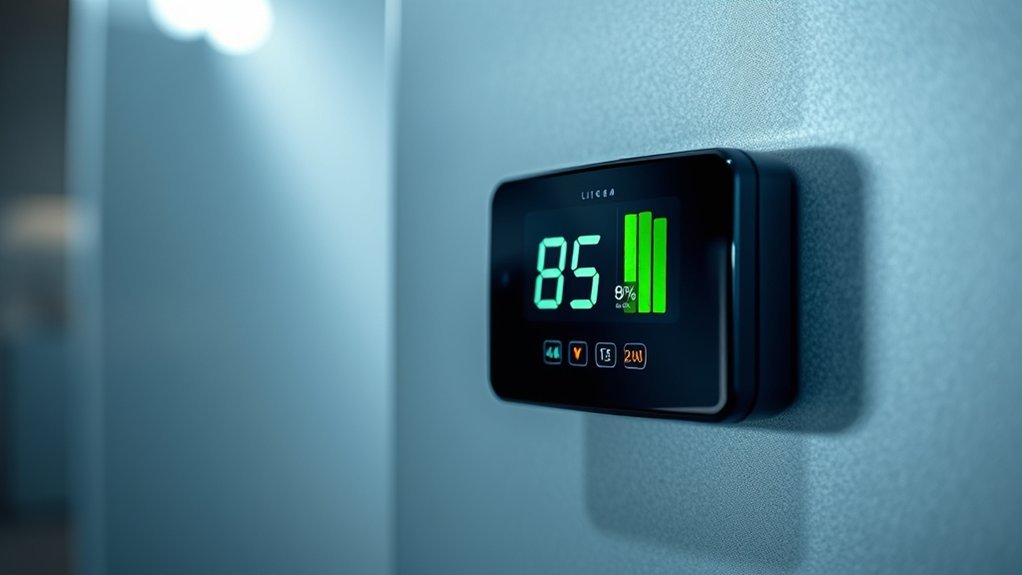
Monitoring your Lifepo4 battery’s charge level accurately is essential for maximizing performance and extending its lifespan. Precise measurement prevents overcharging and deep discharges, which can impair charge cycle efficiency and hinder battery recycling efforts. To do this effectively:
Accurate charge monitoring extends battery life and supports sustainable recycling practices.
- Use a high-quality battery management system (BMS) to track real-time voltage, current, and temperature data.
- Regularly calibrate your monitoring devices to guarantee measurement accuracy over time.
- Record and analyze charge/discharge patterns to identify inefficiencies and potential degradation.
- Maintain awareness of manufacturer guidelines for ideal charge ranges, minimizing stress on the cells and supporting sustainable battery recycling practices.
Adopting these methods ensures efficient utilization, prolongs lifespan, and upholds environmental standards.
What Is the Optimal Charge Range for Lifepo4 Batteries?
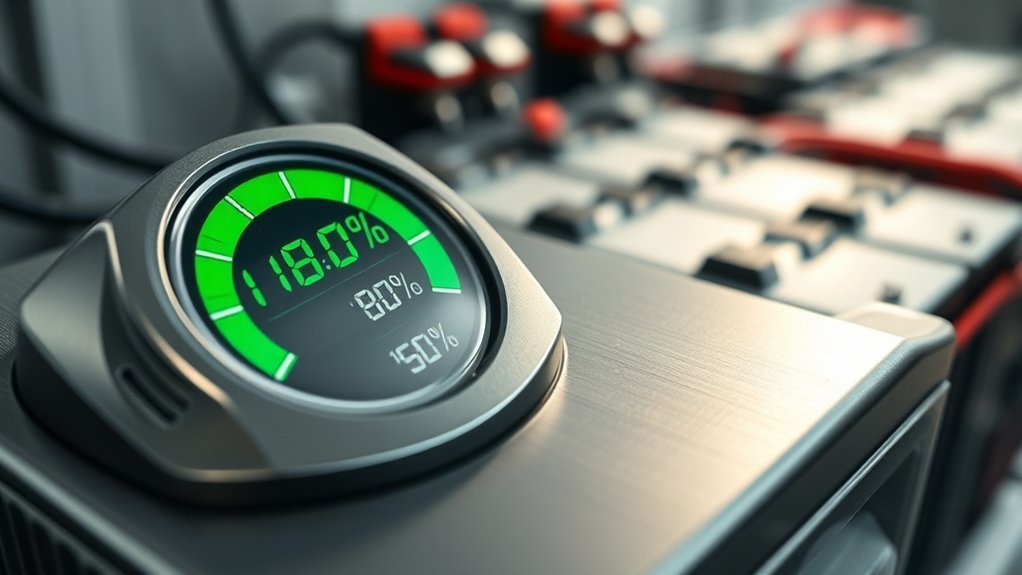
Understanding the ideal charge range for Lifepo4 batteries is essential for maximizing lifespan and performance. Maintaining voltage within specified limits minimizes overcharging risks and preserves cell integrity. By adhering to recommended charge boundaries, we can guarantee safe operation and long-term reliability of the battery system.
Ideal Charge Limits
What is the ideal charge range for Lifepo4 batteries to maximize their lifespan and performance? Based on battery chemistry principles, maintaining a charge between 20% and 80% optimizes cycle life by reducing stress on electrode materials. Limiting the voltage during charge minimizes degradation, extending overall durability. Properly managing this range ensures that each charge cycle preserves capacity and mitigates capacity fade over time.
Key considerations include:
- Avoid reaching full 100% charge frequently to prevent electrode strain.
- Discharge below 20% to prevent deep-cycle stress.
- Consistently maintain within the 20-80% window for longevity.
- Recognize that consistent adherence to these limits improves cycle count and reduces capacity loss over time.
Preventing Overcharging Risks
To prevent overcharging risks in Lifepo4 batteries, it’s essential to limit the maximum voltage during charging, typically to around 3.65 volts per cell. This voltage threshold aligns with the battery chemistry’s stability, minimizing electrolyte degradation and thermal stress. Overcharging beyond this voltage accelerates capacity fade and reduces overall lifespan, especially across multiple charging cycles. Maintaining the ideal charge range ensures the battery’s longevity and safety, as excessive voltage can trigger electrochemical imbalances. Proper voltage regulation during charging preserves cell balance, preventing capacity loss over time. By adhering to these limits, we enhance the battery’s performance, extend its lifespan, and mitigate the risks associated with overvoltage conditions inherent in Lifepo4 chemistry.
How to Manage and Maintain Lifepo4 Battery Charge for Longevity
Effective management of Lifepo4 batteries involves adhering to ideal charging practices, such as maintaining voltage within recommended ranges. We must also prevent deep discharges, which can greatly reduce lifespan, and guarantee storage conditions are controlled to avoid temperature and humidity extremes. By systematically applying these principles, we can maximize battery longevity and performance.
Optimal Charging Practices
Maintaining ideal charge levels is crucial for maximizing the lifespan of LiFePO4 batteries, and careful management of charging practices plays a key role in this process. Understanding battery chemistry guides us to avoid overcharging and undercharging, which can degrade cell integrity. Proper use of charging accessories, such as compatible chargers with adjustable voltage limits, ensures safe and efficient charging. To optimize longevity, we recommend:
- Using chargers designed specifically for LiFePO4 chemistry to prevent voltage stress.
- Keeping charge levels between 20% and 80% to reduce stress on the battery.
- Monitoring voltage and current parameters during charging cycles for safety.
- Avoiding prolonged storage at full charge to minimize capacity fade.
These practices help preserve cell chemistry, prevent degradation, and extend overall battery service life.
Avoid Deep Discharges
Have you considered how deep discharges impact the longevity of LiFePO4 batteries? Due to their unique battery chemistry, LiFePO4 cells are more resilient than other chemistries but still susceptible to damage from excessive discharge cycles. Deep discharges strain the electrodes and can accelerate capacity loss over time. Proper management involves implementing charging algorithms that prevent draining the battery below 20% State of Charge (SoC), maintaining a safe buffer zone. These algorithms regulate voltage and current to avoid exposing the battery to stressors associated with full discharge. By adhering to these practices, we preserve the structural integrity of the cells, extend cycle life, and maximize overall durability. Understanding the interplay between battery chemistry and charging protocols is essential for peak LiFePO4 performance.
Maintain Proper Storage Conditions
Proper storage conditions are critical for preserving the health and longevity of LiFePO4 batteries, especially when they won’t be used for extended periods. Understanding battery chemistry and implementing appropriate charging algorithms are essential. To optimize storage:
- Keep the temperature stable, ideally around 0°C to 25°C, to minimize chemical degradation.
- Maintain a storage charge level between 40-60%, aligning with recommended charging algorithms for longevity.
- Avoid exposing batteries to high humidity or direct sunlight, which can accelerate chemical breakdown.
- Periodically check and recharge batteries using suitable charging algorithms to prevent voltage drift and capacity loss.
Adhering to these conditions guarantees the battery chemistry remains stable, prolonging lifespan and preserving capacity during long-term storage.
Common Signs of Incorrect Charge Levels in Lifepo4 Batteries
How can you tell if a Lifepo4 battery is not charged correctly? Deviations from ideal charge levels often indicate underlying issues related to battery chemistry and charging cycles. Common signs include reduced capacity, uneven voltage levels, and increased internal resistance, which can lead to premature aging. To better understand, consider the following:
| Sign | Cause | Impact |
|---|---|---|
| Voltage imbalance | Incomplete or improper charging | Reduced efficiency |
| Capacity loss | Excessive charge cycles or overcharge | Shortened lifespan |
| Elevated internal resistance | Poor charge management | Heat generation, damage |
These indicators highlight incorrect charge levels, emphasizing the importance of monitoring and maintaining proper charging practices.
Tips for Safe Charging and Discharging of Lifepo4 Batteries
Maintaining ideal charge levels in Lifepo4 batteries requires adherence to specific safety protocols during both charging and discharging processes. Proper management ensures battery chemistry stability and peak performance while preventing hazards. To achieve this, consider these tips:
- Use compatible charging infrastructure designed for Lifepo4 chemistries to prevent overvoltage or undervoltage conditions.
- Monitor voltage and current levels continuously, adhering to manufacturer specifications for safe operation.
- Avoid deep discharges below the recommended minimum, which can compromise battery longevity and safety.
- Implement temperature controls, as excessive heat during charging or discharging can affect battery chemistry and safety.
Following these guidelines helps maintain battery integrity, prolongs lifespan, and ensures safe operation within refined charging parameters.
How to Troubleshoot and Correct Charge Level Issues in Lifepo4 Systems
When charge levels in Lifepo4 systems deviate from their expected ranges, it indicates underlying issues that require systematic troubleshooting. We start by verifying the battery’s manufacturing standards, guaranteeing no defects or inconsistencies affect performance. Next, we check for proper cell balancing, as imbalance can lead to inaccurate charge readings. Faulty sensors or connections often cause false readings, so inspecting wiring and sensor calibration is essential. Additionally, improper battery recycling practices can degrade cell integrity, impacting charge levels. Regular maintenance and adherence to manufacturing standards help prevent these issues. If anomalies persist, conducting a detailed capacity test can identify deteriorated cells, guiding targeted replacements. Correcting charge level issues involves a combination of diagnostic precision and maintaining suitable manufacturing and recycling practices to ensure longevity and safety.
Frequently Asked Questions
How Does Temperature Influence Lifepo4 Battery Charge Levels?
Temperature effects considerably impact LiFePO4 battery charge efficiency; high temperatures accelerate degradation, while low temperatures reduce charge acceptance. We monitor temperature closely to optimize performance and longevity, ensuring consistent, efficient operation across varying environmental conditions.
Can Overcharging Damage Lifepo4 Batteries Permanently?
Overcharging Lifepo4 batteries can cause permanent damage, akin to a crack in a crystal, compromising integrity. High manufacturing quality and proper battery recycling practices minimize risks, ensuring longevity and safe operation, unlike flawed cells prone to irreversible harm.
What Is the Lifespan Impact of Frequently Deep Discharges?
Frequent deep discharges can shorten LiFePO4 battery lifespan, increasing degradation and reducing capacity over time. Proper battery recycling minimizes environmental impact, emphasizing the importance of sustainable practices to mitigate long-term environmental damage from battery disposal.
Are There Specific Chargers Recommended for Lifepo4 Batteries?
We recommend using chargers specifically designed for LiFePO4 batteries, as they guarantee proper battery maintenance and charging safety, preventing overcharge or damage, and optimizing lifespan through controlled, consistent charging parameters tailored for these chemistry-specific requirements.
How Do Age and Usage History Affect Optimal Charge Levels?
We understand aging and usage influence ideal charge levels, but proper management guarantees battery safety and sustains charging efficiency. Regular monitoring helps prevent overcharge or deep discharge, preserving longevity and safety despite battery age or history.
Conclusion
In summary, maintaining the ideal charge range for our LiFePO4 batteries is akin to tending a delicate garden—consistent care and attention nurture their longevity and performance. By monitoring voltage levels and avoiding extremes, we guarantee the internal chemistry remains balanced, much like preserving the harmony of a well-tuned instrument. Ultimately, thoughtful management safeguards our investment, allowing the batteries to serve reliably, much like a steady lighthouse guiding us safely through the currents of energy demands.