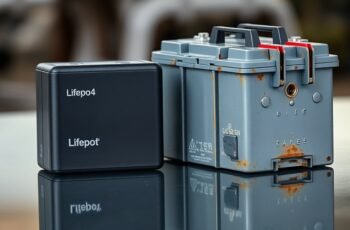
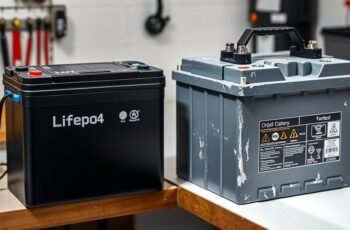
When comparing LiFePO4 and NMC batteries, it’s crucial to evaluate their distinct performance characteristics and safety profiles. These differences influence their suitability for various applications, from energy storage to electric vehicles. Understanding the trade-offs can guide informed choices, but the decision isn’t straightforward. Exploring their technical nuances reveals critical factors that may sway preferences depending on specific needs and priorities—details that warrant closer examination.
Key Takeaways
- LiFePO4 offers superior thermal stability and safety, reducing fire and explosion risks compared to NMC batteries.
- NMC batteries have higher energy density, making them ideal for space-constrained applications like electric vehicles.
- LiFePO4 provides a longer cycle life and easier, cheaper recycling, enhancing long-term cost-effectiveness and environmental sustainability.
- NMC batteries generally have lower initial costs but degrade faster, requiring more maintenance over time.
- LiFePO4 is preferred for safety-critical, long-term energy storage, while NMC suits high-performance, portable devices.
What Are the Main Differences Between LiFePO4 and NMC Batteries?
While both LiFePO4 (Lithium Iron Phosphate) and NMC (Nickel Manganese Cobalt) batteries are popular lithium-ion chemistries, their fundamental differences markedly influence performance, safety, and application suitability. LiFePO4 batteries feature a stable crystal structure, offering enhanced safety and longer cycle life but have lower energy density. In contrast, NMC batteries provide higher energy density, making them suitable for portable devices and EVs, yet they pose greater safety risks. Additionally, environmental impact and battery recycling are vital considerations; LiFePO4’s composition simplifies recycling and reduces toxic waste, whereas NMC’s complex metal mix complicates recycling processes and raises environmental concerns. These distinctions underscore the importance of selecting the appropriate chemistry based on application-specific requirements and sustainability goals.
How Do LiFePO4 and NMC Batteries Perform in Terms of Safety?
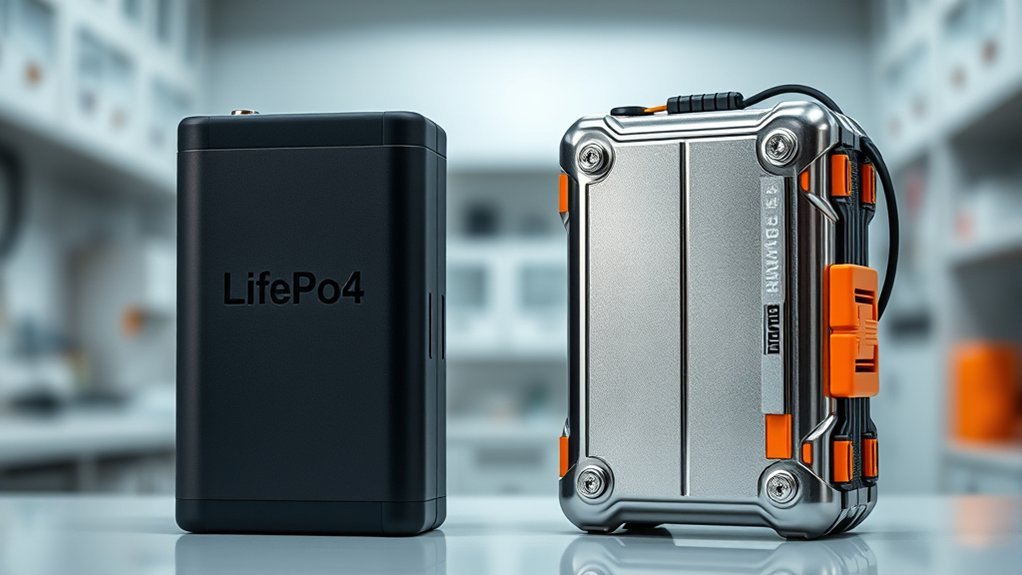
When comparing LiFePO4 and NMC batteries, their thermal stability markedly impacts safety, especially under stress conditions. LiFePO4 cells generally exhibit lower risks of fire and explosion due to their robust chemical structure, whereas NMC batteries can be more prone to thermal runaway. Understanding these safety profiles helps inform their suitability for different applications and risk management strategies.
Thermal Stability and Safety
LiFePO4 batteries demonstrate superior thermal stability and safety characteristics compared to NMC batteries, primarily due to their more stable chemical composition. This stability reduces the risk of thermal runaway during operation, making them inherently safer. When considering battery manufacturing, LiFePO4 cells require less complex thermal management systems, which enhances overall safety protocols. Additionally, their robust chemical stability minimizes degradation over time, decreasing the likelihood of hazardous failures. From an environmental impact perspective, LiFePO4 batteries generate fewer toxic emissions during production and disposal, contributing to safer manufacturing practices. This combination of thermal resilience and safety makes LiFePO4 batteries a more stable choice, especially in applications where safety and environmental considerations are critical.
Risk of Fire and Explosion
How do LiFePO4 and NMC batteries compare regarding fire and explosion hazards? LiFePO4 batteries exhibit superior thermal stability, markedly reducing the risk of thermal runaway, which lowers their potential for fire and explosion. Their stable chemistry makes them less prone to violent failures during manufacturing and operation. Conversely, NMC batteries, while offering higher energy density, are more susceptible to internal short circuits and thermal instability, increasing their risk of fire if not properly managed. Safety protocols, including rigorous manufacturing standards and battery recycling processes, are essential to mitigate these hazards. Proper battery recycling prevents hazardous buildup of degraded materials, further enhancing safety. Overall, LiFePO4 batteries tend to be safer in terms of fire and explosion risks, but both chemistries require diligent safety measures throughout their lifecycle.
Comparing Energy Density: Which Battery Type Offers More Power?
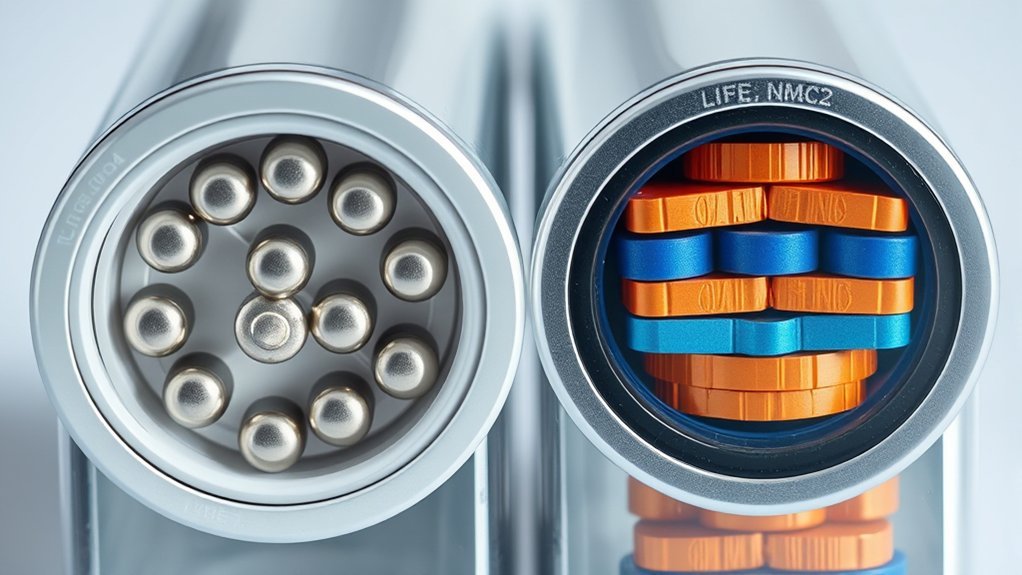
Although both LiFePO4 and NMC batteries are widely used in energy storage applications, their energy densities differ considerably, impacting their suitability for various uses. NMC batteries typically offer higher energy density, allowing them to store more power in a smaller volume, which makes them ideal for portable or space-constrained applications. In contrast, LiFePO4 batteries have lower energy density but excel in thermal stability and longevity. During battery manufacturing, these differences influence electrode material choices and cell design. Recycling processes also vary; NMC’s higher metal content complicates recycling, while LiFePO4’s more stable chemistry simplifies it. Ultimately, the energy density variation stems from material composition and impacts device performance, making the choice dependent on specific power and space requirements.
Which Battery Is More Cost-Effective Over Its Lifespan?
When evaluating the long-term cost-effectiveness of batteries, it’s essential to take into account not just the initial purchase price but also the total cost of ownership over their lifespan. Lifepo4 batteries typically have higher manufacturing costs but benefit from longer cycle life and easier battery recycling, reducing replacement frequency. NMC batteries often feature lower upfront costs but may incur higher costs over time due to shorter lifespans and potential recycling challenges.
Key factors influencing cost-effectiveness include:
- Durability and cycle life
- Recycling and disposal expenses
- Manufacturing efficiencies
- Maintenance and replacement costs
Ultimately, Lifepo4 batteries may prove more economical long-term despite higher initial expenses, due to their durability and recyclability, while NMC batteries could be cost-effective for short-term applications.
How Do Charging and Discharging Behaviors Vary Between LiFePO4 and NMC?
Charging rates differ between LiFePO4 and NMC batteries, with LiFePO4 typically accepting higher currents without risking damage. Their discharge voltage ranges also vary, with LiFePO4 maintaining a stable voltage plateau, while NMC’s voltage declines more gradually. Additionally, the depth of discharge limits influence overall performance and cycle life, often constraining NMC batteries more tightly than LiFePO4.
Charging Rate Differences
The charging and discharging behaviors of LiFePO4 and NMC batteries differ markedly due to their distinct chemical compositions and internal structures. These differences influence their ideal charging rates and overall efficiency. LiFePO4 batteries typically allow higher charge rates with better thermal stability, reducing risks during rapid charging. Conversely, NMC batteries often require more regulated charging protocols to prevent degradation.
Key distinctions include:
- LiFePO4’s capacity for fast charging, supporting higher current rates
- NMC’s sensitivity to overcharging, impacting cycle life
- The environmental impact of faster charging cycles, affecting battery recycling processes
- Variations in internal resistance affecting overall energy transfer efficiency
Understanding these differences helps optimize performance while minimizing environmental impacts.
Discharge Voltage Range
Although both LiFePO4 and NMC batteries operate within specific voltage limits, their discharge voltage ranges differ considerably due to their distinct chemistries. LiFePO4 typically discharges between 3.2V and 2.5V per cell, maintaining stable performance and facilitating safer operation. Conversely, NMC batteries discharge from about 4.2V down to roughly 3.0V, reflecting their higher energy density but increased sensitivity to voltage drops. These differences influence discharging behaviors, affecting battery lifespan and efficiency. Manufacturing processes also impact discharge characteristics, with LiFePO4’s stable chemistry easing recycling, whereas NMC’s complex chemistry presents challenges. Proper understanding of these voltage ranges is vital for optimizing system safety, longevity, and sustainability.
| Battery Type | Discharge Voltage Range | Chemically Stable | Recycling Complexity |
|---|---|---|---|
| LiFePO4 | 3.2V – 2.5V | High | Easier |
| NMC | 4.2V – 3.0V | Moderate | More complex |
Depth of Discharge Limits
Understanding the depth of discharge (DoD) limits for LiFePO4 and NMC batteries reveals significant differences in their operational safety and longevity. LiFePO4 batteries typically tolerate deeper discharges, often up to 80-90%, which enhances cycle life and reduces frequency of battery recycling. In contrast, NMC batteries generally have a lower DoD limit, around 70-80%, to prevent capacity fade and thermal risks. These behaviors influence manufacturing processes, as LiFePO4 cells are designed for durability and safety, while NMC cells prioritize energy density. The deeper discharge capability of LiFePO4 also impacts thermal management strategies, affecting overall longevity. Properly managing DoD is essential for maximizing lifespan, optimizing recycling, and ensuring safe operation across both chemistries.
Which Battery Better Suits Electric Vehicles and Solar Storage?
When evaluating which battery type better suits electric vehicles and solar storage, we must consider key technical factors such as energy density, lifespan, safety, and cost. Lifepo4 batteries generally offer enhanced safety and longer cycle life, making them suitable for long-term energy storage and EV applications. NMC batteries boast higher energy density, which benefits applications requiring more compact, lightweight solutions. Manufacturing processes influence environmental impact, with Lifepo4’s simpler processes facilitating more sustainable battery recycling. Conversely, NMC’s complex manufacturing can hinder recycling efforts, raising concerns about waste management. Cost considerations also vary; Lifepo4 batteries often have lower material costs and improved recyclability, impacting overall lifecycle economics. Ultimately, the choice hinges on balancing safety, energy needs, and sustainability priorities for specific applications.
What Are the Longevity and Maintenance Considerations for Both?
Longevity and maintenance are vital factors influencing the overall value and operational costs of Lifepo4 and NMC batteries. Lifepo4 batteries typically offer longer cycle life due to stable chemistry, reducing replacement frequency. They require minimal maintenance, with less concern for capacity fade, and benefit from manufacturing processes optimized for durability. NMC batteries, while offering higher energy density, tend to degrade faster under frequent cycling, necessitating proactive maintenance and monitoring. Both battery types emphasize the importance of proper battery recycling to mitigate environmental impact. Manufacturing processes greatly influence longevity, with tighter quality controls extending lifespan. Key considerations include:
- Lifepo4’s superior cycle life and thermal stability
- NMC’s higher energy density versus faster degradation
- Impact of manufacturing quality on durability
- Recycling practices to enhance sustainability
How Should You Choose Between LiFePO4 and NMC for Your Needs?
Choosing between LiFePO4 and NMC batteries depends on analyzing your specific energy requirements, operational conditions, and long-term cost considerations. LiFePO4 batteries excel in safety, longevity, and environmental impact, partly due to their more straightforward battery recycling process and lower toxicity. NMC batteries offer higher energy density, suitable for compact applications, but pose greater challenges in recycling and environmental impact. When selecting, consider not just initial costs but also the lifecycle implications, including environmental sustainability. LiFePO4’s eco-friendly profile makes it preferable for renewable energy storage, whereas NMC’s performance benefits suit high-demand, space-constrained setups. Ultimately, your choice hinges on balancing performance needs with environmental considerations and the capacity for responsible battery recycling.
Frequently Asked Questions
How Do Temperature Ranges Affect Lifepo4 and NMC Battery Performance?
We find that Lifepo4 batteries excel in thermal stability and temperature resilience, maintaining performance across broader temperature ranges, while NMC batteries are more sensitive, with performance drops under extreme temperatures, affecting efficiency and lifespan.
Are Lifepo4 Batteries Environmentally Friendly and Recyclable?
We find Lifepo4 batteries environmentally friendly and recyclable due to their safer chemistry, which enhances battery safety, and their sustainable materials, though they have lower energy density compared to other chemistries, making efficiency considerations essential.
What Are the Typical Warranty Periods for Each Battery Type?
Imagine a solar installation lasting decades; typically, Lifepo4 batteries offer a 10-15 year warranty, while NMC batteries usually cover 8-12 years. These warranties reflect differences in battery chemistry, manufacturing standards, and durability expectations.
How Do Charging Times Compare Between Lifepo4 and NMC Batteries?
Charging speed differs; Lifepo4 batteries typically charge faster due to lower energy density and better thermal management, while NMC batteries take longer but store more energy, making them suitable for high-capacity applications, balancing efficiency with energy requirements.
Can Both Batteries Be Used Interchangeably in Existing Systems?
Yes, both batteries can be used interchangeably, but differences in battery lifespan and cost comparison matter. We find that compatibility depends on system specifications, where understanding these factors guarantees ideal performance and longevity without trading quality for cost.
Conclusion
In conclusion, choosing between LiFePO4 and NMC batteries hinges on your priorities. LiFePO4 excels in safety, longevity, and sustainability, making it the superhero of reliable energy storage. NMC, on the other hand, packs a punch with its higher energy density, ideal for space-constrained applications. By understanding these nuances, we can make informed decisions that power our future efficiently and safely—because getting it right can transform how we harness and store energy like never before.