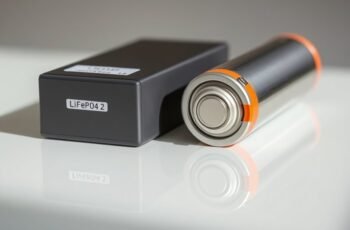
Did you know that LiFePO4 batteries can typically endure four to ten times more charge cycles than traditional lead acid models? This significant difference impacts both longevity and total cost of ownership, yet many overlook the safety and maintenance implications tied to each type. Understanding these distinctions is essential for making an informed decision that aligns with your specific needs, especially in applications like renewable energy or marine use. Let’s explore the key factors that influence their performance and suitability.
Key Takeaways
- Lifepo4 batteries have a significantly longer cycle life, typically 2,000 to 5,000 cycles, compared to 500-1,000 cycles for lead acid.
- Lifepo4 offers higher energy density, better deep discharge capacity, and requires less maintenance than lead acid batteries.
- Lifepo4 batteries are safer, with thermal stability and lower risk of fire or explosion, unlike lead acid’s acid leaks and hazards.
- Although more expensive upfront, Lifepo4’s durability and lower maintenance costs make it more economical long-term.
- Lifepo4’s eco-friendly design and easier recycling make it a more sustainable choice over traditional deep cycle lead acid batteries.
What Are the Key Differences Between LiFePO4 and Lead Acid Batteries?
While both LiFePO4 and lead acid batteries serve as energy storage solutions, their fundamental differences considerably impact their performance and application. LiFePO4 batteries offer longer cycle life and higher efficiency, resulting in reduced frequency of replacement and less waste. This advantage positively affects battery recycling efforts, as fewer units need disposal over time. Conversely, lead acid batteries contain hazardous materials like sulfuric acid and lead, posing significant environmental impacts if improperly disposed of. Their recycling process is more established but remains resource-intensive and environmentally burdensome. These distinctions influence not only operational costs and longevity but also the environmental footprint of energy storage systems. Ultimately, choosing between the two involves weighing performance benefits against environmental considerations and the sustainability of battery recycling practices.
How Do Battery Lifespan and Durability Compare?
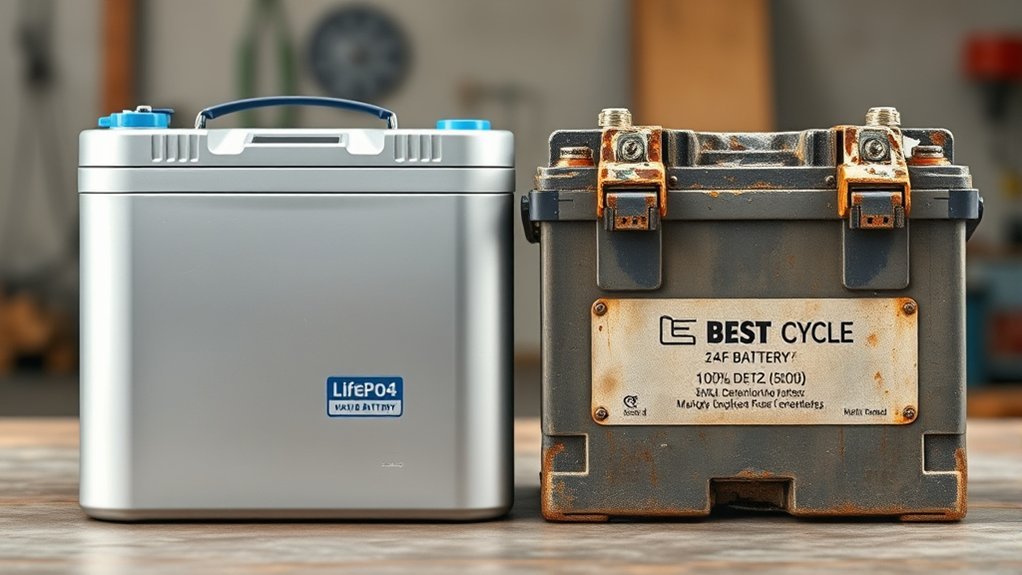
When comparing lifespan and durability, we focus on charge cycles and overall longevity, as these determine how long each battery type remains functional. Resistance to deep discharges considerably impacts performance, especially under demanding conditions, while maintenance requirements influence long-term reliability. Analyzing these factors allows us to accurately assess how each battery type withstands operational stresses over time.
Charge Cycles and Longevity
Lithium iron phosphate (LiFePO4) batteries generally offer markedly higher cycle life compared to deep cycle lead acid batteries, translating into greater overall longevity. Typically, LiFePO4 batteries sustain 2,000 to 5,000 charge cycles, whereas lead acid batteries top out around 500 to 1,000 cycles. This enhanced cycle durability reduces the frequency of replacements, which positively impacts battery recycling efforts and minimizes waste. Consequently, LiFePO4 batteries have a lower environmental impact over their lifespan, as fewer batteries need disposal and fewer resources are consumed. Additionally, their longer lifespan reduces the environmental footprint associated with manufacturing and disposal. This cycle longevity underscores the technical and ecological advantages of LiFePO4, making them a more sustainable choice in the long run.
Resistance to Depth of Discharge
LiFePO4 batteries demonstrate a markedly higher resistance to the effects of deep discharges compared to lead acid batteries, which directly influences their lifespan and durability. This resilience stems from their superior thermal stability, allowing them to withstand extensive discharges without degrading as quickly. Lead acid batteries suffer from capacity loss and reduced cycle life when repeatedly discharged beyond 50%, whereas LiFePO4 can endure deeper discharges with minimal impact on longevity. This characteristic enhances their environmental impact, as fewer replacements are needed, reducing waste and resource consumption. Additionally, the thermal stability of LiFePO4 contributes to safer operation during deep cycling, minimizing risks associated with overheating or thermal runaway. Overall, their resistance to deep discharge underscores their durability and sustainability advantages over traditional lead acid options.
Maintenance and Durability
While both LiFePO4 and lead acid batteries serve essential roles in energy storage, their maintenance requirements and overall durability differ markedly. LiFePO4 batteries generally demand minimal maintenance, avoiding water top-ups and acid management, and offer a longer cycle life. In contrast, lead acid batteries require regular checks, watering, and equalization to prevent sulfation. Regarding durability, LiFePO4 batteries withstand more charge cycles, reducing the frequency of replacements and lowering environmental impact through extended lifespan. Proper battery recycling protocols further enhance sustainability. Key considerations include:
- Reduced maintenance complexity
- Longer cycle life
- Lower environmental footprint
- Resistance to deep discharge
- Greater overall durability
Which Battery Type Is Safer for Your Application?
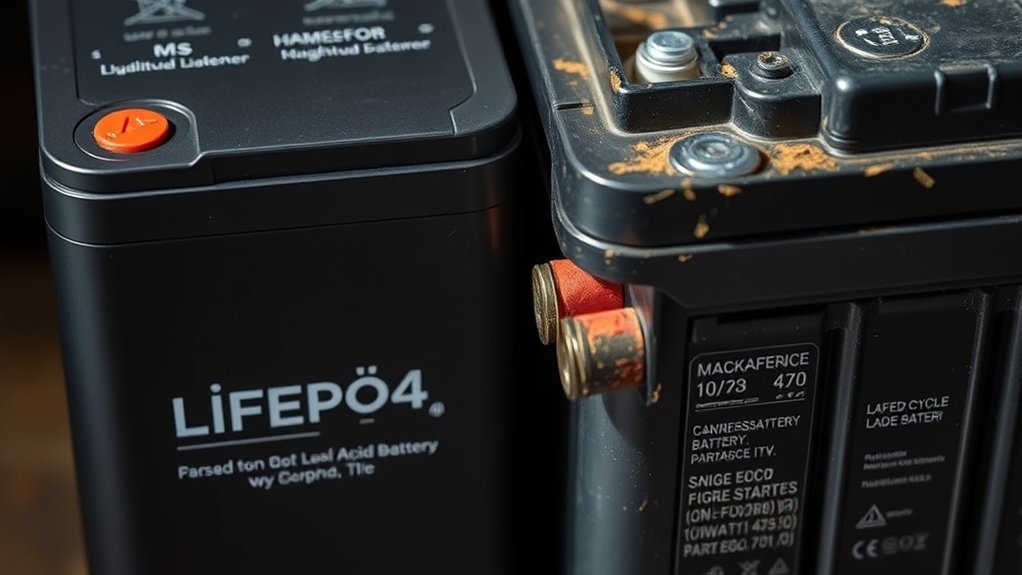
When evaluating battery safety for specific applications, it is crucial to take into account the inherent risks and failure modes associated with each type. Lithium iron phosphate (LiFePO4) batteries are generally safer due to their stable chemistry, reducing risks of thermal runaway and fires. Lead-acid batteries, while reliable, pose higher safety concerns related to acid leaks and explosion hazards if mishandled. Environmentally, LiFePO4 batteries have a lower environmental impact thanks to their longer lifespan and safer disposal. Additionally, battery recycling is more straightforward with LiFePO4 due to fewer toxic materials involved. Overall, LiFePO4 batteries tend to be safer for users and the environment, making them preferable in applications demanding high safety standards and minimal environmental footprint.
What Are the Cost Implications of Choosing LiFePO4 or Lead Acid?
When evaluating cost implications, we consider initial purchase prices, ongoing maintenance expenses, and long-term savings potential. While LiFePO4 batteries typically require a higher upfront investment, their lower maintenance and longer lifespan often offset initial costs over time. Analyzing these financial factors helps determine which option offers greater value tailored to specific application needs.
Upfront Purchase Costs
The initial purchase cost of a battery considerably influences the overall financial viability of energy storage solutions. Lithium Iron Phosphate (LiFePO4) batteries typically have a higher upfront price compared to lead acid variants, primarily due to advanced manufacturing and materials. However, this cost is offset over time through longer cycle life and reduced maintenance. When evaluating costs, consider:
- Higher initial investment for LiFePO4 versus lower lead acid prices
- Lifecycle costs including replacement frequency
- Impact of battery recycling processes on long-term expenses
- Manufacturing environmental impact influencing supply chain costs
- Potential subsidies or incentives for environmentally friendly technologies
While LiFePO4 batteries demand a greater initial outlay, their benefits in durability and eco-friendly manufacturing may justify the expenditure, especially considering future disposal and recycling costs.
Long-Term Savings Benefits
Choosing between LiFePO4 and lead acid batteries markedly impacts long-term financial outcomes due to differences in durability, maintenance costs, and overall lifecycle performance. LiFePO4 batteries offer higher cycle counts, reducing replacement frequency and associated costs. They also have a lower environmental impact through easier battery recycling processes, mitigating ecological concerns. Conversely, lead acid batteries incur higher maintenance expenses, such as watering and equalization, and degrade faster, increasing total ownership costs. The table below summarizes key financial implications:
| Aspect | LiFePO4 | Lead Acid |
|---|---|---|
| Lifecycle & Durability | Longer lifespan, more cycles | Shorter lifespan, fewer cycles |
| Recycling & Environmental | Easier, eco-friendlier | More hazardous waste |
| Maintenance & Replacement | Lower costs | Higher ongoing costs |
| Total Cost of Ownership | More economical long-term | Less economical long-term |
Maintenance Expenses and Costs
Maintaining battery systems involves distinct cost considerations for LiFePO4 and lead acid options, driven by their design and chemical properties. LiFePO4 batteries typically require lower maintenance, reducing ongoing expenses related to water refilling and terminal inspection. Conversely, lead acid batteries demand regular watering, equalization, and terminal cleaning, increasing maintenance costs over time. The manufacturing environmental impact and battery recycling processes also influence costs, with LiFePO4 batteries generally having a lower environmental footprint due to longer lifespans and easier recycling.
- Lower frequency of replacement
- Reduced water and electrolyte costs
- Fewer safety inspections
- Longer lifespan reduces total lifecycle costs
- Eco-friendly disposal and recycling considerations
How Do Charging and Maintenance Requirements Differ?
While both Lifepo4 and deep cycle lead acid batteries require regular charging and maintenance, their protocols differ markedly. Lifepo4 batteries demand a precise charging voltage and are less sensitive to overcharging, extending their lifespan and reducing maintenance. Conversely, lead acid batteries need periodic equalization to prevent sulfation, increasing maintenance complexity. Proper charging strategies influence battery recycling and environmental impact, with Lifepo4’s longer cycle life producing less waste over time.
| Aspect | Lifepo4 | Lead Acid |
|---|---|---|
| Charging | Constant voltage, minimal maintenance | Equalization, regular checks |
| Maintenance | Low, fewer water top-ups | Frequent watering, sulfation prevention |
| Environmental Impact | Recyclable, longer lifespan | Shorter lifespan, more disposal concerns |
Which Battery Offers Better Performance for Renewable Energy, Boats, or RVs?
When evaluating batteries for renewable energy systems, boats, or RVs, performance metrics such as energy density, cycle life, and reliability become paramount. Lifepo4 batteries generally outperform deep cycle lead acid batteries in these areas, offering higher energy density and longer cycle life. Additionally, Lifepo4’s lower self-discharge rate enhances reliability in remote applications. Environmental impact and battery recycling are also key considerations; Lifepo4 batteries are more eco-friendly due to fewer toxic materials and easier recycling processes. For renewable energy, their superior longevity and efficiency reduce replacement frequency. Boats and RVs benefit from their lightweight design and deep discharge capacity. Overall, Lifepo4 batteries deliver better performance aligned with sustainability goals and operational demands.
Frequently Asked Questions
Are Lifepo4 Batteries Environmentally Friendly Compared to Lead Acid?
We find LiFePO4 batteries more environmentally friendly due to their longer lifespan and higher charging efficiency, which reduces waste and energy consumption over time, making them a sustainable choice compared to traditional lead acid batteries.
How Do Temperature Sensitivities Differ Between the Two Battery Types?
We notice Lifepo4 batteries boast better thermal stability and temperature regulation, making them less sensitive to temperature swings. Conversely, lead acid batteries are more prone to performance drops under extreme temperatures, highlighting their limited thermal resilience.
Can Lifepo4 Batteries Be Recycled Easily?
We believe LiFePO4 batteries are easier to recycle due to their stable chemistry and less toxic materials, reducing environmental impact. Battery recycling processes are advancing, making LiFePO4’s eco-friendliness a significant advantage over traditional lead-acid options.
What Are the Warranty Differences Between Lifepo4 and Lead Acid Batteries?
We find Lifepo4 batteries typically offer longer warranties, reflecting their extended battery lifespan, while lead acid batteries often come with shorter warranties. The cost comparison reveals Lifepo4’s higher initial investment balances with durability and longer-term reliability.
How Do Weight and Size Compare for Similar Capacities?
We find LiFePO4 batteries are considerably lighter and more compact than deep cycle lead acid ones of similar capacity, enhancing portability. Their superior battery longevity and cost efficiency make them preferable for space-constrained, long-term applications.
Conclusion
While LiFePO4 batteries demand a higher upfront investment, their remarkable lifespan, safety, and efficiency outweigh initial costs. In contrast, lead acid batteries may seem cheaper initially but often require more frequent replacements and maintenance. Ultimately, choosing LiFePO4 signifies prioritizing long-term performance and sustainability, even amid higher initial expenses. This strategic decision ensures safer, more reliable energy storage, making it the superior option for those seeking durability and ecological responsibility in demanding applications.