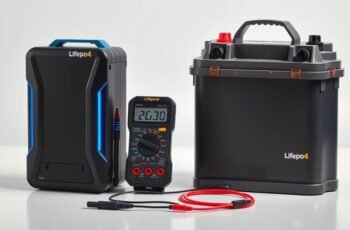
Did you know that lithium iron phosphate (LiFePO4) batteries can last up to four times longer than traditional lead acid options, making them increasingly popular in marine applications? Their higher energy density and faster recharge times offer significant performance benefits, yet they come with a higher initial cost. As we explore the technical differences, safety considerations, and long-term sustainability, you’ll see how choosing the right battery impacts your vessel’s efficiency and maintenance needs—an important decision for any serious mariner.
Key Takeaways
- LiFePO4 offers higher energy density, longer cycle life, and faster charging, making it ideal for demanding marine applications.
- Lead acid batteries are more affordable upfront and easier to service but require regular maintenance and have shorter lifespans.
- LiFePO4 batteries are safer with better thermal stability and produce fewer gases, reducing ventilation needs onboard.
- Lead acid batteries pose environmental challenges due to toxic materials and recycling difficulties, whereas LiFePO4 is more eco-friendly.
- Long-term, LiFePO4 reduces total ownership costs despite higher initial investment, thanks to durability and lower maintenance.
How Do Lifepo4 and Lead Acid Batteries Differ in Marine Performance?
While both LiFePO4 and lead acid batteries serve as essential energy sources for marine applications, they differ considerably in their performance characteristics under marine conditions. LiFePO4 batteries offer higher energy density, faster charging cycles, and superior depth of discharge, enhancing overall operational efficiency. They exhibit lower internal resistance, providing more consistent power delivery during critical marine tasks. Conversely, lead acid batteries are heavier, have limited cycle life, and require regular maintenance. From an environmental perspective, LiFePO4 batteries are more sustainable due to their longer lifespan and reduced need for replacement, easing environmental impact. Additionally, battery recycling processes for LiFePO4 are advancing, minimizing ecological hazards associated with disposal. These distinctions directly influence marine safety, operational reliability, and ecological responsibility.
What Are the Main Advantages of Lifepo4 Batteries for Boats?
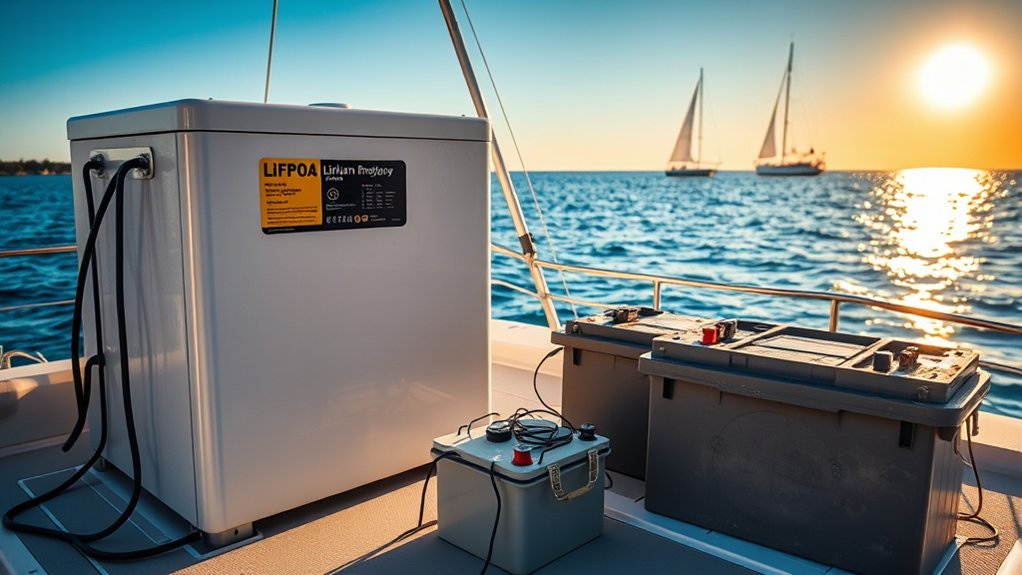
LiFePO4 batteries offer several significant advantages for boating applications, primarily due to their advanced chemical composition and design. They deliver higher battery capacity relative to size, enabling longer operation periods without increasing weight. Additionally, their robust chemistry allows for more charging cycles—often 2000+—which enhances longevity and reduces replacement costs. These batteries maintain stable voltage under load, ensuring consistent power delivery critical for sensitive marine electronics. Their thermal stability minimizes risks of thermal runaway, increasing safety on boats. The high charge acceptance rate also shortens charging times, improving operational efficiency.
| Feature | Benefit | Impact for Boats |
|---|---|---|
| Battery capacity | More energy storage per unit volume | Longer trips, more power |
| Charging cycles | Extended lifespan | Cost-effective, durable |
| Thermal stability | Safe operation | Reduced risk of failure |
Why Consider Lead Acid Batteries for Marine Use?
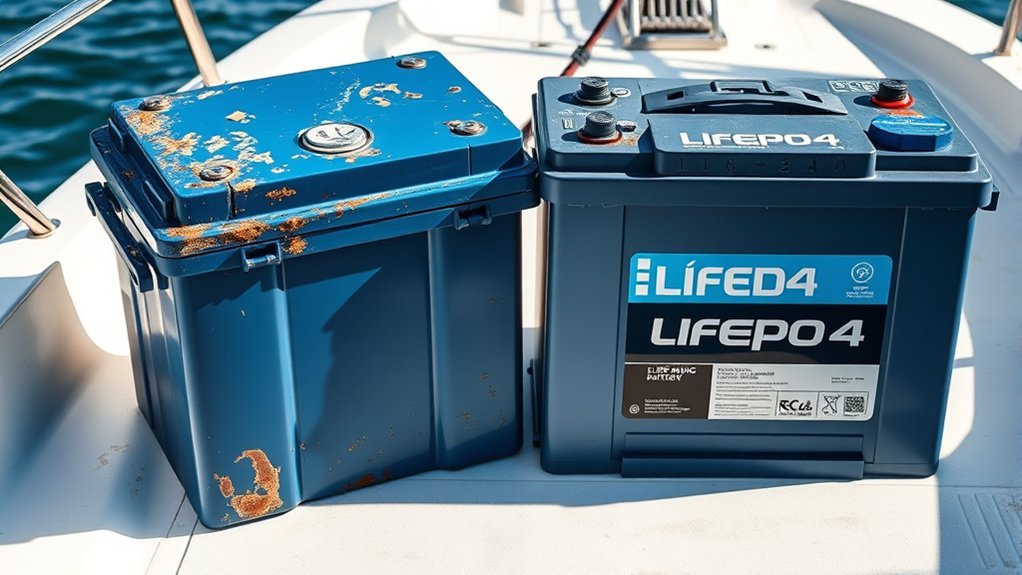
Lead acid batteries remain a cost-effective and readily available option for marine applications, especially in budget-conscious settings. Their long-standing use demonstrates proven reliability and broad compatibility with existing marine electrical systems. This combination of factors makes them an attractive choice for many vessel operators.
Cost-Effectiveness and Availability
Despite the growing popularity of advanced battery technologies, traditional lead-acid batteries remain a highly cost-effective and readily available option for marine applications. Their widespread manufacturing infrastructure guarantees easy access and lower upfront costs, making them an economical choice for many operators. Additionally, lead-acid batteries benefit from established battery recycling programs, which mitigate environmental impact by recovering valuable materials and reducing waste. This recycling process not only supports sustainability but also helps lower long-term disposal costs. While their energy density is lower compared to newer chemistries, the affordability and availability of lead-acid batteries, coupled with mature supply chains, continue to favor their use in marine settings where cost and accessibility are critical considerations.
Proven Reliability and Compatibility
Because marine environments demand dependable power sources, lead-acid batteries have a long-standing reputation for proven reliability and broad compatibility with existing systems. Their well-established technology guarantees consistent performance under harsh conditions, making them a trusted choice for many vessels. Lead-acid batteries are compatible with a wide range of charging systems, simplifying integration into existing electrical setups. Additionally, their familiarity supports effective maintenance and troubleshooting. From an environmental perspective, lead-acid batteries are highly recyclable, with established battery recycling programs that mitigate environmental impact. This extensive recycling infrastructure reduces waste and recovers valuable materials. While Lifepo4 batteries offer advantages, the proven reliability and compatibility of lead-acid batteries—coupled with their recycling benefits—continue to make them a practical choice for marine applications.
Which Battery Type Is More Cost-Effective for Marine Applications?
When evaluating cost-effectiveness for marine applications, we compare initial purchase prices and projected long-term savings. Lifepo4 batteries typically have higher upfront costs but offer superior cycle life and maintenance savings, while lead-acid batteries are less expensive initially but may incur higher replacement and maintenance expenses over time. Analyzing total cost of ownership helps determine which option provides better value in the context of specific operational demands.
Initial Purchase Cost
Initially, the upfront cost of batteries greatly influences the decision-making process for marine applications, and understanding the cost-effectiveness of LiFePO4 versus lead-acid batteries is essential. Lead-acid batteries typically have a lower initial purchase price, making them attractive for budget-conscious applications. However, LiFePO4 batteries, despite a higher initial investment, often offset this cost through longer lifespan and reduced maintenance. When considering total cost, factors like battery recycling and environmental impact are vital; LiFePO4 batteries are more environmentally friendly and easier to recycle, potentially lowering long-term disposal costs. While lead-acid batteries may seem cheaper initially, their shorter cycle life and environmental footprint often result in higher replacement and disposal expenses over time, impacting overall cost-effectiveness.
Long-Term Savings
While the upfront cost influences purchasing decisions, evaluating long-term savings offers a clearer picture of a battery’s true value in marine applications. Lifepo4 batteries typically have higher initial prices but excel in longevity, often exceeding 2,000 deep cycles compared to lead acid’s 300-500 cycles. This durability reduces replacement frequency, lowering overall costs over time. Additionally, Lifepo4 batteries require less maintenance and have a lower environmental impact, partly because they support more efficient battery recycling processes that minimize hazardous waste. Conversely, lead acid batteries degrade faster, necessitating more frequent replacements and generating more waste. When considering total cost of ownership, Lifepo4’s extended lifespan, reduced maintenance, and eco-friendly disposal methods make it a more cost-effective choice for long-term marine use, despite higher initial investment.
How Do Lifepo4 and Lead Acid Batteries Impact Marine Safety and Maintenance?
The choice between Lifepo4 and lead acid batteries considerably influences marine safety and maintenance protocols, as each type presents distinct operational characteristics and risk factors. Lifepo4 batteries enhance marine safety by offering thermal stability, reducing the risk of thermal runaway and fire hazards common in lead acid batteries. They produce fewer gases during operation, lowering ventilation requirements and potential explosion risks. Maintenance challenges differ markedly; lead acid batteries demand regular equalization, electrolyte checks, and rigorous cleaning to prevent corrosion, whereas Lifepo4 batteries require minimal maintenance with no watering or venting. Proper monitoring of voltage and temperature is essential for both, but Lifepo4 batteries’ built-in BMS simplifies safety management. Overall, Lifepo4 batteries deliver safer, lower-maintenance options, but diligent handling remains vital for ideal marine safety.
Which Battery Technology Best Suits Your Specific Marine Needs?
Selecting the right battery technology for your marine application depends on a thorough assessment of your vessel’s operational demands, safety priorities, and maintenance capacity. Lifepo4 batteries offer higher energy density, longer cycle life, and faster recharge times, making them suitable for demanding, long-term use. Lead acid batteries, however, are more cost-effective upfront and easier to service but have shorter lifespans and require regular maintenance. When considering environmental impact, Lifepo4 batteries are more eco-friendly due to their higher recyclability and lower toxic material content, whereas lead acid batteries pose challenges in battery recycling and potential environmental hazards. Ultimately, your choice hinges on balancing performance, safety, environmental responsibility, and logistical factors like battery recycling infrastructure and disposal protocols.
Frequently Asked Questions
How Long Do Lifepo4 and Lead Acid Batteries Typically Last at Sea?
We find Lifepo4 batteries last 8-10 years at sea, outlasting lead acid’s 3-5 years, thanks to better durability and cycle life. Considering battery recycling and cost comparison, Lifepo4 offers long-term efficiency, reducing replacement frequency and environmental impact.
Are Lifepo4 Batteries Environmentally Friendly for Marine Use?
Like a green leaf amid stormy seas, Lifepo4 batteries are eco-friendly, thanks to battery recycling and manufacturing sustainability. Their lower toxicity and longer lifespan reduce environmental impact, making them a responsible choice for marine energy needs.
Can Lifepo4 Batteries Withstand Harsh Marine Weather Conditions?
We believe LiFePO4 batteries withstand harsh marine weather due to their robust casing and stable chemistry, despite being lightweight, which reduces maintenance challenges. Their durability guarantees reliable performance even in extreme conditions.
What Are the Charging Requirements for Lifepo4 Versus Lead Acid Batteries?
We charge Lifepo4 batteries with precise, lower-voltage, multi-stage chargers emphasizing battery recycling safety, unlike lead-acid’s higher-voltage, simpler systems. Proper charging infrastructure guarantees longevity, performance, and environmental safety, making Lifepo4’s requirements technically superior yet more complex.
Do Lifepo4 Batteries Require Special Safety Precautions on Boats?
We follow strict safety protocols and proper battery maintenance when handling Lifepo4 batteries on boats, including avoiding overcharging, guaranteeing proper ventilation, and using protective gear, to prevent thermal runaway and ensure safe, reliable operation in marine environments.
Conclusion
In weighing LiFePO4 against lead acid for marine use, we see that choosing the right battery depends on your operational demands and budget. While LiFePO4 offers superior longevity, safety, and performance, lead acid remains a practical, cost-effective option for less intensive applications. Ultimately, as the saying goes, “You get what you pay for”—investing in the right technology can enhance your vessel’s efficiency, safety, and sustainability over the long haul.