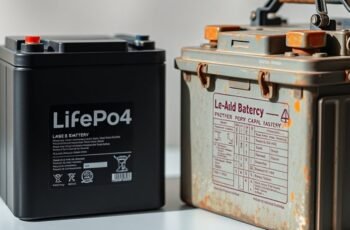
It’s often assumed that all batteries require similar maintenance, but this oversimplification can be misleading. When comparing LiFePO4 and lead-acid batteries, the differences in their maintenance needs are significant and impact long-term performance. Understanding these distinctions is essential for making informed choices about energy storage solutions. As we examine the specifics of upkeep, lifespan, and environmental considerations, the reasons behind these variations become clearer—and perhaps, more consequential.
Key Takeaways
- LiFePO4 batteries require minimal maintenance, mainly safety precautions during installation and disposal, unlike lead-acid batteries needing electrolyte checks.
- Lead-acid batteries need regular electrolyte level checks, terminal cleaning, and voltage monitoring to prevent damage.
- LiFePO4 offers longer lifespan (up to 10 years) with less frequent maintenance compared to lead-acid’s 3-5 years.
- Lead-acid batteries require routine equalization cycles and careful handling to avoid sulfation and capacity loss.
- Recycling LiFePO4 is easier and safer due to non-toxic materials, whereas lead-acid recycling involves hazardous waste management.
Understanding the Maintenance Needs of LiFePO4 and Lead-Acid Batteries
Although both LiFePO4 and lead-acid batteries require routine maintenance to guarantee ideal performance and longevity, their specific needs differ considerably. LiFePO4 batteries demand minimal maintenance, but proper handling includes safety precautions during installation and disposal. Battery recycling is essential to mitigate environmental impact, especially for lithium-based cells. Conversely, lead-acid batteries require regular checks of electrolyte levels, terminal cleanliness, and voltage stability. Safety precautions involve careful handling to prevent acid spills and venting hazards. While lead-acid batteries benefit from routine monitoring, LiFePO4’s lower maintenance profile simplifies upkeep. Understanding these distinctions helps optimize lifespan and safety, emphasizing the importance of responsible disposal and recycling practices to reduce environmental risks associated with both battery types.
How Lead-Acid Batteries Require Regular Upkeep and Monitoring
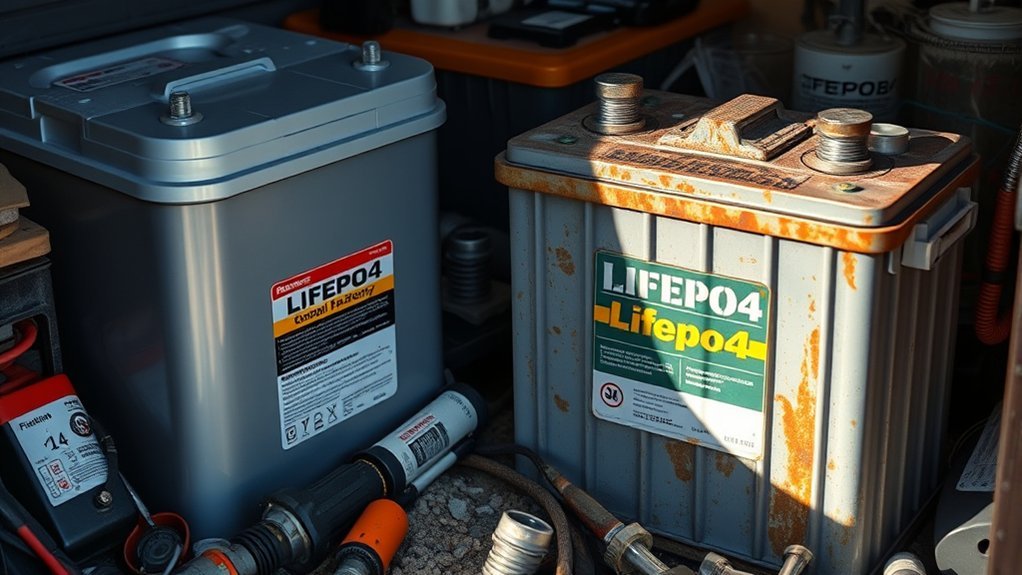
Lead-acid batteries necessitate consistent upkeep and vigilant monitoring to maintain ideal performance and prolong lifespan. Regular checks of electrolyte levels are vital, as low levels can cause sulfation and capacity loss. Strict adherence to charging protocols guarantees proper recharging, preventing overcharging or undercharging that can damage plates. Monitoring voltage and specific gravity helps detect early signs of deterioration. Proper battery recycling practices are essential for environmental safety and recovery of materials, further emphasizing the need for responsible maintenance. The table below highlights key maintenance activities:
| Maintenance Aspect | Critical Considerations |
|---|---|
| Electrolyte Levels | Check and top off with distilled water regularly |
| Charging Protocols | Use correct voltage and current settings |
| Monitoring | Regular voltage and specific gravity assessments |
This systematic approach minimizes deterioration and maximizes battery lifespan.
The Low-Maintenance Benefits of Choosing LiFePO4 Batteries
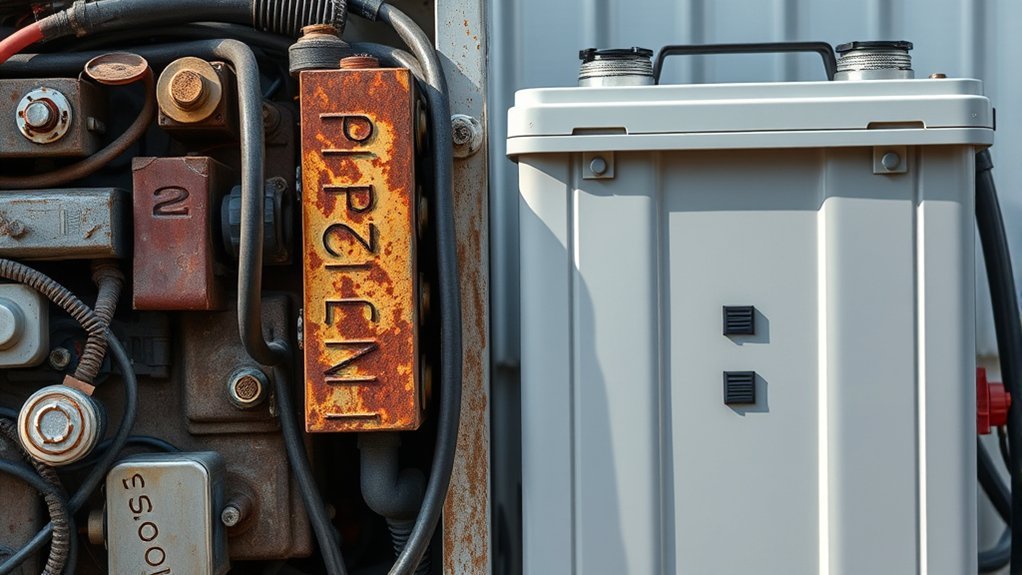
LiFePO4 batteries offer significant low-maintenance advantages due to their inherent chemical stability and advanced design, which reduce the need for frequent monitoring and upkeep. Their robust chemistry minimizes risks of thermal runaway and capacity loss, unlike lead-acid alternatives. This stability translates to fewer operational checks, lower maintenance costs, and increased safety. Additionally, LiFePO4 batteries facilitate more environmentally responsible practices through easier battery recycling, owing to their non-toxic, stable materials. This reduces their environmental impact and aligns with sustainability goals. Their longer lifespan further diminishes the frequency of replacements, decreasing waste and resource consumption over time. Overall, choosing LiFePO4 batteries results in a more efficient, less labor-intensive energy storage solution with a diminished environmental footprint.
Comparing Lifespan and Performance Maintenance for Both Battery Types
When evaluating battery longevity and maintenance requirements, it’s essential to compare their operational lifespans and performance consistency over time. LiFePO4 batteries typically offer a longer cycle life—up to 10 years—compared to lead acid, which usually lasts 3-5 years. This extended lifespan results in less frequent replacements, reducing overall maintenance efforts. Performance stability is also notable; LiFePO4 maintains consistent voltage output and efficiency over its cycle life, whereas lead acid batteries often experience capacity fade. From an environmental perspective, LiFePO4 batteries are easier to recycle, minimizing ecological impact. Lead acid batteries pose greater challenges in battery recycling and generate more hazardous waste, emphasizing the importance of choosing batteries that align with sustainable practices and lower environmental impact over their lifecycle.
Which Battery Maintenance Approach Fits Your Energy Storage Needs?
Choosing the right maintenance approach depends on evaluating how each battery type aligns with your specific energy storage requirements. Lifepo4 batteries typically demand less intensive maintenance, which can reduce operational costs and simplify management. Lead acid batteries, however, require regular topping off and equalization cycles to maintain performance. When assessing maintenance strategies, consider the environmental impact, especially regarding battery recycling practices. Lifepo4 batteries are more environmentally friendly, with less hazardous waste, whereas lead acid batteries pose greater challenges for recycling due to corrosive components. Selecting a maintenance approach that minimizes environmental impact not only aligns with sustainable practices but also influences the overall lifecycle management and disposal processes, ensuring compliance with recycling standards. Ultimately, understanding these factors helps determine which battery type best fits your energy storage needs.
Frequently Asked Questions
Are Lifepo4 Batteries Affected by Temperature Fluctuations More Than Lead-Acid?
We find Lifepo4 batteries are less affected by temperature fluctuations than lead-acid, enhancing battery longevity and cost efficiency. Their stable chemistry maintains performance across temperature ranges, making them more reliable and economically advantageous in variable climates.
How Does Cycling Frequency Impact the Maintenance of Each Battery Type?
Like a delicate dance, cycling frequency influences each battery’s lifespan, requiring precise charging protocols. Lifepo4 batteries resist cycling wear better, demanding less maintenance, while lead-acid batteries need vigilant care to prevent capacity fade and extend longevity.
What Are the Environmental Considerations for Disposing of Each Battery?
We analyze disposal hazards and recycling protocols for each battery type: LiFePO4 batteries pose fewer environmental risks, requiring careful handling to prevent chemical leaks, while lead acid batteries demand strict recycling due to toxic lead and acid, minimizing ecological impact.
Can Both Batteries Be Maintained Effectively With DIY Methods?
Sure, DIY maintenance can prolong battery longevity, but only if we’re willing to embrace the chaos. Both batteries demand technical precision, making professional oversight essential to truly optimize lifespan and safety, rather than risking DIY pitfalls.
Do Maintenance Requirements Change With Battery Age or Usage Intensity?
Yes, maintenance requirements evolve with battery age and usage intensity, impacting battery lifespan and charging protocols; we monitor voltage and temperature regularly, adjusting our maintenance practices to optimize performance and longevity throughout the battery’s operational life.
Conclusion
In analyzing maintenance needs, it’s clear that LiFePO4 batteries offer a more streamlined, cost-effective option with reduced upkeep and longer lifespan. While lead-acid batteries demand consistent monitoring and maintenance to prevent issues, LiFePO4’s stable chemistry minimizes these concerns, potentially challenging the traditional view that all batteries require significant intervention. Ultimately, choosing the right battery depends on aligning maintenance demands with your operational priorities—making LiFePO4 a compelling choice for sustainable, low-maintenance energy storage.