As we explore lithium iron phosphate (LiFePO4) batteries, it’s clear they represent a significant advancement in rechargeable energy storage, combining safety, stability, and longevity. Their unique chemical composition allows for efficient energy cycling, making them suitable for various applications from electric vehicles to solar systems. Understanding the technical nuances behind their operation and advantages can help you make informed decisions about their use, but there’s more to uncover about what sets these batteries apart and how they might fit your needs.
Key Takeaways
- Lifepo4 batteries are rechargeable lithium-ion batteries known for safety, long life, and thermal stability.
- They operate by lithium ions moving between the cathode (lithium iron phosphate) and anode during charging and discharging.
- These batteries have a longer cycle life (over 2,000 cycles) and are safer compared to other lithium-ion types.
- They are environmentally friendly, easily recyclable, and generate less heat and toxic waste.
- Commonly used in electric vehicles, renewable energy storage, and portable power systems for their durability and safety.
What Are Lifepo4 Batteries and How Do They Work?
Lifepo4 batteries, also known as lithium iron phosphate batteries, are a type of rechargeable lithium-ion battery characterized by their stable chemistry and high thermal stability. They operate through the intercalation of lithium ions between the cathode (lithium iron phosphate) and anode materials during charging and discharging cycles. This chemistry provides enhanced safety, longer cycle life, and consistent performance. When considering battery recycling, Lifepo4 batteries pose fewer environmental risks due to their non-toxic, stable materials, reducing harmful waste. Their environmental impact is further minimized because they generate less heat and degrade less over time, lowering the need for frequent replacements. Proper recycling of these batteries guarantees the recovery of valuable materials, contributing to sustainability and reducing ecological footprint.
Key Advantages of Lifepo4 Batteries for Beginners
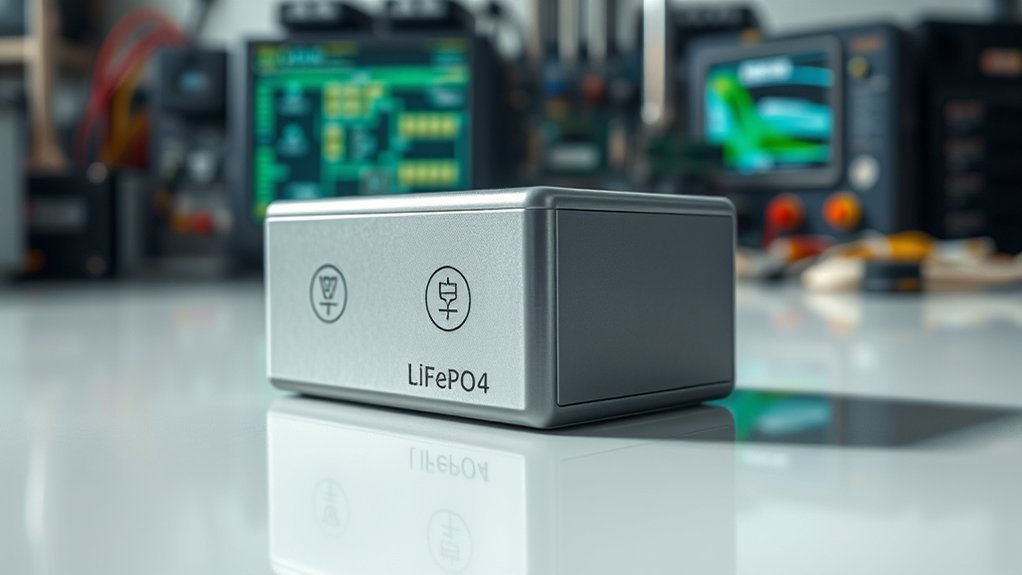
Lifepo4 batteries offer a particularly long cycle life, often exceeding 2,000 charge-discharge cycles, which enhances overall system longevity and reduces replacement costs. Additionally, their built-in safety features, such as thermal stability and resistance to overcharge, minimize risks of thermal runaway or fires. For beginners, these attributes translate into more reliable and safer energy storage solutions with lower maintenance requirements.
Long Cycle Life
Because of their robust chemical stability, Lifepo4 batteries are renowned for their exceptional cycle life, often surpassing 2000 charge-discharge cycles with minimal capacity degradation. This longevity results from the stable crystal structure of lithium iron phosphate, which resists capacity fade caused by repeated cycling. Their extended lifespan reduces the frequency of battery replacements, positively impacting battery recycling efforts by decreasing waste. Consequently, Lifepo4 batteries lower the environmental impact associated with disposal and manufacturing of replacement cells. Additionally, their durable chemistry minimizes the formation of harmful byproducts during operation, further supporting sustainable use. Overall, the long cycle life of Lifepo4 batteries not only enhances economic value but also promotes eco-friendly practices by extending operational life and easing the burden on recycling systems.
Enhanced Safety Features
The inherent chemical stability of Lifepo4 batteries translates into notable safety advantages, especially for beginners unfamiliar with complex battery management. Unlike other chemistries, Lifepo4’s stable crystal structure resists thermal runaway, reducing risks of fires or explosions. This stability simplifies safety protocols and minimizes the need for elaborate cooling systems. Additionally, their manufacturing processes emphasize safety, incorporating rigorous quality controls and materials that limit hazardous byproducts. Lifepo4 batteries are also designed with eco-friendly considerations in mind, facilitating safer battery recycling at end-of-life, which further enhances overall safety. This combination of chemical stability, responsible manufacturing, and sustainable disposal makes Lifepo4 batteries a reliable choice, providing users with peace of mind while reducing potential safety hazards associated with traditional lithium-ion batteries.
How Does Lifepo4 Compare to Other Battery Types?
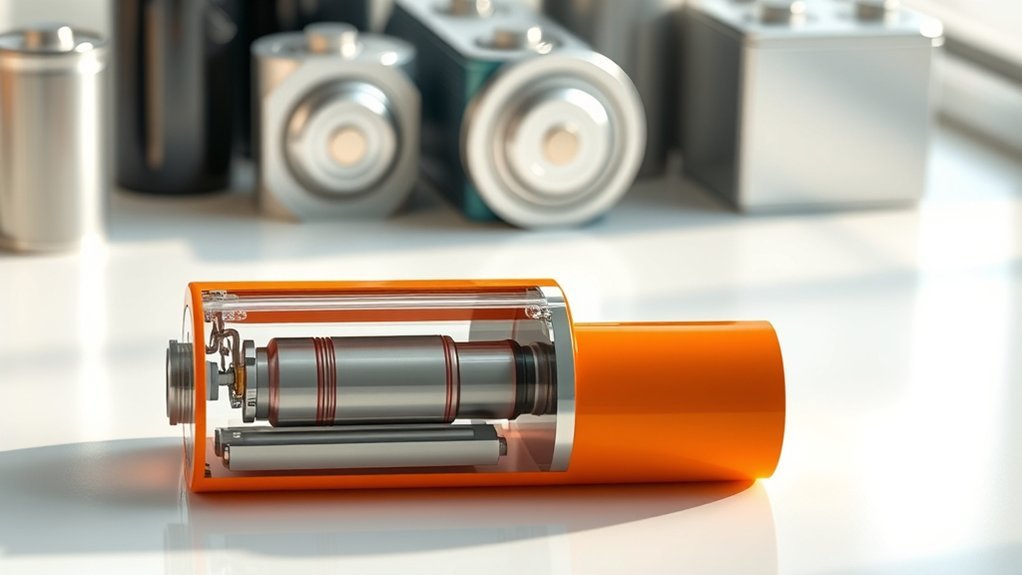
When comparing battery chemistries, it’s essential to take into account factors such as energy density, lifespan, safety, and cost. Lifepo4 batteries excel in safety and longevity, but typically have lower energy density than lithium-ion variants like NMC or LFP. They also offer advantages in battery recycling and manufacturing processes, which reduce environmental impact. Compared to lead-acid batteries, Lifepo4 provides longer cycle life and improved thermal stability.
Lifepo4 batteries offer superior safety, longer lifespan, and eco-friendly recycling but have lower energy density than other lithium options.
- Energy density: Lower than NMC but comparable to other lithium-based batteries
- Lifespan: markedly longer cycle life, reducing replacement costs
- Safety & Recycling: Safer operation with less risk of thermal runaway and easier battery recycling processes
Common Uses and Applications of Lifepo4 Batteries
Lifepo4 batteries are widely employed across various industries due to their exceptional safety profile, long cycle life, and stable performance under demanding conditions. They are commonly used in electric vehicles, renewable energy storage, and portable power systems, thanks to their high energy density and thermal stability. Their durability reduces the frequency of replacements, indirectly supporting sustainable practices like battery recycling. Additionally, Lifepo4’s environmentally friendly chemistry minimizes toxic waste and lowers environmental impact during disposal. This makes them preferable for large-scale grid storage and off-grid applications, where safety and sustainability are critical. As adoption grows, understanding their end-of-life management and recycling processes becomes essential to mitigate environmental impact and promote responsible usage within the industry.
What Should You Consider Before Choosing a Lifepo4 Battery?
Selecting the right Lifepo4 battery requires careful consideration of several technical factors to guarantee peak performance and safety. Key aspects include capacity, voltage compatibility, and cycle life, which directly influence operational efficiency and longevity. Additionally, evaluating the battery’s environmental impact is vital, especially regarding battery recycling processes and disposal methods that minimize ecological harm. It’s important to verify if the manufacturer employs sustainable practices, making sure the battery’s materials are recyclable and environmentally friendly. Other considerations include thermal management, charge/discharge rates, and protection circuitry to prevent overcharge or deep discharge. By analyzing these factors, we achieve optimal performance while reducing the battery’s environmental footprint, aligning with eco-conscious practices and regulatory standards for responsible energy storage solutions.
How to Properly Maintain and Extend the Life of a Lifepo4 Battery
Maintaining and extending the lifespan of a Lifepo4 battery requires diligent attention to proper usage, regular monitoring, and adherence to manufacturer guidelines. Consistently following recommended charging protocols—such as avoiding overcharge and deep discharge—minimizes capacity loss and prevents cell damage. Implementing precise charge and discharge cycles preserves electrode integrity and prolongs cycle life. Regularly monitoring voltage, temperature, and state of charge helps detect early signs of degradation. Proper battery recycling at end-of-life is vital to prevent environmental harm and recover valuable materials, aligning with sustainable practices. Ensuring that charging protocols are strictly followed and that batteries are recycled responsibly considerably enhances Lifepo4 battery longevity, maximizing performance and reducing replacement costs over time.
Are Lifepo4 Batteries Safe for Home and Commercial Use?
Safety considerations are paramount when integrating Lifepo4 batteries into residential or commercial energy systems. These batteries are generally regarded as safe due to their stable chemistry, which minimizes the risk of thermal runaway and fires. However, proper installation, ventilation, and protective circuitry are necessary to guarantee safety. Additionally, Lifepo4 batteries are environmentally friendly, with easier battery recycling processes reducing long-term environmental impact.
Key safety features include:
- Built-in battery management systems (BMS) for voltage and temperature regulation
- Robust casing to prevent physical damage and leaks
- Safe handling protocols to avoid short circuits during maintenance
While Lifepo4 batteries are safe when correctly installed, adhering to safety standards and considering environmental impact through responsible battery recycling are crucial for both home and commercial applications.
Future Trends and Innovations in Lifepo4 Battery Technology
Advancements in solid-state battery integration promise to markedly improve safety and longevity of Lifepo4 systems by replacing liquid electrolytes with solid materials. Enhancements in energy density are driving innovations that enable higher capacity within smaller form factors, making them more suitable for diverse applications. As these technologies mature, we anticipate more efficient, durable, and compact Lifepo4 batteries that can meet the demands of future energy storage solutions.
Solid-State Battery Integration
As the quest for higher energy density and improved safety continues, integrating solid-state battery technology with LiFePO4 (LFP) chemistries emerges as a promising frontier. Solid-state batteries replace liquid electrolytes with inorganic solid electrolytes, markedly enhancing thermal stability and safety. Battery integration involves embedding these solid electrolytes into existing LFP cell architectures, which can reduce dendrite formation and improve cycle life. Advances focus on optimizing solid-state materials for ionic conductivity and mechanical stability, enabling scalable manufacturing. This integration could lead to batteries with faster charging, greater longevity, and enhanced safety profiles. Key developments include:
- Development of high-conductivity solid electrolytes compatible with LFP chemistry
- Improved interface stability between solid electrolyte and electrode materials
- Scalable fabrication techniques for commercial application
Enhanced Energy Density
Despite LiFePO4’s inherent safety and stability, enhancing its energy density remains a central focus to meet the growing demands for longer-lasting and more compact energy storage systems. Advances in manufacturing processes, such as optimizing electrode materials and nano-engineering, aim to increase active material loading without compromising safety. Researchers are exploring composite cathodes with higher theoretical capacities, while innovations in battery recycling enable reclaiming valuable materials, reducing waste, and improving sustainability. These efforts also involve developing novel anode structures and solid electrolyte interfaces to boost energy density further. Future trends emphasize integrating these technological improvements with scalable, eco-friendly manufacturing and recycling practices, ensuring that high-density LiFePO4 batteries remain both efficient and environmentally responsible.
Frequently Asked Questions
What Is the Typical Lifespan of a Lifepo4 Battery?
We find that Lifepo4 batteries typically last 8-10 years, depending on battery chemistry and strict adherence to proper charging protocols. Regular maintenance and avoiding overcharging or deep discharges considerably extend their lifespan, ensuring reliable, long-term performance.
How Do Temperature Changes Affect Lifepo4 Battery Performance?
Temperature swings are like turbulent seas, disrupting Lifepo4 batteries’ thermal performance, because their temperature sensitivity impacts charge efficiency and lifespan. We see performance decline in extreme heat or cold, underscoring the importance of stable thermal management.
Can Lifepo4 Batteries Be Recycled Easily?
Lifepo4 batteries can be recycled through specialized battery recycling processes, reducing environmental impact by reclaiming valuable materials like lithium, iron, and phosphate. This promotes sustainability and minimizes hazardous waste, making Lifepo4 batteries environmentally friendly.
What Are the Signs of a Failing Lifepo4 Battery?
When a Lifepo4 battery’s capacity diminishes or it endures excessive charging cycles, it’s like a fading lighthouse, signaling failure. Watch for reduced runtime, increased self-discharge, or voltage drops during use as key indicators.
Are There Any Environmental Impacts of Lifepo4 Battery Disposal?
We find that disposal impacts from Lifepo4 batteries are minimal due to eco-friendly manufacturing and efficient recycling processes, reducing hazardous waste. Proper recycling prevents environmental contamination, highlighting the importance of responsible disposal to mitigate ecological risks.
Conclusion
In conclusion, Lifepo4 batteries offer a compelling combination of safety, longevity, and environmental friendliness, making them an excellent choice for beginners and experts alike. While some may worry about initial costs or energy density, the long-term benefits—such as reduced maintenance and enhanced safety—far outweigh these concerns. By understanding their technical advantages and proper usage, you can confidently integrate Lifepo4 technology into your projects, ensuring reliable and eco-conscious power solutions for years to come.