While traditional lithium-ion batteries have dominated energy storage, LiFePO4 batteries present a compelling alternative with distinct advantages and challenges. Their stable chemistry offers enhanced safety and longevity, yet questions remain about scalability and environmental impact. As we explore the technical nuances and potential innovations, you’ll find that understanding these batteries is essential for making informed decisions in energy applications. The full picture is complex, and uncovering it requires a detailed look at what makes Lifepo4 batteries uniquely suited—or limited—for future energy solutions.
Key Takeaways
- LiFePO4 batteries are rechargeable lithium-ion batteries known for safety, long cycle life, and stable chemistry.
- Manufacturing involves energy-intensive processes with environmental concerns, emphasizing recycling and sustainable practices.
- They offer enhanced safety, resistance to thermal runaway, and typically last 2,000-3,000 cycles.
- Common applications include renewable energy storage, electric vehicles, and backup power systems.
- Future advancements focus on improved materials, recycling techniques, and scalable, eco-friendly manufacturing.
What Are Lifepo4 Batteries and How Do They Work?
LiFePO4 batteries, also known as lithium iron phosphate batteries, are a type of rechargeable lithium-ion battery distinguished by their cathode chemistry. Their manufacturing processes involve precise material synthesis to guarantee stability and safety. These batteries utilize iron phosphate as the cathode, which provides excellent thermal stability and reduces the risk of thermal runaway. Recycling is integral to their lifecycle, as valuable materials like lithium and iron can be reclaimed to promote sustainability and reduce environmental impact. The chemistry of LiFePO4 enables efficient charge-discharge cycles, with less degradation over time compared to other lithium-ion variants. This reliability makes them suitable for various applications. Overall, understanding their manufacturing and recycling processes highlights their role in advancing safer, eco-friendly energy storage solutions.
Key Benefits of Using Lifepo4 Batteries in Your Projects
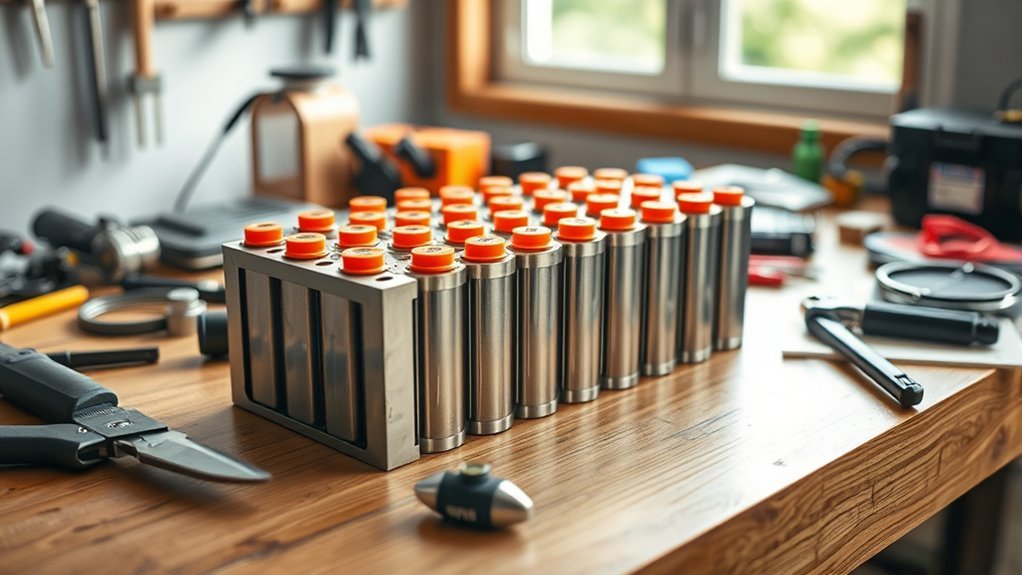
Lifepo4 batteries offer significant advantages in safety, thanks to their stable chemistry and reduced risk of thermal runaway. Their longer lifespan and enhanced durability translate to lower replacement costs and reliable performance over time. These attributes make them a strategic choice for projects demanding both safety and longevity.
Enhanced Safety Features
Due to their inherent chemical stability, these batteries substantially reduce the risk of thermal runaway and fires compared to other lithium-ion chemistries. This stability enhances safety by minimizing the potential for catastrophic failures. Additionally, Lifepo4 batteries feature advanced thermal management systems that regulate internal temperatures, preventing overheating during high-demand operations. Their design also facilitates safer battery recycling, as Lifepo4 chemistry produces fewer toxic byproducts, reducing environmental hazards. These safety attributes make Lifepo4 batteries ideal for critical applications where reliability is paramount. By integrating robust thermal management and promoting environmentally conscious recycling practices, Lifepo4 batteries offer a safer, more sustainable energy solution that aligns with modern safety standards and ecological responsibilities.
Longer Lifespan and Durability
Because of their inherently stable chemical composition, Lifepo4 batteries exhibit considerably longer operational lifespans compared to other lithium-ion chemistries. This stability reduces electrode degradation, enabling up to 2,000-3,000 charge cycles with minimal capacity loss. As a result, they offer enhanced durability and lower total cost of ownership. The extended lifespan also benefits battery recycling efforts, as fewer replacements are needed, reducing environmental impact. Lifepo4’s durability minimizes waste and supports sustainable energy practices. Its resistance to thermal runaway further ensures safety during long-term use. Overall, these attributes make Lifepo4 batteries a reliable, environmentally conscious choice for demanding applications, combining longevity with responsible disposal and recycling strategies that mitigate ecological footprint.
How Do Lifepo4 Batteries Compare to Traditional Lithium-Ion Batteries?

When comparing Lifepo4 batteries to traditional lithium-ion models, safety and stability are critical factors, with Lifepo4 offering superior thermal stability and reduced risk of thermal runaway. Regarding performance and longevity, Lifepo4 batteries generally provide longer cycle life and maintain capacity over more charge cycles. Evaluating these points helps us determine which technology best meets specific application requirements.
Safety and Stability
Lifepo4 batteries are recognized for their superior safety and stability compared to traditional lithium-ion batteries, primarily due to their unique chemistry and construction. Their inherent chemical stability reduces the risk of thermal runaway and fire hazards. Enhanced thermal management capabilities help maintain consistent operating temperatures, preventing overheating. This chemistry also exhibits a lower propensity for dendrite formation, which can cause short circuits.
- The robust chemical structure minimizes risks associated with overcharging or physical damage.
- Superior thermal management ensures safer operation in high-temperature environments.
- Reduced dendrite growth translates to increased reliability and safety over the battery’s lifespan.
Performance and Longevity
Lifepo4 batteries generally outperform traditional lithium-ion batteries regarding performance and longevity due to their stable chemistry and structural design. They maintain capacity over a higher number of charge cycles, often exceeding 2,000 cycles with minimal capacity loss, compared to 500-1,000 cycles for standard lithium-ion cells. This durability results in lower total cost of ownership and reduced replacement frequency. Additionally, Lifepo4 batteries facilitate better battery recycling processes, as their chemistry is less hazardous and more environmentally benign, decreasing environmental impact. Their inherent stability minimizes thermal runaway risks, further extending lifespan. Overall, these attributes make Lifepo4 batteries a more sustainable choice, emphasizing long-term performance, environmental responsibility, and efficient lifecycle management.
Common Applications and Use Cases for Lifepo4 Batteries
Lifepo4 batteries are widely adopted across various industries due to their high safety profile, long cycle life, and stable energy output. Their reliability makes them ideal for applications demanding safety and durability, such as renewable energy storage, electric vehicles, and backup power systems. Their eco-friendly nature supports sustainable practices, emphasizing battery recycling to mitigate environmental impact. The stability and longevity reduce the frequency of replacements, minimizing waste. Additionally, Lifepo4’s inherent safety reduces risks associated with thermal runaway, making them suitable for residential and commercial energy solutions. As adoption grows, understanding their role in environmental impact and responsible disposal becomes essential. Proper lifecycle management ensures that these batteries fulfill their potential in sustainable energy infrastructures and help address ecological concerns.
How to Choose the Right Lifepo4 Battery for Your Needs
How do you determine which battery best fits your specific energy requirements? First, analyze your power needs, considering capacity (Ah or Wh), discharge rate, and lifespan. Manufacturing processes influence battery quality, affecting performance and longevity, so opt for manufacturers with transparent production standards. It’s also essential to evaluate the sustainability of the battery, including its recyclability; efficient battery recycling reduces environmental impact and supports circular economies. Consider the battery’s cycle life—more cycles mean better long-term value. Matching these technical factors to your application guarantees optimized performance. By understanding these parameters, you can select a Lifepo4 battery that balances efficiency, durability, and environmental responsibility, ensuring your investment aligns with both your energy demands and sustainability goals.
Proper Maintenance and Safety Tips for Lifepo4 Batteries
Maintaining safety and guaranteeing the longevity of Lifepo4 batteries require diligent adherence to proper handling and maintenance practices. Adhering to standardized charging protocols prevents overcharging and thermal runaway, which can compromise safety and battery lifespan. Regularly inspecting for physical damage, ensuring proper ventilation, and avoiding deep discharges help sustain performance. Proper battery recycling is essential to mitigate environmental impact and recover valuable materials, emphasizing responsible disposal.
Proper handling, regular inspection, and responsible recycling ensure Lifepo4 battery safety, longevity, and environmental sustainability.
- Follow manufacturer-recommended charging protocols to optimize cycle life
- Monitor voltage and temperature during operation to prevent overheating
- Prioritize safe battery recycling practices to minimize ecological footprint
Understanding these practices guarantees safe operation, promotes sustainability, and maximizes battery efficiency over its service life.
Limitations and Challenges of Lifepo4 Technology
Despite its numerous advantages, LiFePO4 technology faces several limitations that hinder its broader application. One significant challenge is the environmental impact associated with mining raw materials like lithium and phosphate, which raises sustainability concerns. Manufacturing challenges also play a critical role; producing high-quality batteries demands complex, energy-intensive processes that can generate hazardous waste and emissions. Additionally, the relatively high cost of raw materials and manufacturing equipment limits large-scale adoption. Temperature sensitivity is another issue, as LiFePO4 batteries perform poorly in extreme cold, affecting their reliability in certain climates. While advancements continue, these limitations underscore the need for ongoing research to address environmental and manufacturing hurdles, ensuring the technology becomes more sustainable and economically viable for diverse applications.
Future Trends and Innovations in Lifepo4 Battery Development
Advancements in materials science and manufacturing processes are driving significant innovations in Lifepo4 battery technology, aiming to enhance performance, safety, and sustainability. Research focuses on developing more efficient cathode materials and integrating advanced separators to extend cycle life and reduce degradation. Innovations also target improved battery recycling methods, critical for minimizing environmental impact and promoting circular economy principles. Future trends include the adoption of solid-state electrolytes to improve energy density and thermal stability, and the integration of smart management systems for real-time performance monitoring. Additionally, scaling sustainable manufacturing practices will be essential to meet increasing demand while reducing ecological footprints. These developments collectively aim to make Lifepo4 batteries more durable, environmentally friendly, and suitable for large-scale applications.
Frequently Asked Questions
What Is the Typical Lifespan of a Lifepo4 Battery?
We find Lifepo4 batteries typically last 8-10 years, depending on usage. Their durability reduces environmental impact, and proper battery recycling extends lifespan, ensuring minimized waste and sustainable energy solutions for future advancements.
Are Lifepo4 Batteries Environmentally Friendly and Recyclable?
We find LiFePO4 batteries highly eco-friendly, with over 90% recyclable through advanced battery recycling processes, enabling eco friendly disposal. This minimizes environmental impact by reclaiming valuable materials and reducing hazardous waste, making them a sustainable energy storage choice.
How Do Temperature Extremes Affect Lifepo4 Battery Performance?
Temperature extremes can impact Lifepo4 battery performance, as thermal stability decreases at high or low temperatures, causing capacity loss and potential damage. Effective temperature management guarantees ideal operation and longevity, highlighting the importance of maintaining controlled environments.
Can Lifepo4 Batteries Be Used in High-Drain Applications?
We believe LiFePO4 batteries excel in high-drain applications due to advanced charging technology, ensuring efficient power delivery. Safety considerations confirm their stability under heavy loads, making them reliable for demanding uses, backed by thorough technical analysis and testing.
What Are the Cost Differences Between Lifepo4 and Other Lithium Batteries?
We find that LiFePO4 batteries, with their stable battery chemistry, generally cost more upfront but offer longer life and safety, making the overall cost comparison favorable compared to other lithium batteries, especially in demanding applications.
Conclusion
In conclusion, Lifepo4 batteries stand as the sturdy backbone of modern energy solutions, offering a reliable, safe, and eco-friendly power source. While challenges remain, ongoing innovations are steering us toward a brighter, more sustainable energy future. Like a well-engineered bridge, these batteries connect current needs with tomorrow’s possibilities, demonstrating that with precise technology and thoughtful management, we can harness their full potential for a cleaner, safer world.