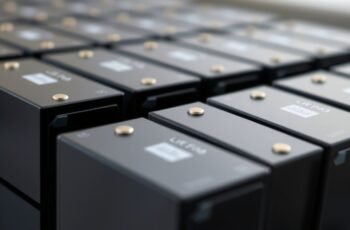
Some assume that all energy storage solutions are fundamentally interchangeable, but this warrants scrutiny given the distinct characteristics of LiFePO4 batteries compared to traditional lead-acid types. Their higher energy density, longer lifespan, and improved safety suggest significant advantages, yet understanding the full scope of these benefits requires a closer look at their performance and application-specific implications. As we explore these differences, it becomes clear why LiFePO4 might be the more sustainable choice in many scenarios.
Key Takeaways
- Lithium iron phosphate batteries offer higher energy density and longer cycle life than lead-acid batteries.
- They are environmentally friendly with simplified recycling due to less toxic materials.
- LiFePO4 batteries support rapid charging and have improved safety features against thermal runaway.
- They are lighter and more compact, saving space and reducing overall weight.
- LiFePO4 batteries have lower maintenance needs and longer lifespan, reducing replacement costs.
How Do Lifepo4 Batteries Differ From Lead-Acid Batteries?
While both LiFePO4 and lead-acid batteries serve as reliable energy storage solutions, they differ markedly in their chemical composition and performance characteristics. LiFePO4 batteries use lithium iron phosphate, offering higher energy density and longer cycle life, whereas lead-acid batteries rely on lead plates and sulfuric acid, which limits their lifespan and efficiency. Manufacturing processes for LiFePO4 involve precise control over lithium compound synthesis, resulting in cleaner, more consistent cells. Additionally, LiFePO4 batteries are more environmentally friendly, with simplified battery recycling due to the less toxic materials involved. In contrast, lead-acid batteries require more intensive recycling procedures to handle lead and sulfuric acid safely. These differences considerably influence sustainability, operational performance, and the overall life-cycle costs of each battery type.
Why Do LiFePO4 Batteries Last Longer?
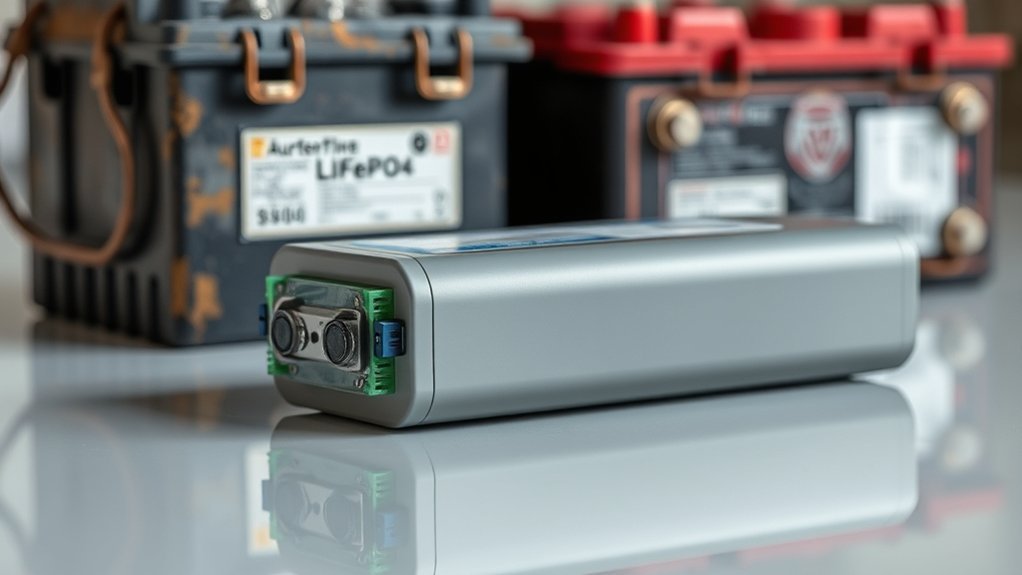
LiFePO4 batteries are engineered for longevity through their stable chemical structure and robust electrode chemistry. This inherent chemical stability minimizes degradation over time, directly enhancing battery longevity. The material durability of LiFePO4 cathodes resists thermal runaway and capacity fade, unlike lead-acid counterparts prone to sulfation and corrosion. Moreover, the stable crystal lattice reduces the formation of dendrites, which can cause internal short circuits. These factors collectively contribute to a longer cycle life, often exceeding 2,000 cycles, compared to traditional batteries. The combination of durable materials and stable chemistry ensures consistent performance over many years, making LiFePO4 batteries a superior choice for applications demanding reliability and extended service life.
How Quickly Can You Recharge a LiFePO4 Battery?
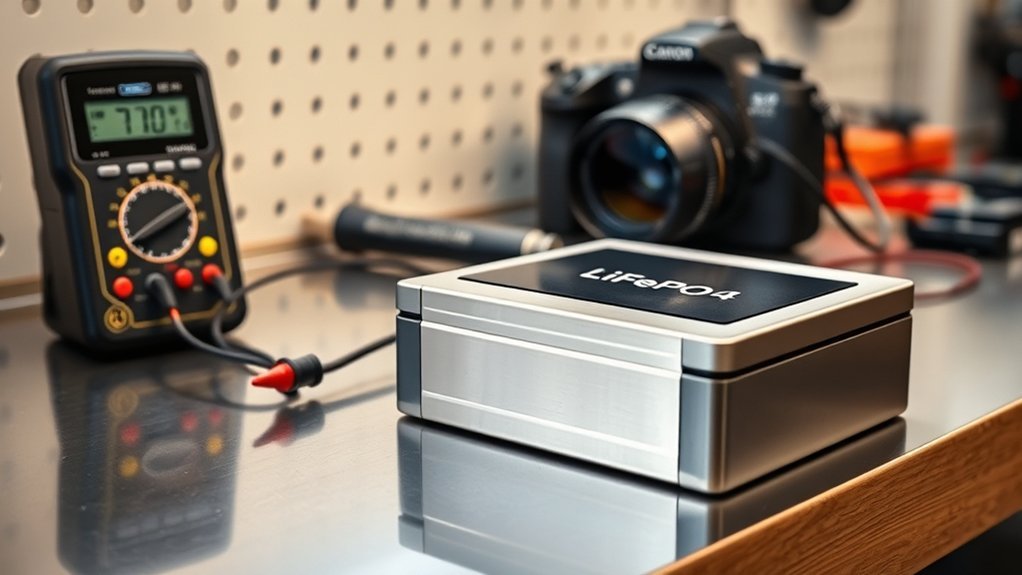
When recharging a LiFePO4 battery, the process is particularly efficient due to its favorable electrochemical properties, allowing for relatively rapid charging times compared to other lithium-ion chemistries. The chemistry supports high current rates, enabling fast charging without markedly compromising battery lifespan. This capability is essential for applications requiring quick turnaround times, as it minimizes downtime. However, while fast charging is feasible, it must be optimized to prevent thermal stress and capacity degradation over time. Proper charge management guarantees that the battery maintains its integrity, balancing rapid recharge cycles with long-term durability. Ultimately, LiFePO4 batteries’ ability to sustain fast charging while preserving battery lifespan makes them a versatile choice for demanding energy needs.
What Makes LiFePO4 Batteries Safer and More Stable?
The inherent chemical structure of LiFePO4 contributes considerably to its safety and stability. Its crystal lattice resists thermal runaway, providing exceptional thermal safety compared to other lithium-ion chemistries. The stable chemical composition guarantees high chemical stability, reducing the risk of decomposition or hazardous reactions under normal or fault conditions. Unlike other lithium chemistries, LiFePO4’s phosphate-based cathode remains stable even at elevated temperatures, preventing overheating and potential failure. This stability minimizes the likelihood of fire or explosion, making it a safer choice for various applications. The robust chemical stability and superior thermal safety of LiFePO4 batteries make them a reliable, safer alternative, especially in environments where safety concerns are paramount.
How Do LiFePO4 Batteries Reduce Overall Weight and Space?
Due to their high energy density, LiFePO4 batteries enable us to achieve significant reductions in both weight and space compared to traditional lead-acid or other lithium-ion batteries. This advantage facilitates a more portable design, making them ideal for applications where minimizing weight is critical. Their compact size allows for a more efficient, space-saving installation, which is especially valuable in confined or integrated systems. The higher specific energy of LiFePO4 cells means we can deliver the same power output with less material, resulting in a lighter overall system. This reduction in size and weight not only improves portability but also simplifies installation processes, reducing the need for bulky enclosures and extensive wiring. Overall, LiFePO4 batteries enhance design flexibility through their compact form factor and lightweight construction.
Are LiFePO4 Batteries More Cost-Effective Over Time?
Although LiFePO4 batteries often have a higher initial purchase price compared to traditional lead-acid options, they tend to be more cost-effective over their lifespan. This is primarily due to significant cost savings achieved through reduced maintenance, longer cycle life, and higher efficiency.
Key points include:
- Extended lifespan—LiFePO4 batteries can last 8-10 times longer, minimizing replacement costs.
- Lower maintenance expenses—they require less frequent checks and replacements.
- Enhanced efficiency—higher charge/discharge efficiency reduces energy losses and operational costs.
- Long-term investment—initial costs are offset by savings over time, making them more economical in the long run.
Which Applications Benefit Most From Using Lifepo4 Batteries?
Renewable energy storage systems benefit considerably from Lifepo4 batteries due to their high cycle life and stability, ensuring reliable power management over extended periods. Recreational vehicles also leverage these batteries for their durability, fast charging, and safety features, optimizing off-grid and on-the-move energy needs. Analyzing these applications highlights how Lifepo4’s technical advantages align with the demands for efficiency and longevity in specific use cases.
Renewable Energy Storage
Renewable energy systems increasingly rely on advanced battery technologies to efficiently store excess power generated from sources like solar and wind. Lifepo4 batteries excel in applications such as solar integration and off-grid solutions, where reliability and longevity are essential. These batteries provide superior cycle life, fast charging capabilities, and enhanced safety, making them ideal for fluctuating renewable inputs.
Key benefits include:
- Improved energy density for more compact storage systems
- Higher charge/discharge efficiency reducing energy loss
- Greater thermal stability ensuring safety in diverse environments
- Extended lifespan decreasing total cost of ownership
These advantages make Lifepo4 batteries especially suitable for renewable energy storage, enabling seamless integration and dependable off-grid operation. Their durability and performance are crucial for maximizing renewable resource utilization.
Recreational Vehicle Power
Which applications in recreational vehicles (RVs) benefit most from Lifepo4 batteries? These batteries excel in providing reliable power for essential systems, including lighting, refrigeration, and electronics, especially during extended trips. They support camping essentials by delivering consistent energy output, even in remote locations, reducing the need for frequent recharging. Lifepo4 batteries also simplify RV maintenance, thanks to their longer lifespan and reduced thermal management concerns compared to lead acid options. Their high charge and discharge efficiencies make them ideal for powering inverter systems and auxiliary devices without sacrificing performance. Overall, Lifepo4 batteries enhance the operational efficiency and longevity of RV power systems, ensuring that camping essentials stay operational while minimizing maintenance demands.
Frequently Asked Questions
Can Lifepo4 Batteries Operate Effectively in Extreme Temperatures?
Lifepo4 batteries exhibit strong temperature resilience, maintaining performance in extreme conditions, which makes them highly suitable for climate adaptation. We find their stable operation across diverse temperatures enhances reliability, especially in applications demanding consistent, resilient energy storage.
How Environmentally Friendly Are Lifepo4 Batteries Compared to Lead-Acid?
Lifepo4 batteries are greener, like a revitalizing gust of air. They produce fewer manufacturing emissions, and their recycling processes are more efficient, reducing environmental impact compared to lead-acid batteries, making them a sustainable energy choice for the future.
Are There Any Special Maintenance Requirements for Lifepo4 Batteries?
We recommend regular monitoring of charge cycles and proper battery recycling to guarantee longevity. Lifepo4 batteries require minimal maintenance, but avoiding deep discharges and managing charge cycles optimizes performance and supports environmental sustainability.
What Is the Typical Lifespan of a Lifepo4 Battery Under Heavy Use?
Under heavy use, Lifepo4 batteries typically last 2000-5000 cycles, roughly 8-10 years. Proper battery recycling and adherence to disposal regulations are crucial for environmental safety and maintaining peak performance over their lifespan.
Do Lifepo4 Batteries Lose Capacity Over Time Like Lead-Acid Batteries?
Lifepo4 batteries do lose capacity over time, but at a slower rate than lead-acid batteries. Their longevity enhances cost savings, and their recyclability reduces environmental impact, making them more sustainable despite initial higher costs.
Conclusion
In conclusion, LiFePO4 batteries stand as the sturdy backbone of modern energy storage—combining resilience, efficiency, and safety with the elegance of a well-orchestrated symphony. Their extended lifespan and rapid recharge capabilities transform how we power our lives, while their lightweight, space-saving design offers a tactical advantage in diverse applications. Embracing LiFePO4 technology is akin to upgrading from a fragile vessel to a robust ship—steady, sustainable, and future-ready.