When we discuss LiFePO4 in batteries, we’re referring to lithium iron phosphate chemistry, a specific type of lithium-ion battery known for its stability and safety. Understanding what LiFePO4 stands for helps clarify why this chemistry is increasingly used in critical applications. Its unique properties set it apart from other lithium batteries, raising questions about how these differences impact performance and safety. Let’s explore what makes LiFePO4 a notable choice in energy storage.
Key Takeaways
- LiFePO4 stands for lithium iron phosphate, a type of lithium-ion battery chemistry.
- It features a cathode made of phosphate-based compounds, providing high stability.
- Known for safety, thermal stability, and resistance to overheating or combustion.
- Offers longer cycle life and reliable performance compared to other lithium batteries.
- Used in energy storage, electric vehicles, and renewable power systems due to its safety and sustainability.
What Does LiFePO4 Stand for in Battery Technology?
LiFePO4 stands for lithium iron phosphate, a specific type of lithium-ion battery chemistry known for its stability and safety. This chemistry is characterized by a stable crystal structure that resists thermal runaway, making it safer for various applications. During manufacturing processes, raw materials are carefully synthesized to produce high-purity LiFePO4 cathode materials, which contribute to the battery’s longevity and performance. Recycling plays an essential role in sustainable development, as lithium iron phosphate batteries are designed for efficient battery recycling, allowing valuable materials to be recovered and reused. This process minimizes environmental impact and reduces reliance on raw resource extraction. Overall, understanding LiFePO4’s composition and manufacturing considerations underscores its advantages in safety, durability, and sustainability.
How Does Lifepo4 Differ From Other Lithium Batteries?
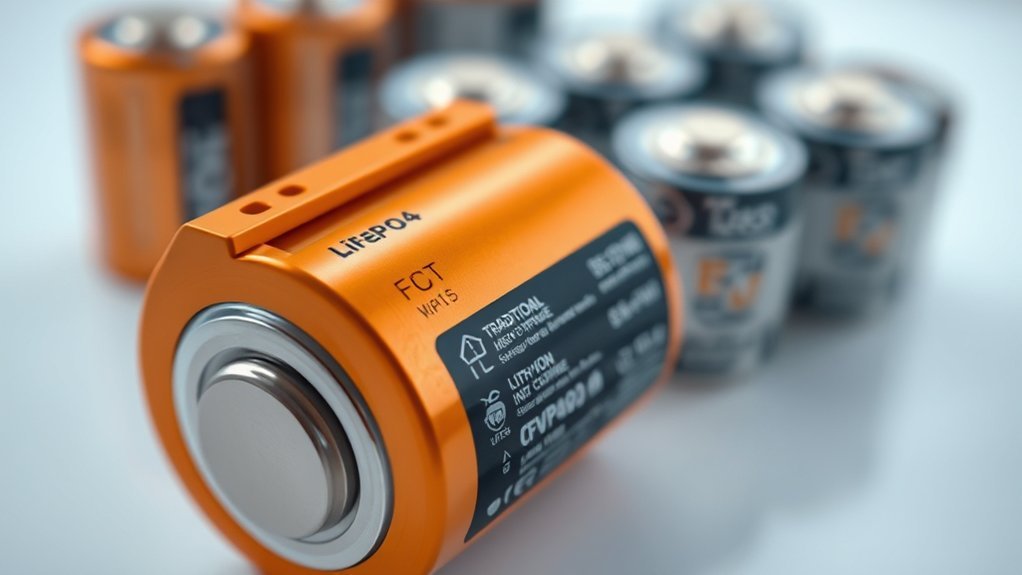
Lifepo4 batteries differ from other lithium chemistries primarily in their chemical composition, which impacts safety, stability, and performance. They offer enhanced safety features and thermal stability, reducing risks of thermal runaway, while also providing longer cycle life and more consistent charging profiles. Understanding these distinctions helps clarify their advantages and limitations in various applications.
Battery Chemistry Differences
While many lithium-ion batteries share similar structures, the chemistry of LiFePO4 sets it apart through its unique cathode composition, which substantially influences its performance characteristics. The phosphate-based cathode in LiFePO4 offers superior chemical stability compared to cobalt or manganese-based cathodes, reducing degradation during charge cycles. This enhanced chemical stability results in a longer lifespan and improved thermal stability. In terms of battery manufacturing, LiFePO4 cells are easier to produce with consistent quality, owing to its stable crystal structure. The chemical stability also minimizes risks associated with overcharging or high temperatures, making it a safer choice. These electrochemical differences directly impact the battery’s cycle life, safety profile, and suitability for high-demand applications.
Safety and Stability
Unlike other lithium-ion chemistries, lithium iron phosphate (LiFePO₄) batteries inherently provide enhanced safety and thermal stability due to their stable cathode material. This stability minimizes risks like thermal runaway, reducing safety concerns during operation. The table below illustrates key safety differences:
| Feature | LiFePO₄ | Other Lithium Batteries | Impact on Recycling & Costs |
|---|---|---|---|
| Thermal Stability | High | Moderate/Low | Easier battery recycling |
| Risk of Fire & Explosion | Low | Higher | Lower manufacturing costs |
| Chemical Stability | Excellent | Variable | Cost-effective manufacturing |
| Cathode Material Safety | Inherently stable | Less stable | Safer disposal procedures |
This inherent safety influences manufacturing costs positively, while simplifying battery recycling processes.
Charging and Longevity
Because of their unique chemical composition, LiFePO₄ batteries typically require a more controlled charging process but offer considerably longer lifespans compared to other lithium-ion chemistries. Their stable chemistry reduces the risk of thermal runaway and supports higher cycle durability, often exceeding 2,000 cycles. This longevity enhances battery recycling efficiency, as fewer replacements are needed over time. Additionally, manufacturing processes for LiFePO₄ cells emphasize precise control to optimize lifespan and safety. Proper management of charge voltages and currents minimizes capacity fade, maintaining performance. Unlike other lithium chemistries, their stable chemistry enables longer service life with less degradation. This combination of factors makes LiFePO₄ batteries more sustainable, as the extended lifespan reduces environmental impact and supports more effective recycling efforts.
Why Is Lithium Iron Phosphate (LiFePO4) Considered Safer?
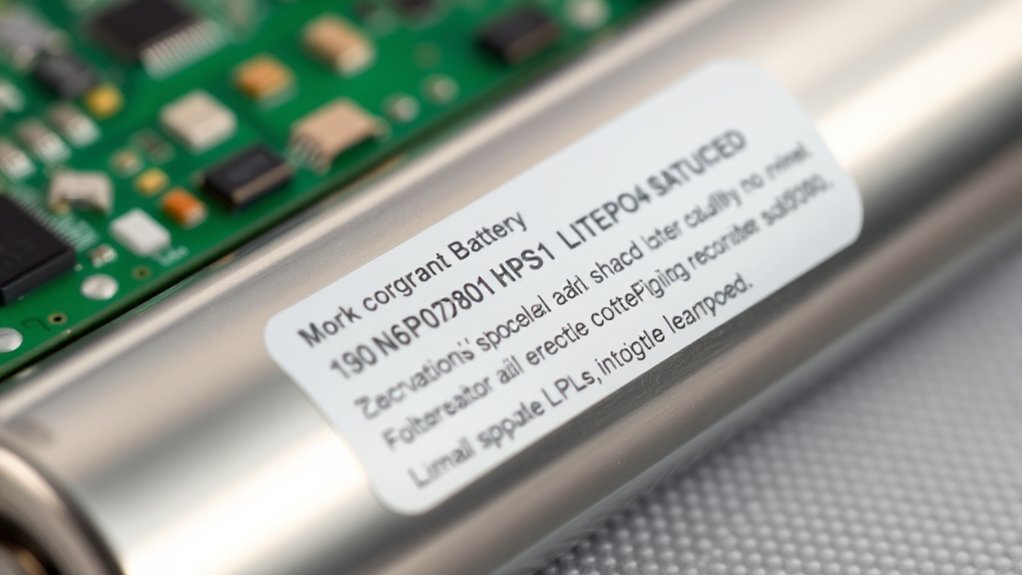
What makes Lithium Iron Phosphate (LiFePO4) batteries inherently safer than other lithium-ion chemistries is their stable crystal structure, which resists thermal runaway and combustion. During battery manufacturing, LiFePO4 cells are designed with robust chemical stability, reducing the risk of overheating under stress or damage. This stability aligns with current market trends favoring safer energy storage solutions, especially in high-demand applications. Unlike cobalt-based chemistries, LiFePO4’s non-volatile cathode material prevents violent reactions even under extreme conditions. Consequently, the overall safety profile is markedly enhanced, making these batteries less prone to fires or explosions. The focus on safer battery chemistry reflects a broader shift in market trends toward reliability, safety, and sustainable energy storage, reinforcing LiFePO4’s reputation in the industry.
What Are the Key Advantages of Using LiFePO4 Batteries?
LiFePO4 batteries offer several key advantages that make them a preferred choice for various applications. Their inherent safety and stability stem from the chemical composition, reducing thermal runaway risks. Additionally, they feature extended cycle life and consistent performance over time.
Key advantages include:
- Enhanced safety due to stable manufacturing processes that minimize thermal and chemical hazards.
- Longer lifespan with hundreds to thousands of charge cycles, reducing replacement frequency.
- Environmental benefits through efficient battery recycling, lowering ecological impact.
- Cost-effectiveness resulting from improved manufacturing methods that optimize material use and facilitate recycling.
These factors combine to create a reliable, sustainable energy storage solution, reinforcing LiFePO4 batteries’ growing adoption across industries.
Which Applications Benefit Most From Lifepo4 Batteries?
We find that Lifepo4 batteries are particularly advantageous in renewable energy storage, offering high cycle life and stability. They also excel in electric vehicle applications due to their safety profile and energy density, enabling longer ranges and faster charging. Additionally, off-grid power solutions benefit from their reliable performance and low maintenance requirements in remote or self-sufficient systems.
Renewable Energy Storage
Renewable energy storage systems increasingly rely on Lithium Iron Phosphate (LiFePO4) batteries due to their exceptional safety, long cycle life, and stable performance. These batteries are especially advantageous for grid-scale applications, where durability and reliability are critical. Key benefits include:
- Enhanced safety profiles, reducing risks during large-scale energy storage.
- Extended cycle life, supporting long-term sustainability with minimal replacement.
- Stable performance across diverse environmental conditions, ensuring consistent energy output.
- Alignment with market trends emphasizing eco-friendly solutions, with a focus on Battery Recycling to minimize environmental impact and optimize resource use.
These aspects make LiFePO4 batteries a preferred choice, reflecting evolving industry standards and a shift towards sustainable energy infrastructure.
Electric Vehicle Use
Electric vehicle (EV) applications stand to benefit markedly from the unique properties of Lithium Iron Phosphate (LiFePO4) batteries. Their high thermal stability and long cycle life make them ideal for autonomous driving systems, where reliability and safety are critical. The stable chemistry reduces risks of thermal runaway, enhancing vehicle safety in complex driving environments. Additionally, LiFePO4 batteries support sustainable practices through efficient battery recycling, which is crucial as EV adoption increases. Their relatively longer lifespan minimizes replacement frequency, lowering lifecycle costs and environmental impact. These attributes position LiFePO4 batteries as a preferred choice for EV manufacturers focusing on safety, durability, and eco-conscious design, particularly in applications demanding consistent performance under rigorous cycling and safety standards.
Off-Grid Power Solutions
Off-grid power solutions greatly benefit from Lithium Iron Phosphate (LiFePO4) batteries due to their outstanding stability and longevity under demanding conditions. These batteries excel in applications that require reliable energy storage, especially when integrating solar power systems. They support efficient solar integration by handling frequent charge-discharge cycles with minimal degradation. Additionally, LiFePO4 batteries facilitate sustainable practices through battery recycling, reducing environmental impact.
- Remote cabins and off-grid homes rely on their durability and safety features.
- Emergency backup systems benefit from consistent performance during outages.
- Renewable energy projects leverage their stability for long-term storage.
- Portable power supplies use their lightweight design to enhance mobility.
These attributes make LiFePO4 batteries ideal for diverse off-grid applications demanding resilience and eco-conscious operation.
How Do You Choose the Right LiFePO4 Battery for Your Needs?
Selecting the appropriate LiFePO4 battery depends on a clear understanding of your specific power requirements, application environment, and performance expectations. We recommend analyzing capacity, voltage, and cycle life to match your needs accurately. Consider the manufacturing processes involved, as high-quality batteries typically utilize controlled, environmentally conscious methods that enhance safety and longevity. Battery recycling practices are also essential; choosing manufacturers committed to sustainable recycling ensures reduced environmental impact and resource conservation. Verify that the battery’s specifications align with your voltage and current demands, and assess the thermal management capabilities for your operating environment. Ultimately, a detailed comparison of brands and models based on these factors will help you select a reliable, efficient LiFePO4 battery tailored to your application.
Are There Any Limitations or Downsides to LiFePO4 Batteries?
While LiFePO4 batteries offer numerous advantages, they are not without limitations. First, their environmental impact during manufacturing remains a concern, as extracting raw materials like lithium and phosphates can cause ecological disruption. Second, manufacturing challenges include maintaining consistent quality and purity, which affects performance and safety. Third, their energy density is lower than that of lithium-ion batteries, limiting their use in space-constrained applications. Fourth, their temperature sensitivity requires careful thermal management, especially in extreme conditions, to prevent capacity loss or degradation. These factors highlight that despite their benefits, LiFePO4 batteries present technical and environmental considerations that must be addressed for ideal application.
Frequently Asked Questions
How Long Do Lifepo4 Batteries Typically Last?
Lifepo4 batteries typically last 2,000 to 3,000 cycles due to their stable battery chemistry, offering a longer lifespan. Their energy density guarantees reliable performance over time, making them ideal for long-term energy storage applications.
Can Lifepo4 Batteries Be Recycled?
Yes, Lifepo4 batteries can be recycled through specialized processes that recover valuable materials, reducing environmental impact. We emphasize proper recycling to minimize waste and support sustainable practices within the battery lifecycle, ensuring eco-friendly disposal.
Are Lifepo4 Batteries Suitable for High-Temperature Environments?
We believe Lifepo4 batteries excel in high-temperature environments due to their unparalleled thermal stability and heat resistance. These qualities guarantee safety, longevity, and consistent performance, even in extreme conditions, making them ideal for demanding applications.
How Do Lifepo4 Batteries Perform in Cold Weather?
Lifepo4 batteries perform reliably in cold climates due to their stable battery chemistry, maintaining capacity better than other chemistries. We observe reduced performance at low temperatures, but proper thermal management can mitigate this effect effectively.
What Is the Charging Time for a Typical Lifepo4 Battery?
Charging a Lifepo4 battery typically takes 3 to 4 hours, like filling a reservoir. We prioritize charging safety and respect its battery capacity to guarantee peak performance without risking damage or reducing lifespan.
Conclusion
In summary, LiFePO4 batteries represent a leap forward in energy storage, combining safety, longevity, and environmental sustainability. Their stable chemistry acts like a sturdy, reliable backbone, ensuring consistent performance even under demanding conditions. As we harness these advanced batteries, we’re not just powering devices—we’re building a resilient, eco-friendly future. Their robustness makes them an essential component in sustainable technology, much like a dependable foundation supporting a thriving, green infrastructure.