We recognize that defining a Lifepo4 battery involves examining its core chemistry, construction, and performance characteristics. As a specialized lithium-ion variant, it offers notable advantages in safety and longevity, making it a compelling choice for various applications. To fully appreciate its unique qualities, we must analyze how its design influences its behavior and reliability in real-world scenarios—an exploration that reveals why Lifepo4 batteries are increasingly preferred across multiple industries.
Key Takeaways
- Lifepo4 batteries are a type of lithium-ion battery using lithium iron phosphate as the cathode material.
- They are known for their high safety, thermal stability, and resistance to overheating and thermal runaway.
- The chemistry provides a long cycle life, typically exceeding 2000 charge-discharge cycles.
- They feature a nominal voltage of around 3.2V per cell and are used in energy storage and portable applications.
- Their design emphasizes safety, durability, and environmental friendliness compared to traditional battery technologies.
What Is a Lifepo4 Battery and How Does It Work?
Although lithium iron phosphate (LiFePO₄) batteries are a subset of lithium-ion technology, they distinguish themselves through their unique chemistry, which provides enhanced thermal stability and safety. This chemistry contributes to a longer battery lifespan by reducing degradation over charge cycles, making them highly durable. Their manufacturing processes emphasize precise electrode synthesis and quality control, ensuring consistent performance and safety. The stable chemistry allows these batteries to operate efficiently at higher temperatures, minimizing thermal runaway risks. Additionally, the manufacturing techniques focus on optimizing material composition to extend cycle life and improve overall reliability. Consequently, LiFePO₄ batteries deliver a combination of safety, durability, and longevity, driven by their distinct chemistry and meticulous production methods.
Key Chemistry and Design Features of Lifepo4 Batteries

The core chemistry of Lifepo4 batteries relies on lithium iron phosphate, which offers enhanced thermal stability and safety compared to other lithium-ion chemistries. Their structural design features a stable cathode framework that contributes to longer cycle life and resistance to degradation. Understanding these chemistry and design advantages is essential to appreciating their reliability and performance.
Lithium Iron Phosphate Chemistry
Lithium Iron Phosphate (LiFePO4) batteries are distinguished by their unique chemistry, which centers on the stable phosphate-based cathode material. This chemistry provides inherent thermal stability and safety, reducing risks associated with overheating. The phosphate cathode contributes to exceptional battery longevity, maintaining capacity over many charge cycles. Additionally, the solid-state structure allows for efficient lithium-ion movement, supporting fast and consistent charging protocols without compromising cycle life. The stable chemistry also minimizes capacity fade caused by deep discharges or overcharges, enabling more flexible usage. Overall, this chemistry underpins the reliable performance and durability of LiFePO4 batteries, making them ideal for applications requiring long-term stability and adherence to specific charging protocols.
Structural Design Advantages
The inherent stability of the phosphate-based cathode in LiFePO4 batteries also influences their structural design, which emphasizes durability and efficient ion transport. This stability enhances structural integrity, allowing the batteries to withstand repeated charge-discharge cycles without significant degradation. The design incorporates robust electrode materials and separator configurations that optimize ion flow while maintaining mechanical strength. Manufacturing processes are tailored to produce uniform electrode coatings and precise cell assembly, ensuring consistent performance and longevity. The lattice structure of LiFePO4 contributes to thermal stability and resistance to internal stresses, reducing the risk of internal damage. Overall, the structural design leverages key chemistry features to deliver reliable, safe, and durable batteries suitable for demanding applications.
Advantages of Using Lifepo4 Batteries Over Traditional Options
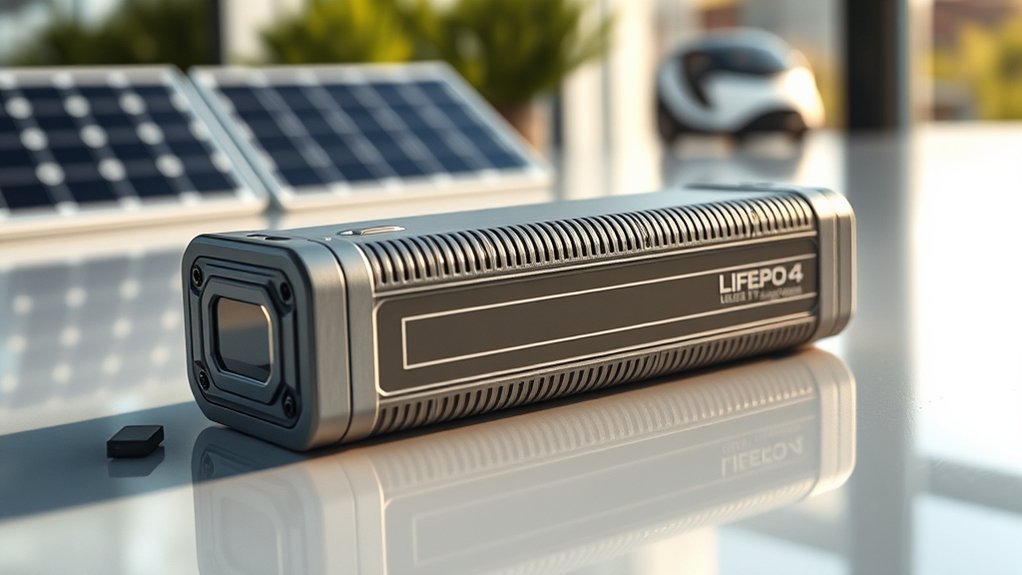
While traditional batteries like lead-acid have served well for decades, Lifepo4 batteries offer significant advantages that make them increasingly preferable for many applications. Their longer cycle life and enhanced safety reduce maintenance and replacement costs, which positively impact overall lifecycle expenses. Additionally, Lifepo4 batteries are more environmentally friendly due to their stable chemistry, facilitating easier battery recycling and minimizing hazardous waste. Manufacturing costs for Lifepo4 cells have declined over time, making them more competitive financially. Their inherent thermal stability reduces the need for complex cooling systems, lowering system costs. Overall, these factors combine to deliver a more sustainable, cost-effective energy storage solution, positioning Lifepo4 batteries as a technically superior alternative to traditional options in various sectors.
Common Applications and Use Cases for Lifepo4 Batteries
Lifepo4 batteries are widely utilized in renewable energy storage systems due to their high cycle life and thermal stability. They also serve as reliable power sources for portable systems where safety and compactness are critical. Understanding these applications highlights their suitability for demanding, high-performance energy solutions.
Renewable Energy Storage Solutions
Renewable energy storage solutions increasingly rely on Lifepo4 batteries due to their exceptional safety, long cycle life, and stability under diverse environmental conditions. These batteries are crucial for grid-scale storage, balancing supply and demand, and integrating renewable sources like solar and wind. Their durability reduces maintenance costs, but manufacturing challenges exist, such as ensuring consistent quality and addressing battery recycling concerns. Efficient recycling processes are essential to mitigate environmental impact and recover valuable materials. The following table illustrates typical applications:
| Application | Key Benefits |
|---|---|
| Grid stabilization | Long cycle life, stability under load |
| Solar energy storage | Safety, durability, environmental resilience |
| Wind farm energy buffering | High discharge rates, reliable performance |
| Remote power systems | Safety, low maintenance, long lifespan |
| Microgrids | Efficient energy management, recyclability |
Portable Power Systems
Have you considered how portable power systems are transforming the way we access energy in remote or emergency situations? Lifepo4 batteries are increasingly integral to these systems due to their high energy density, safety profile, and long cycle life. In battery manufacturing, advancements are driven by market trends emphasizing lightweight, reliable, and environmentally friendly solutions. These batteries power a wide range of applications, from backup power for critical infrastructure to portable tools and outdoor equipment. As market trends favor sustainable energy, Lifepo4-based portable power systems are gaining popularity for their durability and efficiency. They enable rapid deployment in disaster zones and remote locations, highlighting their essential role in modern energy accessibility. We see continued growth and innovation, shaping the future of portable, resilient power solutions.
How to Evaluate the Quality of a Lifepo4 Battery
Evaluating the quality of a Lifepo4 battery requires a systematic approach that focuses on key performance metrics and manufacturing standards. First, assess battery longevity by examining cycle life data, which indicates how many charge-discharge cycles the battery can sustain before capacity diminishes appreciably. High-quality batteries adhere to strict manufacturing standards, ensuring consistent cell chemistry, proper sealing, and robust internal components. Additionally, look for certifications and compliance with industry standards, which reflect rigorous quality control. Consistency in manufacturing reduces variability, enhancing reliability over time. By analyzing these factors—battery longevity, adherence to manufacturing standards, and certification—you can accurately determine the overall quality and durability of a Lifepo4 battery, ensuring ideal performance and safety in your applications.
Lifepo4 Battery Capacity, Voltage, and Performance Metrics
Understanding the capacity, voltage, and performance metrics of Lifepo4 batteries is essential for evaluating their suitability for specific applications. These metrics directly influence battery lifespan and depend on strict manufacturing standards. Specifically, we consider:
- Capacity: Typically measured in ampere-hours (Ah), indicating the total charge storage and influencing runtime.
- Voltage: Nominal voltage usually around 3.2V per cell, with a standard pack voltage depending on series connections.
- Cycle Life: A key performance indicator, often exceeding 2000 cycles, reflecting durability under proper conditions.
- Charge/Discharge Efficiency: Generally above 95%, affecting overall system performance and energy conservation.
These metrics, governed by manufacturing standards, help determine the battery’s reliability, longevity, and overall effectiveness for various applications.
Safety Considerations and Maintenance Tips for Lifepo4 Batteries
Safety considerations and proper maintenance are vital for maximizing the battery lifespan and guaranteeing reliable performance of Lifepo4 batteries. Adhering to correct charging protocols prevents overcharging and deep discharges, which can degrade cell integrity over time. Using a compatible charger with appropriate voltage and current limits is necessary to maintain peak cell health. Regular inspections for signs of physical damage, corrosion, or swelling help identify potential issues early. Maintaining a stable temperature environment—avoiding extreme heat or cold—further prolongs battery lifespan and sustains consistent performance. Proper ventilation during charging reduces the risk of thermal buildup. By following these safety and maintenance practices, we guarantee the longevity of Lifepo4 batteries, enhancing their efficiency and safety throughout their operational life.
Environmental Impact and Recycling of Lifepo4 Batteries
As the adoption of Lifepo4 batteries grows, their environmental impact becomes a critical aspect to contemplate. During battery manufacturing, materials are carefully sourced to minimize ecological harm, but energy consumption and resource extraction still pose concerns. Recycling processes for Lifepo4 batteries are essential for sustainability, involving:
Growing Lifepo4 battery use highlights the need for sustainable recycling and responsible resource management.
- Collection and disassembly to recover valuable components.
- Thermal or hydrometallurgical methods to extract lithium, iron, and phosphate.
- Purification to ensure materials meet quality standards for reuse.
- Safe disposal of non-recyclable parts to prevent environmental contamination.
These steps reduce landfill waste and conserve finite resources. Implementing efficient recycling processes not only mitigate environmental risks but also supports the circular economy, making Lifepo4 batteries a more sustainable energy storage solution.
Future Trends and Innovations in Lifepo4 Battery Technology
Advancements in Lifepo4 battery technology are driven by the need to enhance performance, safety, and sustainability. Future trends focus on extending battery lifespan through improved electrode materials and optimized cycling protocols, which reduce degradation over time. Innovations in charging protocols aim to increase efficiency and reduce thermal stress, further prolonging battery life and ensuring safety. Researchers are exploring advanced battery management systems (BMS) that dynamically adapt charging and discharging parameters based on real-time data, minimizing wear and tear. Additionally, developments in solid-state electrolytes are promising enhanced thermal stability and safety margins. These technological improvements will likely result in Lifepo4 batteries that are more durable, faster charging, and better suited for high-demand applications, solidifying their role in sustainable energy storage solutions.
Frequently Asked Questions
What Is the Typical Lifespan of a Lifepo4 Battery?
We find that Lifepo4 batteries typically last 2,000 to 5,000 cycles, greatly reducing environmental impact through battery recycling; this durability minimizes waste and supports sustainable energy solutions, making them a technically efficient choice for long-term use.
How Does Temperature Affect Lifepo4 Battery Performance?
Temperature markedly impacts Lifepo4 battery performance; thermal management prevents overheating and maintains ideal function, while temperature compensation adjusts charging parameters, ensuring safety, efficiency, and lifespan extension under varying environmental conditions.
Are Lifepo4 Batteries Suitable for High-Current Applications?
We believe that good things come to those who prepare; Lifepo4 batteries handle high-current applications well when proper charging techniques are followed. Ensuring battery safety involves monitoring current levels and avoiding overheating during rapid discharges.
What Are the Costs Associated With Lifepo4 Batteries?
We find Lifepo4 batteries have higher upfront costs compared to traditional lithium-ion options, mainly due to manufacturing challenges and material quality. However, their longevity and safety can offset initial expenses, making an all-encompassing cost comparison essential for informed decisions.
How Do Lifepo4 Batteries Compare to Lithium-Ion Batteries in Detail?
Imagine two energetic explorers: Lifepo4 batteries, with robust safety and lower environmental impact, outshine lithium-ion in stability and longevity, though they may offer slightly less energy density. We see their advantages in safety and eco-friendliness clearly.
Conclusion
In brief, Lifepo4 batteries stand out with a lifespan that often exceeds 2,000 cycles, making them highly sustainable and cost-effective. Their inherent safety and thermal stability reduce risks markedly, which is vital as demand for reliable energy storage grows. As industry experts anticipate a compound annual growth rate of over 20% through 2030, understanding their technical advantages helps us make informed choices for safer, durable, and eco-friendly power solutions.