Did you know that LiFePO4 batteries represent roughly 25% of the global lithium-ion market? As a distinct subset, they utilize lithium iron phosphate for their cathodes, which influences their safety and longevity. While they share core principles with other lithium batteries, their unique chemistry prompts questions about whether they should be classified as traditional lithium batteries. Understanding their differences is vital for making informed decisions about their applications and potential advantages.
Key Takeaways
- Yes, LiFePO4 batteries are a type of lithium-ion battery.
- They contain lithium iron phosphate as the cathode chemistry.
- They are classified within the broader category of lithium batteries.
- Their chemistry distinguishes them from traditional lithium-ion batteries with cobalt or nickel cathodes.
- They are known for safety, stability, and environmental friendliness, common traits of lithium batteries.
What Are LiFePO4 Batteries and How Do They Work?
LiFePO4 batteries, also known as lithium iron phosphate batteries, are a type of lithium-ion battery distinguished by their cathode chemistry, which utilizes lithium iron phosphate. This chemistry offers notable advantages in battery longevity, as it resists capacity fade over numerous charge cycles, enhancing overall lifespan. Their stable electrode structure contributes to higher charging efficiency, allowing for faster, more reliable charging without significant degradation. Unlike other lithium-ion chemistries, LiFePO4 cells generate less heat during operation, reducing thermal stress and further extending battery life. These characteristics make them well-suited for applications demanding durability and consistent performance. Overall, understanding their chemistry helps clarify why LiFePO4 batteries excel in longevity and charging efficiency, offering a robust, safe energy storage solution.
How Do LiFePO4 Batteries Differ From Other Lithium-Ion Batteries?

While all lithium-ion batteries share a common principle of storing energy through lithium-ion movement, LiFePO4 batteries distinguish themselves through their unique chemistry and performance characteristics. Their specific battery chemistry provides inherent stability and safety features, reducing risks like thermal runaway.
Key differences include:
Key differences include improved safety, longevity, voltage stability, and lower self-discharge rates.
- Enhanced Safety Features: LiFePO4’s stable chemistry minimizes fire hazards and thermal instability.
- Longer Cycle Life: They typically endure more charge cycles, improving longevity.
- Voltage Stability: They maintain a consistent voltage output, optimizing performance.
- Lower Self-Discharge Rate: They lose less charge during storage, increasing reliability.
These distinctions make LiFePO4 batteries a safer and more durable choice compared to other lithium-ion chemistries.
Are LiFePO4 Batteries Considered Lithium Batteries?
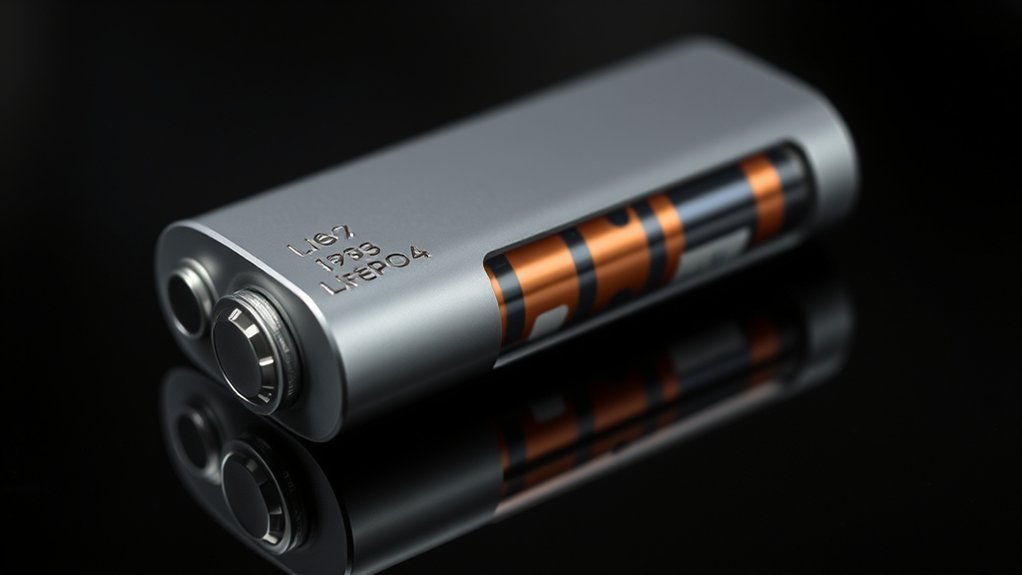
Given their chemical composition and performance traits, it’s important to clarify whether LiFePO4 batteries are classified within the broader category of lithium batteries. Technically, they are considered lithium batteries because they contain lithium compounds—specifically, lithium iron phosphate. However, unlike traditional lithium-ion batteries with cobalt or nickel cathodes, LiFePO4 batteries offer distinct advantages, especially regarding battery recycling and environmental impact. Their more stable chemistry reduces risks during disposal and enhances recyclability, lowering environmental hazards. This stability lessens concerns about toxic leaching and simplifies recycling processes. Consequently, while classified as lithium batteries, LiFePO4 cells differ markedly in environmental considerations. These factors make them a more sustainable option in the context of eco-friendly battery recycling and minimizing ecological footprints.
What Are the Main Advantages and Limitations of LiFePO4 Batteries?
Despite their relatively lower energy density compared to other lithium-ion chemistries, LiFePO4 batteries excel in key areas like battery safety, longevity, and environmental impact. Their stable chemical structure reduces the risk of thermal runaway, making them safer for various applications. Additionally, these batteries have a longer cycle life, often exceeding 2,000 cycles, which enhances durability and reduces replacement frequency. From an environmental perspective, LiFePO4 batteries contain no toxic heavy metals, minimizing ecological harm during disposal.
Main advantages include:
- Enhanced battery safety due to thermal stability
- Extended cycle life for durability
- Eco-friendly composition with minimal environmental impact
- Consistent performance across temperature ranges
Limitations primarily involve their lower energy density, which can impact applications requiring high power-to-weight ratios.
Which Applications Are Best Suited for LiFePO4 Batteries?
LiFePO4 batteries are particularly well-suited for applications where safety, longevity, and environmental considerations outweigh the need for maximum energy density. Their stable chemistry and thermal safety make them ideal for renewable energy storage systems, providing reliable, long-term power for solar and wind installations. In electric vehicles, LiFePO4 batteries offer enhanced cycle life and thermal stability, reducing safety risks and maintenance costs. Their eco-friendly profile aligns with sustainable initiatives by minimizing toxic waste and facilitating recycling. While their lower energy density limits use in portable electronics, their robustness and safety profile make them preferable for stationary storage and electric transportation. Overall, LiFePO4 batteries excel in scenarios demanding durability, safety, and environmental responsibility over sheer energy capacity.
Frequently Asked Questions
Are Lifepo4 Batteries Environmentally Friendly?
We believe LiFePO4 batteries are environmentally friendly due to their stable battery chemistry, which minimizes toxic waste, reduces environmental impact during manufacturing and disposal, and offers a safer, longer-lasting alternative to traditional lithium-ion batteries.
How Long Do Lifepo4 Batteries Typically Last?
Lifepo4 batteries typically last between 2,000 to 5,000 charging cycles, thanks to their stable battery chemistry. We analyze their lifespan based on cycle count and proper maintenance, ensuring peak performance over many years.
Can Lifepo4 Batteries Be Recycled?
We can recycle Lifepo4 batteries through specialized battery recycling processes, reducing environmental impact by reclaiming valuable materials. This technical practice guarantees sustainable disposal and minimizes ecological harm, aligning with environmental standards and promoting responsible resource management.
What Are the Safety Concerns With Lifepo4 Batteries?
We find that LiFePO4 batteries are safer than others, with less risk of fire during manufacturing and use; however, proper handling and ventilation remain essential to minimize safety concerns related to thermal runaway and fire safety.
Are Lifepo4 Batteries Suitable for High-Temperature Environments?
We find LiFePO4 batteries suitable for high-temperature environments due to their superior thermal stability and temperature resilience, which minimize risks of thermal runaway and degradation, making them a reliable choice where temperature variations are a concern.
Conclusion
In fundamental terms, LiFePO4 batteries are indeed a type of lithium battery, yet they differ markedly in safety, stability, and environmental impact. While traditional lithium-ion batteries excel in energy density, LiFePO4’s strengths lie in durability and thermal stability. This juxtaposition highlights that, depending on your priorities—whether longevity or portability—selecting the right lithium battery type is essential. Understanding these nuances guarantees informed decisions tailored to specific application needs.