Like a heavy anchor, LiFePO4 batteries can weigh down energy systems with their limitations. While they offer safety and longevity, their lower energy density and power output pose significant challenges, especially in portable or space-constrained applications. These technical constraints, combined with higher upfront costs and environmental concerns, raise questions about their suitability for widespread adoption. Understanding these disadvantages helps us evaluate whether LiFePO4 can truly meet the demands of modern energy solutions.
Key Takeaways
- Lower energy density makes Lifepo4 batteries bulkier and heavier for the same capacity.
- Limited fast-charging capabilities and infrastructure increase charging times and deployment costs.
- Higher upfront costs hinder widespread adoption despite lower long-term expenses.
- Reduced performance at extreme temperatures necessitates careful thermal management.
- Safety risks from improper handling include thermal runaway and potential fires if not properly managed.
Limited Energy Density Compared to Other Battery Types
Although LiFePO4 batteries are known for their safety and long cycle life, they generally have a lower energy density compared to other lithium-ion chemistries such as NMC or NCA. This energy density limitation directly impacts their application constraints, especially in scenarios requiring high power-to-weight ratios. The lower energy density means that for a given capacity, LiFePO4 batteries are bulkier and heavier, which can restrict their use in portable or space-constrained systems. Environmentally, this may lead to increased resource extraction and manufacturing footprints to meet energy demands. While their stability benefits are clear, the energy density limitations pose significant challenges in optimizing performance for applications like electric vehicles and portable electronics, where maximizing energy storage in minimal space remains critical.
Higher Upfront Costs Make Them Less Accessible

While LiFePO4 batteries offer long-term durability and safety, their higher upfront costs considerably hinder widespread adoption. This cost barrier impacts market accessibility, especially for residential and commercial users with limited budgets. The initial investment is notably higher than traditional lead-acid or other lithium-ion chemistries, driven by raw material costs and manufacturing complexities. Despite lower lifecycle costs and improved safety profiles, the steep initial price discourages consumers from shifting to this technology. This financial hurdle limits the broader integration of LiFePO4 batteries into renewable energy systems and electric vehicles, slowing their potential environmental benefits. Ultimately, without reductions in production costs or financial incentives, the higher upfront costs remain a critical obstacle to expanding market accessibility for this promising battery chemistry.
Compatibility Challenges With Existing Systems
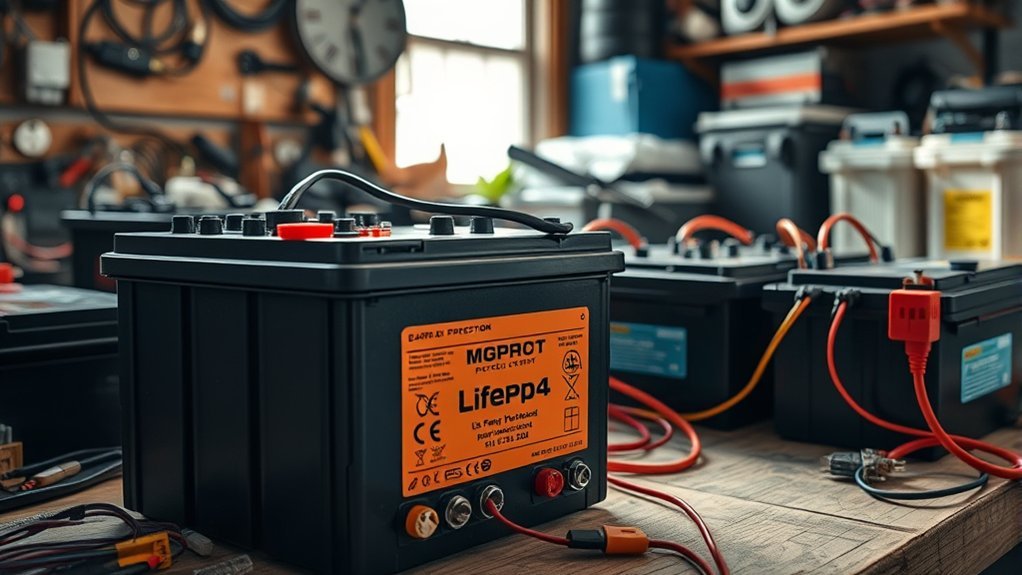
Compatibility issues with existing systems pose a significant barrier to the widespread adoption of LiFePO4 batteries. These challenges stem from system integration complexities and configuration challenges, which hinder seamless adaptation. Many current setups are tailored for lead-acid or other lithium chemistries, requiring significant modifications for LiFePO4 compatibility. This often involves recalibrating battery management systems (BMS), adjusting voltage profiles, and reconfiguring charging protocols. The table below illustrates key aspects:
| Aspect | Impact |
|---|---|
| System integration | Difficult integration with legacy infrastructure |
| Configuration challenges | Complex adjustments needed for maximum performance |
| BMS compatibility | Potential need for advanced or redesigned BMS |
| Voltage profiles | Variations requiring system recalibration |
| Charging protocols | Necessity to modify existing charging hardware |
Reduced Performance in Extreme Temperatures
Have you considered how extreme temperatures affect the performance of LiFePO4 batteries? Thermal instability becomes a critical issue as high or low temperatures induce performance degradation. In cold environments, the chemical reactions within the battery slow down, reducing capacity and efficiency, which hampers reliable energy delivery. Conversely, elevated temperatures can accelerate degradation processes, damaging internal components and shortening lifespan. Unlike some battery chemistries, LiFePO4 batteries are relatively stable but still susceptible to performance shifts caused by thermal fluctuations. These temperature-induced effects highlight the importance of maintaining ideal operating conditions. Overall, while LiFePO4 cells are environmentally friendly and safe, their reduced performance in extreme temperatures presents a notable limitation, especially in applications demanding consistent power under varying environmental conditions.
Lower Power Output for Heavy-Duty Applications
Lifepo4 batteries have limited high-current capabilities, which restricts their effectiveness in heavy-duty applications requiring sustained power. This constraint makes them less suitable for equipment that demands high loads, potentially leading to performance shortfalls. Understanding these limitations is essential for selecting energy storage solutions that align with both technical and environmental needs.
Limited High-Current Capability
Although LiFePO4 batteries are known for their safety and longevity, they often fall short in delivering the high current necessary for heavy-duty applications. This limitation stems from their inherent power output constraints, which restrict their ability to supply large bursts of energy quickly. High current limitations mean that, under demanding conditions, these batteries cannot sustain the power surges required for intensive tasks. This results in compromised performance in applications like heavy machinery or high-performance electric vehicles, where rapid energy delivery is essential. To illustrate, consider the following:
| Application Type | Power Demand | LiFePO4 Suitability | Alternative Needed |
|---|---|---|---|
| Heavy Machinery | High | Limited | Lithium-ion |
| Electric Vehicles | Rapid bursts | Power constraints | Lithium-polymer |
| Power Tools | Short bursts | Not ideal | NiMH, Li-ion |
| Grid Storage | Steady load | Suitable | Yes |
| Emergency Systems | Sudden load | Limited | Supercapacitors |
Not Suitable for Heavy Loads
While LiFePO4 batteries excel in safety and long service life, their lower power output makes them unsuitable for heavy-duty applications requiring sustained high loads. These batteries are limited in meeting the high current demands typical of heavy-duty applications, such as industrial machinery or electric vehicles under load. Their voltage stability and discharge rates are optimized for moderate power needs but falter under continuous heavy loads, risking voltage drops and inefficiency. From an environmental perspective, relying on batteries that cannot sustain high current demands may lead to increased energy consumption and shorter operational lifespans, negating some eco-friendly benefits. Consequently, for applications demanding robust power delivery and reliability under intense load conditions, alternative battery chemistries with higher power capacities are generally more appropriate.
Longer Charging Times and Limited Fast-Charging Options
We notice that Lifepo4 batteries typically have slower charge rates, which can prolong overall recharge times and impact operational efficiency. Their limited compatibility with fast-charging technologies also restricts quick turnaround, especially in time-sensitive applications. From an environmental perspective, these longer charging cycles may increase energy consumption and reduce grid stability.
Slower Charge Rates
Lifepo4 batteries typically exhibit slower charge rates compared to other lithium-ion chemistries, resulting in longer charging times and fewer options for rapid recharging. This slower process affects overall battery lifespan, as prolonged charging cycles can accelerate wear if not carefully managed. Additionally, the limited fast-charging compatibility constrains the development of expansive charging infrastructure, especially in remote or high-demand environments. Consequently, users face challenges in optimizing operational efficiency, as the infrastructure must be tailored to accommodate their specific charging needs without compromising battery health. While Lifepo4’s safety and longevity are advantageous, the inherent slower charge rates require strategic planning to ensure effective integration into energy systems, emphasizing the importance of balanced charging protocols and infrastructure investments.
Limited Fast-Charging Compatibility
Why do Lifepo4 batteries face limitations in fast-charging applications? Their fast charging limitations stem from their chemistry, which requires careful thermal management to prevent degradation. Unlike lithium-ion batteries with advanced internal structures, Lifepo4 cells are more sensitive to high current stress. This restricts their compatibility with existing charging infrastructure designed for rapid recharges, often resulting in longer charging times. Additionally, the limited fast-charging options mean that infrastructure must be specifically tailored, which can be costly and less widespread. Consequently, while Lifepo4 batteries excel in safety and longevity, their slower charge rates hinder quick turnaround times. This makes them less ideal for applications demanding rapid energy replenishment, emphasizing the need for more specialized charging solutions and infrastructure development.
Environmental Impact of Manufacturing and Disposal
Although LiFePO4 batteries are often praised for their relative environmental friendliness, their manufacturing and disposal processes can still pose significant ecological challenges. The production phase involves extracting raw materials like lithium, iron, and phosphate, which can lead to habitat disruption and resource depletion. Recycling challenges complicate proper disposal, as recovering valuable components is technically complex and often inefficient, increasing the risk of toxic waste leakage into ecosystems. Improper disposal may release hazardous substances, such as residual metals and chemicals, contaminating soil and water sources. While LiFePO4 batteries generate fewer toxic emissions during use, their end-of-life management remains a critical concern, emphasizing the need for improved recycling technologies and sustainable waste management practices to minimize their environmental footprint.
Potential Safety Risks if Not Properly Managed
While LiFePO4 batteries are generally considered safer than many other chemistries, neglecting proper management can lead to serious safety risks. Effective battery management is critical to prevent thermal runaway, overcharging, and deep discharging, which can cause damage or fires. Without strict adherence to safety protocols, improper handling may compromise cell integrity, resulting in internal short circuits or gas build-up. These hazards not only threaten user safety but also pose environmental risks through potential leaks or fires. Environmentally-conscious practices in battery management, such as precise voltage regulation and temperature monitoring, are essential to mitigate these dangers. Ultimately, rigorous safety protocols ensure the longevity of LiFePO4 batteries and minimize their environmental impact, emphasizing that proper management is indispensable for safe and sustainable use.
Frequently Asked Questions
Are Lifepo4 Batteries Suitable for All Types of Electric Vehicles?
We believe Lifepo4 batteries suit many electric vehicles due to their stable battery capacity and safe charging speed, but their weight and specific power needs may limit applicability; ongoing tech improvements could expand their suitability further.
How Does Temperature Affect the Lifespan of Lifepo4 Batteries?
Like a delicate dance with fire, temperature sensitivity impacts Lifepo4 batteries’ lifespan; maintaining thermal stability is essential. We analyze how extreme temps accelerate degradation, emphasizing the importance of proper thermal management for sustainable, environmentally-conscious energy storage solutions.
Can Lifepo4 Batteries Be Recycled Easily?
We believe Lifepo4 batteries can be recycled, but the recycling processes are complex and require specialized facilities for battery disposal. Proper recycling minimizes environmental impact, ensuring the materials are recovered efficiently and safely, supporting sustainable battery lifecycle management.
What Are the Risks of Thermal Runaway in Lifepo4 Batteries?
Thermal runaway risks in Lifepo4 batteries are low due to their thermal stability, but safety precautions remain essential. We analyze how proper design and handling mitigate potential hazards, ensuring environmentally-conscious use while maintaining technical safety standards.
Do Lifepo4 Batteries Require Special Maintenance?
Lifepo4 batteries require gentle calibration and vigilant voltage balancing, ensuring ideal performance. Regular checks help maintain their longevity, much like tending a delicate garden, preserving their environmentally-friendly nature and technical integrity for sustained, efficient energy storage.
Conclusion
While LiFePO4 batteries offer safety and environmental benefits, their limitations—such as lower energy density and slower charging—highlight the need for ongoing innovation. We must recognize that no technology is perfect, and as we push for greener solutions, understanding these trade-offs helps us make informed choices. It’s clear that balancing performance, cost, and sustainability is key to advancing energy storage, lest we bite off more than we can chew in the pursuit of eco-friendly progress.