Understanding the ideal frequency for checking a LiFePO4 battery is essential, as it directly impacts both safety and longevity. While regular monitoring can prevent unexpected failures, overchecking may lead to unnecessary maintenance that wastes time and resources. Determining the right balance requires analyzing usage patterns, environmental influences, and importance. Let’s explore how to establish an effective inspection routine tailored to different scenarios, ensuring maximum performance without excess effort.
Key Takeaways
- Check voltage weekly for critical applications; less frequently for stable, low-demand uses.
- Perform full capacity tests annually for continuous-use batteries, and every 2-3 years for standby units.
- Increase inspection frequency during extreme weather or after high-cycle usage to monitor degradation.
- Conduct daily or weekly checks based on environmental conditions and operational intensity.
- Use BMS and regular visual inspections to proactively identify signs of aging or damage.
How Often Should You Check Your LiFePO4 Battery’s Voltage and State of Charge?
Regularly monitoring your LiFePO4 battery’s voltage and state of charge is essential for maintaining peak performance and extending lifespan. Frequent checks allow us to detect early signs of voltage imbalance or capacity loss, which can impact emergency preparedness and the efficiency of battery recycling efforts. A consistent monitoring schedule helps prevent over-discharge, reducing the risk of cell damage and ensuring safe, sustainable use. For critical applications, checking voltage weekly is advisable, while more frequent assessments may be necessary during periods of heavy use or environmental stress. This proactive approach ensures the battery remains within safe charge parameters, supporting responsible battery recycling at end-of-life. Ultimately, diligent voltage monitoring safeguards your investment and enhances the reliability of your energy system.
Daily vs. Weekly Checks: Which Frequency Is Right for Your Usage?
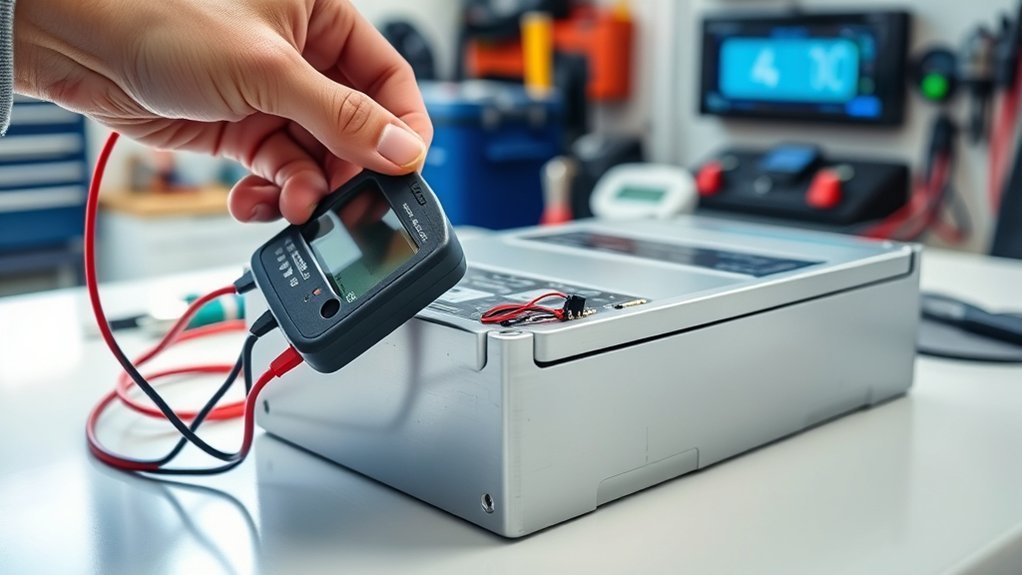
Determining whether to perform daily or weekly checks on your LiFePO4 battery depends largely on your usage patterns and operational demands. For critical applications or sensitive battery storage, daily inspections can help identify voltage fluctuations or environmental factors impacting performance promptly. Conversely, less demanding setups may only require weekly assessments to monitor overall health.
Daily checks are essential for critical battery applications; weekly inspections suffice for less demanding setups.
Consider these points:
- High environmental variability necessitates more frequent checks to mitigate risks from temperature or humidity.
- Intensive operational cycles demand daily voltage and capacity monitoring to prevent premature degradation.
- Stable environmental conditions and moderate usage allow for weekly evaluations, reducing unnecessary handling.
Ultimately, aligning check frequency with environmental factors and storage conditions ensures ideal battery longevity and performance.
Signs That Indicate It’s Time for a Battery Inspection or Maintenance
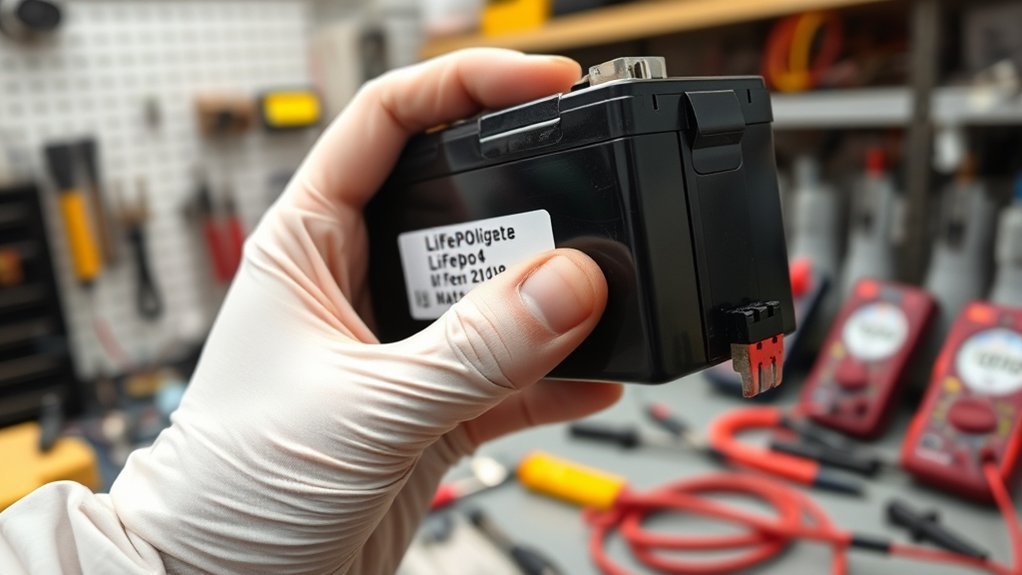
Monitoring the condition of your LiFePO4 battery is essential to maintaining peak performance and extending its lifespan. Indicators such as sudden voltage drops, increased internal resistance, or irregular charging patterns signal that an inspection is necessary. Visual signs like swelling or corrosion also warrant immediate attention, as they may compromise safety or efficiency. Regularly evaluating these signs helps prevent premature battery failure, reducing the need for early battery recycling, which has notable environmental impacts. Addressing issues promptly not only preserves the battery’s functionality but also minimizes waste and environmental harm. Recognizing these signs allows for timely maintenance, ensuring ideal operation and supporting sustainable practices. Ultimately, vigilant monitoring helps balance performance, safety, and environmental responsibility.
Best Practices for Regular Battery Maintenance to Maximize Lifespan
Consistently monitoring voltage levels guarantees we detect potential issues before they escalate, maintaining peak performance. Adhering to proper charging procedures prevents over- or under-charging, which can degrade battery health over time. Implementing these best practices helps us extend the lifespan and reliability of Lifepo4 batteries efficiently.
Regular Voltage Checks
Regular voltage checks are essential for maintaining the health of Lifepo4 batteries and extending their lifespan. Consistent monitoring allows us to detect capacity degradation related to battery chemistry and accumulated charging cycles. To optimize performance, consider these practices:
- Measure voltage at rest, ideally after a full charge and prior to discharge, to assess state of charge accurately.
- Track voltage fluctuations over time to identify early signs of capacity loss, which can correlate with increased charging cycles.
- Use precise digital multimeters to ensure measurement accuracy, critical for diagnosing subtle voltage drops indicative of cell imbalance or aging.
Regular voltage checks enable proactive maintenance, helping to prevent over-discharge or overcharge scenarios that accelerate battery degradation. This disciplined approach maximizes lifespan by aligning usage with the battery’s chemical and cycle characteristics.
Proper Charging Procedures
Proper charging procedures play a pivotal role in preserving the longevity and ideal performance of Lifepo4 batteries. Adhering to correct practices minimizes risks, ensures safety, and supports sustainable battery recycling. Always use a charger compatible with Lifepo4 chemistry, maintaining voltage within recommended ranges. Overcharging or deep discharging accelerates capacity loss and shortens lifespan. Charging safety involves avoiding extreme temperatures and ensuring proper ventilation during charging cycles. Implementing a structured charging protocol enhances efficiency:
| Charging Stage | Voltage Limit | Duration/Cycle |
|---|---|---|
| Bulk Charging | 3.65V per cell | Until current tapers |
| Absorption | 3.65V per cell | 2-3 hours |
| Float Charging | 3.40V per cell | Continuous |
This meticulous approach supports peak performance and environmentally responsible battery recycling.
How to Use Monitoring Devices to Keep Track of Battery Health
Choosing the right monitoring devices is essential for accurate battery health assessment, as different systems provide varying levels of detail and reliability. Once installed, we must interpret the collected data—such as voltage, current, and temperature—to identify potential issues early. Effective analysis guarantees timely maintenance decisions, optimizing the lifespan and safety of the Lifepo4 battery.
Selecting Appropriate Monitoring Devices
How can we guarantee our LiFePO4 batteries remain in ideal condition? Selecting the right monitoring devices is essential. First, we need sensors that measure voltage and current accurately, reflecting real-time data on battery chemistry stability and cycle count. Second, integrating a Battery Management System (BMS) ensures consistent monitoring of state of charge (SoC) and voltage deviations, vital for managing charging cycles effectively. Third, data loggers provide historical insights, enabling trend analysis of capacity fade or temperature fluctuations. These devices must be compatible with LiFePO4 chemistry, minimizing interference with battery performance. Proper selection ensures early detection of potential issues, helping us optimize lifespan and maintain safe operation throughout numerous charging cycles.
Interpreting Battery Data Effectively
To effectively interpret battery data, we must understand how to analyze the information collected by our monitoring devices. This involves evaluating parameters such as voltage, temperature, and cycle count to gauge battery health. Recognizing patterns related to battery chemistry helps predict performance decline, especially after numerous charging cycles. Monitoring devices provide critical data points that, when accurately interpreted, inform maintenance schedules and usage strategies.
| Parameter | Significance |
|---|---|
| Voltage | Indicates state of charge; abnormal levels suggest degradation |
| Temperature | Reflects operational stress; high temps can accelerate aging |
| Cycle Count | Tracks charging cycles; high counts reduce lifespan |
| Internal Resistance | Measures battery capacity loss; increases with aging |
| State of Health (SoH) | Overall health indicator; derived from multiple metrics |
Seasonal or Usage-Based Check Recommendations for LiFePO4 Batteries
Since LiFePO4 batteries are sensitive to environmental conditions and usage patterns, implementing seasonal or usage-based inspection routines is essential for maintaining peak performance and longevity. Regular checks aligned with seasonal changes—such as temperature fluctuations—can prevent capacity loss and mitigate environmental impact. Usage-based inspections, especially after high-cycle periods, help identify potential degradation early.
Regular seasonal and usage-based inspections ensure LiFePO4 battery longevity and optimal performance.
- Increase inspections during extreme weather seasons to monitor voltage stability and temperature effects, reducing environmental impact through proper maintenance.
- After significant usage spikes, verify capacity and internal resistance to prevent premature disposal, supporting battery recycling efforts.
- Schedule thorough quarterly assessments for long-term storage, avoiding capacity fade and reducing waste, thereby promoting sustainable battery lifecycle management.
Common Mistakes to Avoid When Checking Your Battery Too Often or Too Rarely
Over-monitoring or neglecting your LiFePO4 battery can lead to performance issues and premature failure. Checking the battery too often risks unnecessary disturbances to its charging cycles, which can accelerate degradation, especially if frequent discharges aren’t needed. Conversely, infrequent checks may cause overlooked signs of capacity loss or abnormal voltage fluctuations, impacting overall battery storage efficiency. It’s vital to strike a balance—regular, but not excessive, monitoring helps identify early warning signs without disrupting ideal charge management. Overly frequent inspections might lead to unnecessary maintenance, while too infrequent checks could result in missed deterioration. Proper understanding of your battery’s usage pattern and charge cycles ensures you avoid these common mistakes, prolonging lifespan and maintaining consistent performance.
How Often Should You Perform Full Battery Capacity Tests?
Regularly performing full battery capacity tests is essential for accurately evaluating the health and remaining lifespan of your LiFePO4 battery. These tests help identify capacity degradation early, supporting effective battery recycling and minimizing environmental impact. We recommend:
Regular capacity tests help extend battery life and promote eco-friendly disposal practices.
- Conducting tests annually for batteries in continuous use to track performance trends.
- Testing every 2-3 years for infrequently used or standby batteries to avoid unnoticed capacity loss.
- Increasing testing frequency after significant events like deep discharges or repairs, which can accelerate capacity decline.
Frequent testing ensures optimal performance, reduces premature battery replacement, and promotes responsible disposal practices. This approach supports environmental sustainability by enabling timely recycling, reducing waste, and conserving resources. Proper monitoring ultimately extends battery life and mitigates ecological impact.
What Are the Long-Term Monitoring Strategies for Ensuring Battery Safety and Performance?
Implementing effective long-term monitoring strategies is essential for maintaining the safety and performance of LiFePO4 batteries. Regular inspection of voltage, temperature, and capacity can preempt failure and optimize lifespan. We recommend integrating battery management systems (BMS) to track key metrics continuously. Additionally, establishing a schedule for periodic capacity testing helps assess overall health. Proper disposal and recycling procedures minimize environmental impact and support sustainable battery lifecycle management. The table below summarizes key strategies:
| Monitoring Technique | Purpose | Environmental Impact Consideration |
|---|---|---|
| Voltage & Temperature | Detect anomalies early | Supports recycling efforts |
| Capacity Testing | Evaluate longevity and safety | Reduces waste through longevity |
| BMS Integration | Real-time data for proactive maintenance | Minimizes environmental footprint |
These strategies ensure safer, more efficient battery use and disposal.
Frequently Asked Questions
Can Temperature Affect How Often I Should Check My Lifepo4 Battery?
Temperature considerably impacts lifespan, so we recommend more frequent checks during extreme conditions. Battery cooling and temperature monitoring help prevent overheating, ensuring ideal performance. Regularly inspecting your Lifepo4 battery under varying temperatures is essential for longevity.
How Does Battery Age Influence Checking Frequency?
As batteries age, we increase checking frequency to monitor capacity and health, especially after numerous charging cycles. Regular battery maintenance helps us detect potential issues early, ensuring ideal performance and longevity of the Lifepo4 battery.
Are There Specific Indicators for Urgent Battery Checks?
We recommend urgent checks if voltage stability fluctuates unexpectedly or charging cycles become irregular, indicating potential issues. Regular monitoring helps catch these indicators early, ensuring the best battery performance and longevity through proactive maintenance.
Should Checking Frequency Vary Between Different Lifepo4 Battery Brands?
We believe checking frequency should vary with brand reliability and maintenance routines; more reputable brands typically require less frequent checks, but adherence to specific manufacturer guidelines guarantees ideal performance and longevity of your Lifepo4 batteries.
How Do Seasonal Changes Impact Battery Inspection Schedules?
Seasonal changes, like winter’s chill or summer’s heat, profoundly impact environmental factors, so we recommend adjusting inspection schedules accordingly. Regular user maintenance becomes essential during extreme weather, ensuring ideal performance and longevity of your LiFePO4 batteries.
Conclusion
In essence, balancing frequent checks with strategic monitoring allows us to prevent unexpected failures while avoiding unnecessary interventions. Just like tuning a finely calibrated instrument, diligent oversight ensures peak performance and longevity, yet overchecking can cause unwarranted concern. By understanding your usage patterns and environmental factors, we can tailor our maintenance approach—neither neglecting nor obsessing—ultimately securing reliable power and extending our battery’s lifespan. After all, precision in monitoring is the key to sustainable energy management.