Maintaining Lifepo4 batteries is essential for ensuring safety, performance, and longevity. Proper upkeep involves regular checks of voltage, physical condition, and temperature, along with adherence to recommended charging protocols. Neglecting these steps can lead to decreased efficiency or potential hazards. As we explore the key components of this maintenance protocol, you’ll discover practical measures to optimize your battery’s lifespan and reliability—details that could make all the difference in your system’s overall performance.
Key Takeaways
- Regularly monitor voltage, SOC, and temperature to prevent over-discharge and overheating.
- Keep battery surfaces clean, inspect for physical damage, and address corrosion promptly.
- Follow proper charging/discharging practices, maintaining charge levels between 30% and 80%.
- Ensure secure connections, proper ventilation, and avoid extreme temperatures during operation.
- Recognize signs of end-of-life, perform responsible recycling, and seek professional help for serious issues.
Understanding the Basics of Lifepo4 Batteries and Why Proper Maintenance Matters
Although Lifepo4 batteries are known for their safety, longevity, and stability, understanding their fundamental characteristics is essential for effective maintenance. Their battery chemistry, based on lithium iron phosphate, provides thermal stability and reduces risks of overheating or thermal runaway. Unlike other lithium-ion chemistries, Lifepo4 offers a lower energy density, which influences their capacity and weight but guarantees safer operation. Recognizing this trade-off helps us optimize their use in various applications. Proper maintenance hinges on understanding these core properties, guaranteeing the battery’s performance and lifespan. By comprehending the chemistry and energy density, we can implement effective protocols that preserve their stability and prevent premature degradation, ultimately maximizing their functional lifespan and safety.
Regularly Check and Maintain Battery Voltage and State of Charge
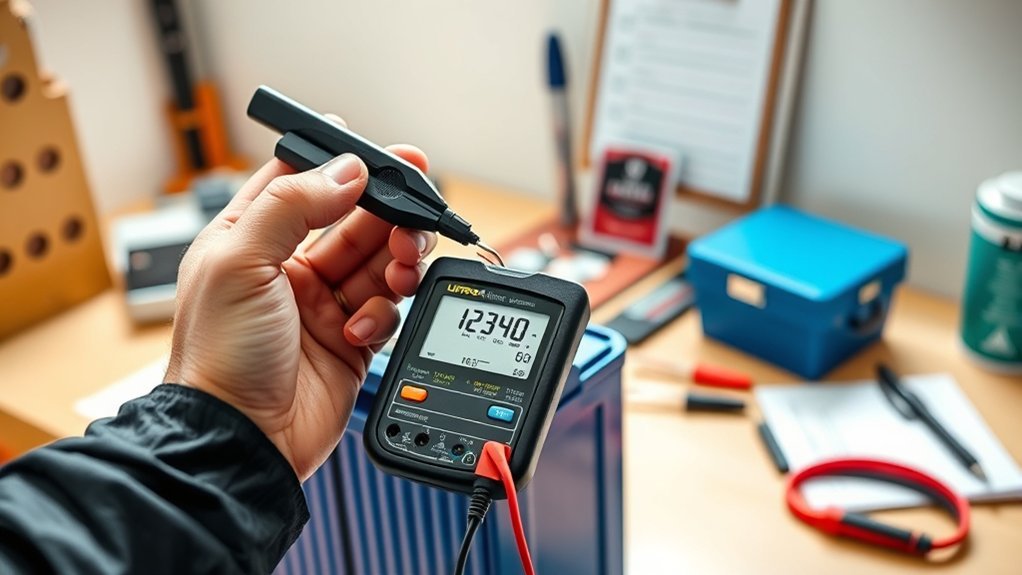
Regularly monitoring the battery voltage and state of charge (SOC) is vital for maintaining Lifepo4 battery performance and longevity. Accurate voltage calibration guarantees measurements reflect true battery conditions, preventing over-discharge or excessive charging. Consistent voltage readings help identify deviations from ideal operating ranges, signaling the need for charge balancing. Charge balancing is essential to equalize cell voltages, minimizing capacity loss and extending lifespan. We recommend using a reliable multimeter or battery management system calibrated for Lifepo4 chemistry to track voltage accurately. Maintaining proper voltage levels prevents deep discharge, which can damage cells. Regular checks allow timely interventions, ensuring the battery remains within safe voltage and SOC parameters, therefore maximizing performance and avoiding premature failure.
Keep Your Lifepo4 Battery Clean and Inspect for Physical Damage
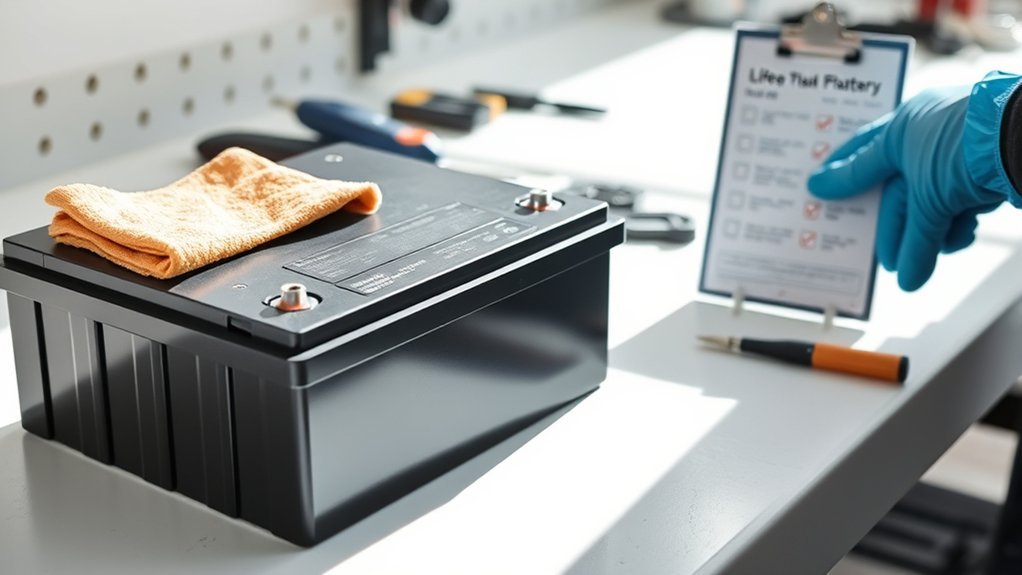
Maintaining a clean surface and inspecting for physical damage are essential for peak Lifepo4 battery performance. We recommend regularly cleaning the battery surface, checking for cracks or deformities, and removing any corrosion buildup. These steps help prevent potential failures and guarantee the longevity of your battery.
Regular Surface Cleaning
Keeping the surface of your Lifepo4 battery clean is essential for peak performance and safety. Regular surface cleaning involves thorough dirt removal to prevent conductive contaminants that could impair connections or cause overheating. Use a soft brush or lint-free cloth to eliminate dust and dirt, avoiding abrasive materials that may damage the casing. Surface polishing can enhance contact points and prevent corrosion, guaranteeing efficient power transfer. When cleaning, avoid excess moisture; dampen the cloth slightly with isopropyl alcohol or a mild, non-abrasive cleaner. Consistent cleaning not only maintains ideal thermal management but also allows for early detection of surface contaminants or corrosion, enabling prompt maintenance. Proper surface maintenance prolongs battery lifespan and ensures safe operation in all conditions.
Check for Cracks
While inspecting your Lifepo4 battery, it’s crucial to carefully check for any cracks or physical damage that could compromise its structural integrity. Crack detection is essential, as even minor fractures can lead to internal failures or safety hazards. Look for visible splits, bulges, or deformations on the casing. Damage may be subtle but impactful, affecting the battery’s performance and safety. To guarantee structural integrity, perform a thorough visual inspection, paying close attention to seams and connection points.
| Inspection Aspect | Indicators of Damage |
|---|---|
| Surface cracks | Fine lines or fractures visible |
| Bulges or deformities | Uneven surface, swelling |
| Connection points | Loose or damaged areas |
| Internal damage | Hidden cracks, not externally visible |
Remove Corrosion Buildup
After inspecting your Lifepo4 battery for cracks and physical damage, it’s important to address any corrosion that may have developed on terminals and connection points. Corrosion buildup can impede electrical performance and compromise connection integrity. To remove corrosion, use a mixture of baking soda and distilled water applied with a non-metallic brush, ensuring thorough cleaning of affected areas. Rinse with distilled water and dry completely. Applying a suitable battery coating after cleaning can help prevent future corrosion, creating a protective barrier against moisture and oxidation. Proper corrosion prevention techniques extend battery lifespan by maintaining clean, secure connections. Regular inspection and maintenance of connection points, combined with these cleaning steps, safeguard your Lifepo4 battery’s performance and reliability over time.
Monitor Battery Temperature and Prevent Overheating
Regularly checking battery temperature is crucial to prevent overheating, which can compromise performance and safety. Proper ventilation around the battery helps dissipate excess heat effectively. Maintaining ideal temperature conditions ensures longevity and reliable operation of the Lifepo4 battery.
Check Temperature Regularly
Monitoring the temperature of LiFePO4 batteries is essential to prevent overheating, which can compromise safety and reduce lifespan. Temperature effects on LiFePO4 batteries are significant; elevated temperatures accelerate chemical degradation, while low temperatures impair performance. Regularly checking temperature helps identify potential issues early, especially considering climate considerations that influence thermal behavior. In hot climates, batteries are more prone to overheating, increasing the risk of thermal runaway, whereas cold environments may lead to capacity loss. Using accurate temperature sensors and recording readings during operation guarantees ideal thermal management. By maintaining consistent temperature checks, we can mitigate temperature effects, adjust operating conditions accordingly, and extend the overall battery lifespan. Precise thermal monitoring is a critical component of effective battery maintenance.
Use Proper Ventilation
Proper ventilation is essential for maintaining ideal operating temperatures and preventing overheating in LiFePO4 batteries. Effective ventilation systems help regulate indoor air quality by dispersing heat generated during charge and discharge cycles. Ensuring adequate airflow minimizes temperature fluctuations that could compromise battery lifespan or safety. We recommend installing exhaust fans or ventilation ducts in enclosed spaces to facilitate continuous air exchange. Regular monitoring of battery temperature is critical; elevated temperatures indicate insufficient ventilation, risking thermal runaway. Proper airflow not only stabilizes internal temperatures but also reduces the buildup of potentially harmful gases. By maintaining a well-ventilated environment, we enhance battery performance, longevity, and safety, ensuring that indoor air quality remains preferable and that overheating risks are mitigated through systematic ventilation management.
Follow Proper Charging and Discharging Practices to Maximize Lifespan
To maximize the lifespan of a LiFePO4 battery, it’s essential to adhere to recommended charging and discharging practices. Avoid deep discharges below 20%, as frequent extremes accelerate capacity loss. Use appropriate charging cables rated for the battery’s voltage and current specifications to prevent overheating or damage. Maintaining a consistent charge level between 30% and 80% optimizes longevity. Properly managing the discharge cycle reduces stress on the cells, extending overall life. When the battery reaches end-of-life, prioritize responsible battery recycling to minimize environmental impact. Regularly inspecting and replacing damaged charging cables ensures safe operation. By following these precise practices, you preserve battery capacity and performance, ultimately prolonging the service life of your LiFePO4 system.
Troubleshoot Common Issues and When to Seek Professional Help
When a LiFePO4 battery exhibits performance issues, it’s essential to identify whether the problem stems from simple user error or a more serious malfunction. Common signs include rapid capacity loss, abnormal heating, or inconsistent voltage output. Troubleshooting should begin with verifying proper charging and discharging practices, making sure connections are secure, and inspecting for physical damage. If issues persist, professional assessment may be necessary, especially if warranty considerations are involved. Manufacturers often specify troubleshooting steps and conditions for warranty claims, so documenting issues is crucial. When the battery reaches the end of its lifecycle, responsible battery recycling is critical to minimize environmental impact. Recognizing these signs early can prevent further damage and guarantee safe handling, repair, or replacement.
Frequently Asked Questions
How Often Should I Perform a Capacity Test on My Lifepo4 Battery?
We suggest conducting a capacity test every 6 to 12 months, utilizing battery calibration and voltage monitoring to confirm accurate results, maintain peak performance, and detect potential issues early for your Lifepo4 battery.
Can I Store My Lifepo4 Battery Long-Term Without Maintenance?
Surprisingly, yes, you can store our Lifepo4 batteries long-term without routine maintenance if you follow proper storage techniques and safety precautions, such as maintaining a partial state of charge and storing in a cool, dry environment.
What Are the Signs of a Failing Lifepo4 Battery?
We observe signs of a failing Lifepo4 battery through reduced battery lifespan, inconsistent voltage, and increased internal resistance. Poor charging habits can accelerate degradation, so monitoring these indicators helps maintain the most favorable performance and prolong battery health.
Is It Necessary to Balance Lifepo4 Cells Regularly?
Yes, regular balancing guarantees cell equalization and consistent voltage balancing across Lifepo4 cells, preventing capacity loss and extending battery lifespan. We recommend periodic maintenance to maintain ideal performance and avoid overcharging or undercharging issues.
How Do Environmental Factors Affect Lifepo4 Battery Performance?
Environmental factors are like a double-edged sword; temperature fluctuations and humidity effects can substantially impact Lifepo4 battery performance, causing capacity loss or degradation. Proper management guarantees ideal operation and prolongs battery lifespan under varying environmental conditions.
Conclusion
By adhering to these maintenance practices, we can keep our Lifepo4 batteries running efficiently and extend their lifespan. Regular inspections, proper handling, and prompt troubleshooting are essential steps that guarantee safety and peak performance. Remember, a stitch in time saves nine—address issues early to prevent costly repairs or replacements down the line. Staying diligent with maintenance not only safeguards your investment but also promotes reliable, long-term power for your needs.