Like a finely tuned engine, a LiFePO4 battery requires meticulous care to operate at peak performance. Proper handling and maintenance are essential to maximize lifespan and guarantee safety. Neglecting these practices can lead to capacity loss, reduced efficiency, or even safety hazards. To truly preserve your investment, understanding the specifics of charging, discharging, and storage is vital. Let’s explore how precise procedures can make all the difference in maintaining your battery’s health and longevity.
Key Takeaways
- Maintain charge between 20% and 80% to prolong lifespan and reduce stress.
- Avoid over-discharging below 2.5V per cell and deep discharges over 80%.
- Store batteries at 40-60% charge in a cool, dry environment between 0°C and 25°C.
- Use compatible chargers with precise voltage regulation to ensure safe charging.
- Regularly monitor voltage and temperature to detect early signs of wear or issues.
How to Properly Charge Your Lifepo4 Battery for Longevity
To maximize the lifespan of your LiFePO4 battery, it’s essential to follow proper charging protocols from the outset. Understanding the battery chemistry is vital, as LiFePO4 cells are designed for specific voltage ranges and stable chemical properties. Maintaining a charge within 20% to 80% prevents undue stress on the chemistry, reducing degradation over repeated charging cycles. Avoid deep discharges and overcharging, as these actions accelerate capacity loss and shorten lifespan. Using a compatible charger with precise voltage and current regulation guarantees ideal charging conditions, preserving cell integrity. Consistent, controlled charging cycles promote longevity by minimizing thermal and chemical stress. Following these guidelines helps maintain peak performance and extends the overall service life of your LiFePO4 battery.
Best Practices for Discharging and Using Your Lifepo4 Battery Safely
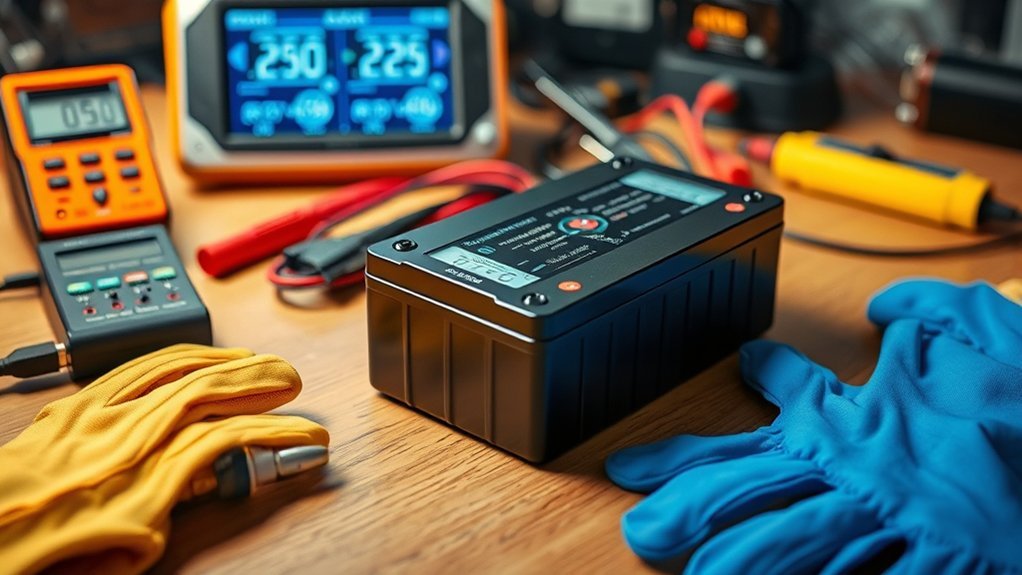
To guarantee safety and maximize lifespan, we follow specific discharge levels that prevent over-discharge, typically maintaining voltage above 2.5V per cell. Adhering to recommended usage practices, such as avoiding deep discharges and monitoring current, minimizes risk of damage. Properly managing these parameters helps maintain battery integrity and safe operation.
Proper Discharge Levels
Maintaining proper discharge levels is critical for preserving the longevity and safety of your LiFePO4 battery. Adhering to recommended discharge depth and voltage limits prevents undue stress on the cells. Specifically:
- Limit discharge depth to no more than 80%, ensuring the battery retains sufficient capacity and minimizes degradation.
- Avoid discharging below 2.5V per cell, as voltages below this threshold can cause irreversible damage.
- Maintain voltage limits within manufacturer specifications—typically around 3.2V to 3.65V per cell—to maximize cycle life.
- Monitor real-time voltage levels during use to prevent accidental over-discharge, which compromises both safety and performance.
Following these guidelines ensures peak battery health and prolonged service life.
Safe Usage Practices
Ensuring safe usage of your LiFePO4 battery requires adherence to best practices that prevent damage and optimize performance. Avoid deep discharges below the manufacturer’s recommended voltage, as this can compromise cell integrity. Monitor charging levels to prevent overvoltage, which can lead to thermal stress and reduced lifespan. Properly managing discharge cycles not only prolongs battery life but also minimizes environmental impact by reducing the frequency of replacements. When the battery reaches end-of-life, prioritize proper battery recycling to prevent hazardous waste and support sustainability efforts. Consistent adherence to these practices ensures safe operation, reduces potential hazards, and aligns with environmental responsibility, ultimately preserving the battery’s performance and minimizing ecological impact.
How to Store Your Lifepo4 Battery to Preserve Capacity

Proper storage of your Lifepo4 battery is crucial to maintain its capacity over time. Effective temperature management and a suitable storage environment are critical factors. To preserve capacity, consider these steps:
- Store the battery at a state of charge between 40-60% to reduce stress on cells.
- Keep the storage environment cool, ideally between 0°C and 25°C, to prevent thermal degradation.
- Avoid high humidity and direct sunlight, which can accelerate capacity loss.
- Guarantee the battery is stored in a dry, well-ventilated space with stable temperature conditions.
Handling and Maintenance Tips to Protect Your Lifepo4 Battery
Handling and maintenance are vital to extending the lifespan and preserving the capacity of your Lifepo4 battery. Proper handling minimizes physical damage, which can compromise internal components and reduce efficiency. Regular maintenance involves monitoring voltage and temperature to prevent overcharging or overheating, thereby avoiding capacity loss. Responsible battery recycling reduces environmental impact, preventing hazardous materials from contaminating ecosystems. Using certified recycling facilities guarantees safe disposal and promotes sustainability. Additionally, avoiding deep discharges and storing the battery at ideal states helps maintain its integrity. Proper handling and diligent maintenance not only protect the battery but also contribute positively to environmental conservation efforts, emphasizing the significance of responsible lifecycle management in Lifepo4 battery care.
Signs Your Lifepo4 Battery Needs Service or Replacement
When a Lifepo4 battery begins to exhibit performance issues, it’s essential to recognize the warning signs early to prevent further damage or failure. Indicators include diminished capacity, inconsistent voltage output, increased self-discharge, and excessive heat during operation.
Early signs of Lifepo4 battery issues include capacity loss, voltage fluctuations, self-discharge, and overheating.
- Reduced Capacity: Noticeable decrease in runtime signals possible cell degradation.
- Voltage Fluctuations: Unstable voltage levels suggest internal resistance issues.
- Self-Discharge: Rapid voltage loss when idle indicates aging cells.
- Overheating: Excess heat during charging or discharging can cause safety risks and environmental impact.
Timely service or replacement supports effective battery recycling, reducing environmental impact. Addressing these signs promptly preserves performance, prevents environmental hazards, and minimizes waste.
Common Mistakes to Avoid When Caring for Your Lifepo4 Battery
Many common mistakes can inadvertently shorten the lifespan or compromise the safety of your Lifepo4 battery. Overcharging or discharging beyond recommended levels accelerates degradation, reducing capacity and increasing safety risks. Ignoring proper storage conditions, such as extreme temperatures, can cause irreversible damage and diminish performance. Additionally, neglecting battery recycling practices can lead to environmental impact, as improper disposal releases hazardous materials. Failing to monitor voltage and temperature during operation may result in thermal runaway or capacity loss. It’s essential to handle batteries with care and adhere to manufacturer guidelines for maintenance. Avoiding these mistakes not only prolongs battery life but also minimizes environmental impact, ensuring responsible disposal and recycling when the battery reaches end-of-life.
Troubleshooting Charging and Discharge Issues With Lifepo4 Batteries
Charging and discharging issues in LiFePO4 batteries often stem from improper voltage regulation, temperature management, or faulty connections. To troubleshoot effectively, consider these steps:
Battery performance issues often result from voltage, temperature, or connection problems. Troubleshoot to extend lifespan.
- Verify Voltage Settings: Confirm chargers and BMS are set within recommended voltage ranges to prevent overvoltage or undervoltage conditions.
- Monitor Temperature: Maintain ideal operating temperatures; excessive heat or cold can impair performance and cause premature failure.
- Inspect Connections: Check all wiring, terminals, and connectors for corrosion, looseness, or damage, which can disrupt current flow.
- Evaluate Battery Health: If issues persist, assess whether the battery is nearing end-of-life, encouraging proper battery recycling to minimize environmental impact.
Addressing these issues preserves battery longevity and aligns with environmentally responsible disposal practices.
Frequently Asked Questions
What Is the Ideal Temperature Range for Lifepo4 Battery Operation?
We recommend maintaining Lifepo4 batteries within a temperature range of 0°C to 45°C for ideal thermal stability. Effective temperature management guarantees safety, prolongs lifespan, and maintains peak performance, preventing overheating or cold-related performance issues during operation.
How Often Should I Calibrate or Balance My Lifepo4 Battery?
“An ounce of prevention is worth a pound of cure.” We recommend balancing your Lifepo4 battery every 50 to 100 charge cycles, following proper charging protocols to guarantee ideal performance and longevity through diligent battery maintenance.
Can Lifepo4 Batteries Be Used in Extreme Weather Conditions?
We can use LiFePO4 batteries in extreme weather, but battery storage and temperature effects matter. High temperatures accelerate degradation, while cold reduces performance. Proper thermal management guarantees safety and longevity in challenging conditions.
What Environmental Factors Can Shorten Lifepo4 Battery Lifespan?
Like a fragile crystal, Lifepo4 batteries suffer from harsh environmental factors. Excessive charging cycles, poor storage conditions, high temperatures, and humidity accelerate degradation, shortening lifespan and impairing performance. Proper care guarantees longevity, efficiency, and safety.
Are There Specific Brands or Models of Lifepo4 Batteries With Better Durability?
We find that reputable brands like Battle Born and Renogy offer more durable Lifepo4 batteries, with thorough model comparisons revealing differences in cycle life and temperature tolerance, ensuring reliable performance and longer lifespan for critical applications.
Conclusion
By adhering to proper charging, discharging, storage, and handling practices, we optimize our LiFePO4 batteries’ lifespan and performance. When we monitor voltage and temperature diligently, it’s like maintaining a finely tuned engine—ensuring reliability and safety. Proper care acts as a safeguard against unexpected failures, much like regular maintenance prevents engine breakdowns. Ultimately, responsible management not only prolongs battery life but also aligns with sustainable practices, turning routine maintenance into a seamless, preventative safeguard for our energy needs.