Studies show that improper storage can reduce LiFePO₄ battery capacity by up to 20% within a year. As professionals, we recognize that maintaining ideal conditions during long-term storage is vital for preserving performance and lifespan. Ensuring the right state of charge, temperature, and handling practices can prevent significant degradation. But to fully grasp these strategies, it’s essential to explore the specific storage parameters and procedures that safeguard your batteries’ longevity.
Key Takeaways
- Store LiFePO₄ batteries at 50-60% charge (around 3.2V–3.3V per cell) for optimal long-term preservation.
- Keep batteries in a cool (0°C–25°C), dry, and well-ventilated environment to prevent degradation.
- Use sealed, climate-controlled containers to protect against moisture, dust, and temperature fluctuations.
- Regularly inspect batteries for physical damage, swelling, or corrosion, and maintain a stable storage condition.
- Avoid storing batteries for over 12 months without periodic checks or recharging to prevent capacity loss.
Understanding Lifepo4 Batteries and Their Storage Needs
While LiFePO4 batteries are known for their stability and safety, understanding their specific storage requirements is essential for maintaining performance over the long term. Their battery chemistry, characterized by a stable phosphate-based cathode, minimizes degradation when stored properly. Ideal storage involves using appropriate storage containers that prevent moisture ingress and thermal fluctuations, which can accelerate capacity loss. It’s indispensable to keep the batteries at a partial state of charge—around 50%—to reduce stress on the cells and preserve longevity. Ensuring the storage environment is cool, dry, and well-ventilated further safeguards the chemistry. Properly selecting and maintaining storage containers is crucial, as they serve as a barrier against environmental factors that could compromise the battery’s stability and overall lifespan.
Preparing Your Batteries Before Long-Term Storage
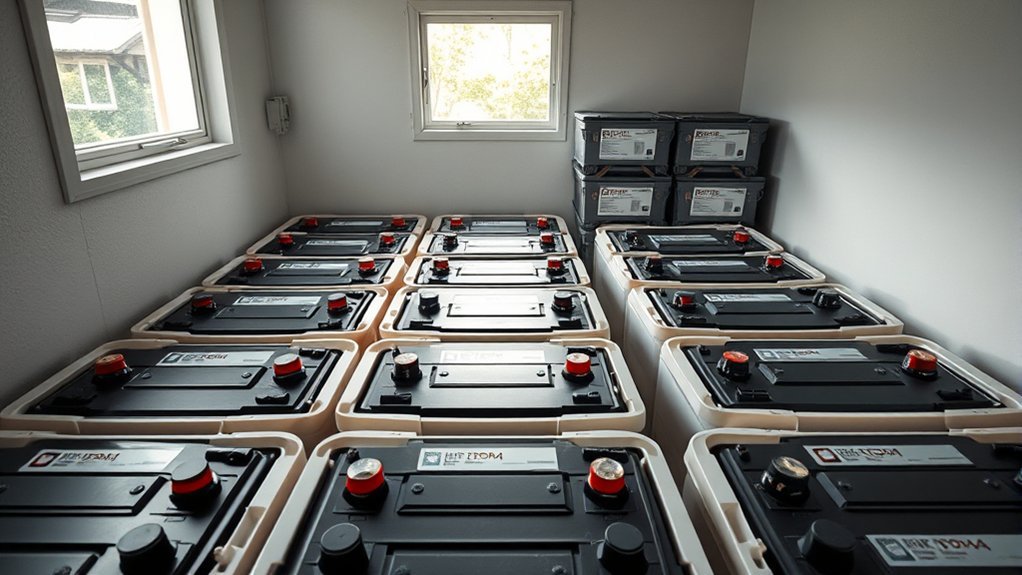
Before storing your Lifepo4 batteries long-term, make sure they are charged to their ideal level to prevent capacity loss. We also recommend cleaning the terminals to avoid corrosion and placing the batteries in a cool, dry environment to maintain stability. Proper preparation minimizes risks and preserves battery health during extended storage periods.
Charge to Optimal Level
Ensuring your Lifepo4 batteries are charged to the optimal level before long-term storage is essential for preserving battery chemistry and minimizing capacity loss. A partial charge—around 50-70%—reduces stress on the cells and prevents capacity fade caused by overcharging or deep discharge. Consistently maintaining this charge level supports fewer charging cycles and prolongs battery lifespan.
| State of Charge | Purpose | Risks of Improper Charge |
|---|---|---|
| 0-30% | Too low, increases risk of capacity loss | Deep discharge damage |
| 50-70% | Optimal for storage, minimizes stress | Excessive charge accelerates aging |
| 80-100% | Fully charged, risks capacity fade | Overcharge damages battery chemistry |
Maintaining this level ensures stable chemical composition during storage, safeguarding performance over time.
Clean Battery Terminals
Have you considered how dirt and corrosion can compromise your Lifepo4 battery’s performance during storage? Proper battery terminal cleaning is essential for effective corrosion prevention. Before long-term storage, we recommend:
- Disconnecting the battery to prevent parasitic drain.
- Using a wire brush or terminal cleaner to remove any existing corrosion or dirt.
- Applying a dielectric grease or terminal protectant to inhibit future corrosion.
This process ensures optimal electrical contact and prevents buildup that can increase resistance or cause terminal failure. Regular inspection and cleaning maintain battery health, reducing the risk of terminal deterioration. Properly cleaned terminals promote reliable performance when you’re ready to use the battery again, ensuring long-term storage does not lead to performance issues.
Store in Cool, Dry Place
Storing LiFePO4 batteries in an environment that maintains stable, moderate temperatures is essential for preserving their capacity and lifespan. The battery chemistry of LiFePO4 is sensitive to temperature fluctuations, which can accelerate capacity loss or cause degradation. To minimize these risks, store batteries in a cool, dry location, ideally between 0°C and 25°C. Use appropriate storage containers that provide insulation and protection from moisture, dust, and temperature extremes. Avoid high humidity environments, as excess moisture can corrode internal components. Proper storage containers help maintain a consistent temperature and prevent contamination. Ensuring the storage area remains dry and cool preserves the chemical integrity of the battery chemistry, prolonging overall battery life and ensuring reliable performance during long-term storage.
Optimal Conditions for Storing Lifepo4 Batteries
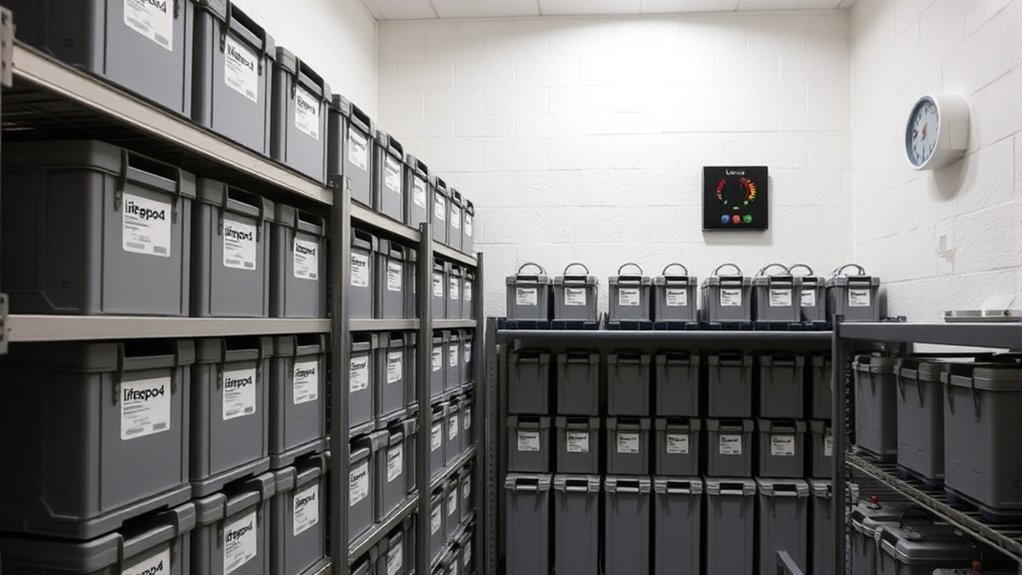
Maintaining ideal storage conditions is essential to preserve Lifepo4 battery performance over time. We recommend storing batteries at a temperature between 0°C and 25°C to prevent capacity loss and degradation. Additionally, keeping the voltage level around 3.2V to 3.3V per cell minimizes stress and prolongs lifespan.
Ideal Storage Temperature
To guarantee ideal long-term performance, Lifepo4 batteries should be stored within a specific temperature range that minimizes capacity loss and degradation. The optimal storage temperature is generally between 0°C and 25°C, with stable conditions being essential. Temperature fluctuations can accelerate capacity fade, so maintaining consistent temperatures is necessary. Additionally, humidity control plays a critical role; low humidity reduces corrosion risk and prevents moisture-related damage. Key considerations include:
- Keep storage temperatures within the 0°C to 25°C range.
- Avoid rapid temperature changes to prevent stress on battery components.
- Maintain low humidity levels to minimize corrosion and moisture ingress.
Adhering to these conditions helps preserve battery integrity and prolongs lifespan during long-term storage.
Proper Voltage Level
Ensuring that LiFePO4 batteries are stored at an appropriate voltage level is essential for minimizing capacity loss and preventing long-term damage. Maintaining voltage stability within the recommended range—typically around 3.2 to 3.3 volts per cell—helps preserve electrode integrity and chemical stability. Over-discharge or excessive charge can accelerate capacity fade, especially during extended storage durations. For best results, we suggest storing batteries at approximately 50-60% state of charge, which balances voltage stability and minimizes stress on the cells. Consistently monitoring voltage levels during storage is critical to avoid drift outside safe limits. Proper voltage management ensures that the batteries retain maximum capacity over time, reducing degradation and extending their useful life during long-term storage periods.
How to Properly Charge and Discharge for Storage
Properly charging and discharging a Lifepo4 battery before storage is essential to preserve its longevity and performance. The battery chemistry allows for multiple charging cycles, but improper handling can accelerate capacity loss. To enhance storage, follow these steps:
- Charge the battery to approximately 3.2-3.3V per cell, ensuring it’s in a balanced state for long-term preservation.
- Discharge it to a resting voltage around 3.2V per cell to prevent stress on the chemistry and minimize capacity fade.
- Avoid full discharges or prolonged partial cycles, as repeated deep cycling can degrade the battery’s lifespan. Proper pre-storage conditioning maintains ideal electrode integrity and maximizes future performance.
Monitoring and Maintaining Stored Lifepo4 Batteries
Monitoring and maintaining stored Lifepo4 batteries is crucial to preserving their capacity and extending their lifespan. Regular voltage checks confirm the battery remains within ideal charge levels, typically around 3.2 to 3.3 volts per cell for long-term storage. Understanding the battery chemistry is fundamental, as Lifepo4 cells are less prone to capacity loss from deep discharge but still require careful management. Proper charger compatibility is essential; using chargers designed for Lifepo4 chemistry prevents overcharging or undercharging, which can degrade performance. Periodic balancing helps maintain cell uniformity, reducing risk of capacity loss. Maintaining a stable storage environment, with controlled temperature and humidity, complements these measures. Consistent monitoring and precise maintenance practices safeguard battery health and ensure long-term reliability.
Common Mistakes to Avoid During Storage
Many common mistakes during storage can considerably impair the longevity and performance of Lifepo4 batteries. First, neglecting proper battery encryption can lead to voltage fluctuations, risking capacity loss. Second, storing batteries in inappropriate storage containers — exposed to extreme temperatures or humidity — accelerates degradation. Third, failing to monitor and maintain the correct state of charge (around 50%) can cause capacity decline or over-discharge. Additionally, using an unsuitable storage container that isn’t airtight may expose batteries to moisture and contaminants, further damaging cells. Proper storage practices include using a sealed, climate-controlled container and guaranteeing batteries remain at an ideal voltage level. Avoiding these mistakes helps preserve battery health and secures reliable performance during long-term storage.
How Long Can You Safely Store Lifepo4 Batteries?
The duration that Lifepo4 batteries can be stored safely depends on several factors, including their state of charge, storage conditions, and battery quality. Typically, a properly stored Lifepo4 battery at about 50-60% charge can be maintained for 6 to 12 months without significant capacity loss. Extended storage beyond this period increases the risk of capacity degradation, especially if storage conditions are suboptimal. Essential storage container options are vital; airtight, temperature-controlled environments mitigate moisture and temperature fluctuations. Battery aesthetics also play a role, as corrosion or physical damage can compromise safety and longevity. Regular inspection ensures that visual indicators, such as swelling or discoloration, remain within acceptable limits. Maintaining these parameters guarantees safe, long-term storage and preserves battery performance.
Tips for Safely Reusing and Recycling Stored Batteries
To guarantee safety when reusing or recycling stored Lifepo4 batteries, we must follow strict procedures that prevent hazards and preserve battery integrity. Proper handling minimizes risks such as thermal runaway or chemical leaks. When considering battery recycling, adhere to regulated collection points to ensure environmentally responsible disposal.
- Inspect batteries for physical damage or corrosion before reuse or recycling.
- Discharge batteries to a safe voltage level prior to recycling, reducing fire risk.
- Partner with certified recycling facilities that follow eco-friendly processes to minimize environmental impact.
Following these steps guarantees safe reuse and effective battery recycling. This approach not only mitigates hazards but also supports environmental sustainability by reducing waste and pollution associated with improper disposal.
Frequently Asked Questions
How Does Temperature Fluctuation Affect Lifepo4 Battery Longevity?
Temperature fluctuations can considerably reduce Lifepo4 battery longevity by causing stress and degradation. Ensuring temperature stability during storage optimizes battery lifespan, emphasizing the importance of proper storage conditions for maintaining battery health over time.
Can Lifepo4 Batteries Be Stored Submerged in Water?
We wouldn’t recommend water immersion for LiFePO4 batteries due to corrosion risks. Submerging them in water can damage internal components, compromise safety, and reduce lifespan; instead, store batteries in a dry, cool, well-ventilated environment.
What Are the Signs of Battery Degradation During Long-Term Storage?
We observe battery degradation through decreased capacity and poor charge retention over time, indicating internal chemical changes. Regularly testing voltage and capacity helps us detect these signs early, ensuring ideal performance and safe long-term storage of LiFePO4 batteries.
Is It Necessary to Periodically Cycle the Batteries During Storage?
We believe periodic cycling helps maintain battery capacity and voltage stability during storage, preventing capacity loss and ensuring readiness. Regularly cycling Lifepo4 batteries minimizes degradation, preserving performance and extending lifespan, especially when stored long-term.
How Do Storage Practices Differ for Different Lifepo4 Battery Chemistries?
Different LiFePO4 battery chemistries require tailored storage practices; we guarantee ideal storage environment conditions, such as temperature and voltage, to preserve battery health, considering specific chemistries’ sensitivities and recommended states of charge during long-term storage.
Conclusion
In summary, proper long-term storage of LiFePO₄ batteries is vital to preserve their performance and lifespan, much like the careful preservation of a fine manuscript in a medieval scriptorium. By maintaining ideal conditions, monitoring regularly, and handling with care, we can guarantee these batteries remain reliable for years to come. Adhering to these guidelines allows us to avoid premature degradation and maximize their utility, turning modern energy storage into a timeless investment.