Like a finely tuned engine, a LiFePO4 battery’s performance relies on precise management and maintenance. Proper practices can considerably extend its lifespan, but understanding the nuances is essential to avoid premature degradation. We’ll explore key strategies—from voltage regulation to thermal control—that help maximize your battery’s longevity. This knowledge is vital for ensuring reliable operation and avoiding costly replacements, so staying informed is more important than ever as we uncover the best ways to care for these batteries.
Key Takeaways
- Keep the battery within the recommended voltage range during charging and discharging.
- Store in a cool, dry environment with a partial charge (around 50-70%) for long-term preservation.
- Avoid deep discharges below 20% capacity or below 3.0V per cell to prevent capacity loss.
- Use appropriate chargers with overvoltage protection and monitor temperature during charging.
- Regularly inspect terminals and connections, ensuring they are clean and secure to prevent corrosion and voltage issues.
How Do LiFePO4 Batteries Work and Why They Last Longer?
LiFePO4 batteries, also known as lithium iron phosphate batteries, operate through the movement of lithium ions between the anode and cathode during charge and discharge cycles. This process is governed by specific battery chemistry that provides thermal stability and safety advantages. Unlike other chemistries, LiFePO4 exhibits a stable voltage profile, which contributes to consistent performance over multiple cycles. Their structural stability minimizes degradation caused by repeated charging cycles, resulting in longer lifespan. The robust chemical bonds within the cathode material prevent electrode corrosion and capacity fade. Additionally, the inherent safety features reduce the risk of thermal runaway. These factors collectively enable LiFePO4 batteries to sustain numerous charging cycles without significant capacity loss, making them a reliable choice for long-term energy storage solutions.
Keep Your Batteries Fully Charged but Avoid Overcharging
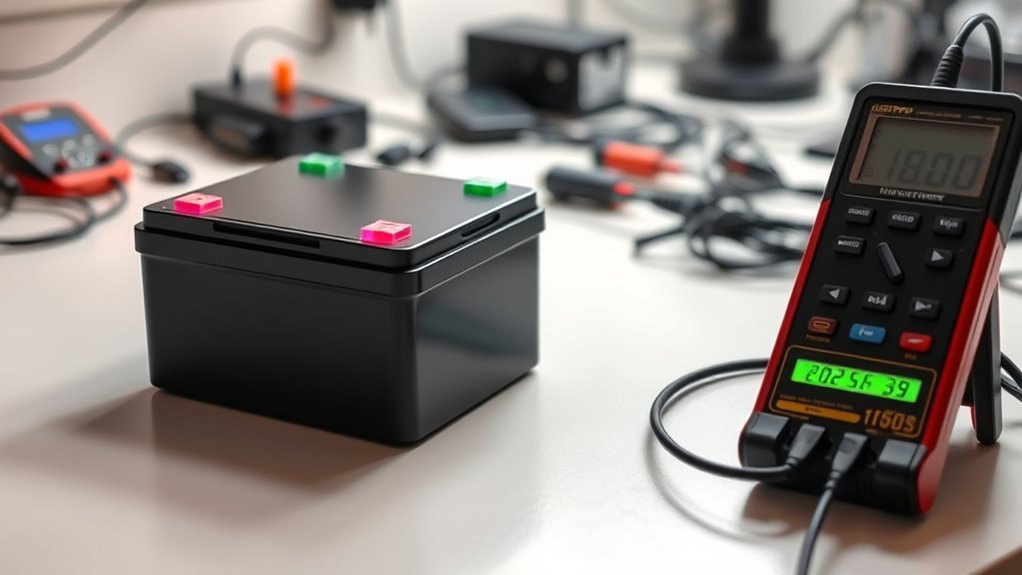
While maintaining a full charge is beneficial for maximizing battery capacity and readiness, overcharging can accelerate capacity fade and damage the cells. Good charging habits focus on preventing overvoltage, which is critical for Longevity. To ensure optimal battery health:
- Set precise charge voltage limits based on manufacturer specifications.
- Use chargers with overvoltage prevention features to avoid accidental overcharge.
- Regularly monitor charging progress and disconnect once fully charged.
- Avoid leaving batteries connected to charging sources beyond full capacity, reducing stress on the cells.
Implementing these strategies minimizes the risk of overvoltage, preserves battery integrity, and extends lifespan. Proper charging habits are essential for maintaining the performance and safety of your LiFePO₄ batteries over time.
Manage Your Discharges to Prevent Deep Cycling Damage
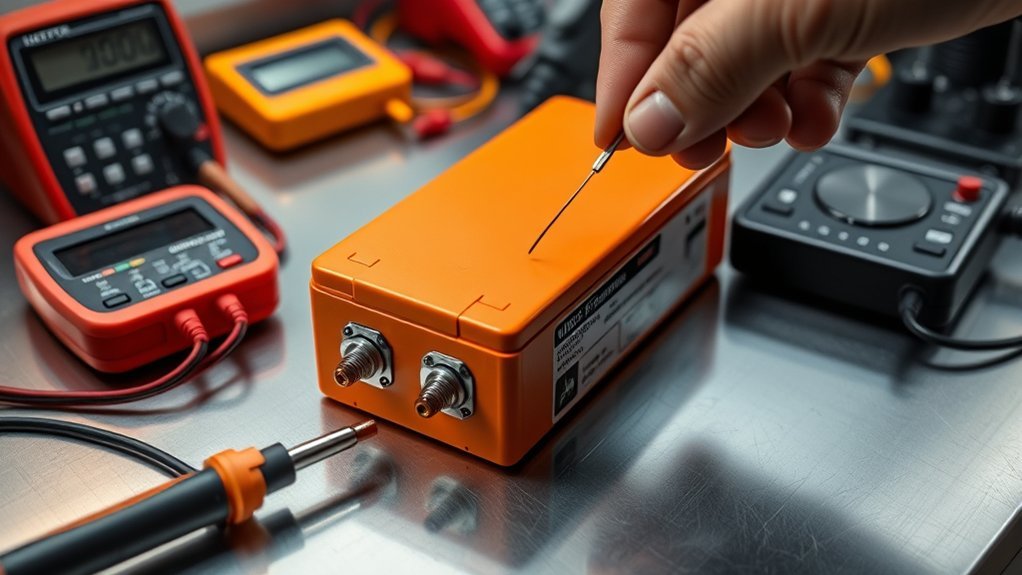
To maximize battery lifespan, we must carefully manage discharges to avoid deep cycling that can cause significant capacity loss over time. Deep cycling, where the battery discharges below 20% capacity, accelerates capacity fade and reduces overall lifespan. To prevent this, limit discharge cycles to stay within the recommended voltage range, typically avoiding discharge below 3.0V per cell. Consistent voltage balancing during use ensures cells remain synchronized, preventing imbalanced discharges that stress individual cells. Maintaining proper voltage levels minimizes stress on the battery, reducing the risk of capacity degradation. By monitoring discharge cycles and avoiding deep discharges, we preserve the battery’s integrity, guaranteeing excellent performance and longevity. Proper management of discharges is essential for sustaining the efficiency of LiFePO4 batteries over their service life.
Store Batteries Properly When Not in Use for Extended Periods
Proper storage of Lifepo4 batteries is essential to preserve their longevity. We recommend keeping batteries in a cool, dry environment and maintaining a partial charge level to minimize capacity loss. Ensuring these conditions helps prevent degradation during long-term inactivity.
Keep Batteries in Cool Area
Have you considered how temperature impacts the longevity of your LiFePO4 batteries? Excessive heat accelerates degradation, while cold temperatures can impair performance. To preserve battery health during storage, we recommend:
- Choosing a cool, stable environment—avoid direct sunlight or heat sources.
- Implementing thermal insulation—helps maintain consistent temperatures, reducing thermal stress.
- Ensuring proper ventilation strategies—prevent heat buildup and moisture accumulation.
- Monitoring ambient conditions regularly—maintains ideal storage environments and prevents temperature fluctuations.
Maintaining a cool, well-ventilated area minimizes thermal cycling and chemical breakdown, extending battery lifespan. Proper storage conditions are critical, especially during prolonged disuse, to prevent capacity loss and guarantee reliable performance over time.
Maintain Partial Charge Levels
When storing LiFePO4 batteries for extended periods, maintaining a partial charge—typically around 50% to 70%—is essential to prevent capacity loss and cell degradation. Proper charging habits during storage guarantee maximum capacity retention by avoiding the stress caused by full discharges or overcharging. A partially charged state minimizes electrolyte decomposition and reduces the risk of dendrite formation, both of which impair battery health. We recommend periodically checking the voltage and recharging to maintain this level if storage exceeds several months. Maintaining partial charge levels reduces the likelihood of capacity fade over time, preserving battery performance. This approach supports long-term health and ensures the battery remains ready for use when needed, without risking the detrimental effects associated with deep discharges or full charges during storage.
Store in Dry Environment
Storing LiFePO4 batteries in a dry environment minimizes the risk of moisture-related damage and chemical degradation that can occur over extended periods of inactivity. Proper storage guarantees effective moisture protection and humidity control, preserving battery integrity. To optimize storage conditions, consider these key steps:
- Keep batteries in a sealed container with silica gel packets to absorb excess humidity.
- Store in a temperature-controlled environment, ideally between 0°C and 25°C.
- Avoid direct contact with water or damp surfaces that could introduce moisture.
- Periodically check stored batteries for signs of humidity infiltration or corrosion.
Implementing these measures maintains battery performance, prevents capacity loss, and extends lifespan during long-term storage.
Use the Right Charger and Avoid Charging at Excessive Currents
Using the correct charger is crucial for maintaining the longevity of a LiFePO₄ battery, as incompatible or low-quality chargers can cause overvoltage or undervoltage conditions that degrade battery cells. Proper charger compatibility ensures the battery receives appropriate voltage and current regulation, preventing damage and premature aging. Charging at excessive currents accelerates capacity loss and risks thermal stress. To minimize these risks, always select chargers designed specifically for LiFePO₄ chemistry, adhering to manufacturer specifications.
| Charger Compatibility | Current Regulation | Impact on Battery Life |
|---|---|---|
| High-quality, rated charger | Proper current limits | Extended cycle life |
| Incompatible chargers | Excessive current | Accelerated degradation |
| Manufacturer-recommended | Precise regulation | Optimal performance |
| Low-quality chargers | Uncontrolled charge | Reduced lifespan |
| Certified chargers | Stable charging process | Better longevity |
Monitor Battery Temperature to Prevent Overheating
Maintaining the battery within its ideal temperature range is crucial to prevent thermal stress and capacity loss. We recommend implementing active cooling systems when operating in high-temperature environments or during rapid charging. Consistent temperature monitoring guarantees safe operation and prolonged battery lifespan.
Maintain Optimal Temperature Range
Monitoring the temperature of your LiFePO4 battery is essential to prevent overheating and guarantee peak performance. Effective thermal management relies on consistent temperature monitoring to maintain the ideal range, typically between 0°C and 45°C. Deviations outside this range accelerate battery degradation and reduce lifespan. To enhance thermal management, consider these steps:
- Regularly check temperature readings with a reliable sensor.
- Adjust operating conditions to avoid high-temperature zones.
- Ensure proper ventilation around the battery to dissipate heat.
- Implement proactive measures when temperature approaches critical limits.
Use Cooling Systems When Needed
To prevent overheating and prolong your LiFePO4 battery’s lifespan, implementing an effective cooling system is vital, especially during high-demand operation or elevated ambient temperatures. Thermal regulation through cooling systems guarantees the battery operates within ideal temperature ranges, minimizing thermal stress that accelerates degradation. Active cooling methods, such as fans or liquid cooling, can be employed when monitoring indicates rising temperatures beyond safe thresholds. These systems help dissipate excess heat efficiently, maintaining stable operating conditions. Accurate temperature sensors should be integrated to trigger cooling mechanisms precisely when needed, avoiding unnecessary energy consumption and wear. Proper thermal regulation with appropriate cooling systems not only enhances performance but also considerably extends overall battery longevity by preventing thermal-related damage.
Regularly Check and Maintain Battery Connections and Terminals
Regularly inspecting and maintaining battery connections and terminals is vital to guarantee peak performance and longevity of your LiFePO4 battery. Proper care prevents issues that could lead to reduced capacity or failure.
- Corrosion prevention: Clean terminals with a mixture of baking soda and water, then dry thoroughly to inhibit corrosion.
- Terminal tightening: Ensure all connections are snug but not overtightened, preventing arcing and voltage drops.
- Visual inspection: Look for signs of corrosion, oxidation, or loose wires regularly.
- Secure connections: Confirm all terminal clamps are firmly attached to avoid intermittent power loss or electrical faults.
Adhering to these steps maintains optimal conductivity, reduces risk of damage, and extends your battery’s life.
Recognize Signs of Battery Degradation and When to Replace
As LiFePO4 batteries age, their performance decline becomes evident through specific signs that indicate degradation. Recognizing these degradation indicators helps us determine when the battery has reached the end of its peak battery lifespan. Common signs include increased internal resistance, reduced capacity, and voltage sag under load. We may also notice longer charging times and a higher number of charge cycles required to reach full capacity. These indicators suggest the electrolyte or electrode materials have deteriorated, compromising efficiency and safety. Monitoring these signs allows us to plan timely replacements, preventing unexpected failures. Understanding degradation indicators ensures we maintain maximum battery performance and extend overall system reliability, making informed decisions about replacing the battery before it becomes inefficient or unsafe.
Frequently Asked Questions
Can Lifepo4 Batteries Be Used in Extreme Weather Conditions?
Lifepo4 batteries can handle extreme weather conditions thanks to their temperature tolerance and weather resilience. We recommend monitoring temperature ranges closely, ensuring proper insulation, and avoiding rapid temperature fluctuations to maintain ideal performance and longevity.
How Often Should I Cycle My Lifepo4 Battery for Optimal Lifespan?
They say, “A stitch in time saves nine,” so we recommend cycling your Lifepo4 battery every 3-5 charge cycles for the best lifespan. Proper battery maintenance guarantees longevity, minimizing capacity fade and maximizing performance over time.
Are There Specific Brands of Chargers Recommended for Lifepo4 Batteries?
We recommend chargers with proven brand reliability and compatibility specifically designed for Lifepo4 batteries, such as Orion or Victron, to guarantee safe, efficient charging and maximize lifespan; always verify your charger matches your battery’s specifications.
What Are the Environmental Impacts of Disposing of Lifepo4 Batteries?
We worry about waste when disposing of lifepo4 batteries because improper disposal releases toxic chemicals into the environment. Recycling programs help reduce this impact by safely handling and repurposing batteries, protecting ecosystems from harmful chemical contamination.
How Does the Age of a Lifepo4 Battery Affect Its Performance?
As Lifepo4 batteries age, battery degradation accelerates, leading to reduced capacity and increased internal resistance. Aging effects diminish performance, emphasizing the importance of monitoring cycle life to maintain ideal functionality and prolong battery longevity.
Conclusion
By following these best practices, we can truly unleash the full potential of our LiFePO4 batteries, ensuring they serve us reliably for years to come. Proper care is like tending a delicate garden—consistent attention and precision keep it flourishing. When we respect voltage limits, monitor conditions, and maintain connections, we’re not just extending battery life; we’re safeguarding our investments and powering our journeys with confidence.