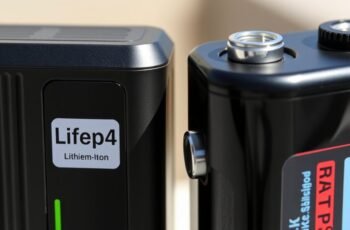
When comparing LiFePO4 and lead acid batteries, efficiency differences substantially impact their suitability for various applications. We observe that LiFePO4 offers higher charge/discharge efficiency, faster recharging, and better performance across temperature ranges. However, understanding these distinctions requires analyzing multiple factors, including cycle life, weight, cost, and environmental impact. To determine which battery best meets specific needs, it’s essential to examine these aspects in detail, starting with their fundamental efficiency traits.
Key Takeaways
- LiFePO4 batteries support higher charging currents, enabling faster recharge times compared to lead acid.
- They have higher energy density, allowing more efficient energy storage in a smaller, lighter form.
- LiFePO4 maintains better performance across wider temperature ranges, especially in cold conditions.
- Longer cycle life (2,000–5,000 cycles) makes LiFePO4 more efficient for long-term usage.
- Overall, LiFePO4 offers greater efficiency and durability, reducing replacement and maintenance costs over time.
How Do Lifepo4 and Lead Acid Batteries Differ in Efficiency?
While both LiFePO4 and lead acid batteries serve as reliable energy storage solutions, their efficiency profiles differ markedly. This primarily stems from distinct battery chemistry, which influences their energy density and overall performance. LiFePO4 batteries feature a more stable chemical composition, resulting in higher energy density—allowing them to store more energy per unit volume or weight. In contrast, lead acid batteries have lower energy density due to their chemical makeup, limiting the amount of power they can store relative to size. This difference translates into greater efficiency for LiFePO4 in applications requiring lightweight, compact energy solutions. Additionally, their chemical stability enhances cycle life and reduces energy loss during operation, further improving overall efficiency compared to traditional lead acid batteries.
Charging Speed: Which Battery Recharges Faster?
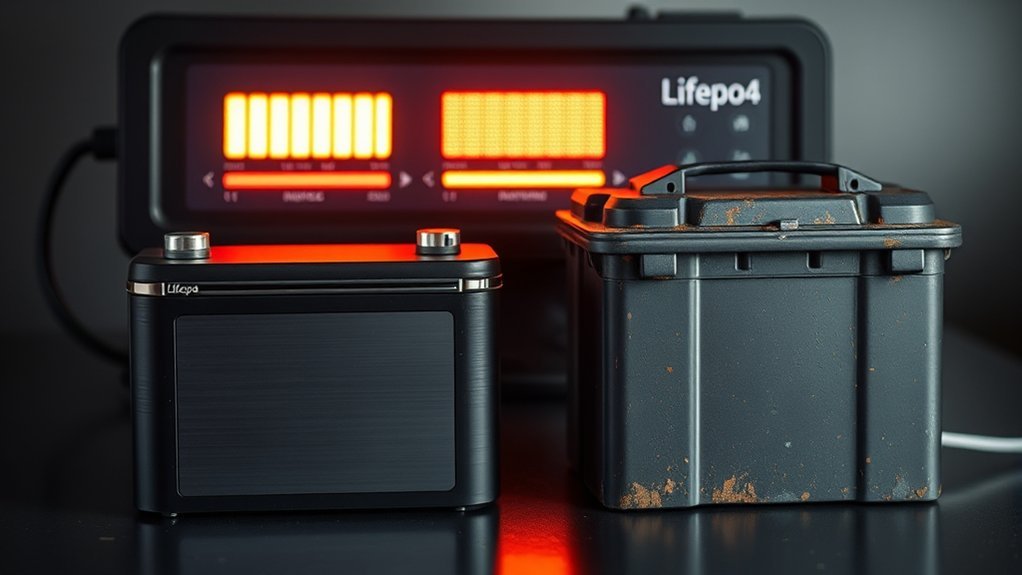
The charging rates of Lifepo4 and lead acid batteries considerably influence their recharging times, with Lifepo4 batteries typically allowing higher current levels without damage. Temperature effects also play a critical role, as both chemistries respond differently to thermal conditions during charging. Ideal charging practices, including voltage and current management, are essential to maximize recharge speed and battery lifespan.
Charging Rate Differences
Charging rates considerably influence the practical application of batteries, with LiFePO4 cells generally recharging faster than lead-acid counterparts under similar conditions. This difference stems from their distinct battery chemistry and charging algorithms, which optimize current flow and voltage regulation. LiFePO4 batteries typically support higher C-rates, enabling quicker recharge cycles without damaging the cell integrity. In contrast, lead-acid batteries require more conservative charging to prevent sulfation and capacity loss. The table below compares key parameters:
| Parameter | LiFePO4 | Lead Acid |
|---|---|---|
| Max Charging Rate | 0.5–1.0 C | 0.2–0.3 C |
| Charging Algorithm | Voltage and current control | Voltage regulation |
| Typical Recharge Time | 2–4 hours | 8–12 hours |
| Battery Chemistry | Lithium Iron Phosphate | Sulfate Lead Acid |
| Impact on Cycle Life | Supports fast charging | Limited by sulfation |
Impact of Temperature
Temperature considerably affects the charging speeds of both LiFePO4 and lead-acid batteries, as thermal conditions influence electrochemical reactions and internal resistance. Battery chemistry dictates how each type responds to temperature fluctuations, with LiFePO4 exhibiting superior thermal stability at varied temperatures. Elevated temperatures generally increase reaction rates, enabling faster charging; however, excessive heat can compromise thermal stability, especially in lead-acid batteries, leading to accelerated degradation. Conversely, low temperatures hinder ion movement, reducing charging efficiency. Lithium iron phosphate’s stable chemistry allows it to perform reliably across a broader temperature range, maintaining more consistent charging speeds. This difference underscores how the inherent thermal stability of each battery impacts charging performance, especially under fluctuating environmental conditions.
Optimal Charging Practices
When examining charging speeds, lithium iron phosphate (LiFePO4) batteries generally outperform lead-acid batteries due to their advanced electrochemical properties. LiFePO4’s higher energy density allows for faster recharging without compromising safety or longevity. Ideal charging practices involve controlling the charging current to match the battery’s manufacturing specifications, minimizing stress and degradation. Unlike lead-acid batteries, which require slower, staged charging to prevent sulfation, LiFePO4 batteries tolerate higher currents, enabling quicker recharge cycles. Properly managed charging not only accelerates recharging times but also maintains battery health. The combination of superior energy density and robust electrochemical stability makes LiFePO4 batteries more efficient for rapid recharging, emphasizing the importance of tailored charging protocols aligned with their design and manufacturing standards.
Cycle Life and Longevity: Which Lasts Longer Over Time?
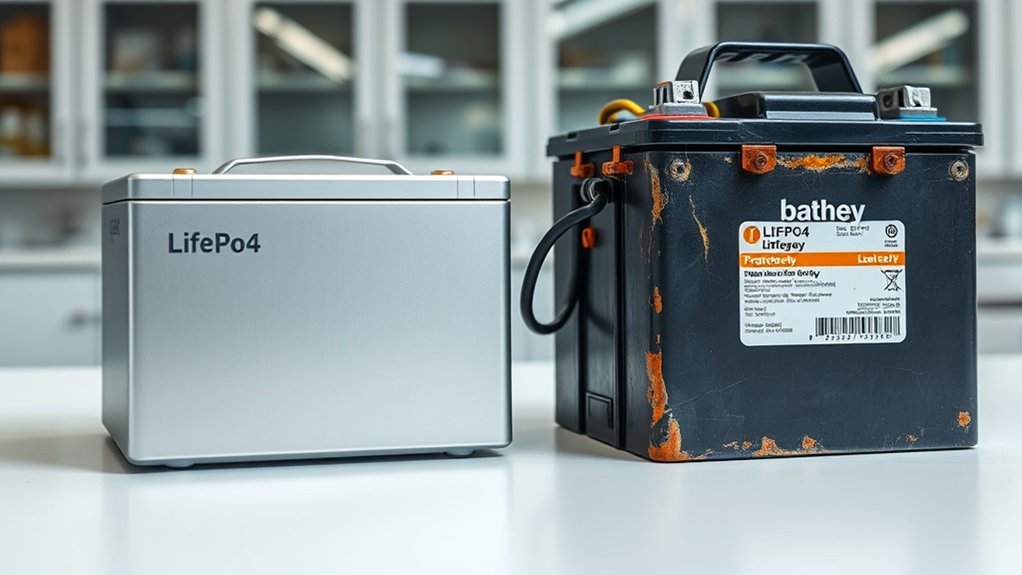
When comparing cycle life and longevity, we focus on overall cycle count, as Lifepo4 batteries typically endure more charge-discharge cycles than lead-acid counterparts. The depth of discharge greatly influences degradation rates, with deeper discharges accelerating capacity loss over time. Analyzing how each battery type degrades under various usage patterns helps determine which maintains ideal performance longer.
Overall Cycle Count
Lifepo4 batteries generally exhibit a higher overall cycle count compared to lead acid batteries, which directly translates to longer lifespan and greater longevity over time. This increased cycle count results from their advanced chemistry and manufacturing processes that enhance battery safety and stability. Lifepo4 cells typically endure 2,000 to 5,000 cycles, whereas lead acid batteries average around 500 to 1,000 cycles. The durability of Lifepo4 stems from their stable material composition, which minimizes capacity fade.
| Battery Type | Typical Cycle Count | Key Advantage |
|---|---|---|
| Lifepo4 | 2,000–5,000 | Longer lifespan |
| Lead Acid | 500–1,000 | Lower initial cost |
This distinction underscores the significance of manufacturing quality and safety standards in determining overall cycle longevity.
Depth of Discharge Impact
How does depth of discharge (DoD) influence the cycle life and long-term durability of batteries? Higher DoD considerably impacts battery chemistry, reducing cycle life and affecting overall longevity. For example:
- Lifepo4 batteries tolerate higher DoD levels (up to 80-100%) with minimal capacity loss, thanks to stable chemistry and high energy density.
- Lead acid batteries experience rapid capacity degradation beyond 50% DoD, shortening cycle life due to sulfation and internal component stress.
- Increasing DoD accelerates wear, decreasing the effective lifespan of batteries; therefore, managing DoD is essential for optimizing long-term performance and maximizing energy density benefits.
Degradation Rate Over Time
The rate at which a battery degrades over time directly influences its cycle life and overall longevity, with different chemistries exhibiting distinct patterns of wear. Lithium Iron Phosphate (LiFePO₄) batteries generally demonstrate slower degradation due to stable chemical structures, resulting in higher cycle counts and longer service life. In contrast, lead-acid batteries tend to degrade more rapidly, affected by sulfation and acid stratification. Battery manufacturing quality also plays a vital role; superior manufacturing processes reduce early degradation, enhancing longevity. Additionally, energy density impacts degradation, as higher energy density in LiFePO₄ batteries can lead to better thermal management and reduced wear. Overall, LiFePO₄ offers a more durable, long-term solution, while lead-acid batteries typically have a shorter lifespan due to inherent chemical limitations.
Weight and Size: How Do They Compare for Portable Applications?
When evaluating portable energy solutions, weight and size are critical factors that directly impact usability and design flexibility. Lithium iron phosphate (LiFePO4) batteries are particularly lighter and more compact than lead-acid counterparts, offering advantages in portability. Specifically:
- LiFePO4 cells have higher energy density, reducing overall weight and volume.
- Their manufacturing processes enable tighter packaging, enhancing portability without compromising battery safety.
- The smaller size simplifies integration into diverse applications, while their lighter weight minimizes strain on supporting structures.
This size and weight efficiency make LiFePO4 ideal for portable systems. Additionally, their construction ensures superior battery safety, as the manufacturing process reduces risks associated with thermal runaway, further supporting their suitability for mobile use.
Cost-Effectiveness: Which Offers Better Value in the Long Run?
Although lithium iron phosphate (LiFePO4) batteries typically have a higher upfront cost, they often deliver greater long-term value compared to lead-acid batteries. This is primarily due to differences in battery chemistry, which influence overall lifecycle costs. A detailed cost analysis reveals that LiFePO4 batteries exhibit lower total cost of ownership, thanks to longer cycle life, reduced maintenance, and higher efficiency. While initial investments are higher, their durability—often exceeding 2,000 cycles—means fewer replacements over time. Conversely, lead-acid batteries require more frequent replacements, increasing replacement costs and downtime. By examining these factors, it’s clear that LiFePO4 batteries offer superior cost-effectiveness in the long run, making them a more economical choice despite the higher initial expense.
Performance Under Different Temperatures and Conditions
LiFePO4 batteries generally demonstrate more stable performance across a wider range of temperatures compared to lead-acid batteries. This stability stems from their battery chemistry, which resists thermal fluctuations better. In cold environments, LiFePO4 maintains higher capacity and efficiency, as its electrochemical processes are less affected by low temperatures. Conversely, lead-acid batteries experience significant capacity loss and slower charging rates due to increased internal resistance.
LiFePO4 batteries perform better in cold temperatures, maintaining capacity and efficiency compared to lead-acid batteries.
Key factors influencing performance include:
- Thermal management: LiFePO4 systems often incorporate active cooling, maintaining ideal operating temperatures.
- Temperature resilience: LiFePO4’s chemistry provides superior cold-start performance.
- Heat dissipation: The stable thermal profile reduces degradation risks, ensuring longevity across conditions.
Maintenance Requirements and Their Impact on Efficiency
Maintaining ideal performance from LiFePO4 and lead-acid batteries requires regular attention to their specific maintenance needs, which directly influence their overall efficiency and lifespan. Battery chemistry dictates distinct maintenance protocols: lead-acid batteries demand regular electrolyte checks, top-offs, and equalization to prevent sulfation, ensuring maximum storage capacity. Conversely, LiFePO4 batteries are largely maintenance-free, but periodic voltage and capacity assessments help verify health. Neglecting these requirements can lead to capacity loss, reduced efficiency, and shortened lifespan. Proper maintenance preserves storage capacity by preventing chemical degradation and ensuring consistent performance. Ultimately, understanding these differences allows us to optimize each battery type’s efficiency, maximizing energy output and system reliability over time.
Environmental Impact and Recycling Considerations
Have you considered how the environmental footprints of different battery chemistries compare throughout their lifecycle? Lifecycle analysis reveals key differences in sustainability.
- Battery manufacturing: LiFePO4 batteries require less energy during production and generate fewer emissions than lead-acid counterparts, reducing overall environmental impact.
- Recycling methods: Lead-acid batteries benefit from established, efficient recycling processes that recover nearly 99% of materials, whereas LiFePO4 recycling is still developing, posing challenges for resource recovery.
- Environmental footprint: Lead-acid batteries contain toxic lead, necessitating careful disposal, while LiFePO4 batteries are more environmentally benign but demand improved recycling infrastructure.
Understanding these factors helps clarify the broader ecological implications of each chemistry’s lifecycle.
Which Battery Is Better Suited for Your Specific Needs?
Choosing the right battery depends on evaluating specific application requirements, including performance needs, lifespan, safety considerations, and environmental impact. For instance, Lifepo4 batteries offer superior battery safety due to stable chemistry and built-in safety features, reducing risks associated with overheating or thermal runaway. They also adhere to stringent manufacturing standards, ensuring consistent quality and reliability. Lead acid batteries, while cost-effective, often require careful handling due to corrosive materials and potential safety hazards. When selecting a battery, consider how critical safety and durability are for your application. If longevity, safety, and adherence to manufacturing standards are priorities, Lifepo4 batteries are generally better suited. Conversely, for short-term, low-cost solutions, lead acid may suffice, but with increased safety and lifespan trade-offs.
Frequently Asked Questions
How Does Temperature Affect Lifepo4 and Lead Acid Battery Efficiency?
Temperature impacts both batteries’ thermal stability, with high heat causing performance degradation, especially in lead acid batteries. Lifepo4 batteries maintain better efficiency across temperature variations due to superior thermal stability, reducing performance degradation risks under extreme conditions.
Are Lifepo4 Batteries More Environmentally Friendly Than Lead Acid?
We find Lifepo4 batteries more environmentally friendly due to lower material toxicity and easier battery recycling processes, reducing harmful waste. Lead acid batteries pose greater environmental risks, given their toxic lead content and more complex recycling challenges.
What Are the Safety Considerations for Each Battery Type?
We consider safety in battery recycling and manufacturing safety essential; LiFePO4 batteries pose fewer thermal runaway risks, while lead acid requires careful handling of sulfuric acid, emphasizing proper procedures to prevent spills and exposure during disposal or recycling processes.
Can Lifepo4 Batteries Be Used in High-Demand Applications?
In high-demand applications, Lifepo4 batteries excel due to their lightweight design and rapid charging speed. For example, in electric vehicles, their high discharge rates sustain performance, proving ideal despite demanding power and efficiency requirements.
How Do Maintenance Costs Compare Over the Batteries’ Lifespan?
We find that Lifepo4 batteries incur lower maintenance costs over their lifespan due to superior durability factors, reducing replacements and service needs. A detailed cost analysis shows long-term savings when compared to lead-acid batteries, enhancing operational efficiency.
Conclusion
In conclusion, LiFePO4 batteries outshine lead acid options with a typical efficiency of around 95%, compared to 85-90% for lead acid. This higher efficiency translates into faster charging, longer cycle life, and better performance across temperature ranges. For those seeking durability and cost-effectiveness over time, LiFePO4 proves to be a superior choice. As battery technology advances, understanding these efficiencies helps us make informed decisions tailored to our specific power needs.