Lithium Iron Phosphate (LiFePO4) battery cells are a crucial component in modern energy storage, renowned for their stability and safety. Their unique chemistry offers consistent performance and a long cycle life, making them suitable for various applications. Understanding how these cells operate and their key features is essential for optimizing their use. As we explore the fundamentals, you’ll see why LiFePO4 batteries are increasingly favored in sustainable technology, but there are important details to take into account for effective implementation.
Key Takeaways
- LiFePO4 batteries use lithium iron phosphate as the cathode material, offering high stability and safety.
- They operate via lithium-ion movement during charge and discharge cycles, with a stable voltage profile.
- Known for long cycle life (over 2,000 cycles), thermal stability, and minimal risk of overheating or combustion.
- Have a moderate energy density (90-160 Wh/kg), making them lighter and safer but slightly larger than other lithium batteries.
- Widely used in electric vehicles, energy storage, and portable applications due to their safety, durability, and eco-friendly recycling.
What Are LiFePO4 Battery Cells and How Do They Work?
LiFePO4 battery cells are a type of lithium-ion battery characterized by their use of lithium iron phosphate as the cathode material. During battery manufacturing, precise synthesis of cathode and anode components guarantees ideal performance and safety. These cells operate through the movement of lithium ions between electrodes during charge and discharge cycles, providing stable voltage and high thermal stability. Their inherent chemical stability minimizes risks associated with overheating or thermal runaway. Recycling processes are integral to sustainable development, allowing recovery of valuable materials like lithium, iron, and phosphate for reuse. This closed-loop approach reduces environmental impact and raw material dependency. Understanding these operational and manufacturing aspects highlights the efficiency and eco-friendliness of LiFePO4 cells within advanced energy storage systems.
Key Features and Benefits of LiFePO4 Batteries
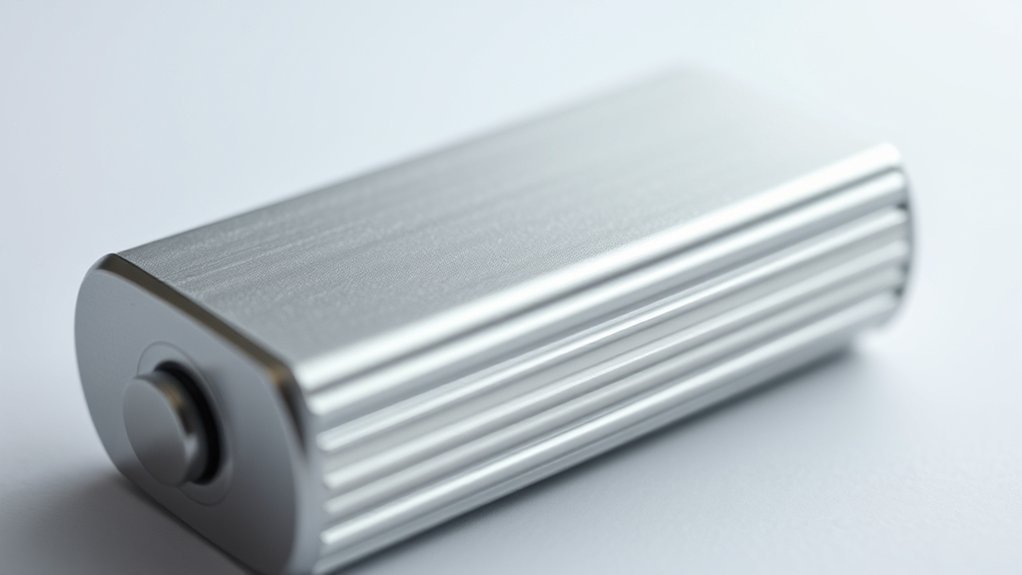
LiFePO4 batteries offer a superior safety profile due to their stable chemical structure, reducing risks of thermal runaway. They also provide a long cycle life, ensuring reliable performance over thousands of charge-discharge cycles. Additionally, their lightweight and compact design enhances versatility in space-constrained applications.
Enhanced Safety Profile
Have you ever wondered what makes certain battery chemistries inherently safer? LiFePO4 batteries excel in safety due to their stable chemical structure and robust manufacturing processes. This stability significantly reduces the risk of thermal runaway, even under high stress. Their inherent thermal management capabilities allow for safer operation across varying conditions. Key features include:
- Thermal stability minimizes overheating risks
- Chemical stability prevents combustion or explosion
- Manufacturing processes ensure high-quality, consistent cell design
- Low self-discharge rates reduce thermal hazards
- Inherent safety during overcharge and deep discharge conditions
These factors combine to produce a resilient, safe energy storage solution suitable for diverse applications. The synergy of thermal management and meticulous manufacturing processes underpins the enhanced safety profile of LiFePO4 batteries, making them a trusted choice for safety-critical uses.
Long Cycle Life
A key advantage of LiFePO4 batteries is their exceptional long cycle life, which stems from their stable chemical composition and robust electrode design. This stability minimizes capacity fade over numerous charge-discharge cycles, often exceeding 2,000 cycles with minimal degradation. Advanced manufacturing processes optimize electrode integrity, further enhancing longevity. Additionally, the inherent safety of LiFePO4 chemistry supports sustainable battery recycling, enabling the recovery of valuable materials without compromising performance. The combination of resilient electrode materials and environmentally responsible recycling practices guarantees that LiFePO4 batteries maintain their long cycle life while supporting eco-friendly disposal and reuse. This durability reduces replacement frequency, lowers operational costs, and underscores their suitability for long-term energy storage solutions.
Lightweight and Compact
The inherent design of LiFePO4 batteries enables them to deliver high energy density within a compact form factor. This efficient packaging results from a lightweight design that reduces overall weight without sacrificing performance. The compact form allows for flexible integration into various applications, including portable and space-constrained systems. These batteries offer several key benefits:
- Reduced weight enhances portability and ease of installation
- Space-efficient design maximizes available room
- Improved energy-to-weight ratio for demanding applications
- Simplified system design due to smaller size
- Enhanced mobility in electric vehicles and portable devices
How Do LiFePO4 Cells Compare to Other Lithium-Ion Batteries?
We compare LiFePO4 cells to other lithium-ion batteries by examining their energy density, which influences overall capacity and weight. Safety and stability are also critical factors, with LiFePO4 offering superior thermal stability and lower risk of thermal runaway. Understanding these differences helps determine the best battery type for specific applications.
Energy Density Differences
How do LiFePO4 cells compare to other lithium-ion batteries regarding energy density? LiFePO4 cells generally have a lower energy density, typically around 90-160 Wh/kg, compared to lithium cobalt oxide (LiCoO2) cells, which reach 150-250 Wh/kg. This impacts their suitability for applications requiring compact power sources. Key differences include:
- *Lower volumetric energy density*, resulting in larger cell sizes for the same energy capacity.
- *Enhanced thermal stability*, contributing to safety and longevity.
- *Environmental impact*, as LiFePO4’s stable chemistry simplifies battery recycling.
- *Longer cycle life*, reducing the need for frequent replacements.
- *Trade-offs in weight and size*, influencing design choices for portable versus stationary use.
Understanding these differences helps optimize performance while considering environmental and recycling factors.
Safety and Stability
Are LiFePO4 cells inherently safer than other lithium-ion batteries? Yes, primarily due to their stable crystal structure, which reduces thermal runaway risk. This stability simplifies thermal management, as LiFePO4 cells generate less heat during operation and are less prone to overheating. Additionally, their chemical composition enhances safety by resisting combustion and decomposition under stress. From a sustainability perspective, recycling protocols for LiFePO4 are well-established, facilitating safer disposal and reuse compared to other lithium chemistries that pose higher environmental hazards. Overall, the inherent stability of LiFePO4 cells contributes considerably to their safety profile, making them a reliable choice for applications demanding high safety standards and long-term stability.
Common Applications of LiFePO4 Battery Cells
LiFePO4 battery cells are widely utilized across various industries due to their high safety profile, long cycle life, and stable chemical properties. These characteristics make them ideal for applications demanding reliability and durability. They are commonly used in electric vehicles, renewable energy storage, uninterruptible power supplies (UPS), portable power tools, and marine equipment. Their compatibility with sustainable practices emphasizes efficient battery recycling and environmentally friendly manufacturing processes. The stable chemistry reduces thermal runaway risks, ensuring safety in densely packed systems. Additionally, their long cycle life minimizes replacement frequency, lowering lifecycle costs. As industries advance, LiFePO4 cells continue to expand into new sectors, driven by their safety, longevity, and eco-conscious manufacturing practices.
Factors to Consider When Choosing a LiFePO4 Battery
When selecting a LiFePO4 battery, it’s essential to evaluate key factors that influence performance, safety, and lifespan. Critical considerations include capacity, voltage compatibility, and cycle life, ensuring the battery meets specific application demands. Environmental impact also plays a significant role; choosing batteries that facilitate efficient battery recycling reduces waste and minimizes ecological harm. Proper safety features, such as thermal management and overcharge protection, are essential to prevent failures. Additionally, assessing the manufacturer’s standards and certifications guarantees quality and reliability. By prioritizing these factors, we can optimize operational efficiency, extend battery longevity, and promote sustainable practices through responsible battery recycling, ultimately reducing the environmental footprint of energy storage solutions.
Understanding LiFePO4 Battery Charging and Discharging
Understanding how to properly charge and discharge LiFePO4 batteries is essential for maximizing their lifespan and maintaining ideal performance. Controlled charging, typically at 3.65V per cell, prevents overvoltage damage, while avoiding deep discharges preserves cell integrity. Proper management involves:
- Using compatible chargers with precise voltage and current regulation
- Monitoring State of Charge (SoC) to prevent excessive cycling
- Employing efficient recycling techniques to recover valuable materials
- Considering manufacturing processes that enhance cycle stability
- Minimizing temperature fluctuations during operation
Safety Considerations for LiFePO4 Batteries
Although LiFePO4 batteries are inherently safer than other lithium-ion chemistries, implementing strict safety measures remains vital to prevent potential hazards. Proper handling during installation, use, and disposal minimizes risks of thermal runaway or mechanical damage. Safety protocols include overcharge protection, temperature monitoring, and secure enclosures. Additionally, responsible battery recycling is essential to mitigate environmental impact, as improper disposal can release harmful chemicals. Recycling programs ensure the safe extraction of materials, reducing ecological footprint and conserving resources. Adhering to safety standards not only protects users but also promotes environmental sustainability. By integrating these safety considerations, we can maximize the benefits of LiFePO4 technology while minimizing risks and environmental consequences.
Extending the Lifespan of Your LiFePO4 Cells
To maximize the lifespan of LiFePO4 cells, it’s essential to implement proper charging, discharging, and maintenance practices. Consistent, controlled charging within recommended voltage ranges prevents over-stressing cells, extending their lifespan. Avoid deep discharges; keep cycles within 20-80% capacity to reduce strain. Regularly inspect and balance cells to ensure uniform voltage levels. Proper thermal management minimizes degradation caused by temperature extremes. Additionally, responsible battery recycling reduces environmental impact, conserving resources and preventing hazardous waste. To further enhance longevity, consider:
Maximize LiFePO4 battery lifespan with proper charging, balancing, thermal management, and eco-friendly recycling practices.
- Using compatible chargers and avoiding overcharging
- Monitoring temperature during operation
- Performing periodic capacity testing
- Keeping batteries in a cool, dry environment
- Prioritizing environmentally conscious recycling practices
These steps help preserve cell integrity and promote sustainable usage, minimizing environmental impact over the battery’s lifecycle.
Future Trends and Innovations in LiFePO4 Battery Technology
Advancements in LiFePO4 battery technology are driven by ongoing research aimed at enhancing energy density, charging speed, and cycle life. Future innovations focus on integrating quantum computing to optimize battery management systems, enabling real-time diagnostics and predictive maintenance. This approach will improve safety, efficiency, and longevity. Additionally, developments in renewable integration are shaping the future of LiFePO4 batteries, facilitating more efficient storage solutions for solar and wind power. These batteries are increasingly suited for grid-scale applications, supporting decentralized energy systems and reducing reliance on fossil fuels. Emerging materials and electrode designs also promise higher capacity and faster charge/discharge cycles. Collectively, these trends aim to make LiFePO4 batteries more sustainable, resilient, and adaptable to the evolving demands of renewable energy and advanced technological applications.
Frequently Asked Questions
What Is the Ideal Temperature Range for Lifepo4 Battery Operation?
We recommend maintaining Lifepo4 batteries within a temperature range of 0°C to 45°C for ideal performance. Effective thermal management ensures temperature stability, preventing degradation and prolonging lifespan, especially during charge and discharge cycles.
How Do Environmental Conditions Affect Lifepo4 Battery Performance?
Like a steady lighthouse guiding ships, environmental conditions influence Lifepo4 battery performance. Variations in temperature and humidity impact battery chemistry, affecting voltage stability and overall efficiency, emphasizing the importance of ideal conditions for reliable operation.
Are Lifepo4 Batteries Recyclable or Environmentally Friendly?
We believe Lifepo4 batteries are environmentally friendly and recyclable. Recycling processes efficiently recover valuable materials, reducing environmental impact. Proper disposal minimizes hazardous waste, supporting sustainability and decreasing ecological footprint through responsible lifecycle management.
What Is the Typical Lifespan of a Lifepo4 Battery in Cycles?
Like a well-aged oak, our Lifepo4 batteries typically endure 2,000-3,000 cycles before capacity diminishes considerably, maintaining high charging efficiency and reliable battery capacity throughout their lifespan, ensuring consistent performance over years of use.
Can Lifepo4 Batteries Be Used in High-Temperature Applications?
We can use LiFePO4 batteries in high-temperature applications due to their thermal stability, but safety considerations are vital. Proper cooling and monitoring prevent overheating, ensuring peak performance while maintaining safety standards in demanding environments.
Conclusion
As we navigate the evolving landscape of energy storage, LiFePO4 batteries stand as steadfast guardians of safety, stability, and longevity. Their resilient chemistry and environmentally friendly design make them the backbone of sustainable power solutions. By understanding their intricacies, we can harness their full potential, ensuring our energy future is both reliable and green. With each charge and discharge, these cells silently power the revolution toward a cleaner, more durable tomorrow.